
10 Modern Kitchen Ideas That Make Small Spaces Look Luxurious
Is your kitchen still just a place where you cook dinner, or has it quietly become the room you secretly wish felt more like a magazine spread every single morning?
That feeling — standing in your kitchen with your coffee, looking around and thinking “something needs to change” — is one of the most universally relatable moments in homeownership. The good news is that transforming your kitchen does not have to mean a six-figure renovation or months of living in construction dust. Sometimes it takes just one brilliant idea, the right material choice, or a design decision that shifts the entire energy of the room. This article walks you through ten of the most exciting modern kitchen ideas that real homeowners across the United States are falling in love with right now. Whether you are starting from scratch or just looking to breathe new life into what you already have, something here is absolutely going to spark something in you.
Two-Tone Wood Cabinetry That Feels Rich and Layered
Picture walking into a kitchen where the lower cabinets have this gorgeous, deep walnut warmth pulling your eye downward while the upper cabinets sit in a clean, pale white oak that keeps everything feeling airy and open. The contrast between the two tones creates a visual rhythm that makes the entire space feel intentional, layered, and honestly a little bit luxurious. It stops the kitchen from looking like a flat, one-note room and gives it the kind of depth that makes guests immediately say “wow, who designed this?” You feel grounded when you stand in it — like the kitchen has actual personality instead of just cabinets.
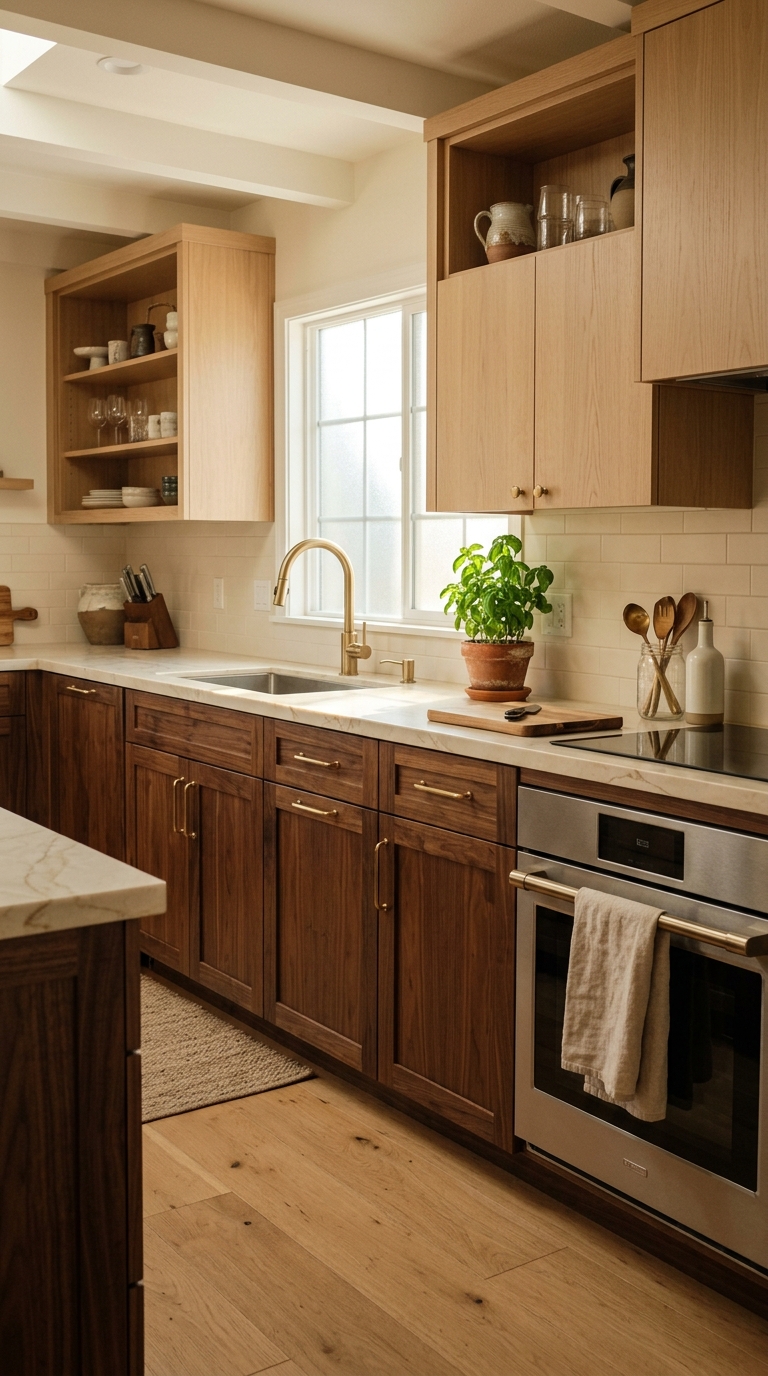
The key to pulling this off beautifully is choosing wood tones that share a common undertone rather than fighting each other for attention. Walnut lowers paired with white oak uppers works so well because both carry warm, natural undertones that feel cohesive even while contrasting. If you love a moodier approach, try a deep espresso stain on the island against raw natural wood perimeter cabinets. Keep your hardware consistent across both tones — brushed brass or matte black works beautifully — and let the countertop act as the neutral bridge between your two cabinet colors. Do not overthink it. When the wood tones feel harmonious, the whole kitchen falls into place naturally.
The Waterfall Island That Becomes Your Kitchen’s Crown Jewel
There is something almost sculptural about a waterfall island — the way the stone countertop flows vertically down the sides like a slow pour of liquid, meeting the floor in one seamless, architectural movement. It transforms a functional piece of furniture into an actual design statement that anchors the whole room. Veined marble, smooth quartz, or even polished concrete all look stunning in this application, and the effect is one of those things that photographs beautifully but looks even better in real life. Every single time someone walks into your kitchen for the first time, their eyes go straight to it.
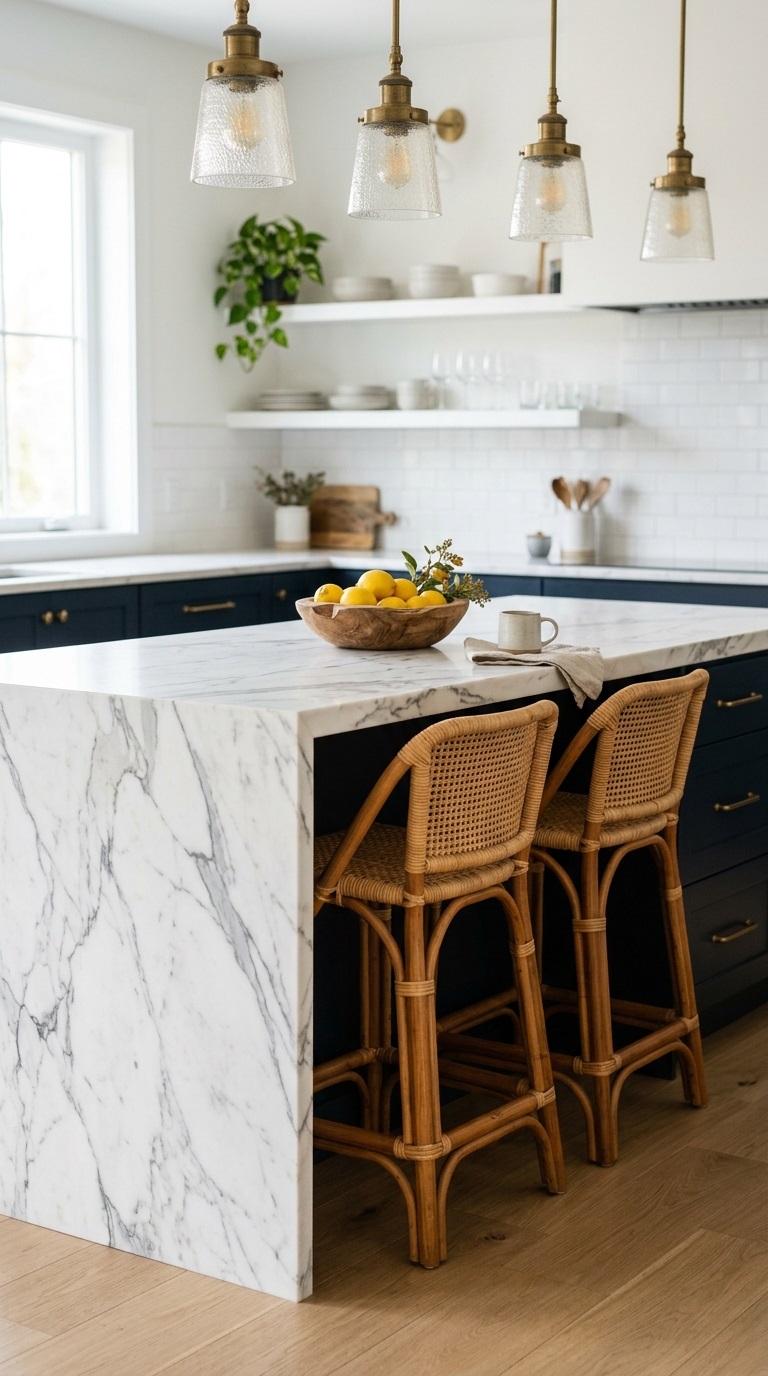
When you plan your waterfall island, the material you choose for the countertop face will set the entire mood of your kitchen. A bold, heavily veined Calacatta marble makes a loud, high-drama statement while a soft, warm quartzite in sandy beige keeps things sophisticated without shouting. The island also needs to work hard beyond just looking gorgeous, so think ahead about built-in drawers on one side, a prep sink tucked into the surface, or a seating overhang on the opposite end where family can pull up stools during dinner prep. The waterfall edge protects the side panels from daily scuffs while making the whole piece feel custom and intentional — that combination of beauty and practicality is exactly what great modern kitchen design always gets right.
Flat-Panel Minimalist Cabinetry for a Clean, Calm Space
Step into a flat-panel kitchen and the first thing you notice is how quiet it feels — not silent, but calm, like everything has been given exactly the space it needs to breathe. No ornate moldings, no raised door profiles, no hardware interrupting the smooth run of cabinet faces from one end of the kitchen to the other. The surfaces are honest and clean, and when light hits them in the morning it does this beautiful thing where the whole room glows in a way that feels almost meditative. This is the kind of kitchen that makes you want to cook something from scratch just because being in the space feels so good.
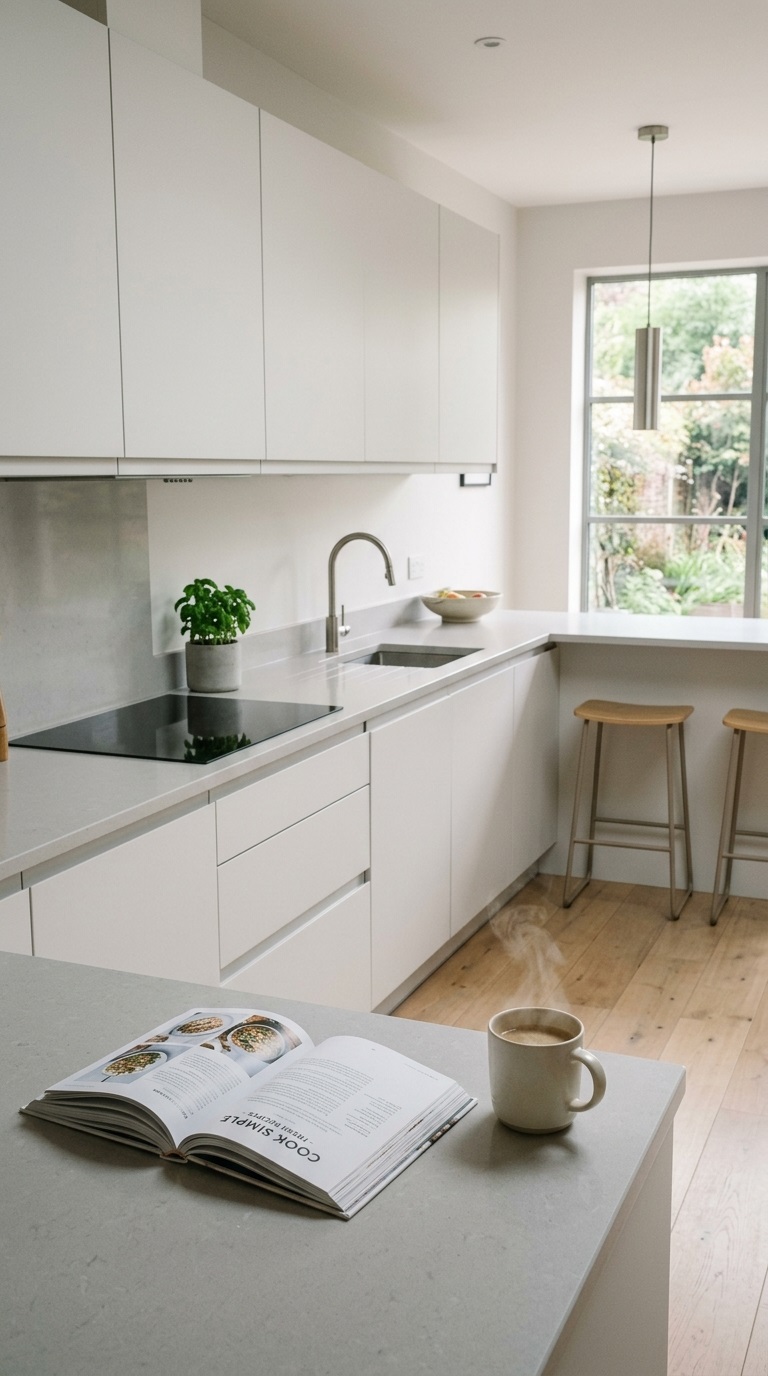
Flat-panel cabinets work best when you invest in the little details that elevate simplicity into sophistication. Integrated finger-pull edges replace traditional hardware and keep that seamless look intact — they feel incredibly satisfying to use once you get used to them. Choose a countertop material with some natural variation, like a softly veined quartz or honed limestone, so the simplicity of the cabinets does not make the room feel sterile. Under-cabinet LED strip lighting adds a warm glow that brings the whole room to life in the evenings. The beauty of this design is that it is endlessly adaptable — swap your bar stools or pendant lights with the seasons and the kitchen feels completely refreshed without a single cabinet door changing.
Earthy, Warm Color Palettes That Feel Like a Hug
Sage green cabinets. Terracotta accents. Warm beige walls and a butcher block section on the counter. If you have been scrolling through kitchen inspiration lately, you already know that earthy, nature-forward color palettes are absolutely everywhere right now — and they are trending for a very good reason. They make a kitchen feel lived-in and genuinely warm rather than showroom-polished and untouchable. These tones invite people in. They make the kitchen feel like the emotional center of the home, which honestly, it always was — it just sometimes takes the right color on the wall to remind everyone of that.
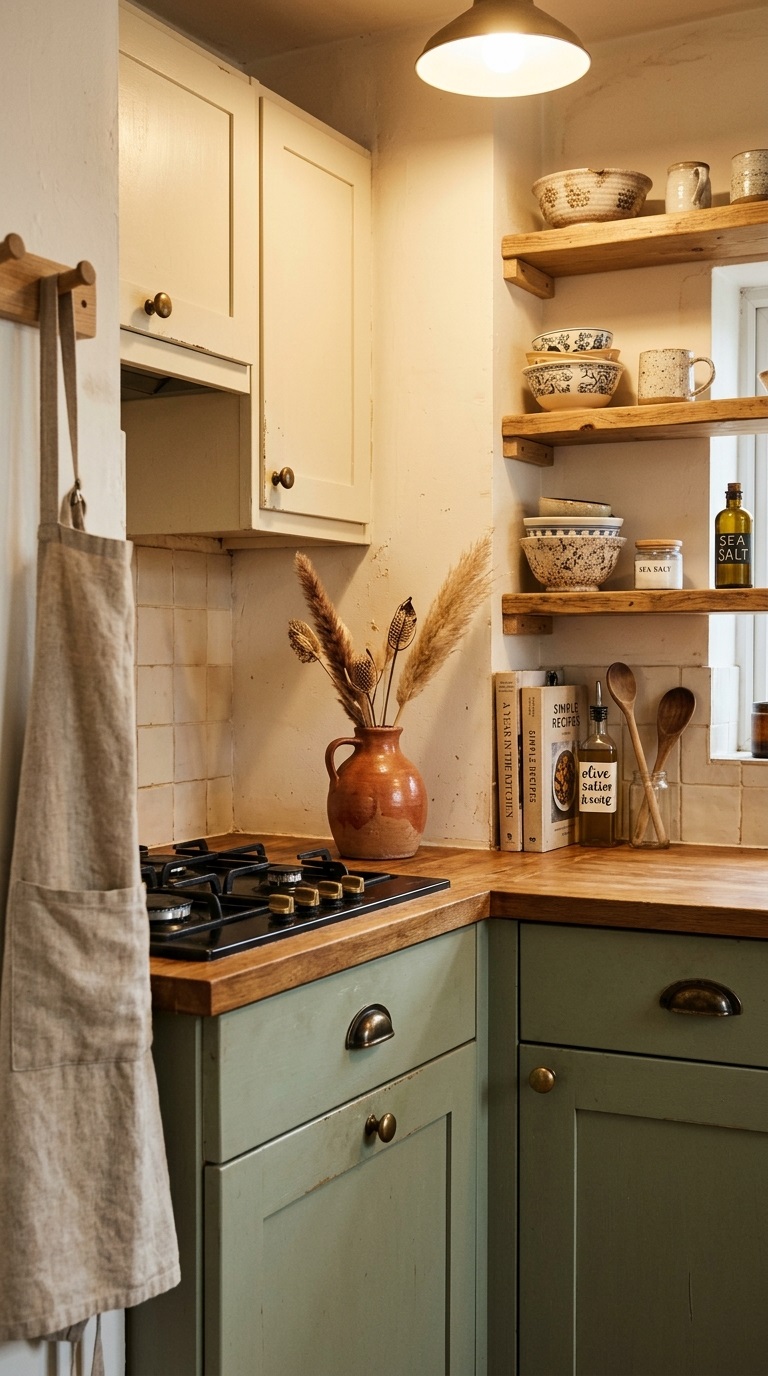
Commit to one anchor color and build your earthy palette outward from there in layers. If you choose sage green for your lower cabinets, bring in warm aged brass hardware, a cream or off-white on the uppers, and a countertop in something organic like honed soapstone or a warm white marble with soft grey veining. The materials you layer in are just as important as the paint colors themselves:
- Unlacquered brass hardware that develops a natural patina over time
- Linen or cotton Roman shades for the window above the sink
- Ceramic pendant lights in matte clay tones
- A jute or wool runner rug at the kitchen prep zone
- Open shelves in oiled walnut or raw white oak
Let these textures do the storytelling while your color palette holds everything together with quiet confidence.
A Smart Kitchen That Actually Makes Life Easier
Imagine finishing a long workday, walking into your kitchen, and saying “preheat oven to 375” out loud while you change out of your work clothes. By the time you walk back in, the oven is ready, your under-cabinet lights have shifted to a warmer tone for evening cooking mode, and the fridge has already reminded you that you need more eggs. This is not science fiction anymore — this is Tuesday night in a smart modern kitchen, and once you experience it, going back to a regular kitchen feels genuinely strange. The technology does not take over the warmth of the space; it quietly gets out of the way and just makes everything flow better.
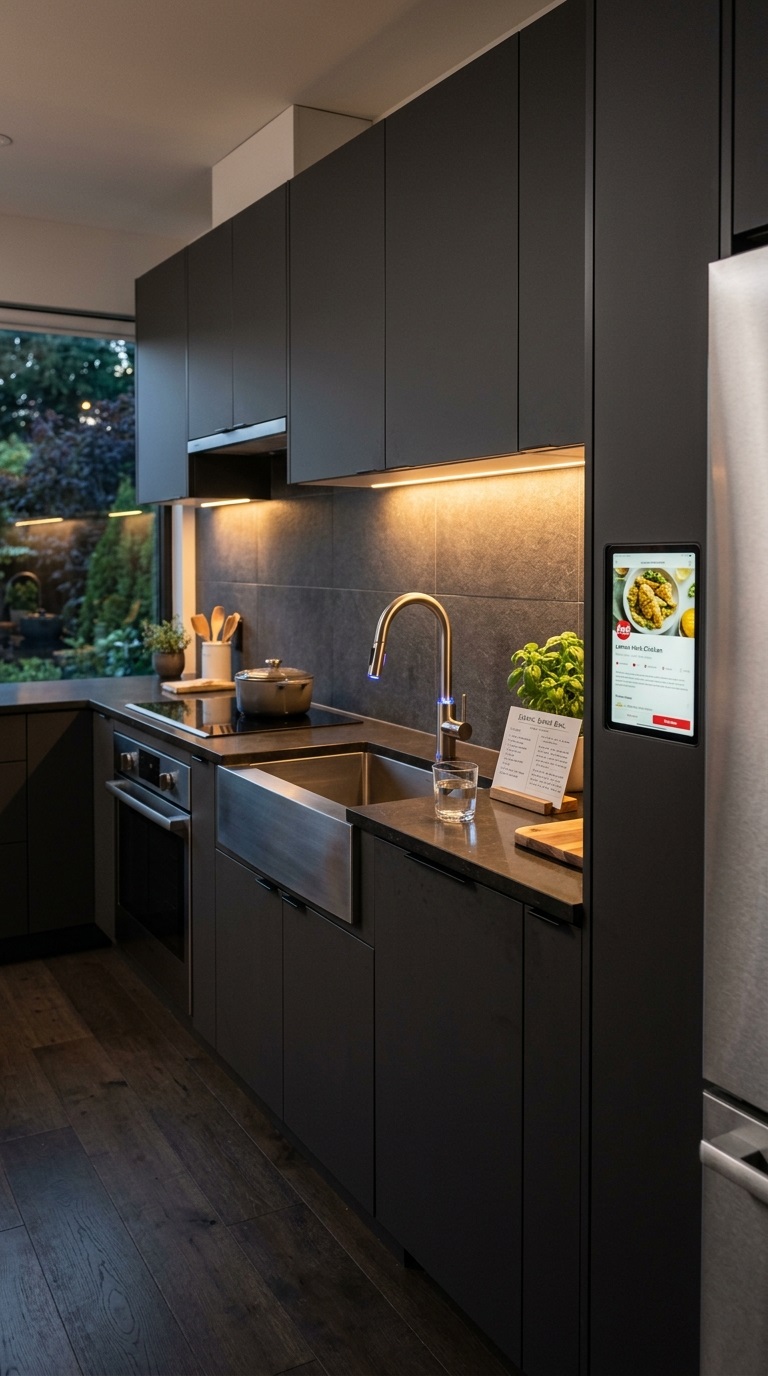
Start with the one upgrade that will impact your daily routine the most rather than trying to transform everything at once. A smart refrigerator with an internal camera lets you check what you need while standing in the grocery store, which alone might save you more time and money than any other upgrade you make this year. Touchless faucets feel like an absolute luxury once your hands are covered in raw chicken or bread dough. App-controlled ovens let you monitor a slow roast from your living room sofa. Built-in charging drawers keep phones and tablets off the countertop completely, which does wonders for the visual cleanliness of the space. Layer these upgrades gradually and your kitchen becomes more intuitive with every single addition.
Open Shelving Mixed with Closed Storage for That Perfect Balance
There is this particular magic that happens in a kitchen where open shelves and closed cabinets exist side by side. The closed cabinets handle the practical, everyday chaos — the mismatched Tupperware, the rarely used appliances, the stack of baking pans — while the open shelves get to hold the beautiful things, the pieces you actually want people to see. That balance makes a kitchen feel curated without feeling like a showroom. It feels like someone real lives there, someone who has good taste and also makes dinner every night and keeps their kitchen stocked with actual food.
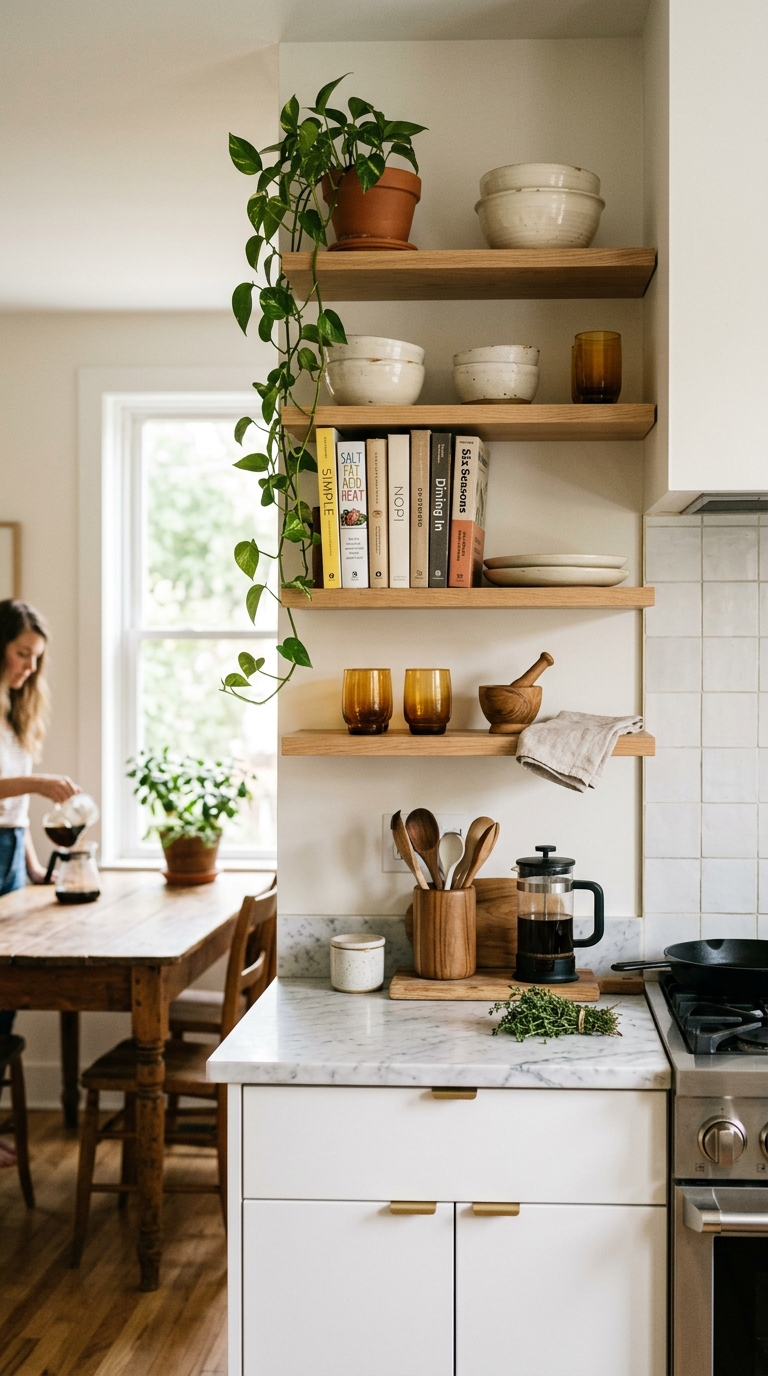
The shelf styling is where the real magic happens, and it does take a little intentionality to get it right without tipping into clutter. Group items in threes — one textural object like a ceramic crock, one practical item like a stack of pretty bowls, one living element like a small trailing plant. Vary the heights so your eye has somewhere interesting to travel along the shelf. Stick to a tight, cohesive color palette for everything on display — cream, natural wood, black, and warm white almost always work together effortlessly. If your open shelves start to feel messy after a few weeks, that is a sign you have slightly too many items on them, and editing down by just two or three pieces usually fixes everything immediately.
A Statement Backsplash That Does All the Talking
You can keep your cabinets neutral, your countertops quiet, and your flooring understated — and then let your backsplash be the moment in the room that stops people in their tracks. A truly great backsplash is the piece of the kitchen that reveals your personality most honestly, whether that means floor-to-ceiling handmade Moroccan zellige tiles in a deep inky blue, a dramatic slab of book-matched marble running from counter to ceiling, or a bold geometric pattern in terracotta and cream that feels like something you brought home from Lisbon. The backsplash costs less per square foot than almost any other element in the kitchen, which makes it the smartest place to spend on something genuinely exciting.
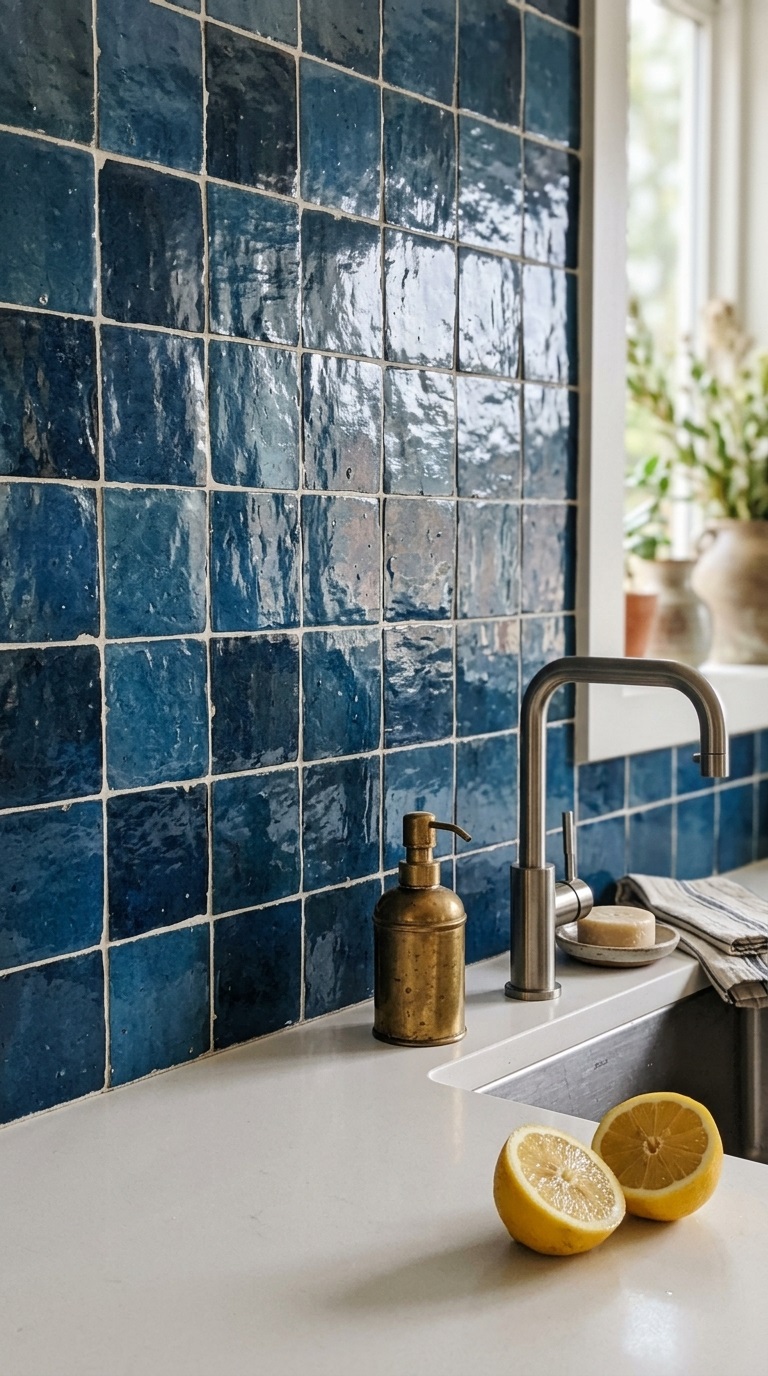
The finish of your tile matters just as much as the pattern or color you choose. Glossy handmade tiles like zellige catch light beautifully because the surface variation means no two tiles reflect light the same way — the whole wall shimmers slightly as you move through the room. Matte tiles in earthy tones absorb light and create a warmer, more grounded effect. If you go bold with your tile choice, keep your countertop and cabinet colors as calm as possible so the backsplash has room to breathe and the room does not feel visually overwhelmed. And always, always tile up to the ceiling if your budget allows — a backsplash that stops halfway up a wall never looks quite as intentional as one that goes all the way.
The Concealed Kitchen Aesthetic for Seamless, Serene Living
There is something incredibly calming about a kitchen where everything disappears when it is not in use — where the refrigerator front matches the cabinet panels so seamlessly you almost do not register it as a separate appliance, where the small appliances all live behind closed doors in their own designated spaces, where the countertops stretch out in long, uninterrupted runs of stone with absolutely nothing sitting on them except maybe one beautiful object. This is the concealed kitchen, and it has become one of the most-requested design directions in American homes because it delivers something that most busy households desperately crave: the feeling of total visual calm.
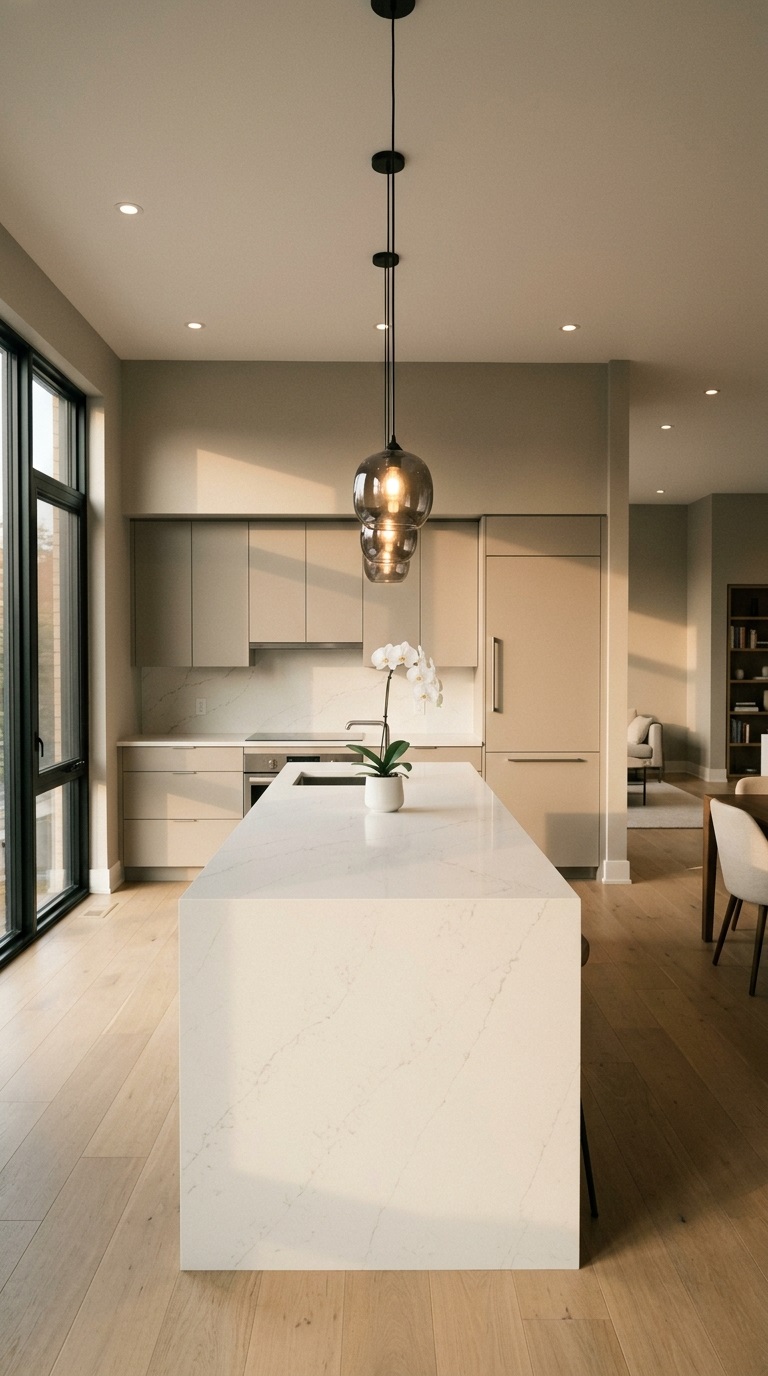
The appliance garage is the single most practical upgrade you can add to a kitchen that wants to embrace this aesthetic. It sits at counter height with a roll-up or lift-up door and hides your coffee maker, toaster, and blender completely out of sight while keeping them perfectly accessible every single morning. Panel-ready appliances — refrigerators, dishwashers, and even range hoods designed to accept a custom cabinet front — complete the illusion and make the kitchen feel like one continuous, intentional surface rather than a collection of separate appliances. The result is a kitchen that photographs beautifully every single day, not just when company is coming, because there is genuinely nothing to tidy before someone arrives.
Curved Edges and Soft Shapes That Bring Warmth Back
Sharp angles and hard-edged geometry dominated kitchen design for so long that walking into a kitchen with softly rounded countertop edges, an oval island, or arched cabinet door profiles now feels almost revolutionary — and incredibly, immediately comfortable. There is a reason we are all gravitating toward softer shapes right now. They make a room feel more human, more welcoming, more like a space that was designed for living rather than for photography. A rounded island corner never catches your hip when you walk past it at 7am half asleep, which is a benefit no design magazine ever talks about but every homeowner who has one mentions immediately.
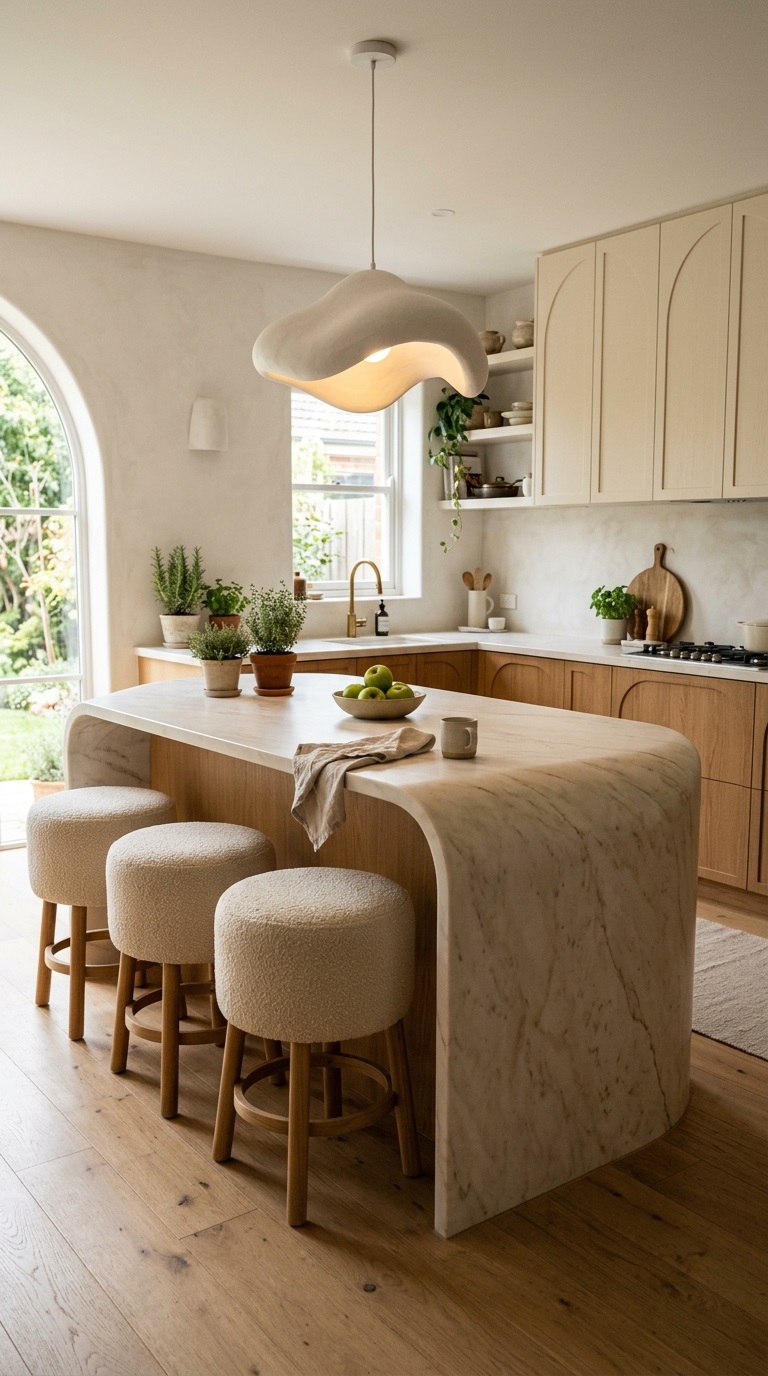
Bringing curved and softened shapes into your kitchen does not require a full renovation. Start with the countertop edge profile — a bullnose, ogee, or full radius edge on your existing countertops already creates a noticeably softer effect without replacing a single cabinet. If you are planning more significant updates, look for islands with rounded corners rather than the standard square, or cabinet doors with a subtle arch at the top panel that echoes the softer silhouette of traditional European cabinetry. Curved pendant lights and rounded cabinet hardware both reinforce this softer geometry in a way that feels cohesive rather than accidental. The whole kitchen starts to feel like it exhales.
Bringing the Outdoors In with Natural Materials and Living Texture
Walk into a kitchen where there is raw wood grain on the countertop, a cluster of fresh herbs growing in terracotta pots on the open shelf, eucalyptus stems in a simple vase on the island, and linen curtains filtering the morning light — and something in your body just relaxes. Natural materials carry an energy that manufactured surfaces simply cannot replicate. They age beautifully, develop character over time, and remind you at some deep, quiet level that you are connected to something bigger than your four kitchen walls. This is why the move toward organic textures, living plants, and raw natural materials in kitchen design feels less like a trend and more like a correction.
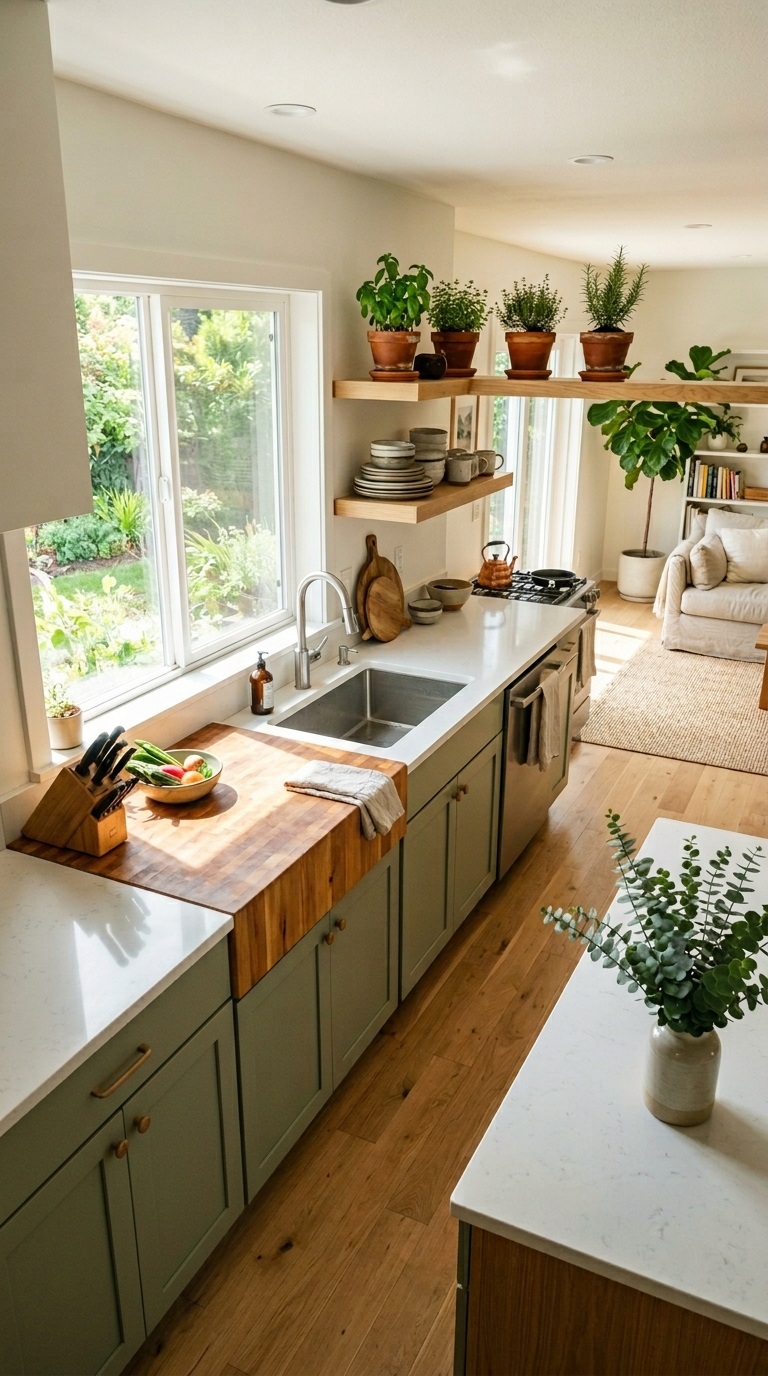
Natural texture works best when you layer it intentionally rather than adding it all at once without a plan. A butcher block section integrated into one end of your countertop adds warmth and a functional chopping surface without committing your entire kitchen to wood maintenance. Woven light fixtures in rattan or jute bring an organic ceiling element that no glass pendant can replicate. Stone surfaces with visible movement — the kind where you can see the fossil marks or the mineral inclusions — feel infinitely more alive than perfectly uniform engineered surfaces. And a small indoor herb garden on a windowsill, whether it is just three pots of basil, rosemary, and thyme, does something for the energy of a kitchen that no decorating budget could otherwise buy.
Your kitchen does not need to transform overnight, and it absolutely does not need to look like everyone else’s to be something you genuinely love. Pick the one idea from this list that made you feel something — the one that made you lean forward a little, picture yourself in that room, and think “yes, that” — and start there today. Order the tile sample, pull a paint swatch, or rearrange your shelves this afternoon. Beautiful spaces are built one honest, intentional choice at a time, and your kitchen is absolutely worth that kind of attention and care. Make it the room that welcomes you home every single day.