
12 Genius Small Bathroom Ideas for Stylish Space-Saving Design
You know that moment when you walk into your bathroom in the morning and immediately feel your shoulders tense up? Maybe it’s the clutter sitting on every surface, the walls closing in a little too fast, or just that suffocating feeling that no candle or pretty hand towel can seem to fix. I have been there more times than I care to admit. My first apartment had a bathroom so tiny that opening the door and reaching the sink was practically a yoga pose. I tried everything — wrong mirrors, the wrong shelves, the wrong light fixtures — and I learned every single lesson the hard way so you don’t have to.
What I eventually discovered changed everything about how I think about small spaces. A small bathroom doesn’t need to be a compromise. It doesn’t need to feel like a storage closet you reluctantly shower in. With the right ideas layered together thoughtfully, it can feel like the most intentional, luxurious little room in your entire home. In this article I’m sharing twelve real ideas I have personally used or tested in my own homes and the homes of friends — ideas that actually work in the real world, not just on beautifully staged Pinterest boards where nobody actually lives.
Go Vertical With Open Shelving
When floor space disappears, your walls become the most valuable real estate in the room. I installed two slim floating oak shelves above my toilet last spring and the difference was immediate and genuinely emotional — I finally had a place for everything without anything touching the floor. Vertical shelving draws the eye upward, which creates the powerful visual illusion of a taller, more expansive room. The ceiling feels farther away, the walls feel less tight, and suddenly your tiny bathroom starts to breathe. The key is keeping those shelves edited and intentional — a few rolled towels, one small plant, one or two pretty vessels — rather than turning them into a second junk drawer mounted at eye level.
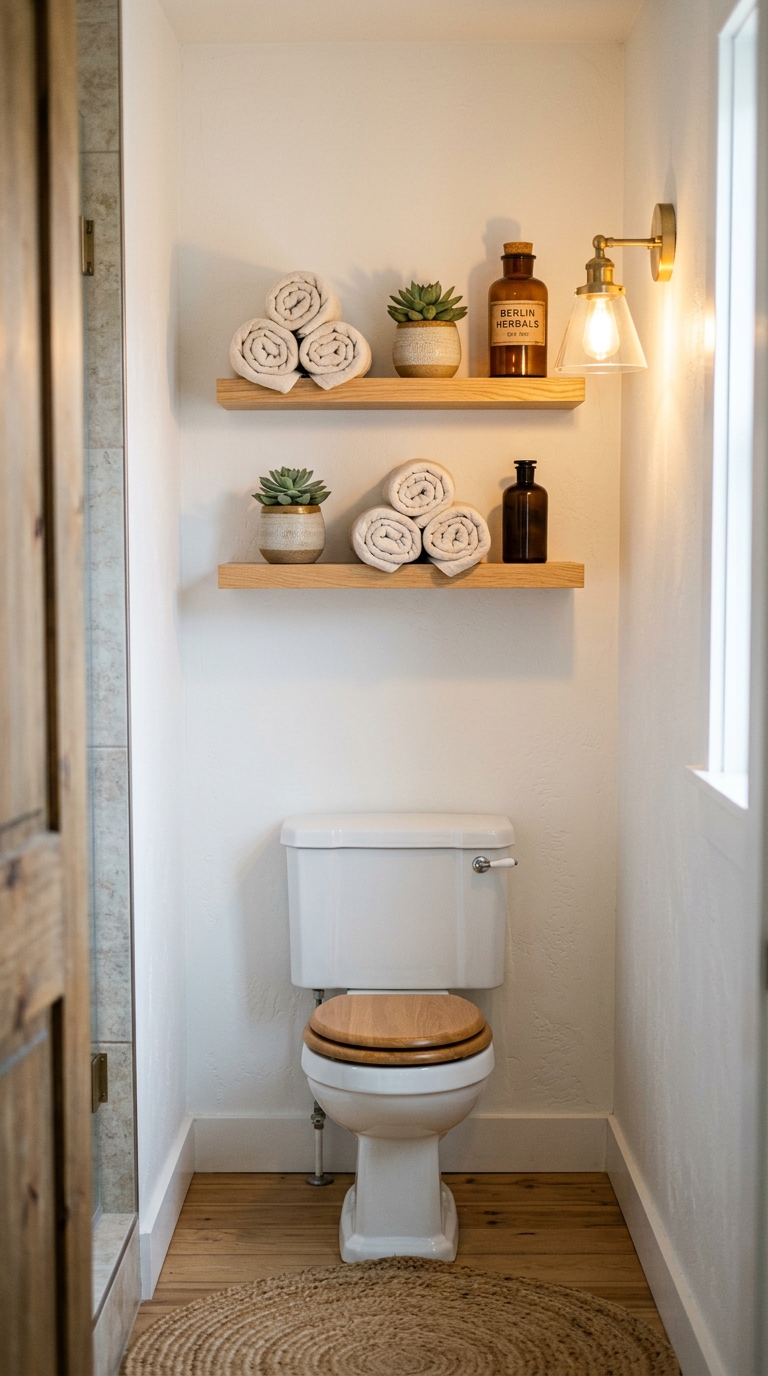
For the shelves themselves, I always recommend solid wood over wire or metal in a small bathroom because wood brings warmth into a space that easily feels cold and clinical. Benjamin Moore’s White Dove on the surrounding walls made my shelves pop without screaming for attention. Space your shelves at least fourteen inches apart so taller bottles and plants don’t feel crammed. Style them in odd numbers — three items per shelf feels balanced and curated rather than accidental. My honest personal note here is that I resisted open shelving for years because I worried about dust, but wiping them down takes thirty seconds and the visual payoff is absolutely worth that small trade-off every single time.
Install a Pedestal Sink
The moment I swapped out the bulky vanity cabinet in my guest bathroom for a simple pedestal sink, the entire room exhaled. It sounds counterintuitive — you are technically losing storage — but what you gain is visible floor space, and visible floor space is everything when you are working with a room under fifty square feet. Your eye reads the open floor as room, and the brain registers that as spaciousness even when the square footage hasn’t changed by a single inch. A pedestal sink also brings an architectural elegance to a small bathroom that no boxy cabinet-and-countertop combo can replicate. It has a timeless sculptural quality that feels considered and intentional rather than just functional.
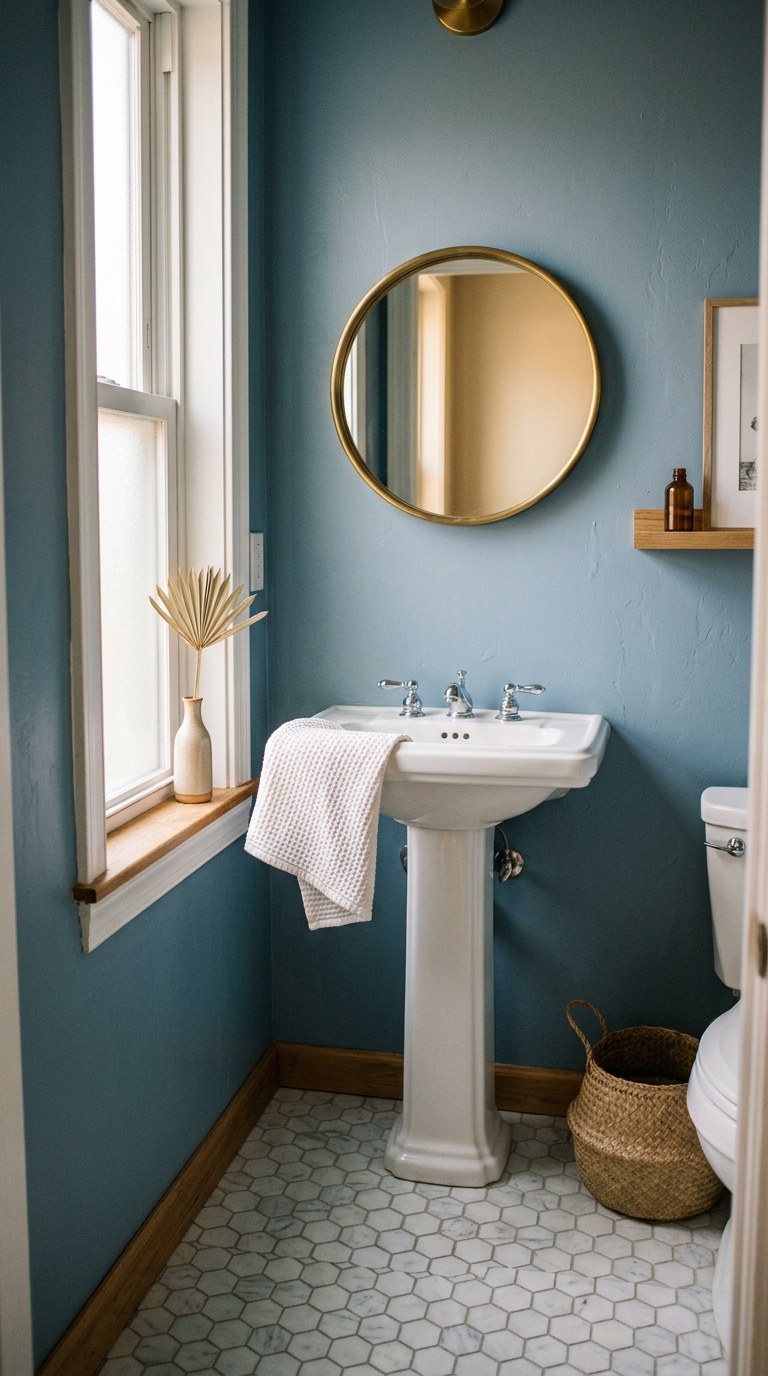
The practical trade-off is real storage loss, and I want to be honest with you about that. You will need to get creative — a small wicker basket on the floor for extra toilet paper, a magnetic strip inside a medicine cabinet door for bobby pins and tweezers, a slim over-door organizer for everyday products. Farrow & Ball’s Mizzle, a beautiful muted sage green, looked absolutely stunning behind my white pedestal sink and gave the whole room a quiet garden-bathroom energy I adored. Pair your pedestal sink with a round mirror above rather than a rectangular one to soften the hard lines and keep the visual language of the room feeling cohesive, light, and quietly refined rather than sharp and boxy.
Use Large-Format Floor Tiles
This is the tile trick that almost no one talks about and I wish someone had told me about it years earlier. Conventional wisdom says use small tiles in small bathrooms — tiny hexagons, classic subway, little mosaics — but that thinking is actually completely backward. Small tiles create more grout lines, and more grout lines visually chop up your floor into dozens of tiny sections, which makes the floor look fragmented and smaller than it actually is. Large format tiles — twenty-four by twenty-four inches or even larger — have fewer grout lines, which means the eye travels smoothly and continuously across the floor without interruption. The result is a floor that reads as one unified, expansive plane rather than a collection of small pieces.
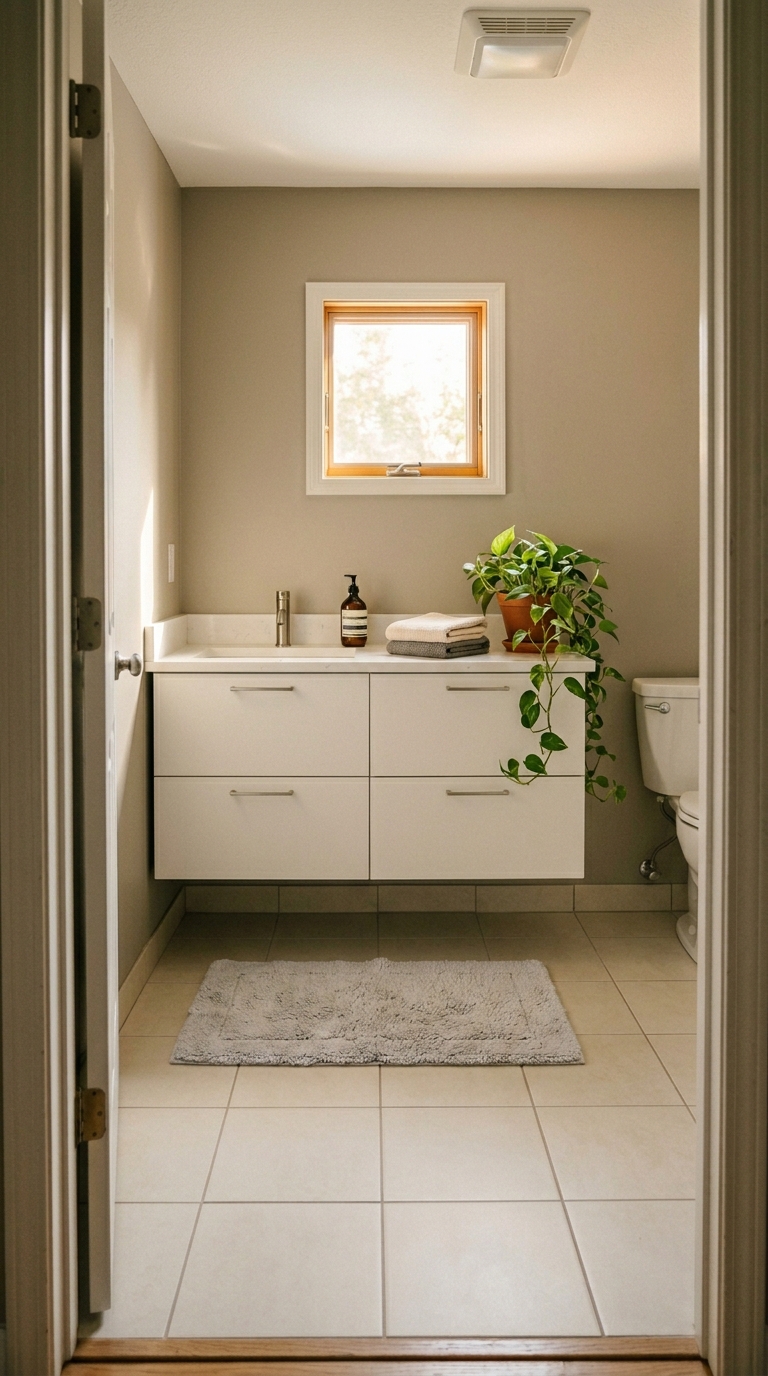
I made this switch in my main bathroom two years ago and the floor suddenly looked like it doubled in size overnight. The specific tile I chose was a matte warm cream porcelain in a large format, and I had it laid in a simple straight grid rather than a diagonal pattern to keep things calm and modern. Sherwin-Williams’s Accessible Beige on the walls tied the whole room together in a palette that felt sun-warmed and genuinely peaceful. For furniture, a low-profile floating vanity in white with brushed nickel handles kept the look grounded without adding visual weight near the floor. My personal tip is to use the same tile from the floor up into the shower — that continuity eliminates the visual break and makes everything feel seamlessly larger and more intentional.
Mount Your Mirror Closer to the Ceiling
Most people hang their bathroom mirror at eye level and call it done, and I completely understand that instinct because it feels logical. But if you want your small bathroom to feel taller, hanging your mirror higher — with its top edge close to the ceiling — is one of the most effective tricks I have ever used. A tall mirror that nearly grazes the ceiling pulls your eye all the way up and makes the ceiling feel dramatically higher than it actually is. It also bounces light from your light fixture across a wider area of the room, brightening corners that natural light never quite reaches. The taller the mirror, the more powerful this effect becomes, which is why I always suggest going taller rather than wider when you are choosing a new mirror.
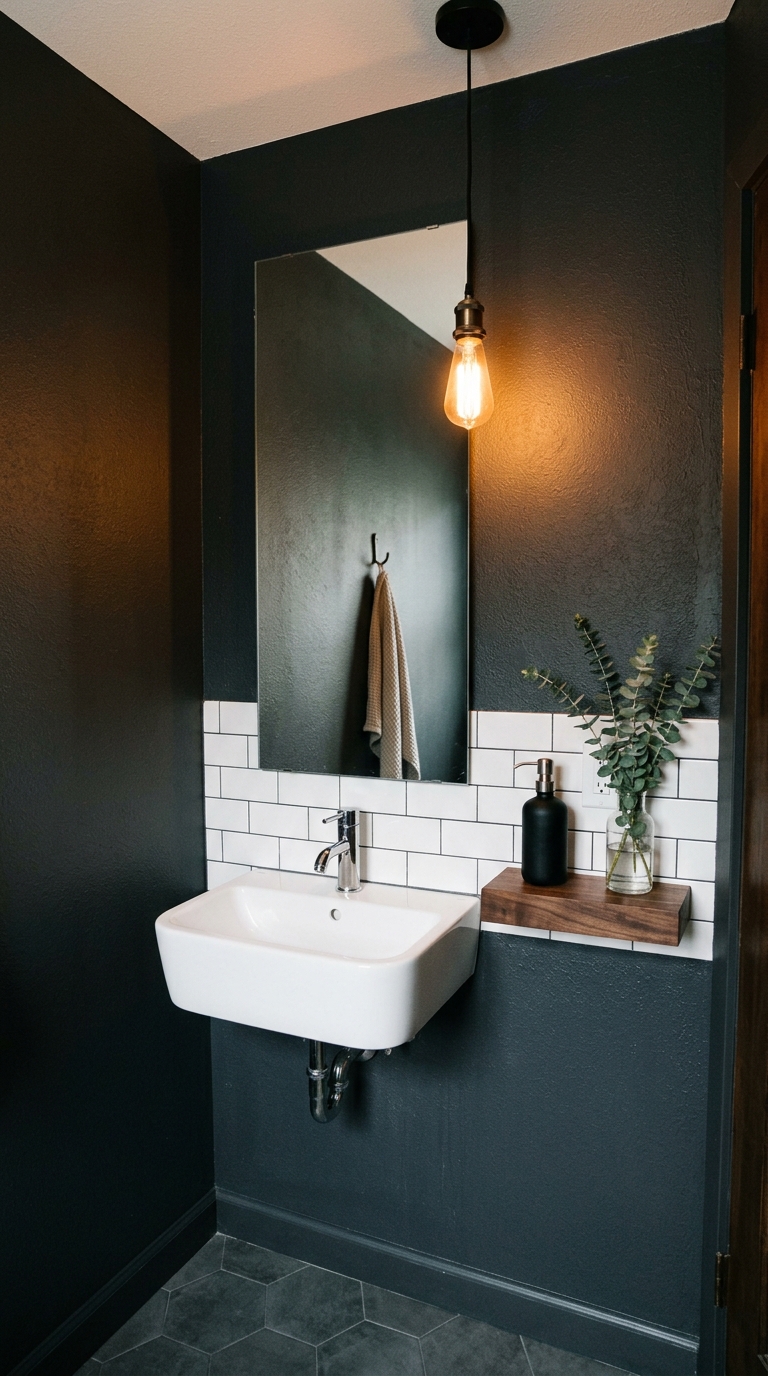
The frame matters enormously here. In a dark, dramatic bathroom — I painted mine in Sherwin-Williams’s Urbane Bronze for a moody editorial feel — a frameless or thin-profile mirror disappears into the wall and feels like an architectural feature rather than a decorative accessory hanging on top of the design. In a lighter, brighter bathroom, a slim brushed brass or unlacquered brass frame adds warmth without adding bulk. Pair your tall mirror with a single overhead pendant or a wall sconce mounted at mirror height on either side to maximize that beautiful light reflection. My honest experience is that this single change — going taller with the mirror — gave my small bathroom more visual drama and perceived space than any renovation I ever paid a contractor to complete.
Choose a Wet Room Shower Design
A curbless wet room shower is one of the most transformative decisions you can make in a small bathroom, and I say that from genuine personal experience rather than design theory. When you remove the shower tray, the glass enclosure, and the visual barrier of a shower threshold, the entire bathroom floor reads as one continuous uninterrupted space. That seamless continuity tricks the brain into perceiving the room as significantly larger than the tape measure would suggest. Wet rooms are also wildly practical — no mold-catching shower tray, no door tracks to scrub, no glass to squeegee daily. The whole bathroom becomes easier to clean, which means it stays looking beautiful with far less effort than a traditional enclosed shower requires.
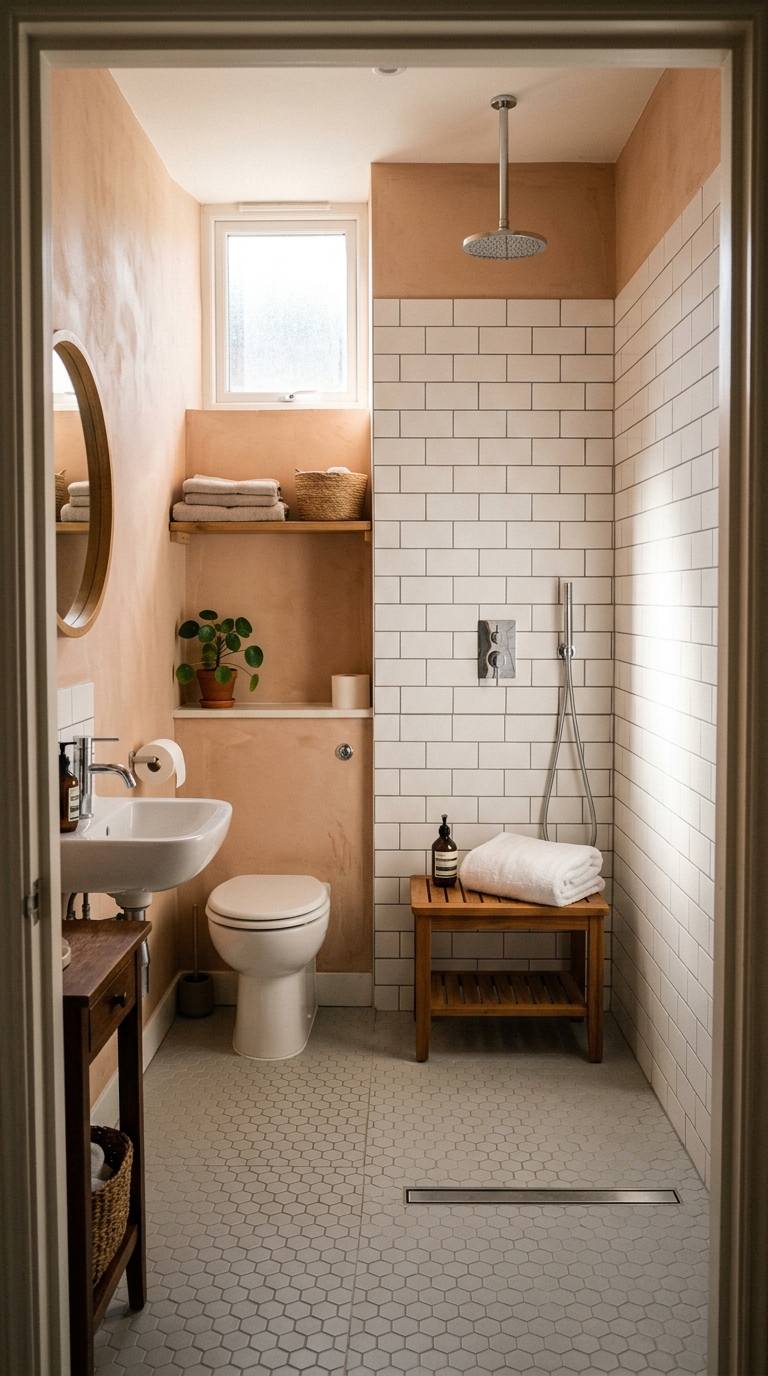
The key to making a wet room work beautifully in a small space is thoughtful tile selection and a great drain. I used the same tile inside the shower area and on the main bathroom floor to create that visual continuity I mentioned — no threshold, no color shift, just one flowing surface from wall to wall. Benjamin Moore’s Hale Navy on the walls paired with white matte subway tile inside the shower gave my wet room a nautical-meets-luxe hotel feeling that I absolutely loved waking up to every single morning. A teak shower bench adds warmth, a rain showerhead adds drama, and one well-placed niche in the shower wall replaces the need for any shelving unit that would otherwise eat into your precious square footage and make the room feel busier than it needs to.
Paint the Ceiling the Same Color as the Walls
This is the interior design move that absolutely stopped me in my tracks the first time I saw it done well, and I have been recommending it to every single friend with a small bathroom ever since. When you paint your ceiling the same color as your walls — every surface one seamless, continuous shade — you eliminate the hard visual line where the wall ends and the ceiling begins. That line is what makes a room feel boxed in and low. Remove it, and the room suddenly feels like it has no ceiling at all. The color wraps around you like a beautiful cocoon and the space feels cozy and intentional rather than cramped and claustrophobic. It is one of those rare design decisions that costs almost nothing but delivers an enormous visual return.
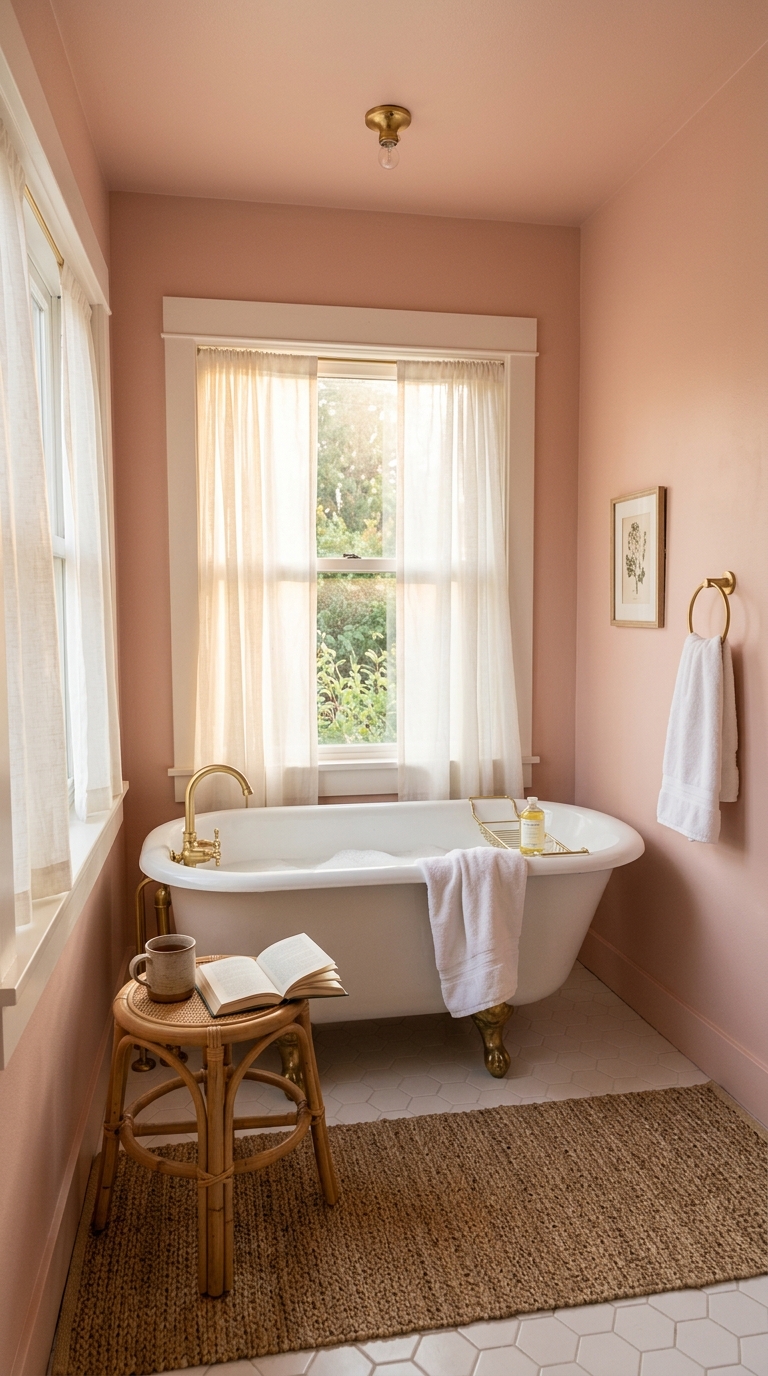
I used Farrow & Ball’s Setting Plaster — a gorgeous warm blush with the faintest terracotta undertone — on all four walls and the ceiling in my smallest bathroom, and guests genuinely stopped and commented on how romantic and spa-like it felt. Nobody guessed it was only forty square feet. The trick is choosing the right finish — I go with an eggshell on the walls and the same eggshell on the ceiling rather than switching to flat white, which would break the visual wrap immediately. Pair this monochromatic envelope with white fixtures, brass hardware, and natural textures like a rattan stool or a seagrass runner to ground the softness and prevent the room from feeling too sweet or candy-colored. The result is a bathroom that feels genuinely designed rather than accidentally painted.
Add a Slim Recessed Medicine Cabinet
I lived for years with a medicine cabinet that jutted four inches off my bathroom wall and I genuinely did not understand why my small bathroom always felt so cluttered and busy until I replaced it with a slim recessed version that sits flush with the wall surface. Recessed medicine cabinets are a revelation. They hide behind a mirrored door, they take up zero visual space on the wall, and they store an enormous amount of everyday products completely out of sight. Your counter stays clear, your walls stay clean, and your bathroom instantly feels more serene and spacious because there is simply less stuff competing for visual attention. It is one of those functional upgrades that also happens to look incredibly intentional and beautifully minimal.
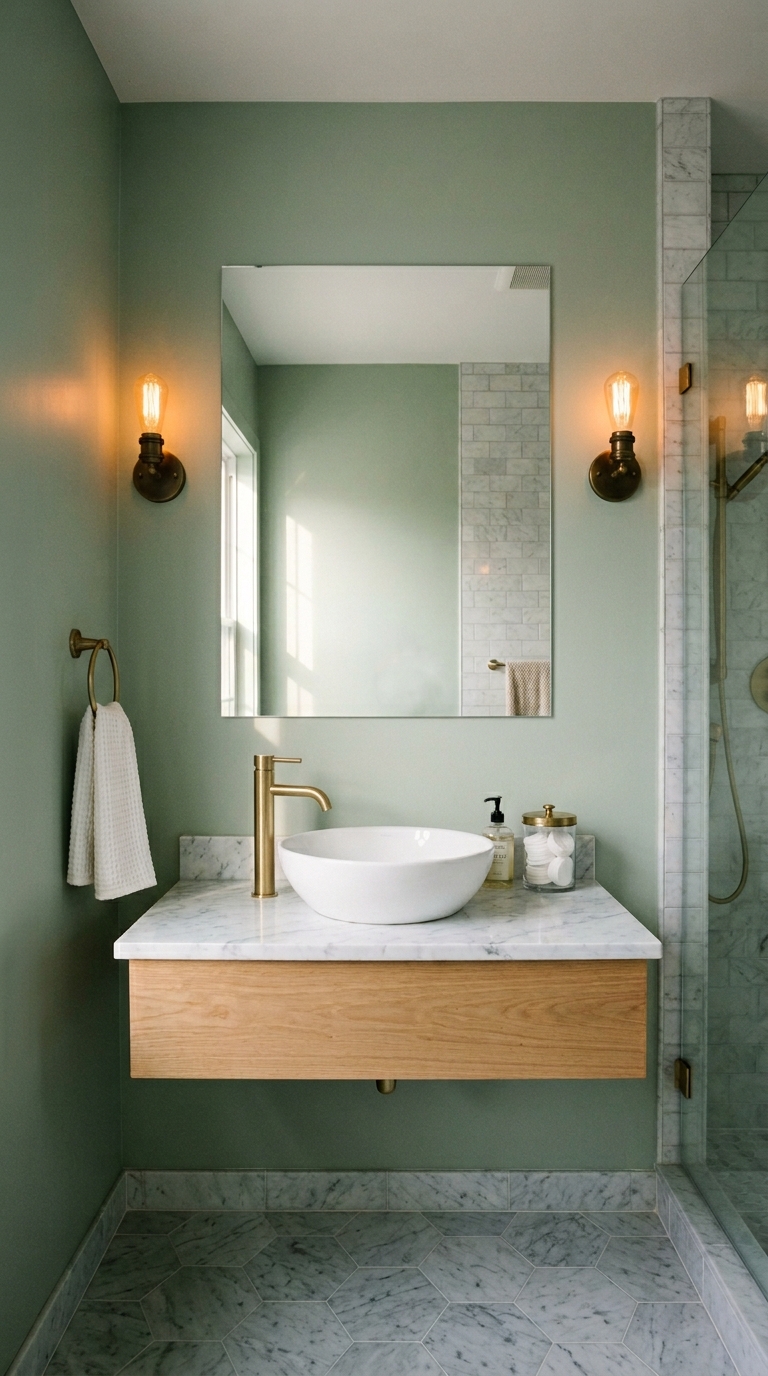
The installation involves cutting into the wall between studs, which sounds intimidating but is genuinely manageable as a weekend project if you are comfortable with basic tools — I did mine alone with a YouTube tutorial and a borrowed oscillating saw. Sherwin-Williams’s Evergreen Fog on the walls made my recessed medicine cabinet feel like it belonged architecturally to the room rather than sitting on top of it. I paired the cabinet with simple LED vanity lights mounted vertically on either side rather than a horizontal bar across the top, which is more flattering for your face and more elegant visually. Inside the cabinet I use small clear acrylic organizers to keep everything sorted so opening it never produces an avalanche of forgotten face creams and hair ties.
Embrace a Dark Accent Wall
Every design rule book will tell you to keep a small bathroom light and bright, and most of the time that advice is solid. But there is a genuinely exciting counter-move that works brilliantly when you want drama and intimacy rather than airy brightness — and that is committing fully to one dark accent wall. A single deep, rich wall behind your toilet or behind a freestanding mirror creates a focal point that draws the eye immediately and purposefully, making the room feel intentional and curated rather than just small and white. The contrast between your dark accent wall and the lighter surrounding walls creates a sense of depth that flat all-white bathrooms simply cannot achieve, no matter how many white subway tiles or chrome fixtures you layer in.
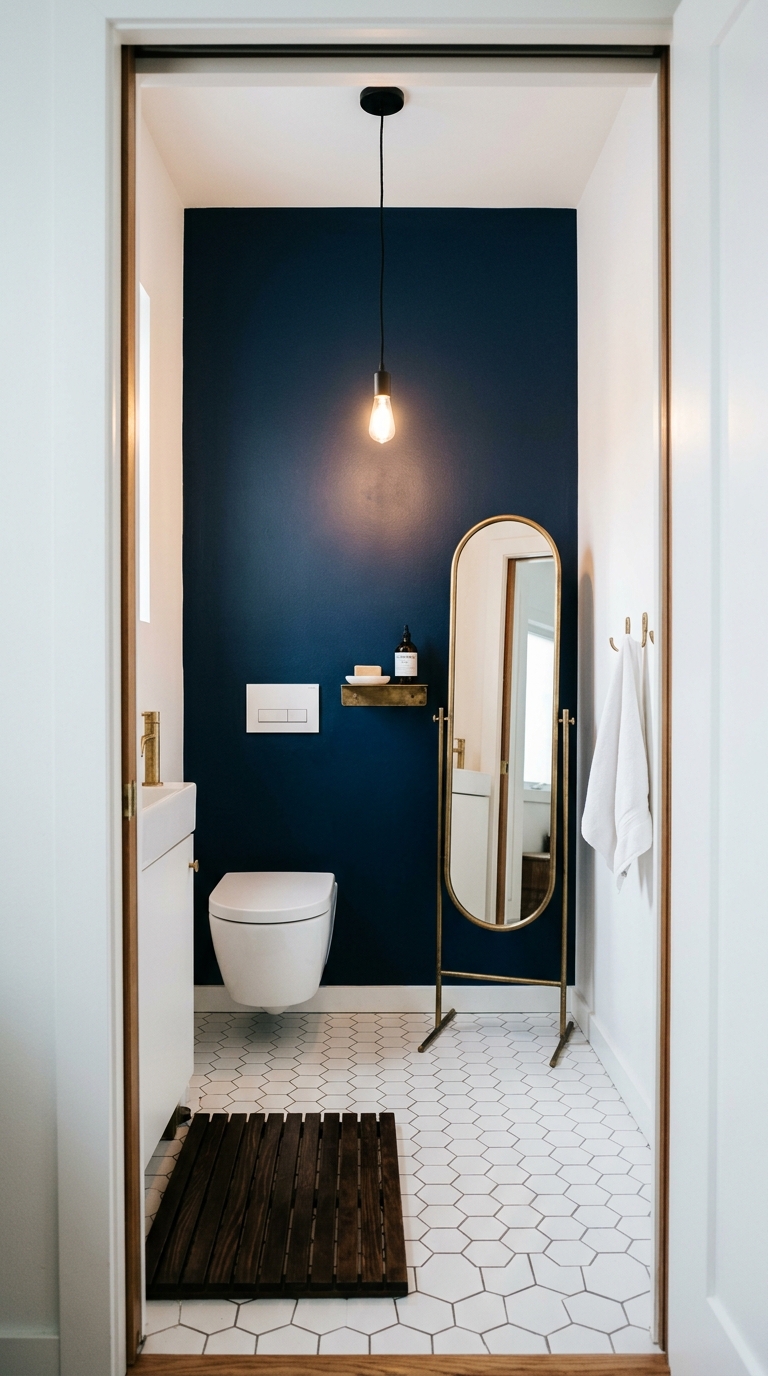
I painted the wall behind my toilet in Benjamin Moore’s Hale Navy and styled a slim brass shelf against it with just a few carefully chosen objects — a ceramic soap dish, a single dropper bottle, one trailing strand of a string of pearls plant — and the result looked like something straight out of a boutique hotel that charges four hundred dollars a night. The dark wall also made every single white and brass element in the room pop with a clarity and crispness that a lighter wall could never provide. My advice is to keep the three remaining walls crisp bright white and let the dark wall do all the heavy lifting visually. This creates maximum drama with minimum commitment — you are painting one wall, not remodeling an entire room, and the transformation is remarkable.
Swap Out the Toilet for a Wall-Hung Model
This is the upgrade I put off for two years because it sounded expensive and complicated, and when I finally did it I genuinely could not believe I had waited so long. A wall-hung toilet — where the tank lives invisibly inside the wall and only the bowl and a slim flush plate are visible — frees up an astonishing amount of visual and physical floor space compared to a standard floor-mounted toilet. The floor beneath the bowl is completely open, which makes cleaning infinitely easier and makes the bathroom feel significantly more spacious because your eye can travel all the way to the baseboard without interruption. It is one of those upgrades that looks expensive and architectural but delivers genuine daily practical benefits beyond just the aesthetics.
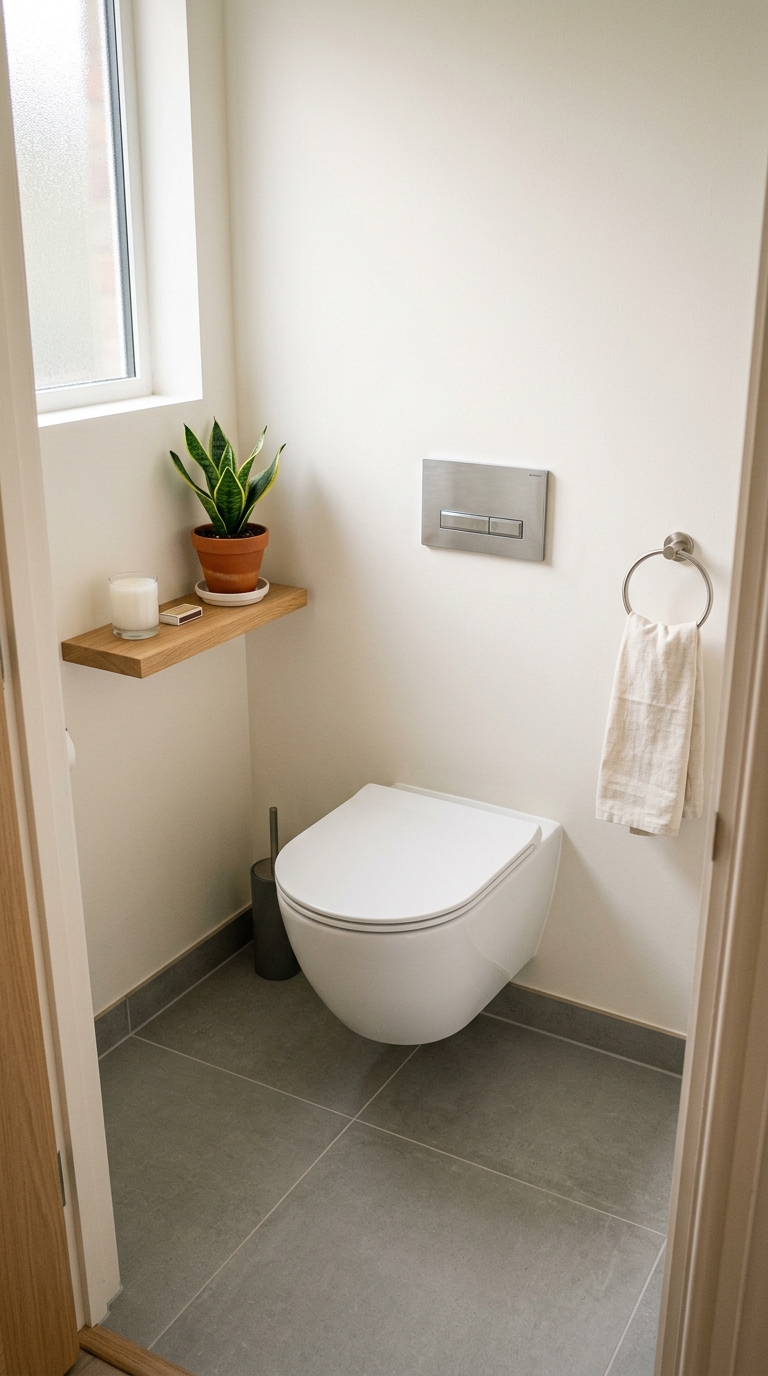
The installation is more involved than most DIY projects — you do need a plumber to install the in-wall tank carrier — but the long-term payoff is absolutely worth the upfront investment. I used Sherwin-Williams’s Greek Villa on my walls, a warm creamy white with the faintest yellow undertone that makes the whole bathroom feel sunny and lived-in rather than sterile and cold. The chrome flush plate blended into the wall so seamlessly that guests always do a double-take trying to figure out where the tank is hiding. Pair your wall-hung toilet with a small floating shelf at counter height nearby to replace the top-of-tank surface you lose — styled simply with one plant and one candle, it looks far more intentional than any cluttered toilet tank top ever managed to look.
Layer Lighting at Multiple Heights
Overhead lighting alone in a small bathroom is one of the most common and most fixable mistakes I see in home after home, including my own for the first three years I owned it. A single overhead fixture floods the room with flat, shadowless light that flattens every surface and makes even a beautifully decorated bathroom look dull and utilitarian. Layering your lighting — a backlit mirror at face height, a wall sconce at shoulder height, and a small accent lamp or under-shelf lighting in a corner — creates dimension, warmth, and the kind of atmospheric glow that makes a tiny bathroom feel like a genuine retreat rather than a functional necessity you endure twice a day before getting on with your real life.
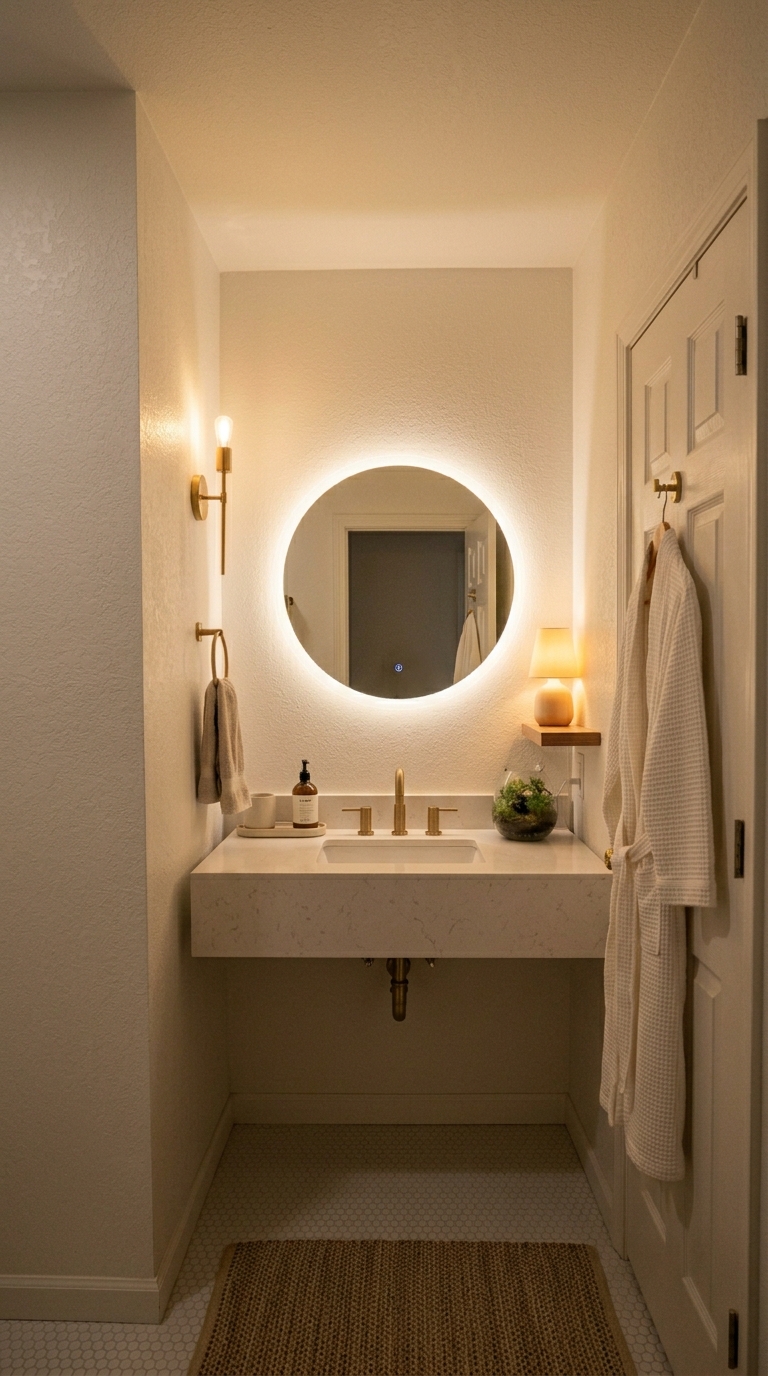
The backlit mirror is the single most transformative piece in this layered approach, and I say that as someone who resisted spending real money on one for far too long. It provides even, flattering light for your morning routine while also functioning as a beautiful glowing design element even when no one is actively using it. I chose a round backlit mirror with a warm three-thousand Kelvin color temperature — anything cooler than that feels like a doctor’s office — and mounted it above a simple white quartz vanity. Farrow & Ball’s Strong White on the walls reflected the warm light beautifully without competing with it. My personal tip is to put each light source on its own switch or dimmer so you can tune the mood from bright and energizing in the morning to soft and candle-like for an evening bath.
Hang a Curtain Instead of a Shower Door
Glass shower doors look sleek in a showroom and feel like constant work the moment you actually live with them. Soap scum, water spots, and the ever-present haze of hard water film turn a beautiful glass door into a weekly cleaning project that never quite looks clean even when it is. Swapping a shower door for a beautiful fabric curtain is one of those decisions that feels almost rebellious for how simple and effective it turns out to be. A curtain can be pushed fully to one side and tied back when not in use, opening up the full width of the shower alcove to visual view and making even a tight bathroom feel more open and airy. It also introduces soft texture and pattern — two things that glass simply cannot offer.
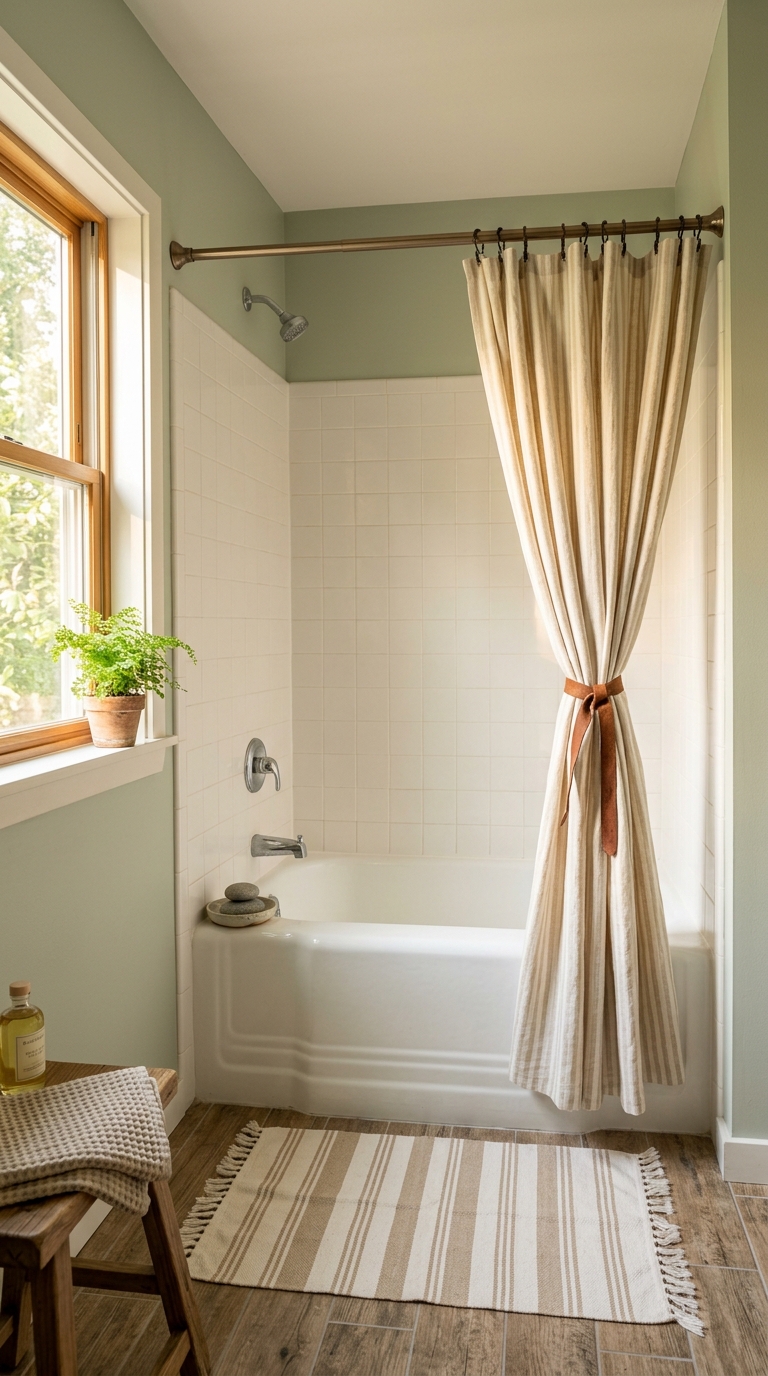
The curtain fabric matters more than most people realize, and I learned this lesson with a cheap polyester panel that sagged, mildewed at the hem, and looked nothing like the linen dream I had in my head. Go with a genuine heavyweight cotton or linen blend — something with enough weight to hang cleanly without billowing dramatically every time someone walks past. I found a beautiful natural stripe in undyed cotton that I use with a simple brushed bronze ring-clip rod in my main bathroom, and paired it with Sherwin-Williams’s Rainwashed on the walls — a soft aqua-meets-sage that makes the whole room feel like a quiet morning by the sea. Change the curtain seasonally if you want an effortless refresh without touching a single tile.
Add a Vintage or Antique Mirror
There is a particular kind of magic that a vintage or antique mirror brings to a small bathroom that no perfectly symmetrical modern mirror can replicate, and I think it comes down to character and history. A beautiful ornate gold-leaf mirror with a slightly worn frame, or a foxed mercury glass mirror with a gentle patina, tells a story that a frameless rectangle from a big box store simply does not. That story — that sense of something having a life before it arrived in your bathroom — is what makes a small space feel curated and collected rather than decorated by someone who bought everything in the same store on the same afternoon. It creates the feeling that your bathroom evolved intentionally over time, even if you found the mirror at an estate sale last weekend for forty-two dollars.
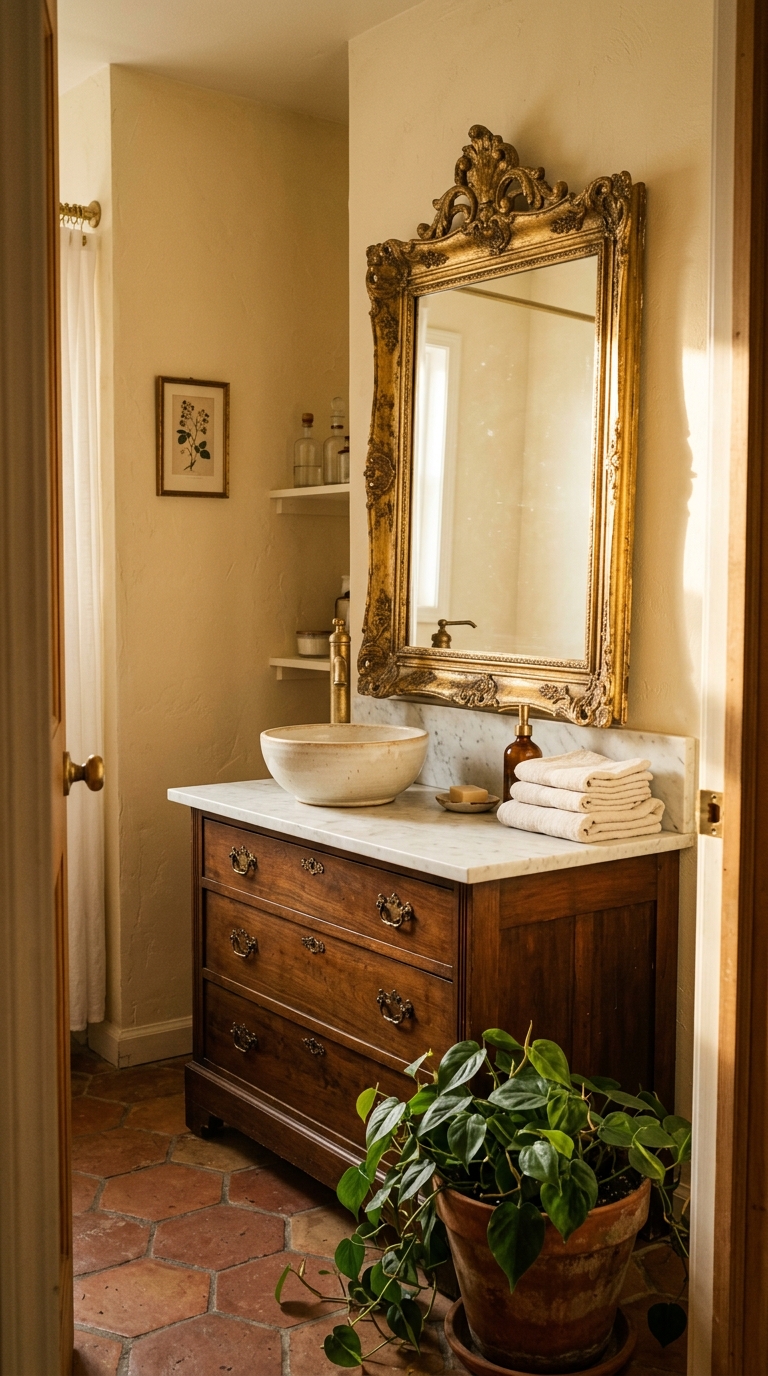
I picked up an enormous ornate mirror at a local flea market and it instantly became the visual anchor of my guest bathroom in a way that nothing I purchased new ever had. The scale felt slightly too large for the wall — and that is exactly why it worked so well. An oversized vintage mirror reflects more light, covers more wall, and makes a bold statement that pulls the eye immediately and holds it. I painted the surrounding walls in Benjamin Moore’s Pale Oak, a warm greige that complemented the gold tones in the mirror frame beautifully without fighting them. Underneath the mirror I placed a slim antique dresser repurposed as a vanity, added a vessel sink and a tall brass faucet, and suddenly my smallest bathroom had become the most talked-about room in my home.
Here is the truth that I want to leave you with: a small bathroom is not a design problem waiting to be solved. It is a design opportunity waiting for someone to look at it differently. Every single idea I shared with you today costs less than a full renovation, and most of them cost less than a hundred dollars. You do not need more square footage to have a bathroom that feels beautiful, intentional, and genuinely restorative. You need the right ideas layered with genuine care and a willingness to do one thing at a time rather than trying to fix everything simultaneously and overwhelming yourself into doing nothing at all. Pick just one idea from this list — the one that made you stop scrolling and think, yes, that is exactly what my bathroom needs — and start there today.
A beautiful home is not built in a weekend. It is built in a hundred small decisions made over time by someone who genuinely cares about how the space feels to live in every single day. Your bathroom is the first room you enter every morning and the last room you visit every evening, which means it shapes how you begin and end every day of your actual life. That matters more than most people give it credit for. I want your bathroom to feel like a sanctuary — not a luxury you have to earn through a full gut renovation, but something you can create right now with thoughtfulness, a little creativity, and the genuine belief that your small bathroom is absolutely worth the effort and attention you are finally ready to give it.