12 Small Kitchen Organization Ideas That Actually Changed How I Cook Every Day
You open a cabinet and a cutting board slides out and hits the counter. You reach for the olive oil and knock over three things getting to it. You have seventeen spatulas but somehow never the right one. If that sounds like your kitchen on a Tuesday morning, I have been exactly where you are, standing in my own tiny galley kitchen in complete frustration, wondering why something as simple as making breakfast felt like a scavenger hunt.
I spent two years testing, rearranging, failing, and finally figuring out what actually works in a small kitchen. This article gives you twelve real, practical organization ideas I use every single day in my own home, with honest advice on what made the biggest difference and what I would tell a friend over coffee.
Open Shelving That Works Hard and Looks Beautiful
The moment I pulled my upper cabinet doors off and replaced them with open walnut shelves, my whole kitchen exhaled. Everything I needed lived right in front of me, visually accessible and honestly beautiful. Open shelves force you to keep only what you love and actually use, and that edit alone transformed how my mornings felt.
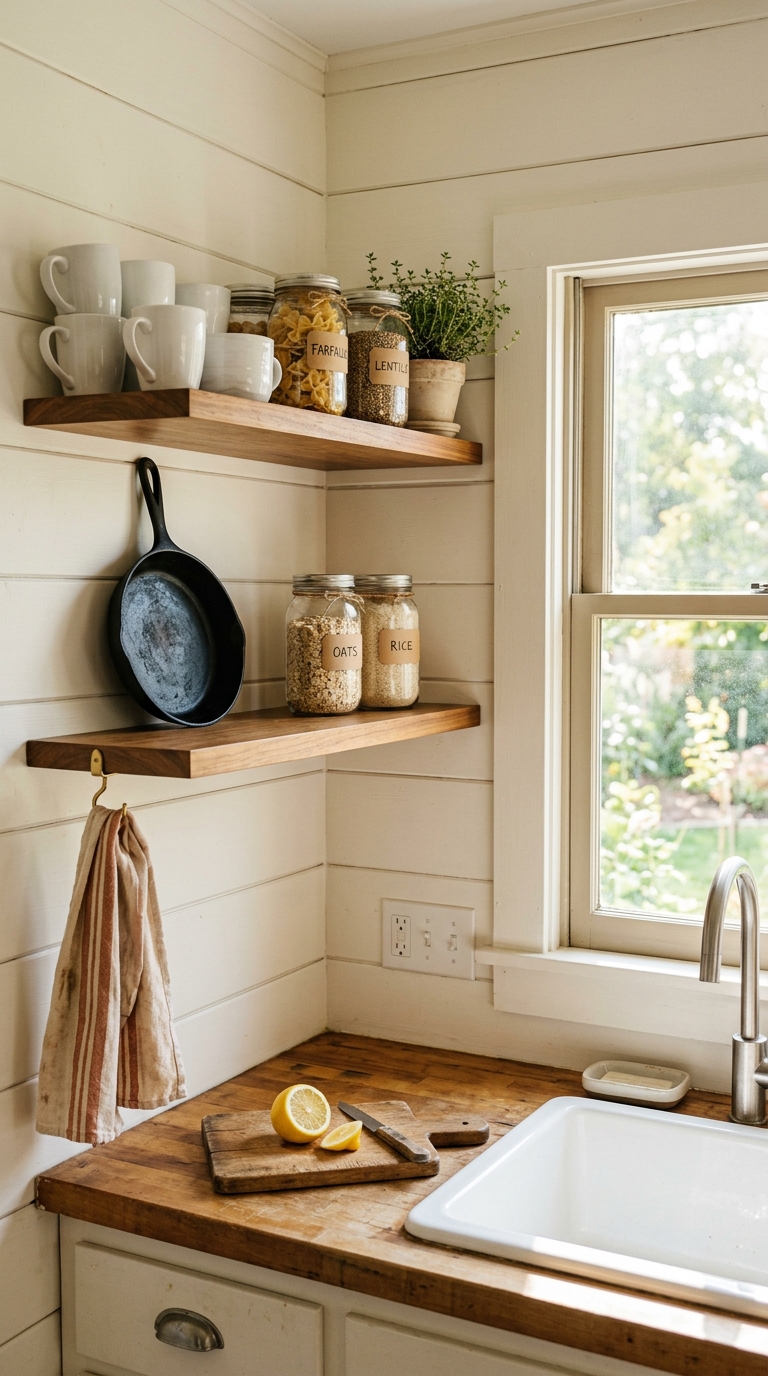
The practical part nobody tells you is that open shelving only works if you group things with intention. I keep mugs together, oils and vinegars together, and everyday glasses at eye level so nobody has to dig. If you want that warm editorial look rather than a cluttered mess, limit each shelf to one category and leave breathing room at the ends. That deliberate restraint is what makes it look styled instead of stored.
A Magnetic Knife Strip Over the Backsplash
Clearing your knife block off the counter is one of the single most impactful moves you can make in a small kitchen. I mounted a magnetic strip on the wall directly above my stove backsplash, and suddenly I gained an entire section of counter space that I had been unknowingly surrendering for years to a bulky wooden block I never loved.
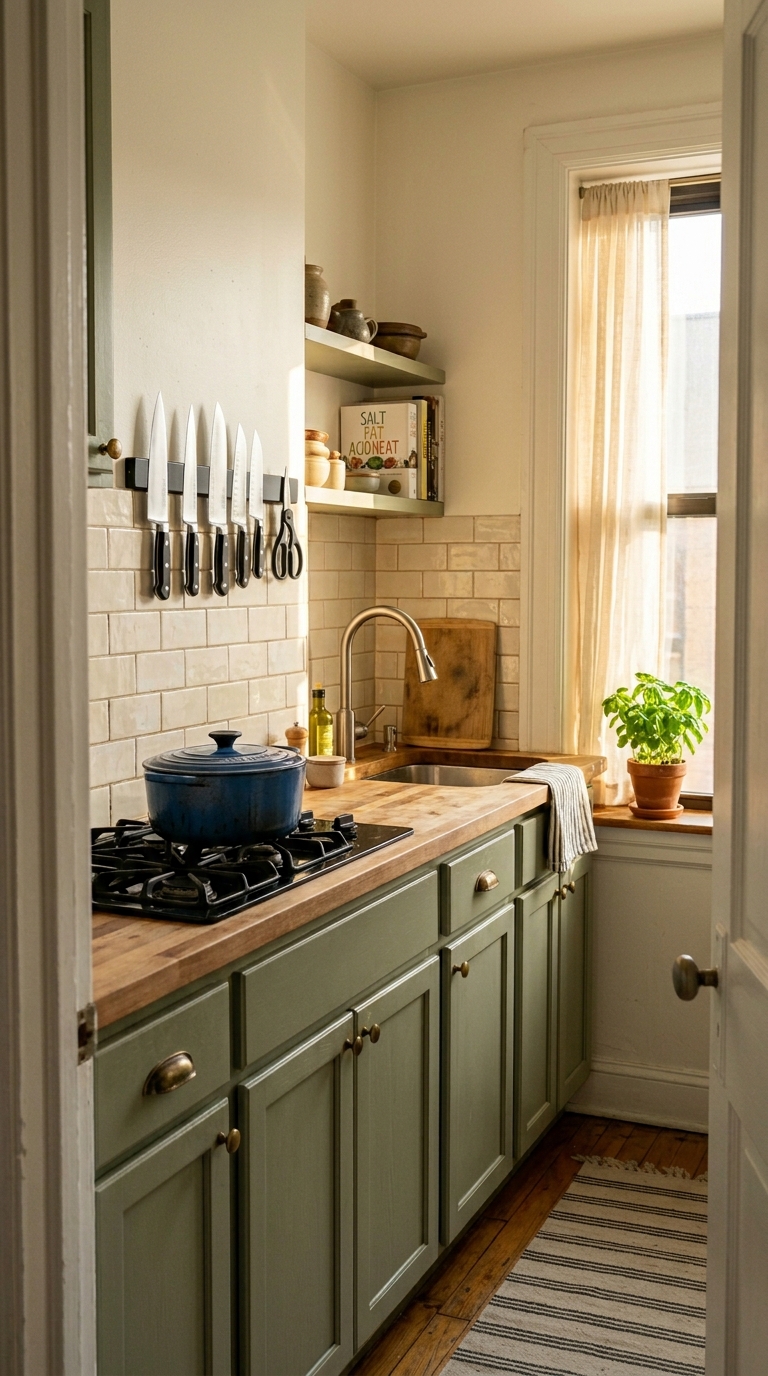
The key is choosing a strip that holds your knives at a comfortable reach height, roughly shoulder level when you stand at the stove. I use a simple solid walnut magnetic strip, and it genuinely looks like a design choice rather than a storage fix. Your knives stay sharper longer too because they never rattle around in a drawer — which was an unexpected bonus I noticed within the first month.
Deep Drawer Dividers for Pots and Lids
The chaos of stacked pots and tumbling lids crashing out every time you open a cabinet is something I dealt with for way too long before I discovered deep drawer organization. Once I installed adjustable wood dividers inside my base cabinet drawer, every single pot found a permanent vertical home and I stopped dreading dinner prep entirely.
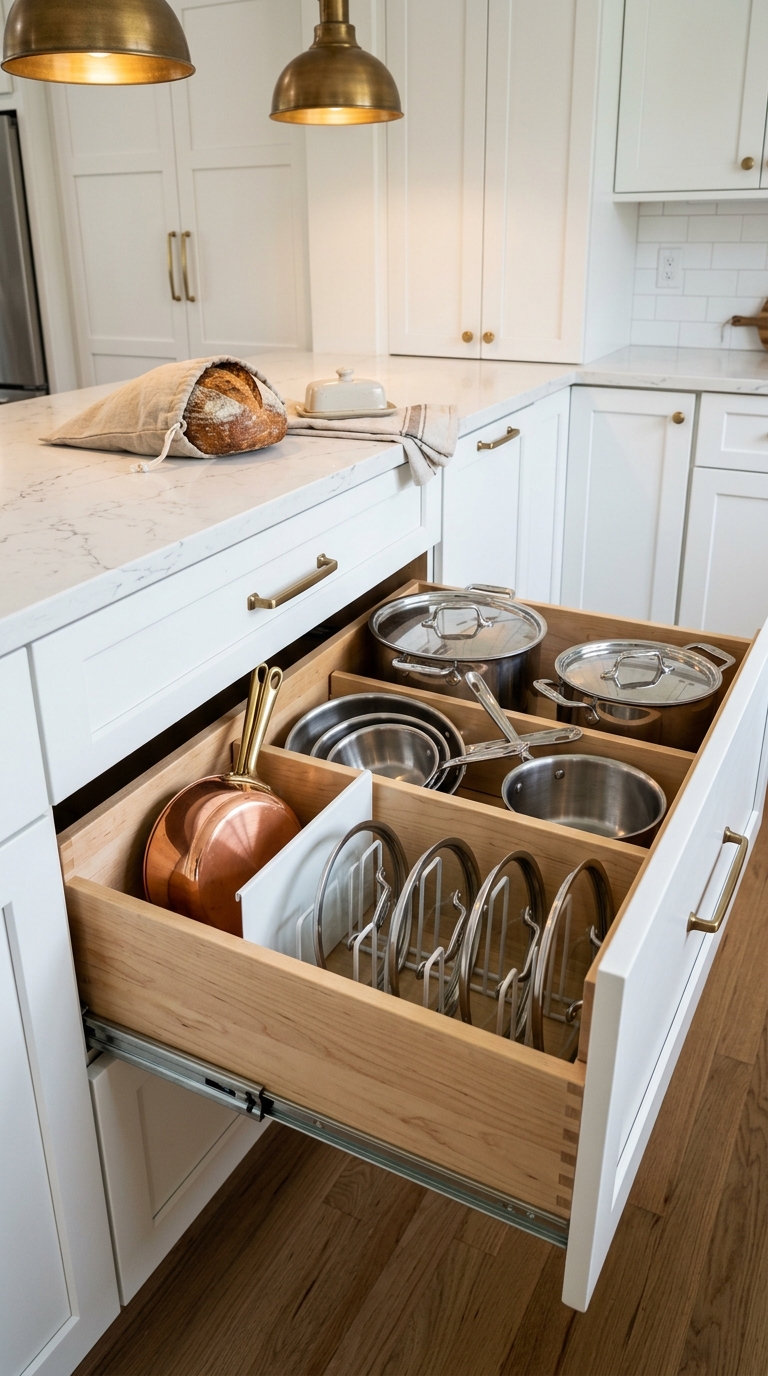
The trick is storing pots and pans upright like books on a shelf rather than stacking them flat. This lets you grab exactly what you need without dismantling a tower. I also added a dedicated vertical lid slot at the front of the drawer so lids never disappear into the back corner again. This one change alone saved me probably ten minutes of frustration every single evening, and that adds up fast.
Tension Rods Inside Cabinets for Vertical Storage
Nobody talks about tension rods enough in small kitchen conversations, and honestly that frustrates me because this was one of the cheapest and most transformative tricks I ever tried. I spent four dollars at the hardware store, installed three vertical rods inside one lower cabinet, and suddenly had a perfectly divided filing system for every flat thing in my kitchen.
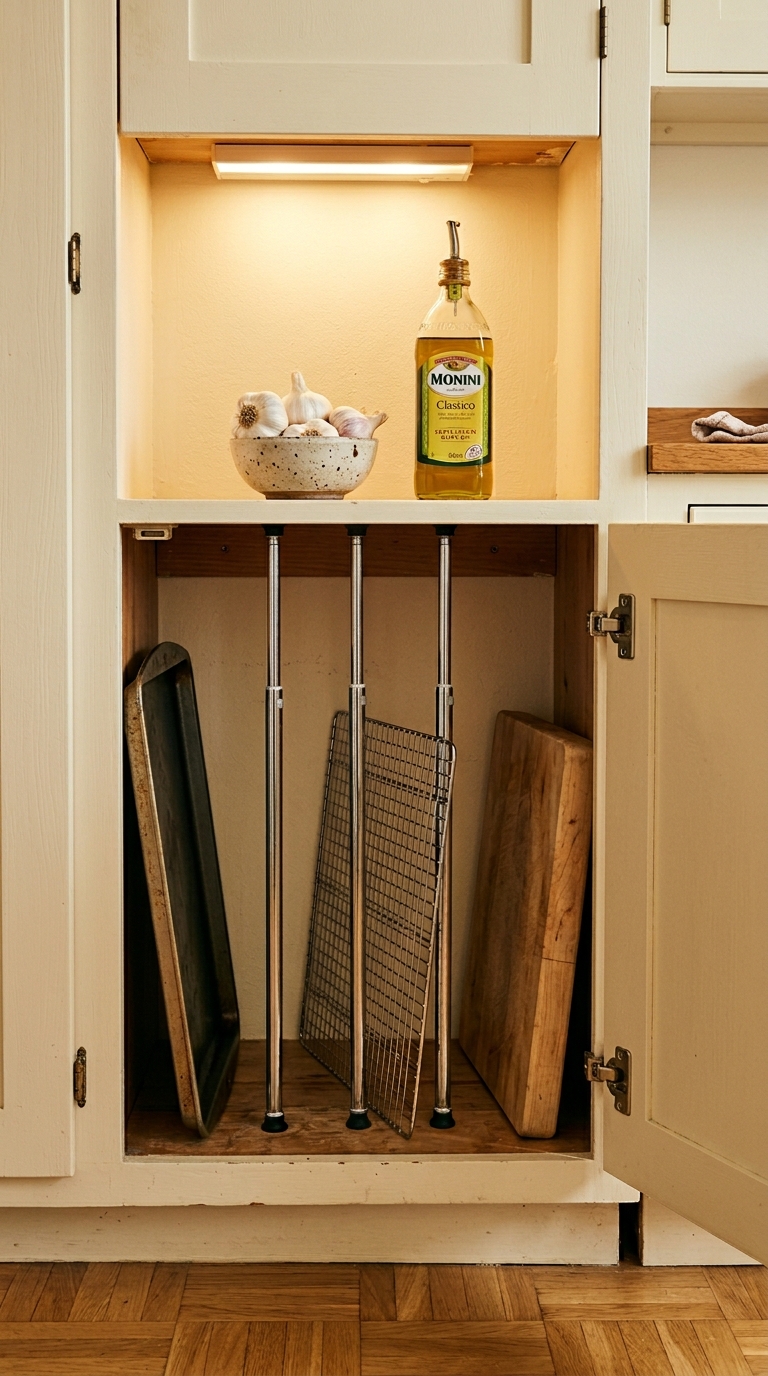
Baking sheets, muffin tins, cutting boards, and cooling racks all stand upright between the rods like perfectly organized files. Nothing slides, nothing stacks, nothing requires you to unpack the entire cabinet to reach the one thing buried at the back. I have shown this trick to probably a dozen friends and every single one of them texted me a week later saying it changed their kitchen life.
A Rolling Cart That Earns Its Space Every Day
When my kitchen has no island, the rolling cart becomes my island. I resisted buying one for years because I thought it would make my small kitchen feel more cramped, but the opposite turned out to be completely true. A well-chosen cart with a butcher block top actually added real prep surface and meaningful storage without permanently stealing floor space.
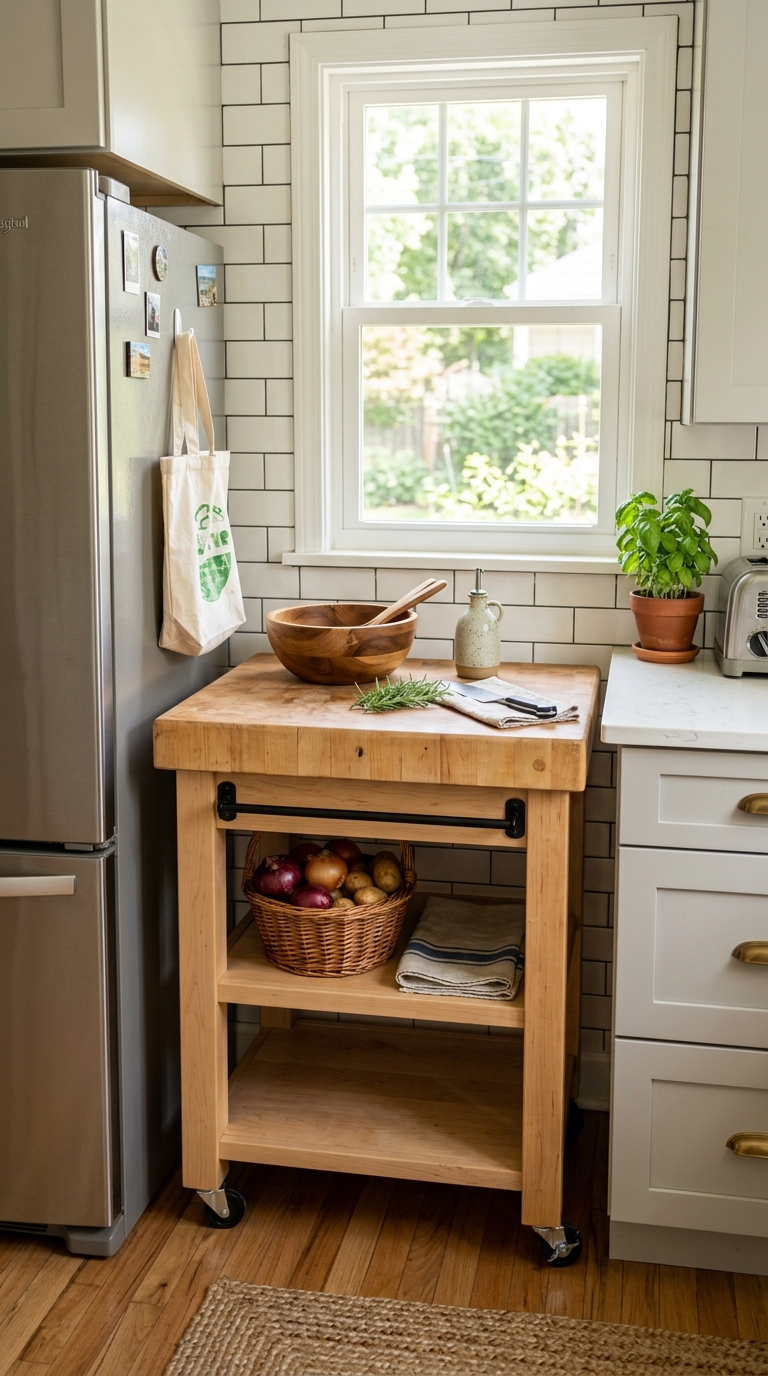
The rolling part is genuinely useful, not just a marketing feature. I pull mine out when I cook and tuck it beside the fridge when I do not need it. The lower shelf holds my potato and onion basket and a spare dish towel, and the top works as a prep station, a serving bar when friends come over, and occasionally a coffee station on slow weekend mornings. It genuinely earns its spot every single day.
Clear Canisters and Uniform Containers on the Counter
Switching from mismatched bags and boxes to uniform glass canisters was a turning point in my small kitchen that I genuinely did not expect. The counter stopped looking chaotic overnight. When every container matches in style and height, the eye reads the space as intentional and calm rather than cluttered and overwhelming, even if the actual square footage has not changed at all.
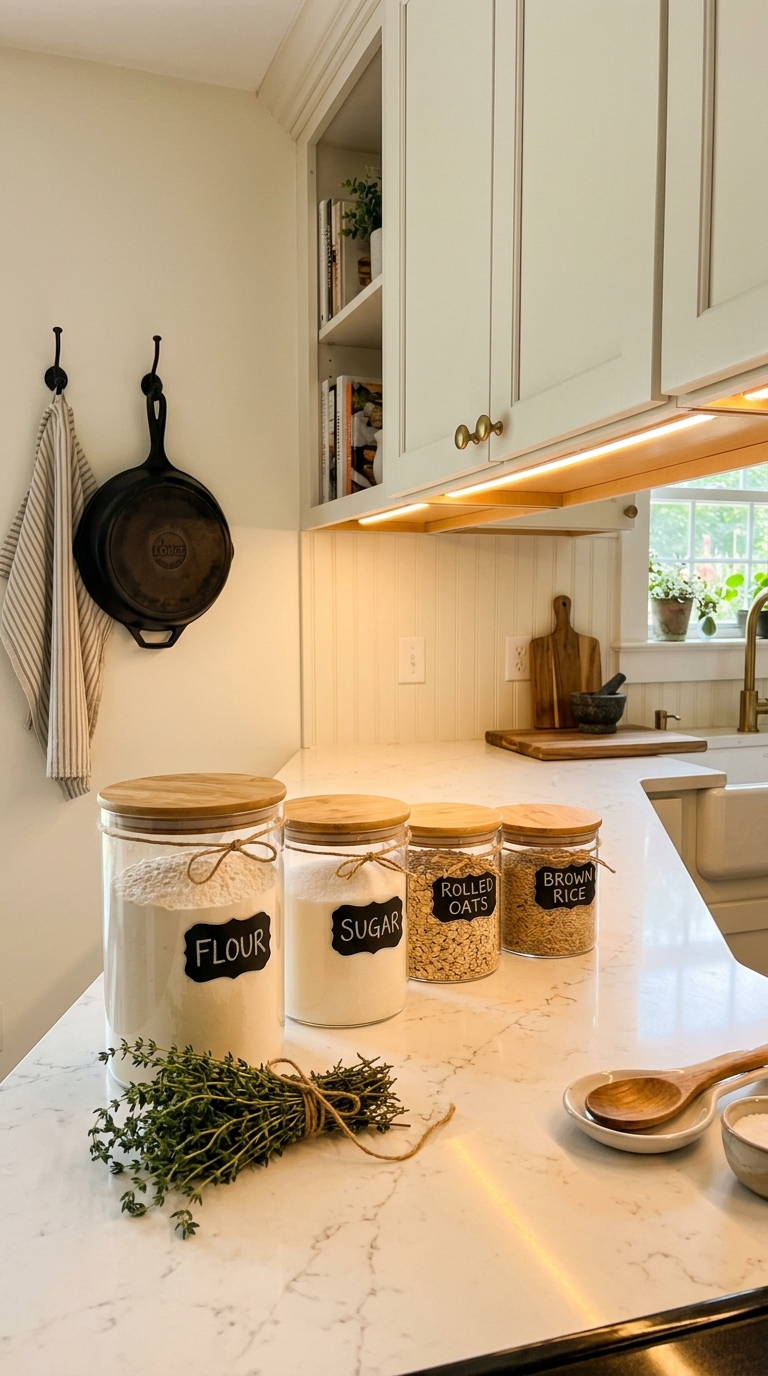
I went with clear glass canisters with bamboo lids because I could see exactly how much of everything I had left without opening anything. No more discovering I was out of oats at seven in the morning. I labeled each one with small handwritten kraft tags, which added that little personal touch that makes even organization feel warm. Uniform containers are genuinely one of the highest-return small investments you can make in a kitchen.
An Over-the-Door Organizer Inside the Pantry
The back of a pantry door is prime real estate that most people in small kitchens completely ignore, and I was absolutely one of them until I installed a simple over-the-door organizer and gained what felt like an entirely new shelf. Every random packet, tiny bottle, and awkward oddly shaped item found a home without touching a single existing shelf.
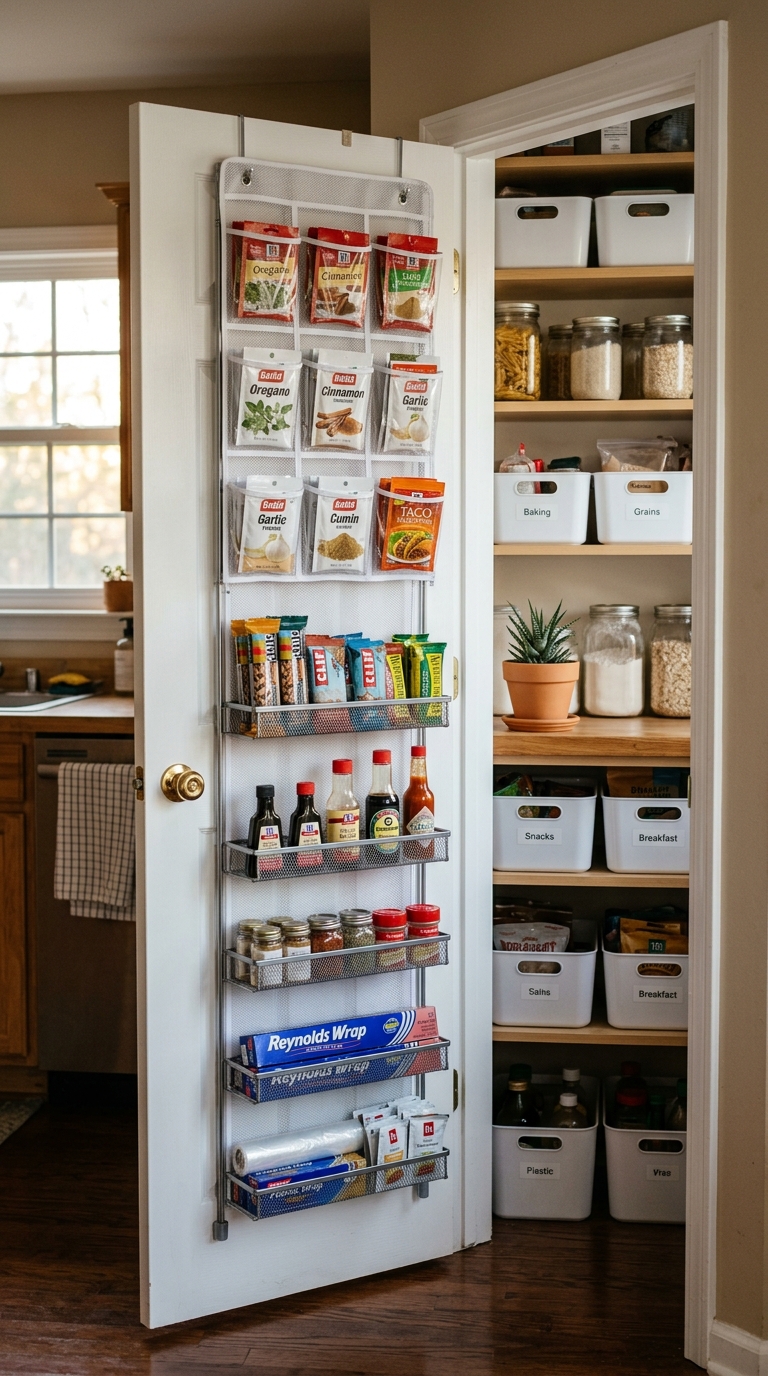
I keep foil, plastic wrap, spice packets, soy sauce packets, and all those small bottles that get lost at the back of a cabinet inside the door pockets instead. Everything is visible at a glance, reachable in two seconds, and not taking up shelf space that my larger items actually need. It cost me under twenty dollars and changed how I feel about opening my pantry door every single morning.
A Pegboard Wall Beside the Stove
A pegboard beside my stove was the single most personalized organization decision I made in my kitchen, and I say that genuinely. It turned a blank wall into a fully functional, completely visible storage system for my most-used tools and gave the kitchen real character at the same time. The brick wall in my old apartment made it feel even more like a working cook’s kitchen I was proud of.
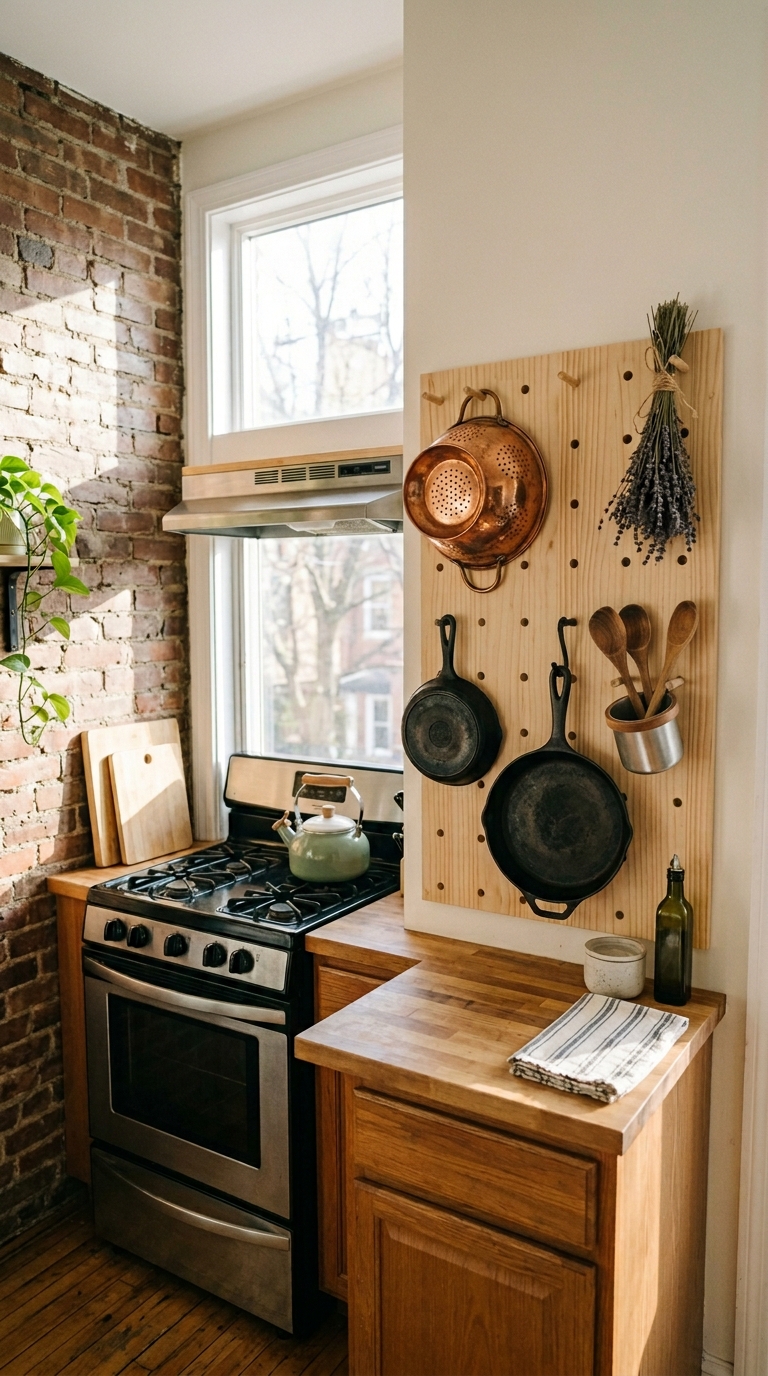
The beauty of pegboard is that nothing is permanent. You move the hooks whenever your needs change, and the whole system evolves with you. I started with pans and gradually added a hook for my colander, a small cup for wooden spoons, and a spot for dried herbs just because it looked beautiful. If you have even eighteen inches of blank wall anywhere in your kitchen, I would hang a pegboard there today without hesitation.
Drawer Organizers for Utensils and Junk Drawers
I used to have what I called a functioning junk drawer, which is really just a way of saying I had given up on that drawer entirely. The day I spent fifteen minutes installing bamboo dividers and sorting everything into categories was the day I stopped losing my wine key, my vegetable peeler, and my good scissors on a rotating mysterious schedule.
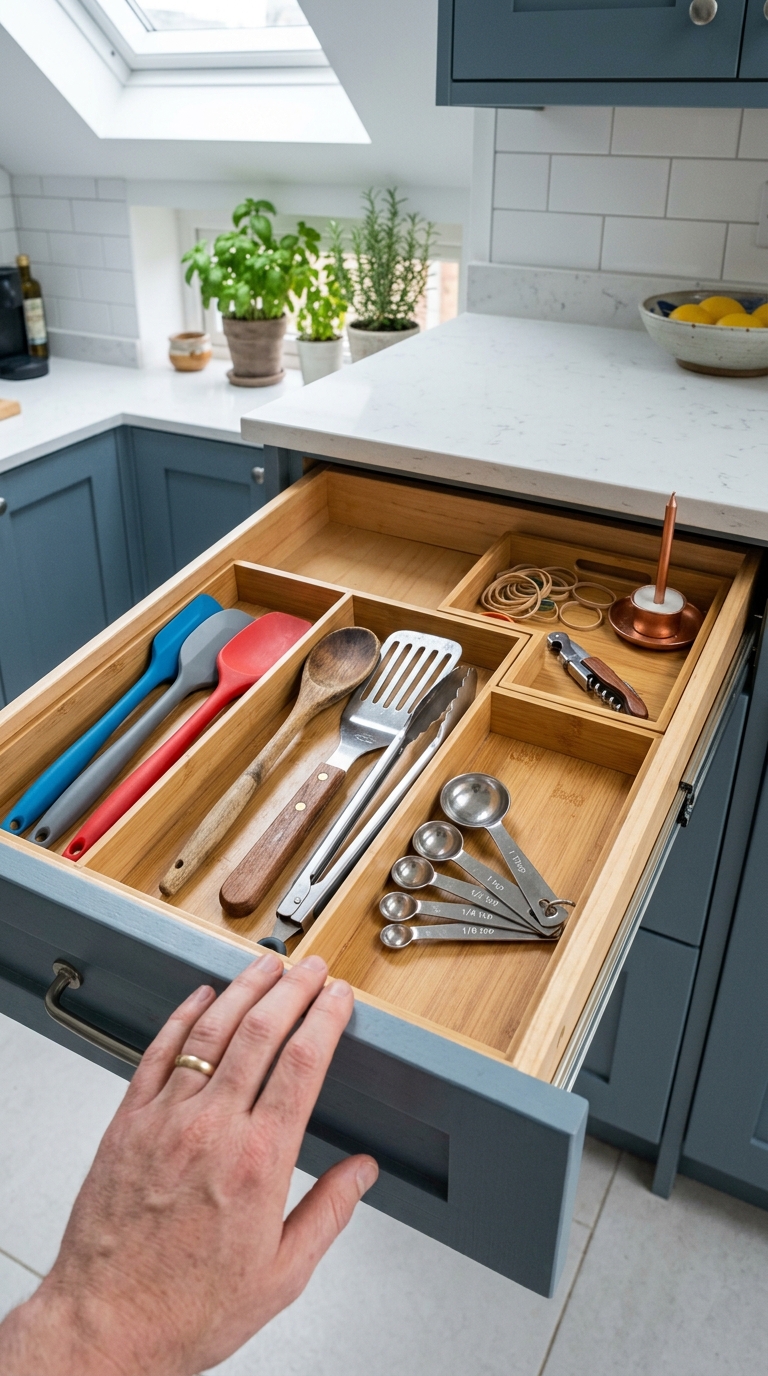
The secret with utensil drawers is being ruthlessly honest about what you actually reach for every week and removing anything that does not meet that standard. I keep one drawer for everyday cooking tools and one dedicated small tray for the necessary miscellaneous items — wine key, rubber bands, a spare birthday candle. Everything has a zone, nothing overlaps, and finding what I need takes zero mental energy now. That small shift adds up to real calm over time.
Under-Shelf Baskets to Double Cabinet Space
The moment I discovered under-shelf hanging baskets, I genuinely felt like someone had given me an extra cabinet. These simple wire baskets clip onto any existing shelf and instantly create a second storage tier below it, turning one shelf into the functional equivalent of two without drilling a single hole or spending more than fifteen dollars per basket.
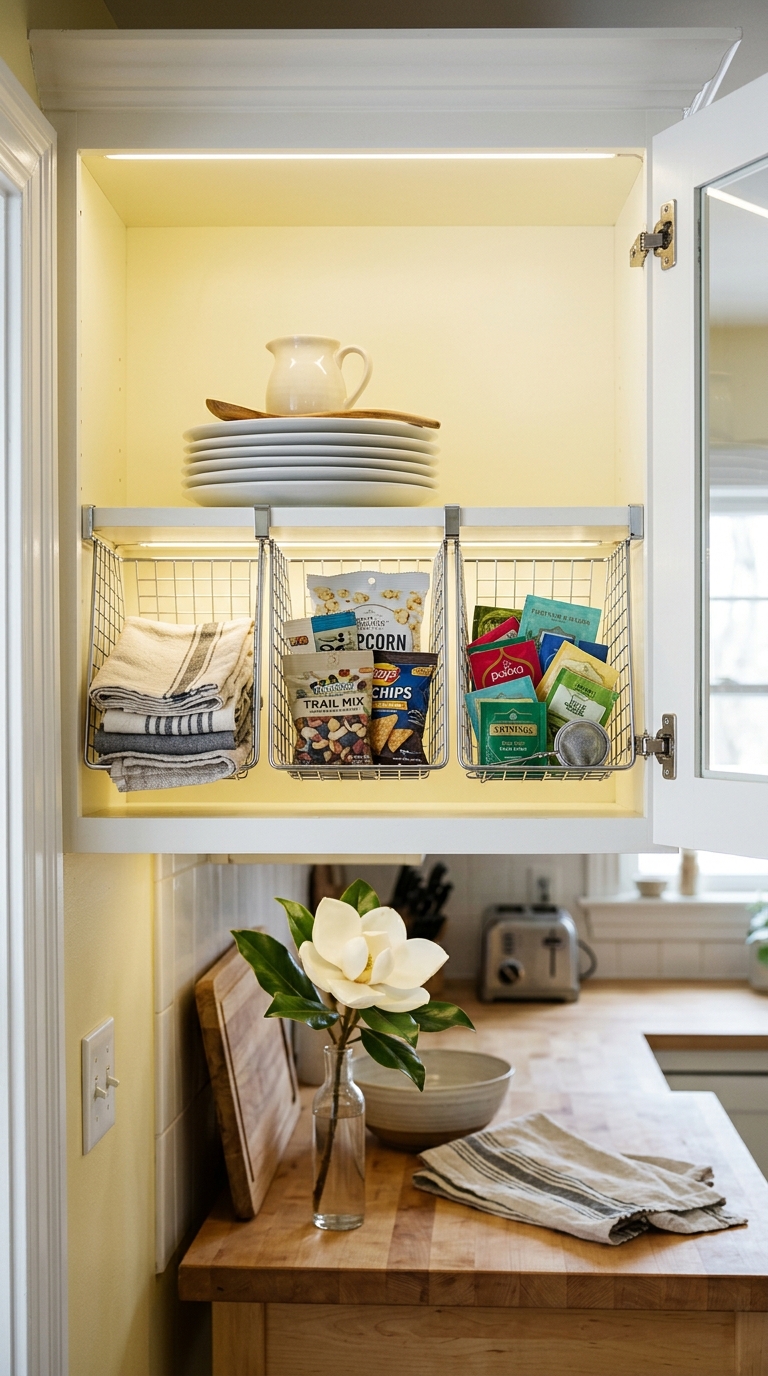
I use them for folded linen napkins, spare snack bags, loose tea sachets, and all the lightweight flat things that normally pile up in chaotic stacks on the shelf itself. The shelf surface stays clean and reserved for heavier items like plates and bowls, and the basket below catches everything that used to fall over or get lost in the shuffle. Try one basket in your most crowded cabinet first and I promise you will come back for more.
A Spice Drawer Instead of a Spice Rack
Converting a shallow drawer into a dedicated spice drawer was the organization change that made me feel most like a real cook in my own kitchen. Reaching into a cluttered cabinet or spinning a rack that inevitably hides things in the back was my daily frustration for years. Laying every spice flat and label-up inside a drawer meant I could read every single one at a glance, like a beautiful edible library.
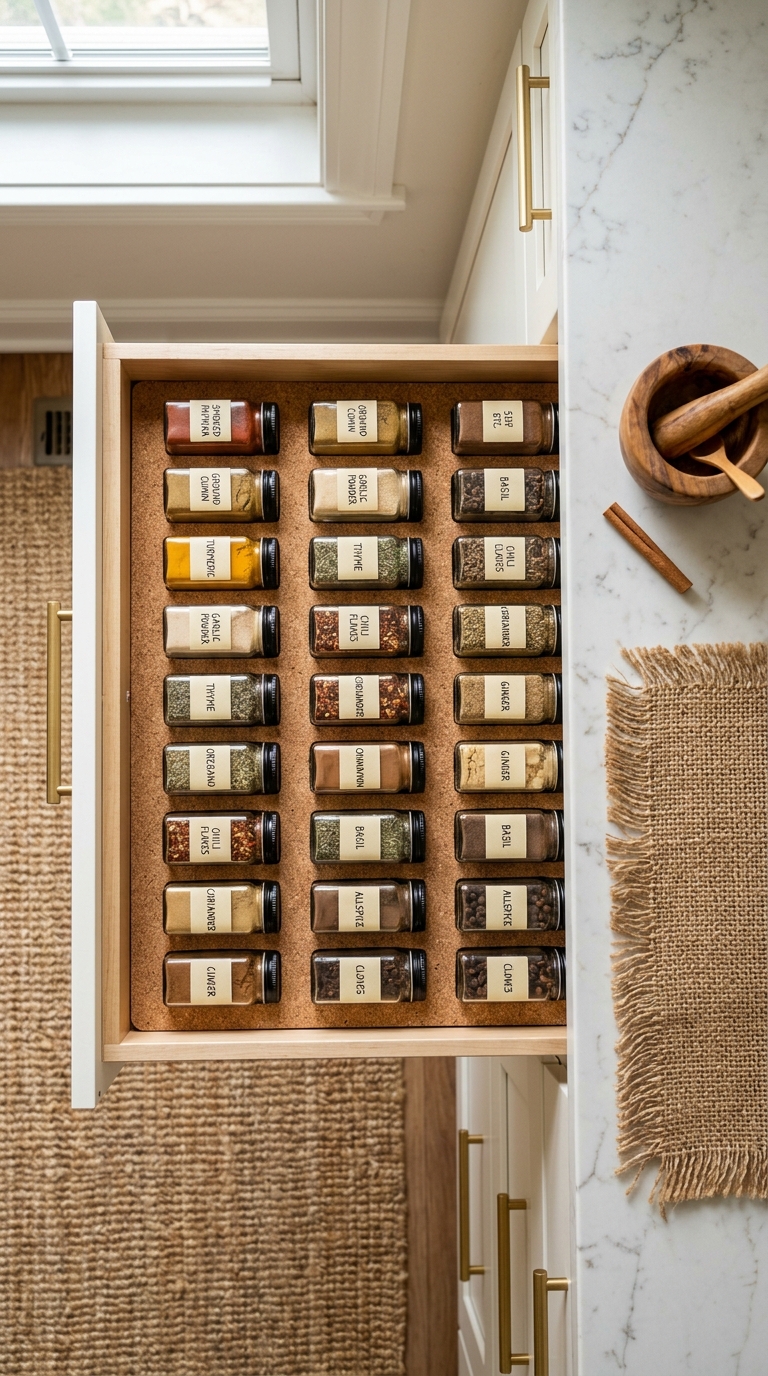
The practical setup is simple: line the drawer with a cork sheet cut to size to keep jars from sliding, then decant your spices into uniform small glass jars and write the name on top with a paint marker. Doing the whole drawer in one afternoon takes about forty-five minutes and the result is genuinely one of those changes that makes you feel quietly proud every time you open that drawer to cook.
A Countertop Riser to Create Two Levels of Space
A simple countertop riser transformed my coffee corner from a cluttered surface into what I can only describe as a functional little station I actually enjoy walking up to in the morning. By elevating my espresso machine on a wooden riser, I created a full second level of usable surface underneath it — enough to tuck my French press, a jar of coffee beans, and a small cup of stirring spoons out of sight but still within reach.
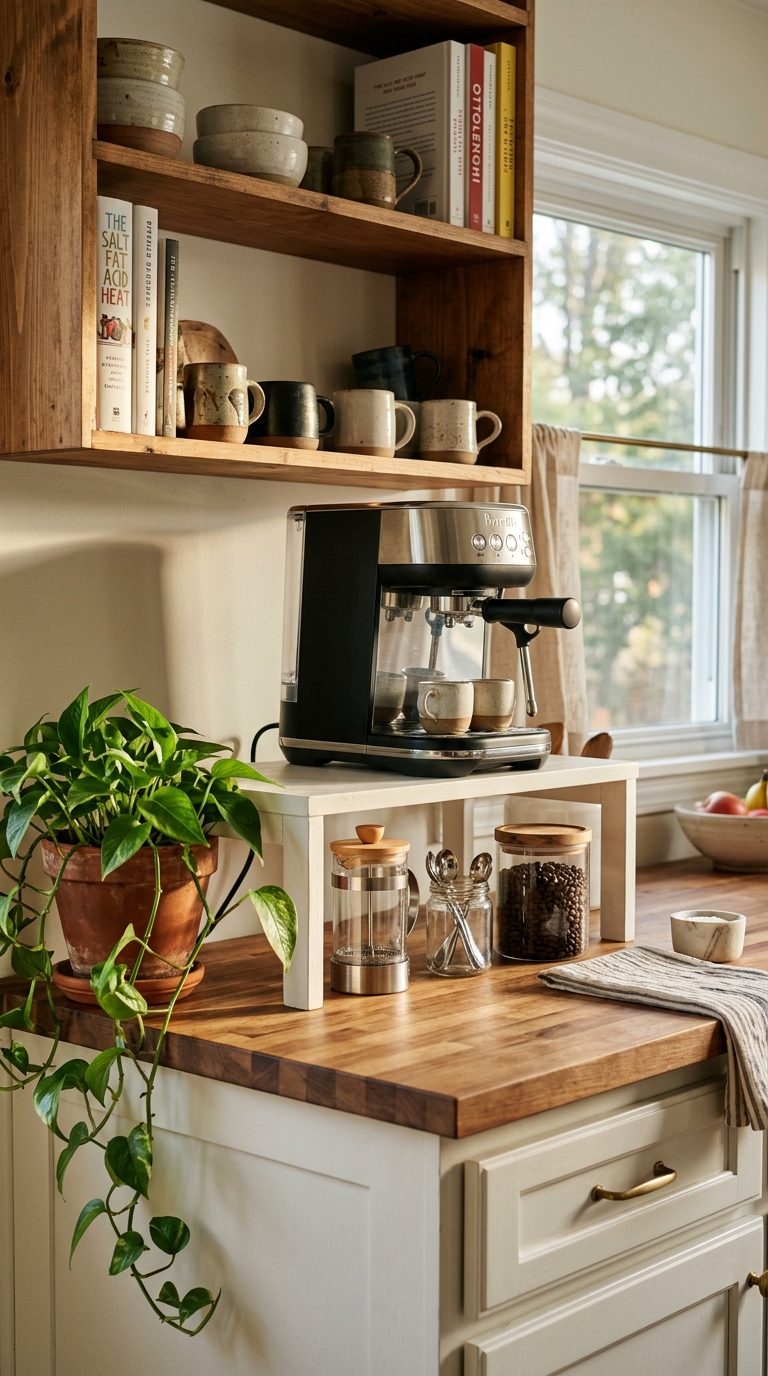
The riser idea works in any corner of a small kitchen where you want to create visual layers and recover surface space simultaneously. I have also used a version of this trick in the pantry to elevate canned goods so I can see the labels on the shorter cans behind. It costs almost nothing, requires no tools, and makes your counter look purposefully styled rather than crowded. This is the kind of small fix that quietly makes everyday life feel more put together.
Conclusion
You do not need a bigger kitchen. You need a smarter one. Everything in this article costs very little, takes an afternoon at most, and creates real, lasting change in how your kitchen functions and how it feels to be in it. Pick just one idea today — one drawer, one wall, one shelf — and start there.
Your kitchen is the room where your day begins and where your family gathers at the end of it. It deserves to feel calm, functional, and completely yours. I would love to know which idea you try first — leave me a comment below because I genuinely read every single one.