Can a Small Space Have a Cozy Breakfast Nook?
That’s exactly what a breakfast nook does. It takes that awkward slice of wall beside your window, that ignored kitchen corner, that dead-end space nobody quite knows what to do with — and it turns it into something you look forward to every single morning. Whether you’re squeezing into a city apartment, a starter home, or just a kitchen that was not designed with dining in mind, you absolutely can carve out a cozy, beautiful little spot that feels intentional and warm. This article walks you through 12 genuinely creative breakfast nook ideas made for small spaces — from budget-friendly DIY setups to built-in dream corners — all written from real experience with tiny homes and big design ambitions. Let’s make your mornings something to savor.
The L-Shaped Built-In Banquette Corner
There is something deeply satisfying about a built-in banquette that hugs two walls like it was always supposed to be there. The L-shape is the workhorse of small breakfast nook design — it wraps around a corner and creates an instant sense of enclosure that feels both intimate and purposeful. When you sink into that cushioned bench on a slow Tuesday morning with your coffee and nothing pressing for the next twenty minutes, it genuinely feels like the most thoughtful room in the house. It has a permanence to it, a solidity that freestanding furniture never quite manages to deliver.
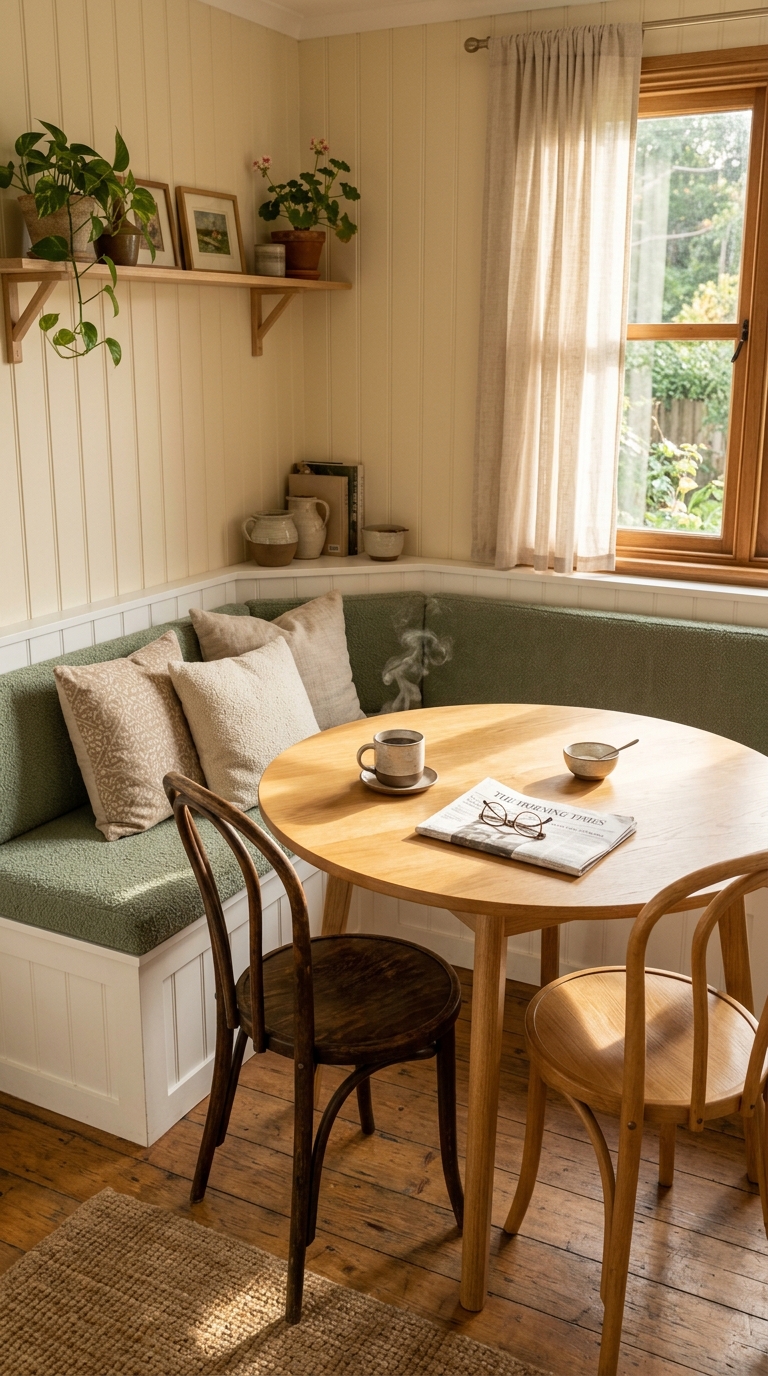
To build this yourself without calling a contractor, start with basic 3/4-inch plywood boxes assembled directly against your walls at a seat height of 18 inches. Frame the bench, add a piano hinge lid, and you instantly create hidden storage underneath — perfect for things like extra placemats, board games, or those bulky appliances you only drag out twice a year. Finish the front panels with beadboard or flat trim to match your kitchen style, then cut 3-inch foam cushions to fit and cover them in a performance fabric like Sunbrella so spills wipe off without drama. Pair it with a round table — never rectangular in a tight corner — because the curved edge lets everyone slide in and out without bumping knees or apologizing. Keep the wall above the bench simple: one small framed print or a tiny floating shelf with a plant is all you need.
The Fold-Down Wall Table Nook
If your kitchen is the kind of place where every square foot has a job to do, a fold-down wall table is honestly one of the most clever moves you can make. It lives flat against the wall when you don’t need it — looking almost like a decorative panel — and then drops into a full table surface in about four seconds when you’re ready for breakfast. The whole setup takes up zero floor space when folded, which makes it a genuine game-changer for galley kitchens, studio apartments, and any room where you’ve already mentally drawn boundary lines around every inch of open space.
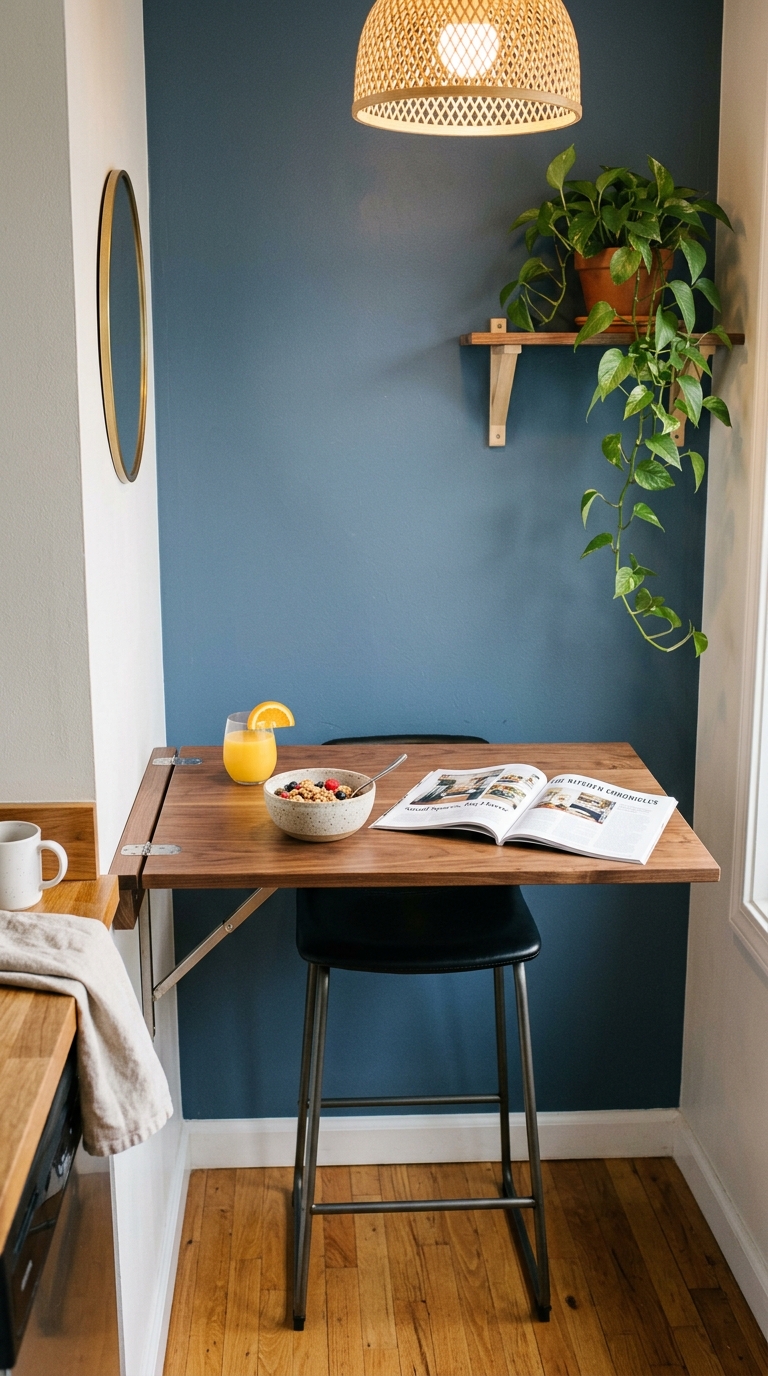
Mount a 24-by-30-inch solid wood panel to your wall using heavy-duty folding brackets rated for at least 75 pounds — you don’t want your morning toast launching off a wobbly surface. Position it at 30 inches from the floor for comfortable seated dining, or bump it to 36 inches if you prefer bar-style seating with a stool. The stool, by the way, should be backless so it slides completely underneath when the table folds up, disappearing from view entirely. Paint or stain the tabletop to match your existing kitchen cabinetry so it reads as intentional rather than improvised. Style the wall around it with a small piece of art and one slim shelf above — when the table is folded up, that wall should still look like a considered design moment, not just a practical afterthought.
The Bay Window Built-In Seat
A bay window is one of those architectural features that people have in their homes for years without ever fully realizing its potential. That angled, protruding little alcove of glass is basically asking you to fill it with cushions, slide a table in front of it, and spend your mornings there watching the world wake up outside. The natural light that pours through three sides of glass makes everything feel bigger, warmer, and more alive — even in the smallest kitchen. It turns what could be just a pass-through eating spot into somewhere you actually want to linger.
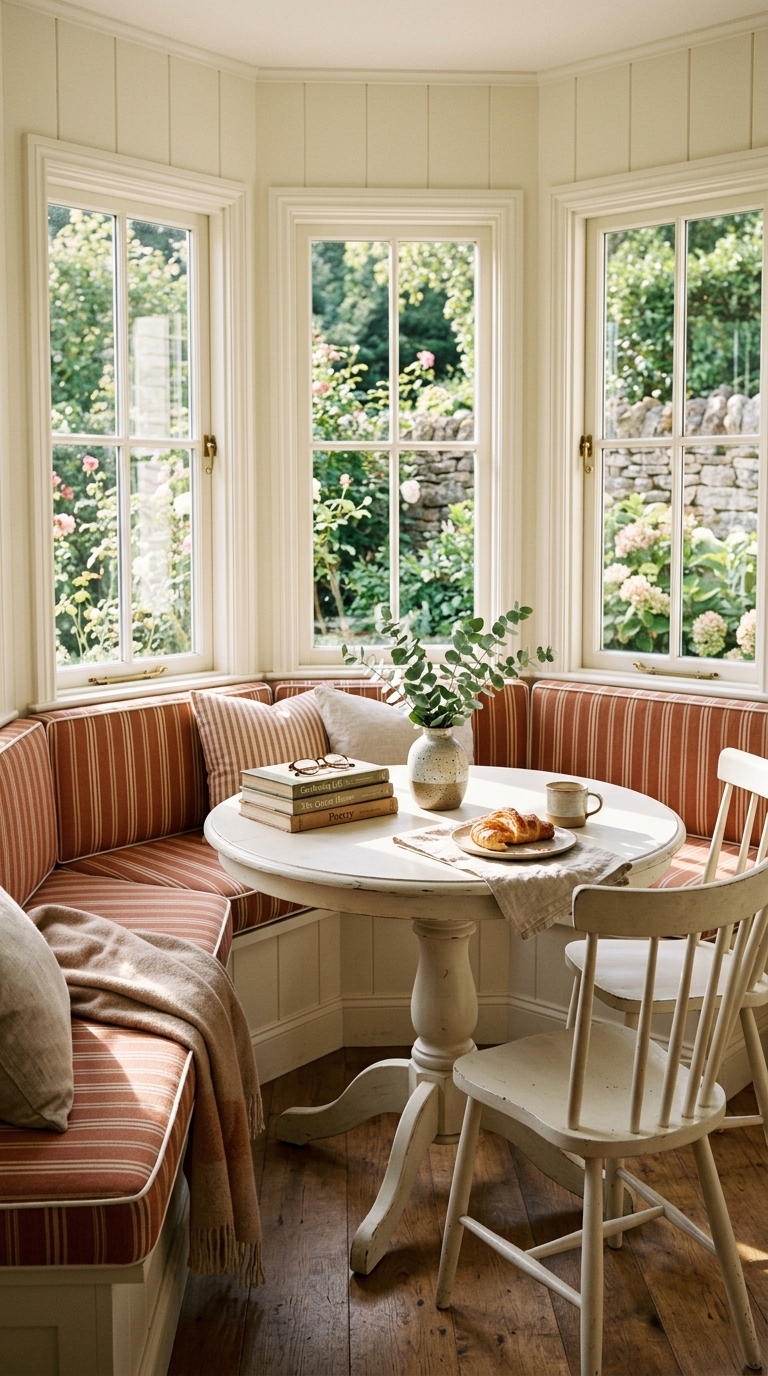
The secret to making this work in a small space is custom-fitting the bench to the exact width of your bay window opening — no gaps, no awkward overhangs. If you’re not going the full custom-built route, look for a long storage bench that you can cut to fit or have trimmed at a local lumber yard for under $50. Storage underneath the bay window seat is practically free real estate — use it. Slide-out drawers are ideal if you can build them in, but even basic hinged-lid boxes give you a place to tuck away seasonal linens and those extra throw blankets you pull out every winter. For the table, choose a pedestal style with a single center leg so you’re not fighting with table legs every time you scoot in or out. Hang a simple Roman shade at the top of each window panel rather than curtains — it keeps the light open and doesn’t crowd the small space with extra fabric.
The Floating Shelf Breakfast Bar
A floating shelf breakfast bar is the nook idea that makes the most sense in the kind of apartment kitchens that were clearly designed by someone who never had to actually eat there. You mount one wide, sturdy shelf at counter height along whatever wall you can claim, slide two counter-height stools underneath, and suddenly you have a breakfast spot that takes up no floor space, adds visual interest to a blank wall, and gives you somewhere to sit with your coffee that isn’t the couch. It’s casual, stylish, and genuinely functional in a way that feels like you figured something out that everyone else missed.
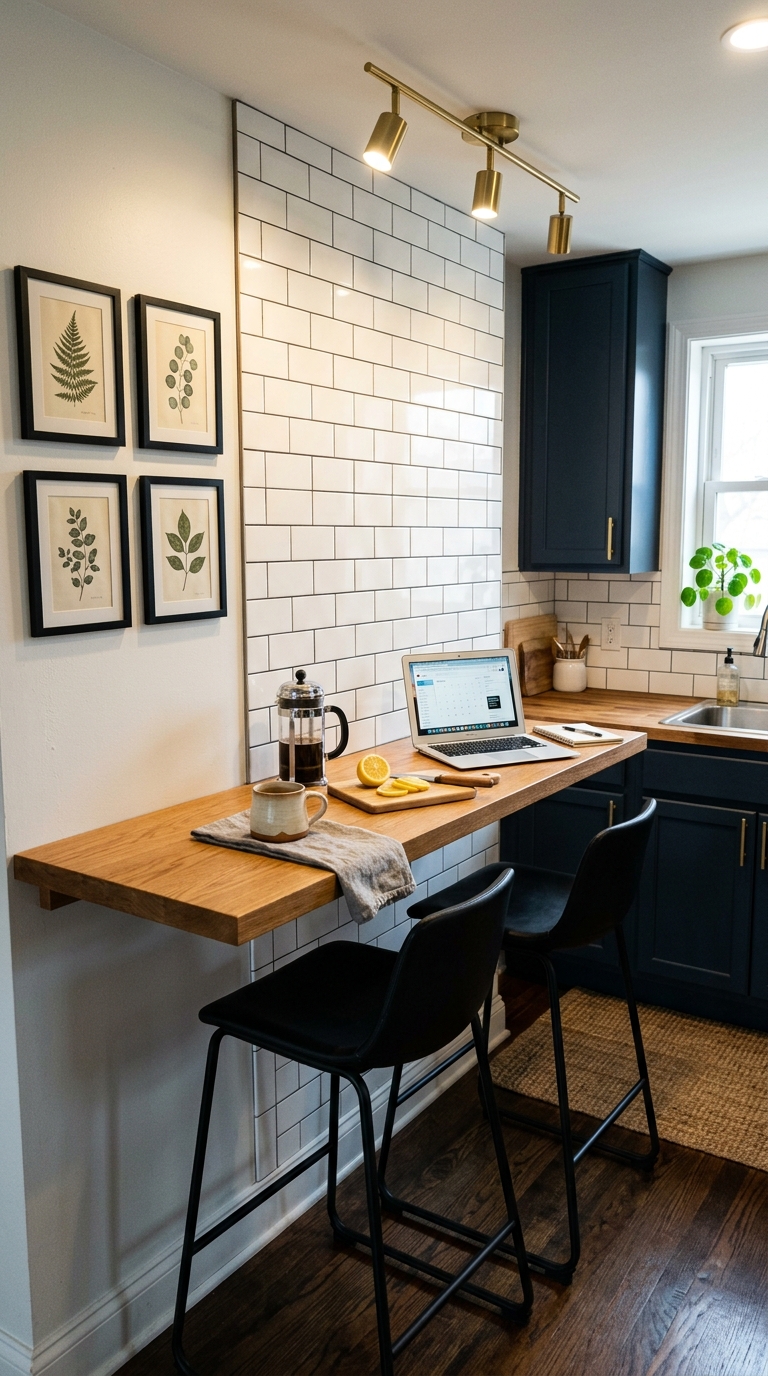
Choose a shelf that’s at least 10 inches deep and mount it to wall studs at 36 inches from the floor — that’s standard counter height and works perfectly with standard counter stools. The material matters a lot here: a live-edge wood slab, a thick walnut butcher block, or even a solid pine board with a dark stain all bring warmth that painted MDF simply can’t match. Secure it with heavy-duty L-brackets hidden underneath, or invest in floating shelf hardware that keeps the bracket invisible for a cleaner look. For the stools, choose a backless style in a metal or wood finish that echoes something else already in your kitchen — a cabinet hardware finish, a light fixture, a faucet — so the whole thing looks planned rather than pieced together.
The Sunny Window-Facing Two-Seater
Some of the most beautiful breakfast nooks in the world seat exactly two people, and there is nothing small about that. A little marble bistro table pulled up to a south-facing window with two chairs that you actually want to sit in for an hour — that is the dream. It’s the Parisian apartment version of breakfast, the one where your morning meal feels less like refueling and more like a ritual. The key is positioning: place the table close enough to the window that the glass becomes your view and your light source both, turning every morning into something you didn’t know you needed until you had it.
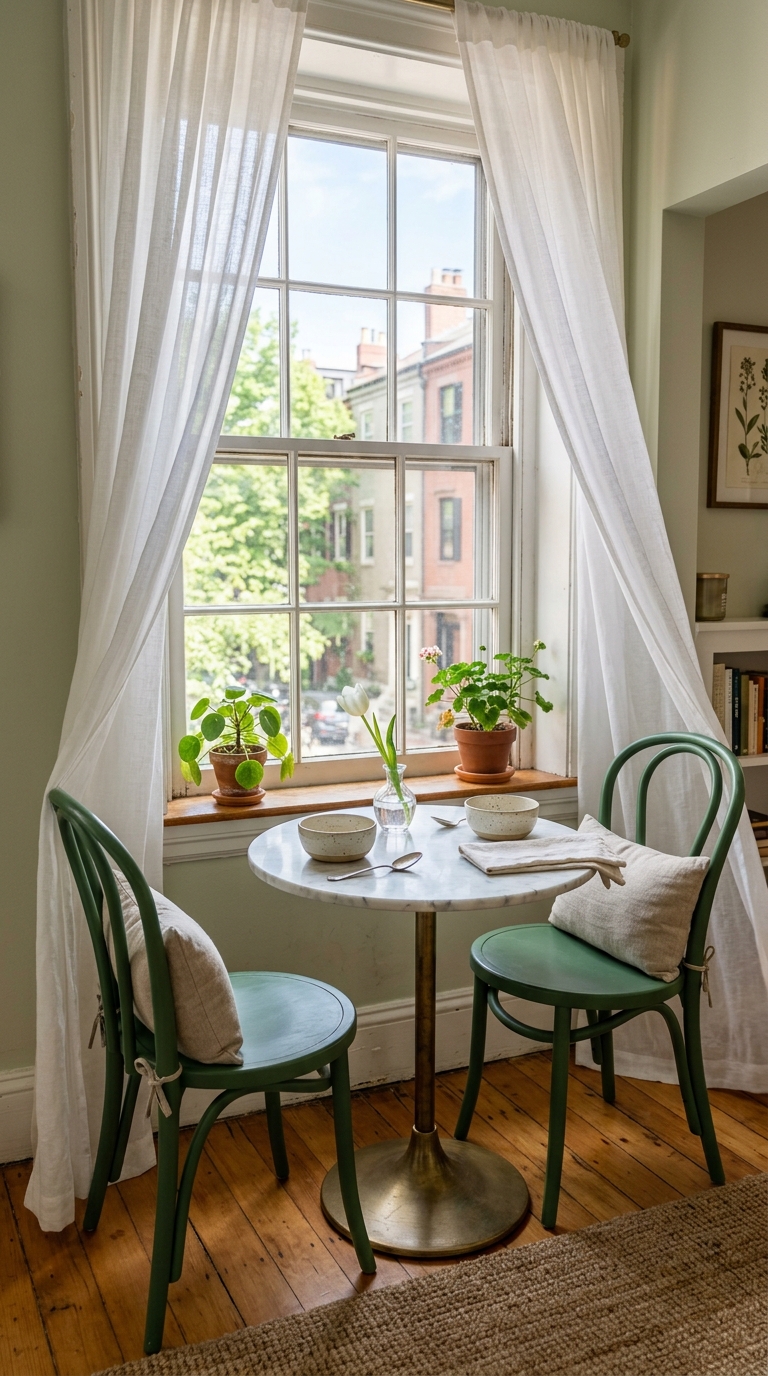
For this setup, a round table with a 28-to-30-inch diameter is the magic size — it’s big enough for two full settings and a small vase of flowers, but small enough that two people can have an actual conversation without feeling like they’re seated at opposite ends of a conference table. The chairs matter enormously here. Skip the matching dining set and instead find two chairs that you love individually — different styles can work beautifully together as long as they share a color or material. Think about:
- rattan café chairs in a natural finish
- painted wood bistro chairs with a slim profile
- vintage bentwood chairs with a subtle curve
Those options give you character without crowding the space. Keep the table surface itself mostly clear — a single small vase, one candle, and you’re done. The window does all the decorating work for you.
The Corner Booth With Mismatched Chairs
The corner booth setup — one built-in bench against the wall, two chairs opposite — is the small-space breakfast nook configuration that punches way above its weight in both seating capacity and visual personality. What makes it feel fresh rather than formulaic is leaning into the mismatched chair approach instead of buying two identical seats. This is genuinely one of those times where “imperfect” is the actually stylish choice. Two different chairs that share a unifying element — the same leg color, a similar scale, a tonal relationship — look curated and intentional, like someone with real taste lives here.
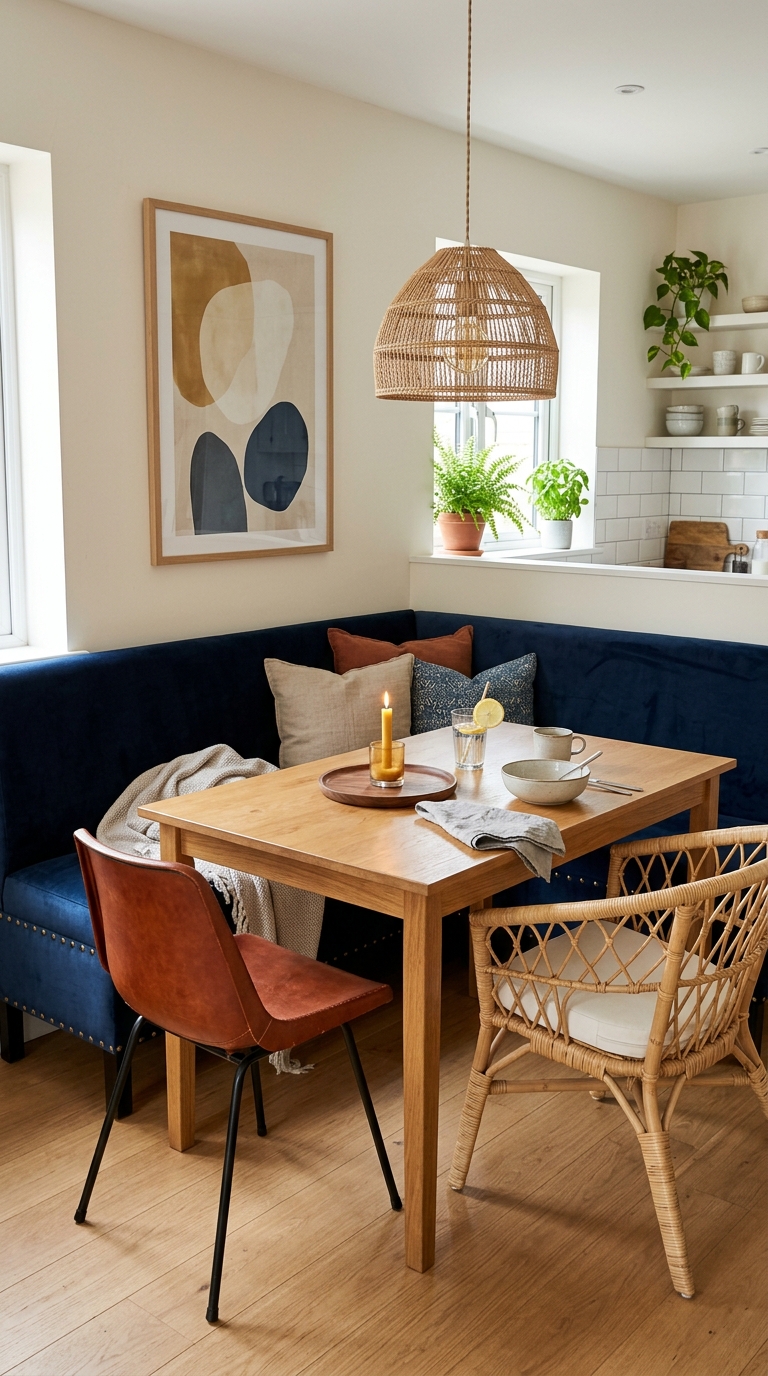
For the bench itself, build it straight along one wall rather than L-shaped if your space is more narrow than square. A straight bench that runs 48 to 60 inches along the wall with a table in front of it and two chairs opposite can comfortably seat four adults — which is remarkable for how little floor area it actually claims. Use a rich, textured fabric on the bench cushion — velvet, boucle, or a woven stripe — because the texture does a lot of the visual heavy lifting in a small space that doesn’t have room for much else. Mount the pendant lamp low, about 30 inches above the tabletop, so the light pools directly on your meal rather than washing out the room from above. That low pendant does something almost magical: it makes the nook feel like its own defined little world, separate from the rest of the kitchen, even if there’s nothing physically separating them.
The Boho Rattan Reading Nook Corner
Not every breakfast nook needs a table. If you live alone, work from home, or just genuinely prefer eating your morning yogurt curled up rather than sitting upright at a table, a cozy single-chair nook with a small side table gives you everything you actually need. The boho rattan version of this idea has had such staying power in home design because it delivers maximum coziness in minimum square footage — a hanging egg chair or a deep rattan papasan takes up barely more floor space than a side table, but it creates this whole architectural moment in a corner that would otherwise just be empty.
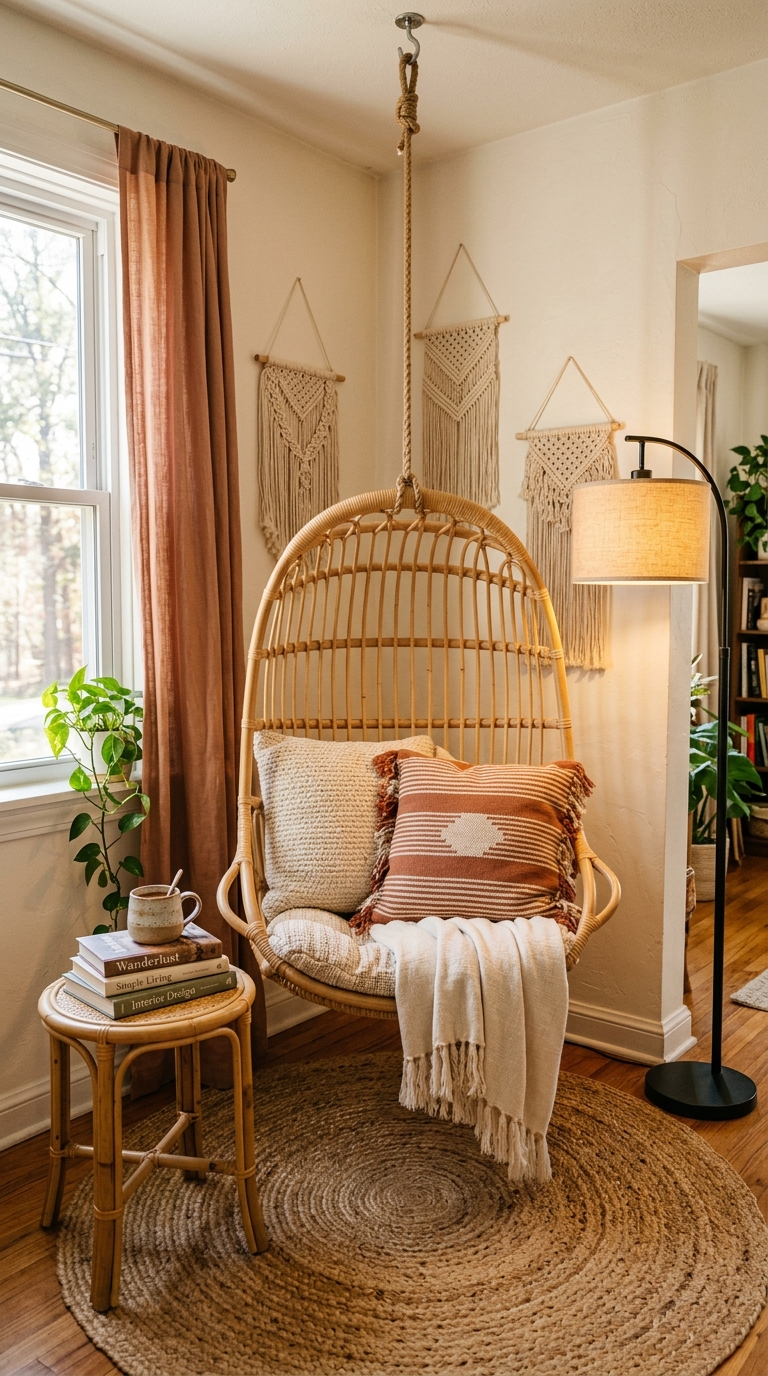
Hang the chair from a ceiling joist, not just drywall — use a stud finder, locate a solid beam, and use a hook rated for at least 250 pounds even if you weigh significantly less, because dynamic load during sitting adds force. Style the surrounding corner intentionally: a jute rug underneath to anchor the space, one floor lamp to the side for reading light after dark, and a small round side table just tall enough to reach from the seated position without stretching. Bamboo and rattan side tables at around 20 to 22 inches height work perfectly for this. Layer in texture with woven cushions, a chunky knit throw, and one or two macrame pieces on the wall behind — but keep it controlled. Three carefully chosen textural elements feel rich and intentional; six feel chaotic and cluttered in a small corner.
The Minimalist Bench-and-Round-Table Setup
For people who find fussy decor genuinely stressful rather than charming, the minimalist breakfast nook is a revelation. No cushions to fluff, no throw pillows to arrange, no coordinating textiles to second-guess — just a clean bench, a round table, two cups of coffee, and total visual quiet. This approach works especially well in modern apartments and urban homes where the overall design language is already pared-back and the architecture itself does the talking. A nook designed with restraint doesn’t feel cold or uninviting when it’s done right — it feels intentional, calm, and almost meditative to sit in.
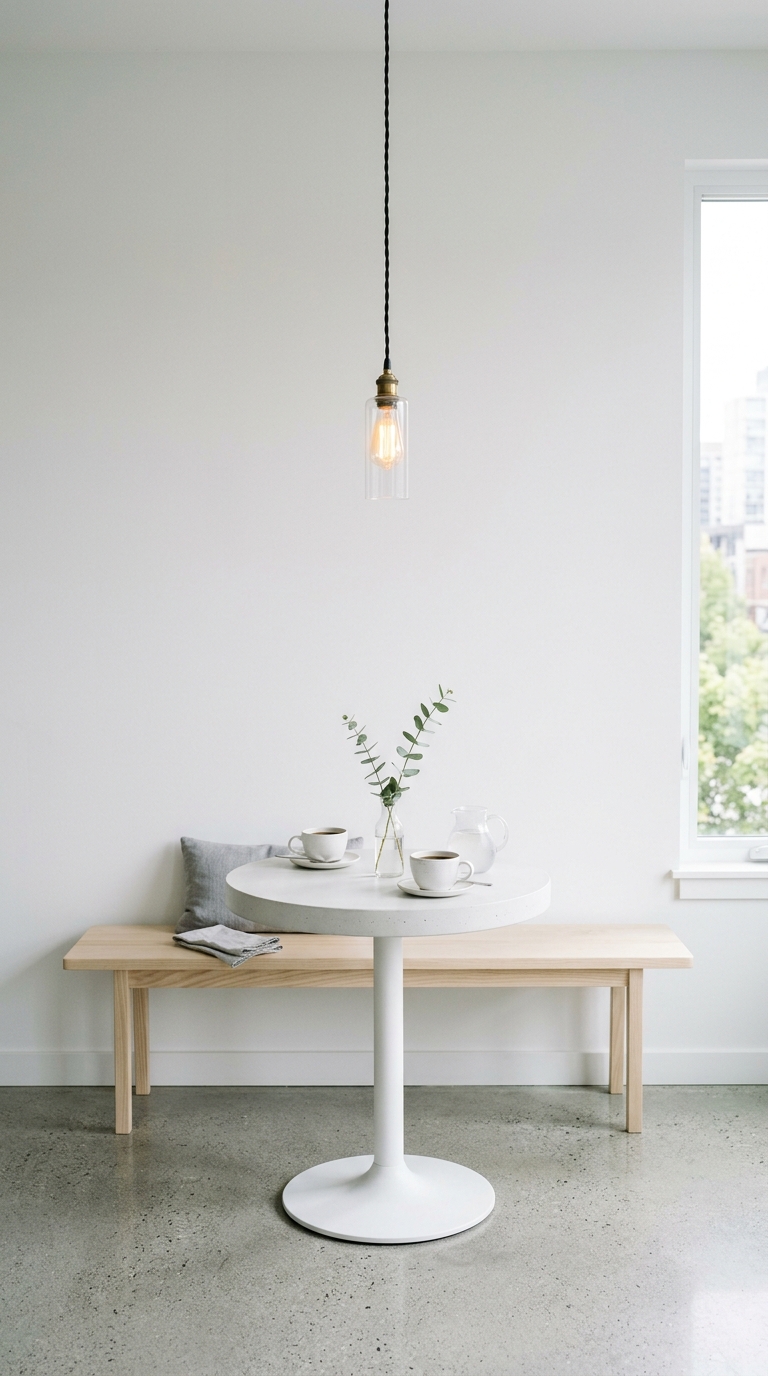
The most important decision you make in a minimalist nook is material. Because there’s nothing to distract the eye, every surface has to be beautiful on its own terms. Choose a bench in solid wood — pale ash, white oak, or natural birch — and skip the cushion entirely if the bench is deep enough (18 inches or more) to sit comfortably. A concrete or stone tabletop adds weight and permanence without pattern or color. Leave the wall above the bench completely bare or hang just one simple object: a single round mirror, or one small framed line drawing with wide white matting. The pendant light above the table should be simple and intentional — a bare bulb on a fabric cord, a simple dome shade in matte black or brass. Every detail counts twice in a minimal space because there’s nothing else competing for attention.
The Under-Stair Breakfast Nook
Under the stairs is one of the most underused spaces in multi-story homes, and converting it into a breakfast nook is one of the most satisfying transformations you can make because it gives purpose to something that was previously just collecting sports equipment and old shoes. The angled ceiling that slopes down from the staircase above actually adds to the coziness rather than detracting from it — it creates an enclosure, a sense of being tucked in, that flat-ceiling rooms simply cannot replicate. It’s the closest thing to a secret room that most of us will ever have in our everyday homes.
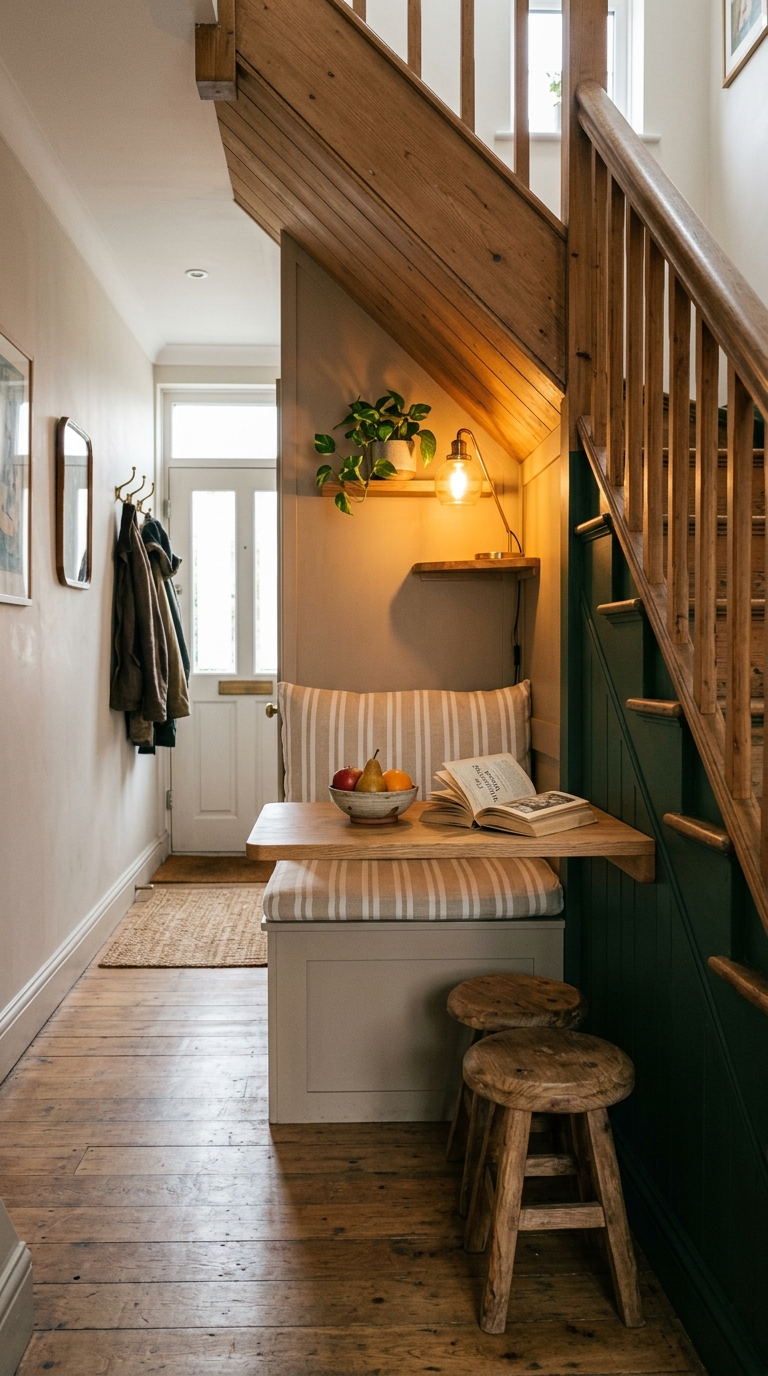
The trickiest part is the irregular ceiling height, which means freestanding furniture often won’t fit cleanly. A built-in approach works dramatically better here: construct a bench that follows the lowest point of the stair slope, then mount a table directly to the wall at sitting height rather than using a table with legs. This eliminates the leg-height problem entirely and creates a surface that feels purpose-built for the space. Paint the under-stair walls and the stair risers visible behind the bench in a single deep, rich color — forest green, navy, terracotta — to make the nook feel like an intentional room within a room rather than just a place someone shoved a bench. Add a small clip-on lamp since natural light usually doesn’t reach under stairs, and the whole thing becomes genuinely magical.
The Bump-Out Alcove Nook
If your kitchen or dining area has any kind of architectural recess — even a shallow one that’s only 18 or 20 inches deep — you already have the bones of a bump-out alcove nook and possibly don’t realize it yet. These little wall indentations happen in homes for all kinds of structural reasons, and most of the time they end up housing a random piece of furniture that doesn’t quite fit or getting ignored entirely. But treat that recess as a gift, because it gives you three walls to work with, a natural sense of enclosure, and an obvious spot to create a nook that looks like it was always part of the home’s original design.
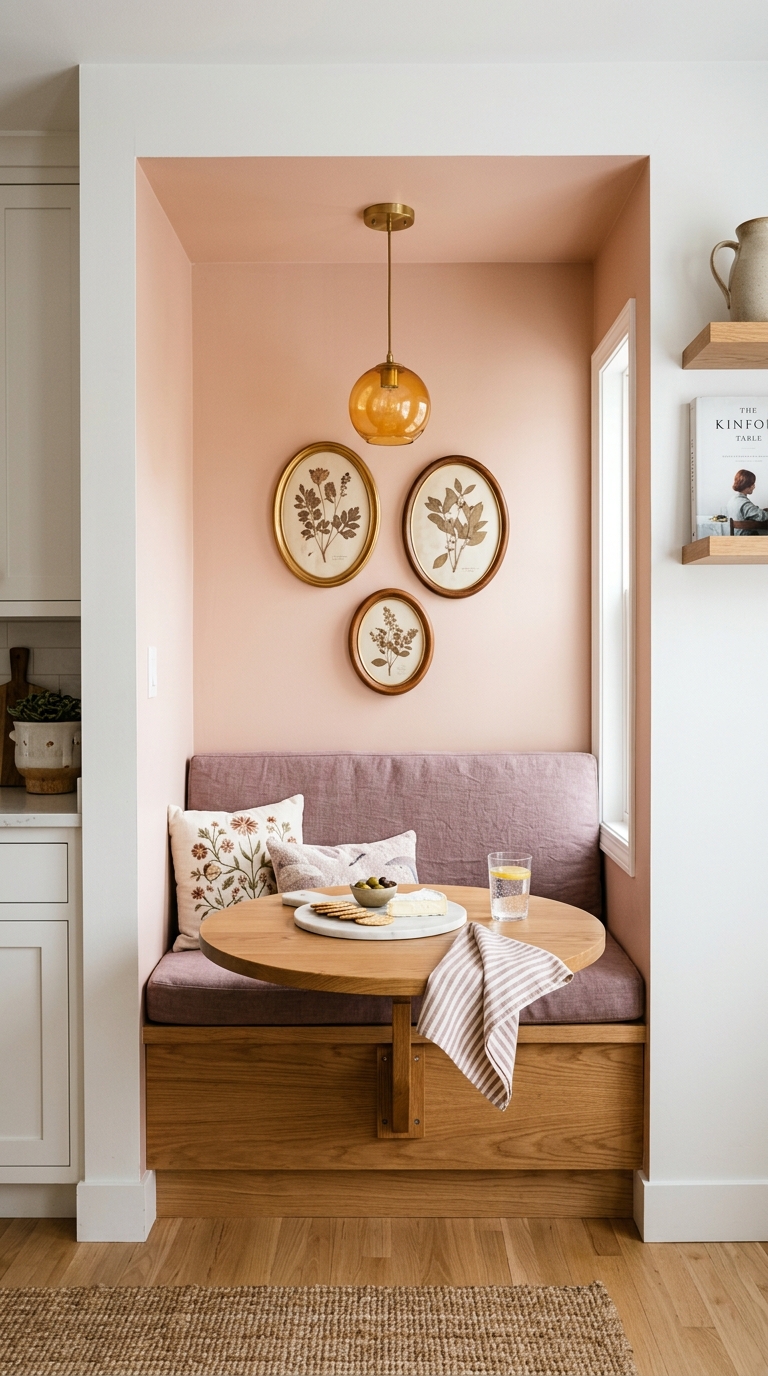
The most effective move is to paint the interior of the alcove a different color from the surrounding walls — just one or two shades deeper in the same tonal family, or an entirely contrasting accent color if you want it to be a true statement moment. This immediately reads as intentional and designed, turning the architectural accident into a feature. Build or fit a bench along the back wall of the recess, mount a table to the wall rather than using a freestanding piece, and hang a pendant inside the alcove ceiling to claim it as its own lit zone. The contrasting paint is the single most powerful tool you have here — it costs almost nothing and does more visual work than any furniture choice.
The Window Seat With Hidden Storage
A window seat with a hinged storage bench underneath is the kind of solution that makes you feel genuinely smart about your home. You’re getting a breakfast spot, a reading perch, extra storage, and a design feature all in the same 15 to 18 square feet. In small homes where storage is the constant, nagging concern underneath every renovation decision, this particular configuration earns its keep in a way that a plain chair-and-table setup simply doesn’t. The storage underneath isn’t a bonus — it’s a core part of why this works so well for real families in real small homes.
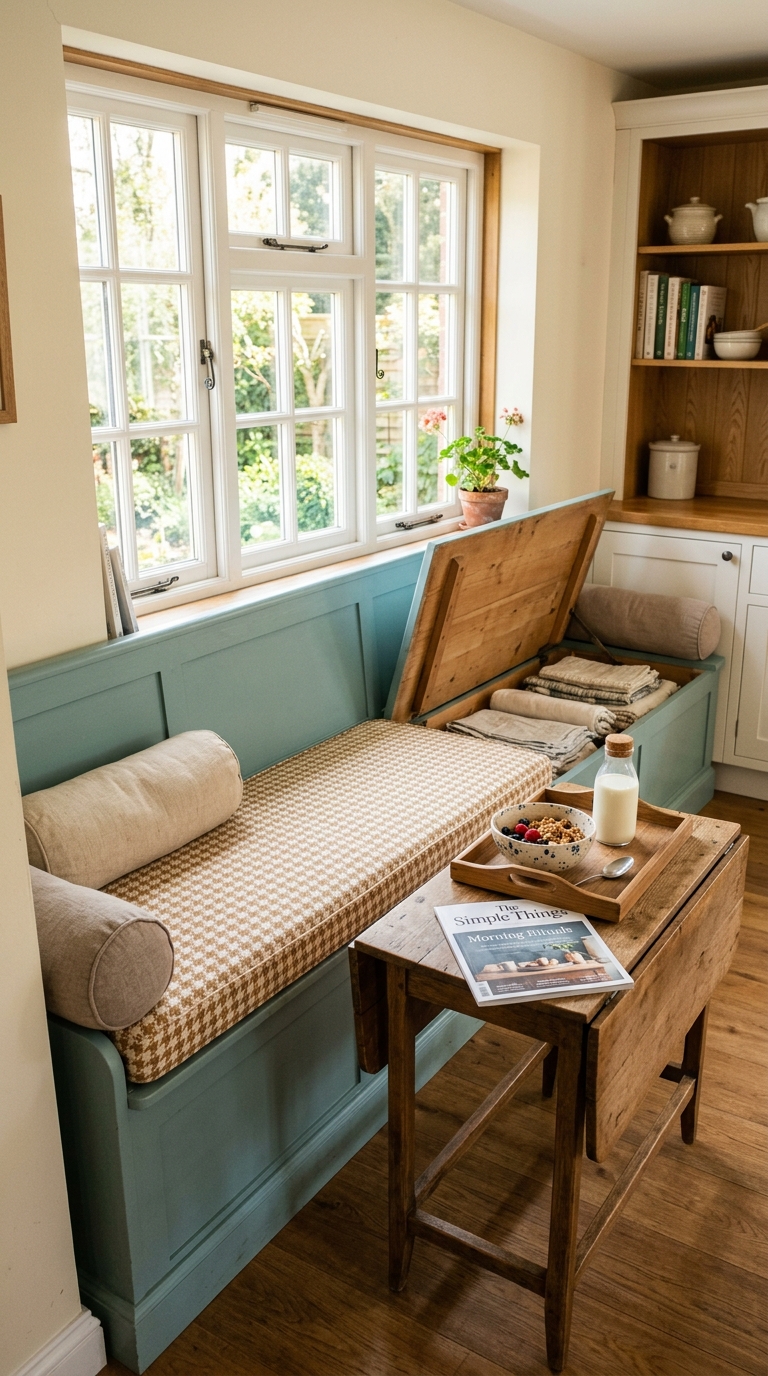
Build or buy the bench box to match your window width exactly, finishing it with a piano hinge lid that stays propped open on its own rather than slamming down on your head mid-organization session. The cushion on top should be thick — at least 3 inches of foam — because this seat gets used for extended morning sits, and comfort matters more here than it does at a desk chair. For the table, a drop-leaf style gives you flexibility: fold both leaves down when the kids need to play on the floor, raise one leaf for a solo breakfast, extend both for a family meal. Position the table so it can be pushed back against the bench and slid aside entirely when you want the window seat to function as just a reading spot with no mealtime obligations attached.
The Café-Inspired Tile-Backed Nook
There is a specific kind of delight that comes from sitting in a nook that feels like it was borrowed from a neighborhood café in Lyon or a tiled breakfast room in Barcelona. The café-inspired nook leans into pattern, rich color, and that particular combination of bistro furniture and statement wall treatment that makes even a cup of instant coffee feel like something you ordered from a professional. In a small space, a single bold tile panel on the wall behind the seating is a far more effective design move than trying to tile an entire room — it concentrates all the drama exactly where you spend your time, and the rest of the space can stay simple and quiet around it.
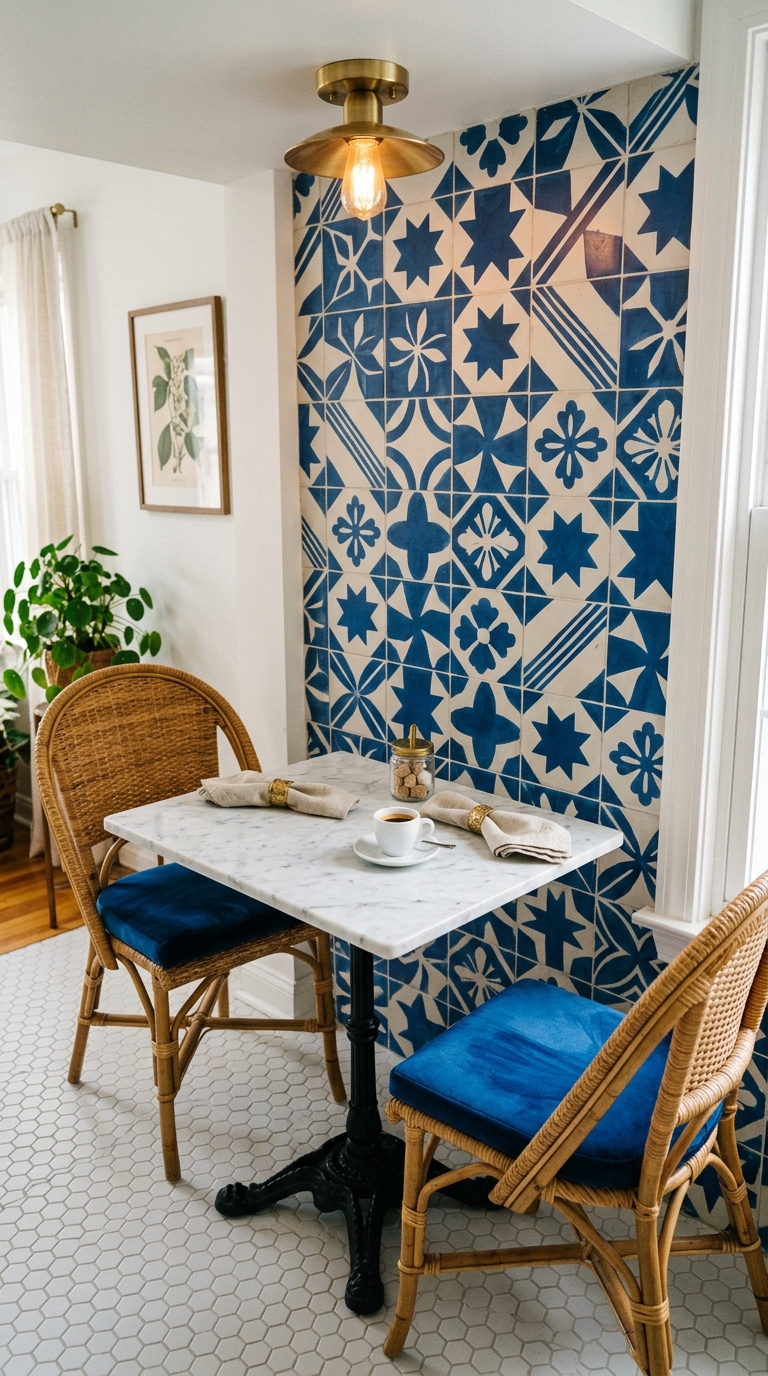
Choose encaustic cement tiles or high-quality ceramic patterned tiles in a panel that covers just the wall area directly behind and above your bench or chairs — roughly 3 feet tall by however wide your seating runs. This controlled approach to pattern keeps the space from feeling overwhelming and lets the tile play the starring role it deserves. Pair it with a bistro table in black metal or a dark iron finish, two curved café chairs, and a small brass light fixture overhead. The material pairing of tile, metal, rattan, and marble keeps everything grounded in that European café register without tipping into costume territory. Keep accessories genuinely minimal here — the tile is already doing enormous amounts of work, and the most elegant version of this nook is one where nothing competes with it.
Conclusion
Here is what I want you to take away from all of this: you do not need a big house to have a beautiful, meaningful little corner that feels like it was made just for you. Start with the idea that excites you most right now — not the one that seems most achievable, but the one that makes you want to clear the furniture and get started this weekend. Even one small change, a bench cushion, a fold-down shelf, a coat of paint in a color that makes your heart do something — can completely change how your mornings feel. Your home deserves corners that invite you to slow down, and so do you.