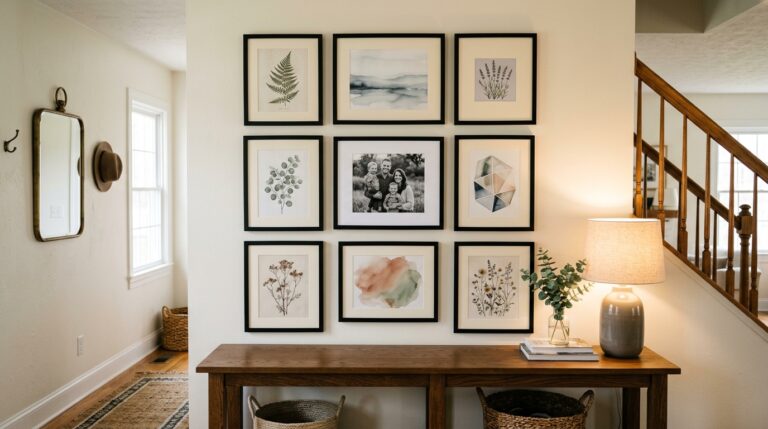
12 Small Entryway Ideas That Make a Big First Impression
You know that split-second feeling when you walk into someone’s home and immediately think, wow, this place feels good? Nine times out of ten, that feeling starts right at the front door. Your entryway sets the emotional tone for every single room that follows — and here’s the thing most people miss: it doesn’t have to be large to be incredible.
If you’ve been ignoring your entryway because it feels too small or too awkward to do anything meaningful with, this article is about to change your mind completely. We’re going to walk through twelve genuinely beautiful, practical small entryway ideas that work in real homes — apartments, older houses, narrow hallways, you name it. Every idea here is something you can start thinking about today, not after a full renovation or a big budget. Ready? Let’s make that first impression count.
Use a Slim Console Table as Your Anchor Piece
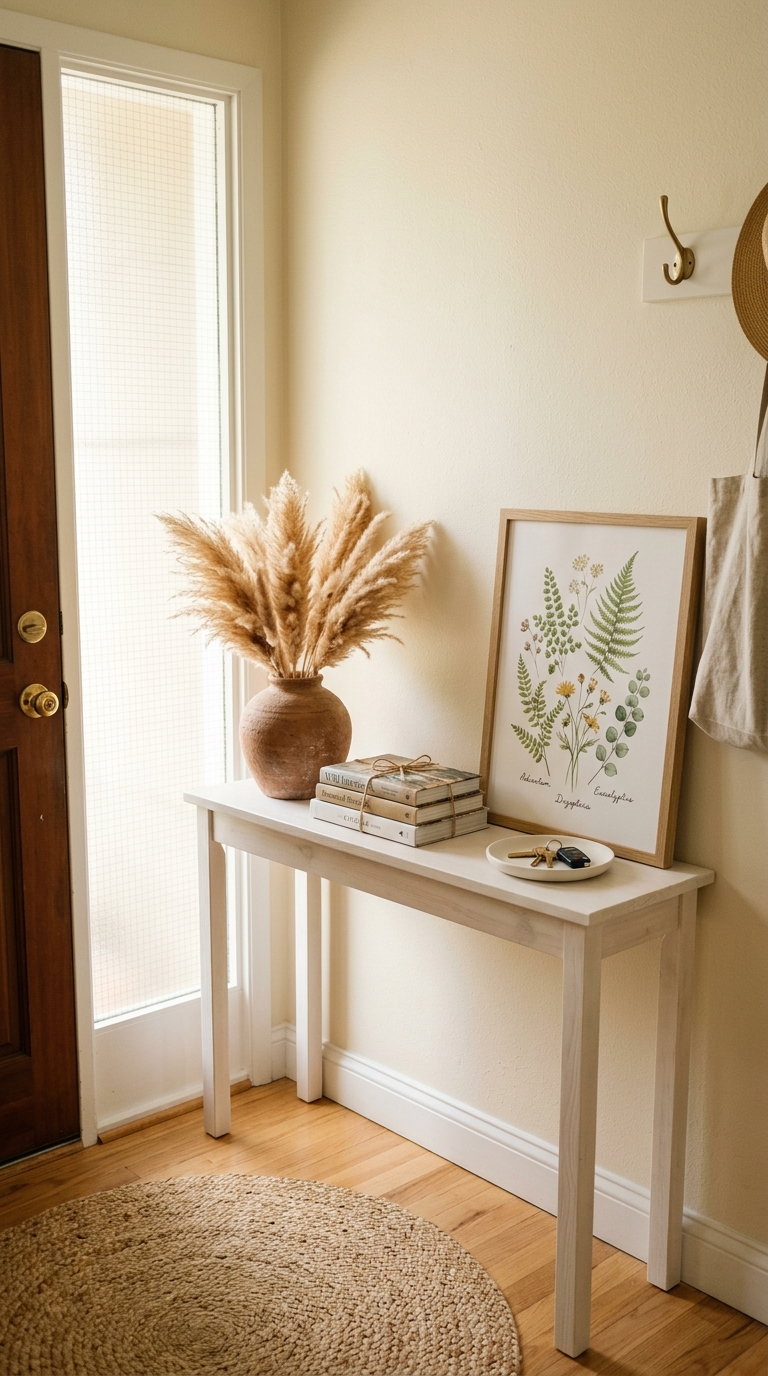
There is something so instantly grounding about a console table in an entryway — even the narrowest one. Picture walking through your front door after a long day and having an actual place to land: somewhere to set your bag, drop your keys, and exhale. A slim console that sits just ten or twelve inches deep gives you all of that without eating up precious floor space. Style it with something tall, something textural, and one personal object — a framed photo, a small plant, a candle you actually burn — and suddenly that bare wall becomes the most intentional corner in your home.
When you’re choosing your table, look for pieces in natural wood, painted white, or a warm black finish depending on your existing style. Proportion is everything — the table should stop about two to three inches below any mirror or artwork you hang above it. Keep the surface edited: resist the urge to pile things on. One small tray corrals the everyday chaos of wallets and sunglasses, and that single act of containment makes the whole space feel surprisingly calm and curated.
Hang a Mirror to Double the Light and Space
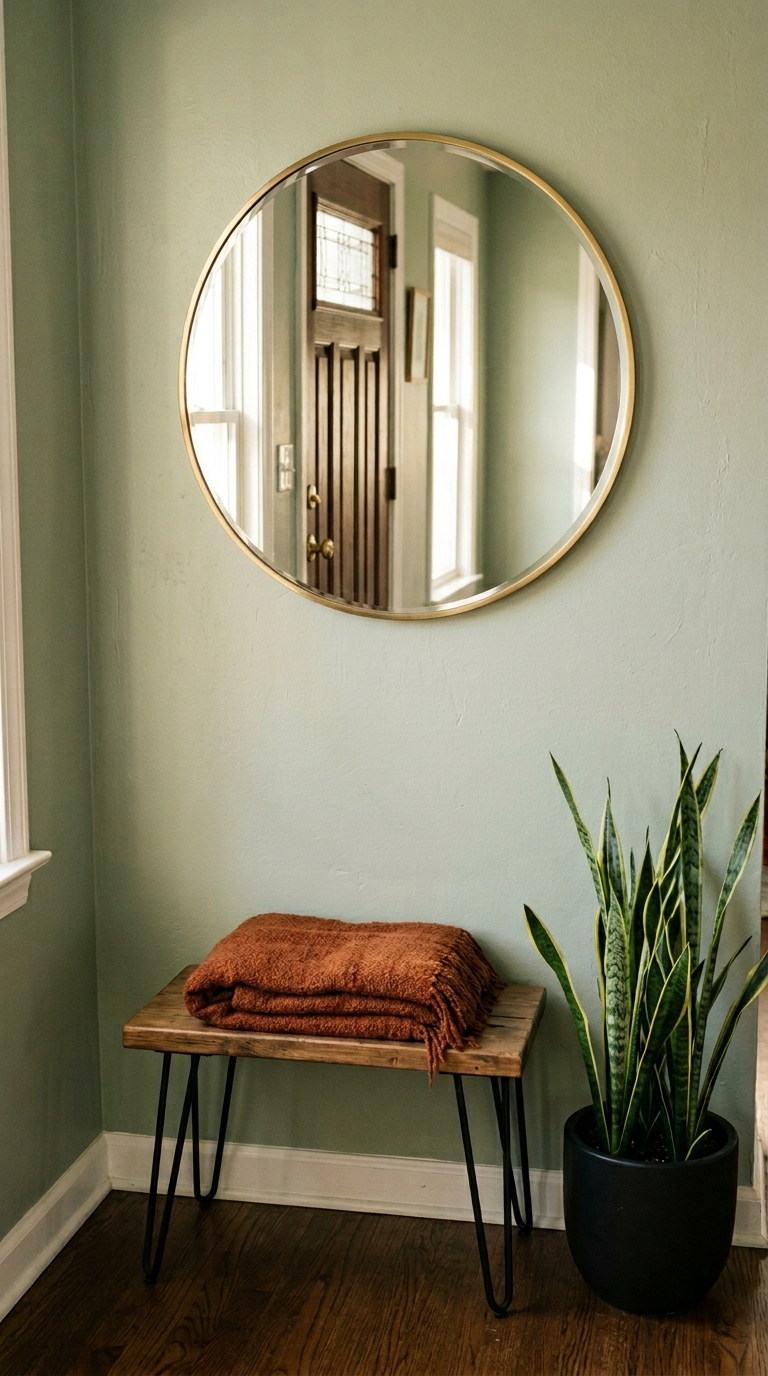
Walk into any small entryway that feels bright and open, and we almost guarantee there’s a mirror doing a lot of quiet, hard work. Mirrors don’t just reflect your face before you leave — they bounce light around the room, trick the eye into seeing more depth than actually exists, and add a layer of elegance that almost nothing else at the same price point can deliver. A round mirror with a warm metal frame feels current and approachable. An arched mirror leans more editorial and dramatic. Either way, the minute you hang one, the entryway breathes.
Placement matters more than size here. Hang your mirror so the center sits at roughly eye level for the tallest person in your household — typically around 57 to 60 inches from the floor. If your entryway gets almost no natural light, position the mirror directly across from whatever light source exists, even a lamp, so it can do maximum reflecting duty. Don’t be afraid of going slightly larger than feels safe — an oversized mirror in a small space almost always looks more intentional and confident than one that timidly matches the wall.
Build Vertical Storage With Floating Shelves
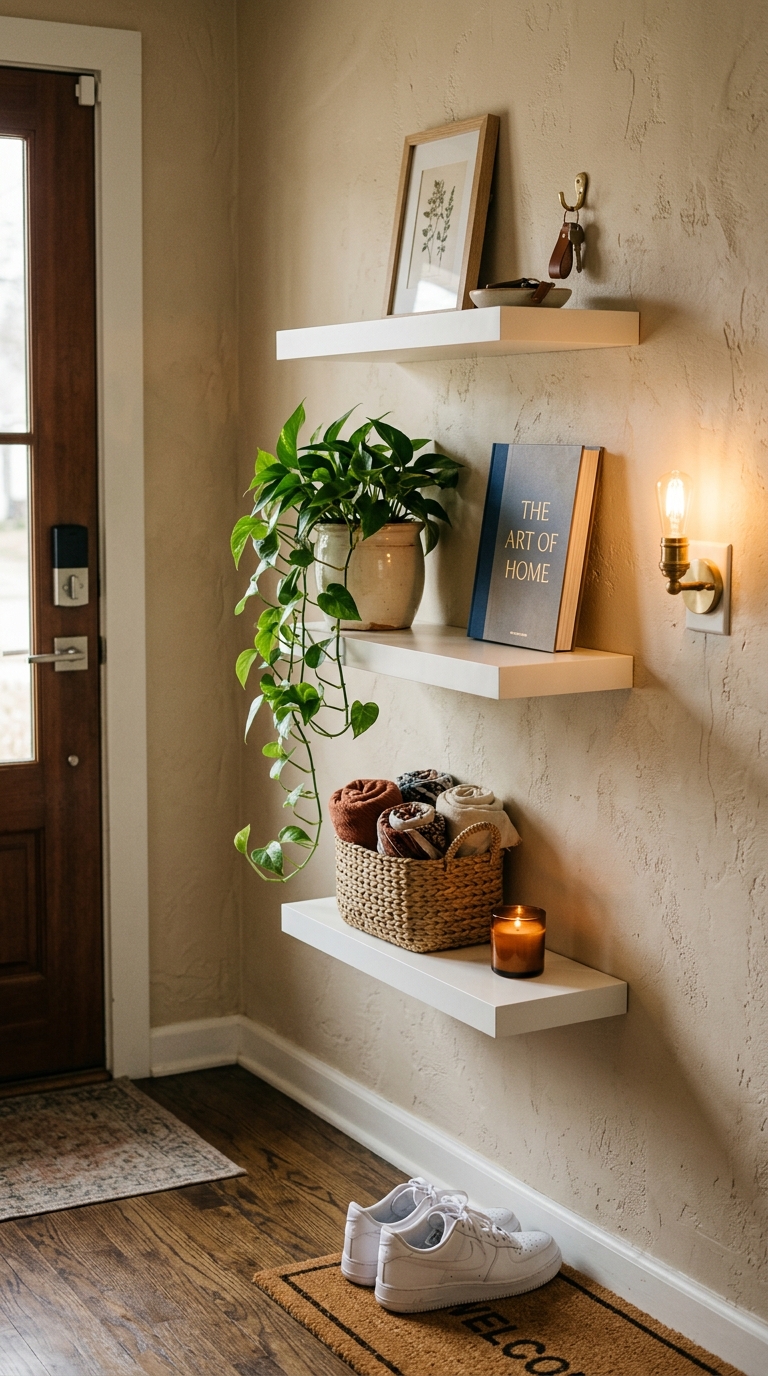
When floor space is tight, you go up — and floating shelves are genuinely one of the most underused tools in small entryway design. Instead of fighting for inches along the floor, shelves pull your storage and style vertically, drawing the eye upward and making the ceiling feel higher in the process. Stagger three shelves at different heights for a collected, organic look that doesn’t feel like a storage unit. Use them for a rotating mix of functional items and beautiful ones — a basket for gloves and hats, a plant for softness, a small framed print leaning casually against the wall behind everything.
The key to shelves that look curated rather than cluttered is the rule of odd numbers and varying heights. Group objects in threes — one tall item, one medium, one low — and leave breathing room between groupings. Choose a consistent finish for your shelf brackets so the hardware disappears into the wall rather than competing with what you’ve styled. If you’re renting and can’t drill into walls, look for peel-and-mount systems rated for actual weight loads — they’ve come a long way and many hold up to 15 pounds per shelf with the right installation.
Add a Narrow Bench for Everyday Function
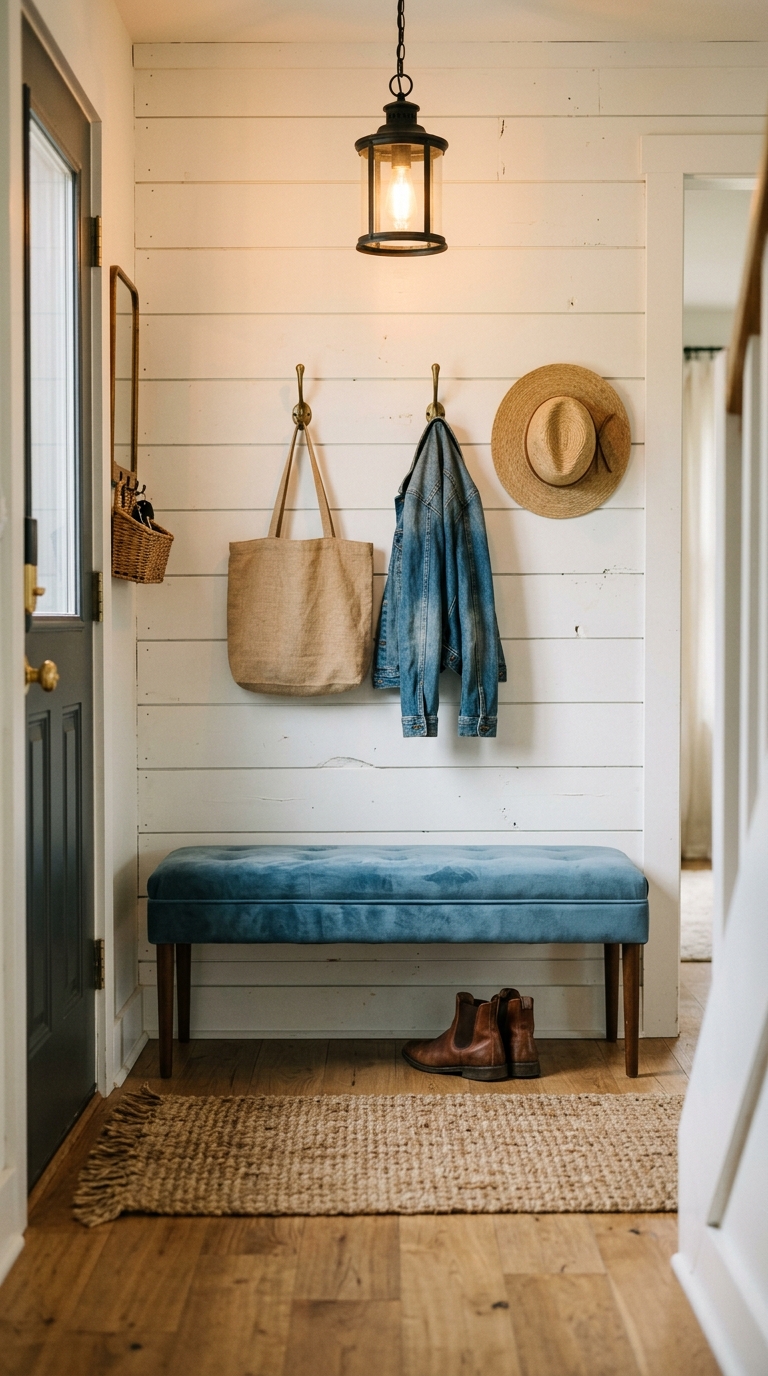
A bench in an entryway isn’t a luxury — it’s one of the most quietly useful things you’ll ever add to your home. Think about how many times a week you hop around on one foot trying to pull on a boot while holding your bag and your keys and your coffee. A bench fixes all of that in one move. Even a small one, just 24 to 36 inches long, gives you a dedicated sit-down spot that signals to everyone who enters that this house is organized and thoughtful. Pair it with hooks above and suddenly you have a full mini mudroom happening in the space of a single wall.
When selecting your bench, think about whether you want it upholstered for softness or wooden for durability. If you have kids or pets, an indoor-outdoor fabric or a leather-look vinyl wipes clean beautifully and still looks polished. Storage benches with a hinged lid are a brilliant option if you need to hide shoes, umbrellas, or seasonal items — just make sure the internal mechanism is smooth enough that you’ll actually use it. The real function of a bench is to create a ritual around coming and going, and rituals make even a small home feel intentional and loved.
Layer a Rug to Define the Space
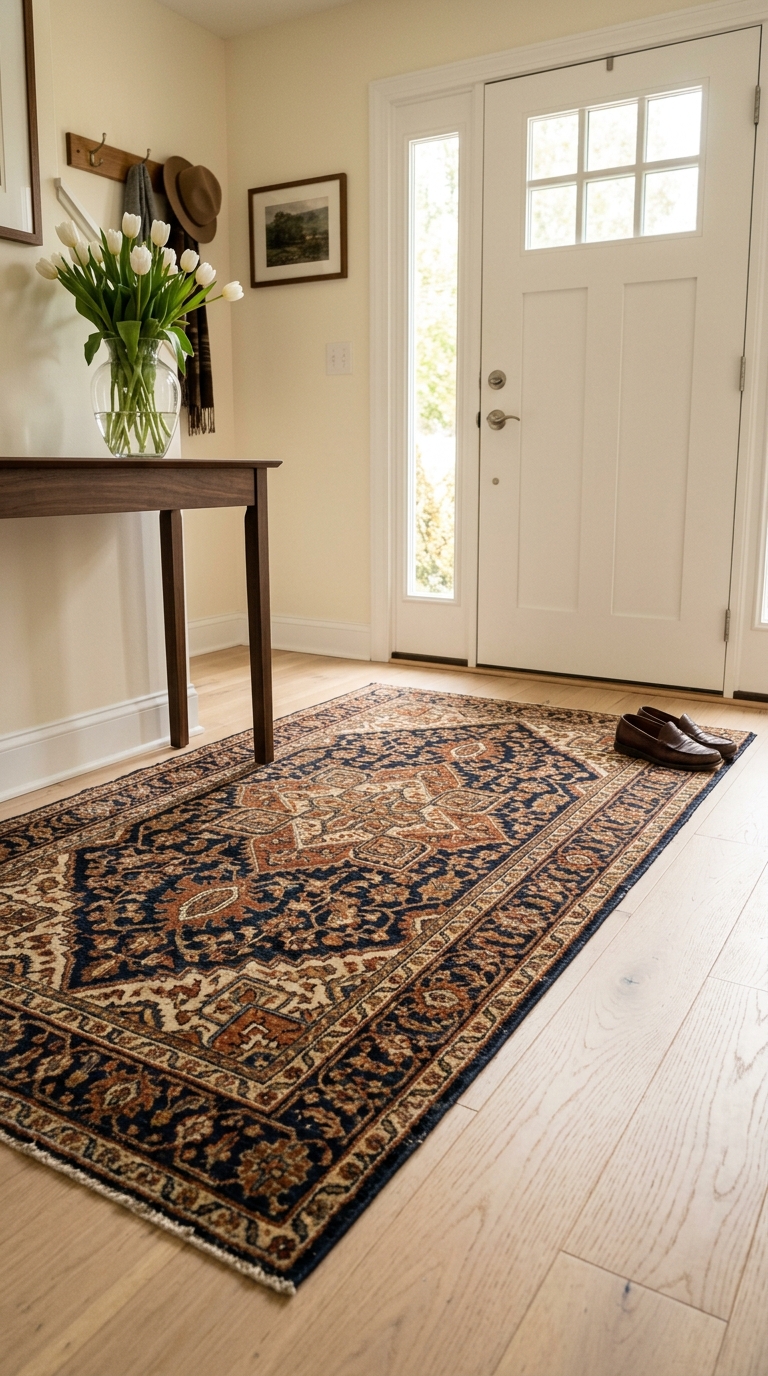
A rug does something almost magical in a small entryway — it tells the floor where the room begins. Without one, the entry can feel like a vague, forgotten transition zone between outside and inside. With the right rug, it suddenly has its own identity, its own personality, its own visual weight. You don’t need a large one. A runner in a bold pattern or a small 2×3 area rug with texture and color is enough to completely anchor the whole space. Go for something that genuinely makes you smile every time you look down at it.
Practically speaking, choose a rug with a low pile or a flat weave for entryways — thick shag catches dirt, curls under doors, and becomes a tripping hazard faster than you’d expect. A durable, washable rug is your best friend in this high-traffic spot. Natural fiber rugs like jute or sisal add wonderful organic warmth but don’t love moisture, so if your entryway is exposed to wet boots and rainy days, a polypropylene or cotton flatweave is the smarter choice. Whatever you choose, make sure it lays flat and feels like a genuine welcome underfoot every single time.
Dedicated Drop Zone With a Tray and Hooks
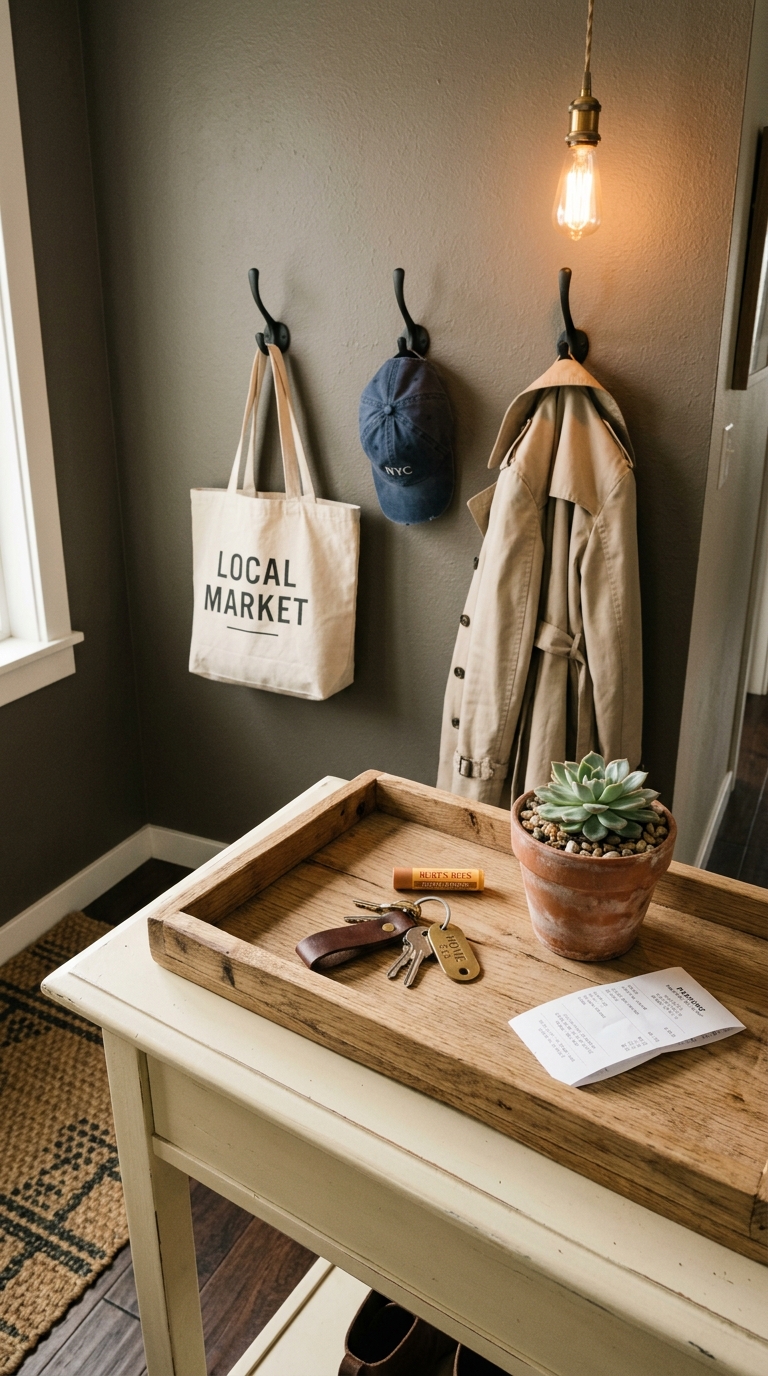
We all have a drop zone — the question is whether it’s intentional or chaotic. In most small entryways, it’s the latter: keys on the floor, mail on the console, bags draped over every available surface until the whole thing feels like controlled panic. The fix is almost embarrassingly simple. A tray and a row of hooks turn the same square footage into a system that works, and a system that actually gets used. The tray contains the small daily essentials. The hooks handle everything that hangs. Together, they absorb the entry chaos so it never spreads further into your home.
Choose a tray with some personality — a lacquered tray in a deep jewel tone, a hammered brass dish, a hand-thrown ceramic piece you picked up somewhere that makes you happy. For hooks, spacing is the detail people overlook: leave at least five inches between each hook so bags and coats don’t pile on top of each other and the whole wall starts to look like a yard sale. Three to five hooks is usually the sweet spot for a small entryway. Mount them at a height that works for the coats and bags your household actually uses — not so high that reaching up becomes a whole event.
Introduce a Plant for Life and Color
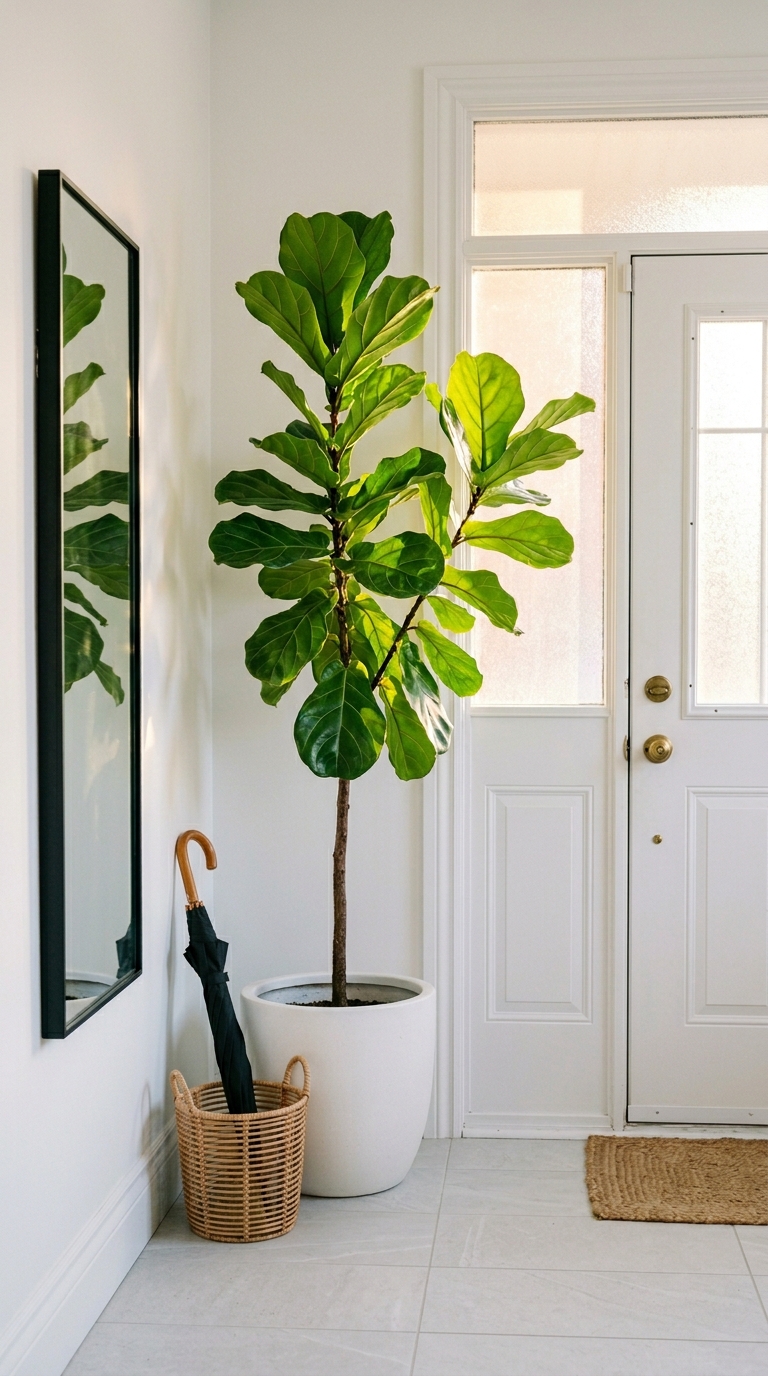
Plants do something no piece of furniture or wall art can do: they make a space feel genuinely alive. In a small entryway, a single well-chosen plant — something with presence, something with height or architectural shape — transforms the whole atmosphere from a passthrough into a place you actually want to pause in. A fiddle leaf fig, a tall snake plant, an olive tree in a beautiful pot, a trailing pothos on a high shelf — any one of these pulls the eye, adds color, and signals that someone in this home pays attention to living things. That matters more than people think.
If your entryway has almost no natural light, don’t give up on plants — just choose the right ones. ZZ plants and cast iron plants practically thrive on neglect and low light, and they always look composed and green. If you have a sliver of indirect light from a door sidelight or a window at the end of a hallway, pothos, heartleaf philodendrons, and peace lilies will do beautifully. Pot your entryway plant in something that coordinates with your existing colors rather than contrasting wildly — a cohesive pot color makes the plant feel designed rather than dropped in.
Use Paint or Wallpaper to Make the Entry Its Own World
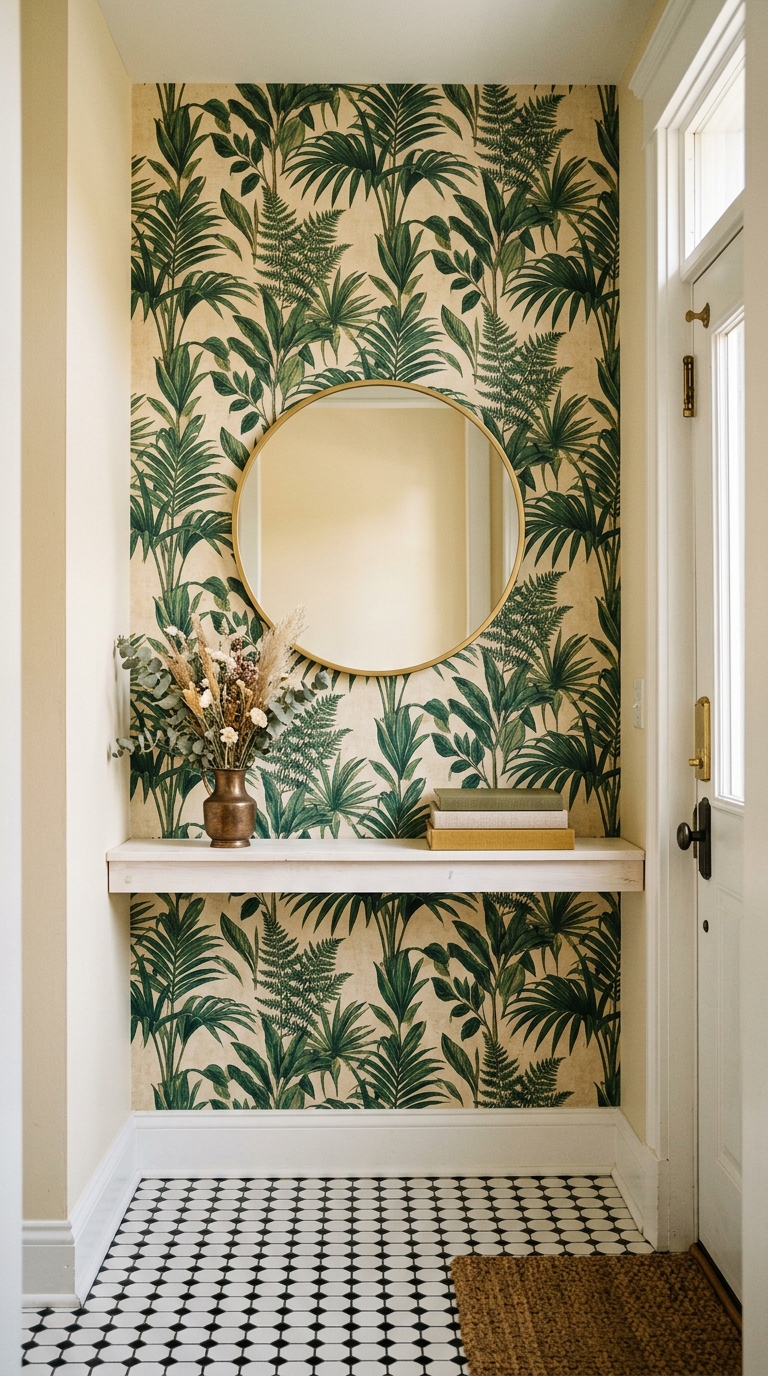
Here’s something liberating about decorating a small entryway: because it’s small, you can be bold in a way you might never dare in a larger room. A dramatically painted wall — think inky navy, warm terracotta, rich forest green — or a statement wallpaper turns a 20-square-foot transition space into the most talked-about spot in your home. Guests will notice it the moment they step inside. It sets a mood, it tells a story about who lives here, and it makes every other room they walk into feel like part of a deliberate, cohesive world rather than a collection of random furniture choices.
You don’t need to wallpaper every wall — in fact, please don’t. One statement wall is all it takes, and in a small entryway, one wall is usually all you have anyway. Paint is the more budget-friendly and renter-adaptable option: a single can of a bold, beautiful color costs very little and takes an afternoon. Peel-and-stick wallpaper has gotten genuinely impressive in quality and design over the last few years, and it’s a brilliant option if you’re renting or just want to try something dramatic without committing for years. Pick a pattern that connects somehow to colors or motifs in the adjacent rooms so the entryway feels like a doorway into the rest of your home rather than a random surprise.
Light It Beautifully With a Statement Pendant or Sconce
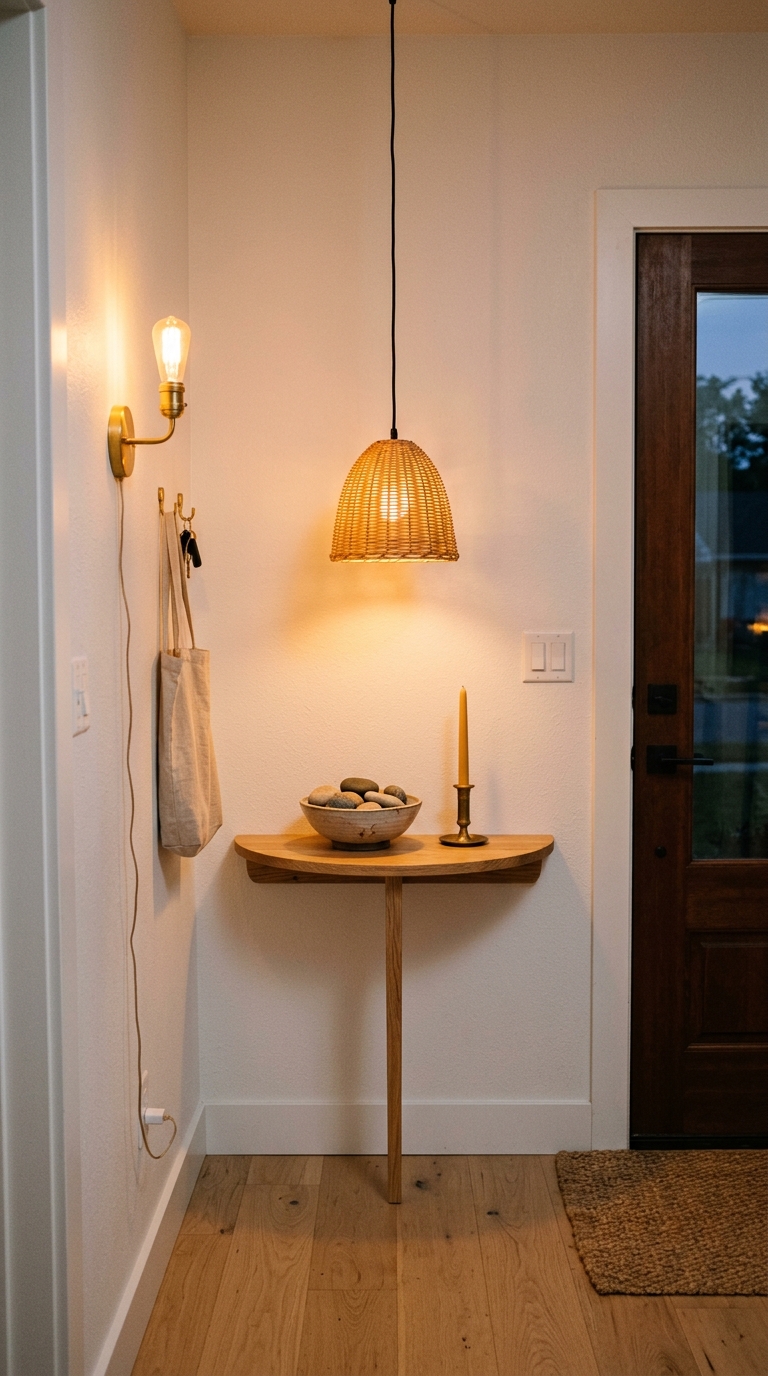
Lighting in an entryway is one of those decisions that seems minor until you get it right — and then you wonder how you ever lived without it. Overhead recessed lighting is fine, functional, and completely forgettable. A pendant with character, a well-placed sconce, or even a beautiful table lamp on your console communicates warmth and welcome in a way that overhead fluorescents simply cannot. When someone walks into your home and the lighting is warm and layered, they immediately relax. Their shoulders drop. They feel welcome. That’s the entire goal.
For small entryways, a single pendant hung lower than you think feels right is usually the most dramatic and inviting choice — aim for the bottom of the shade to sit at roughly 7 feet from the floor for comfortable clearance. If your entryway has low ceilings or no hardwired overhead option, a plug-in sconce mounted on the wall with its cord run neatly behind a small cable cover is a gorgeous workaround that looks completely intentional. Warm-toned bulbs in the 2700K range make skin look good and spaces feel cozy — save the cool daylight bulbs for the kitchen and bathroom.
Maximize a Corner With a Curved or Corner Piece
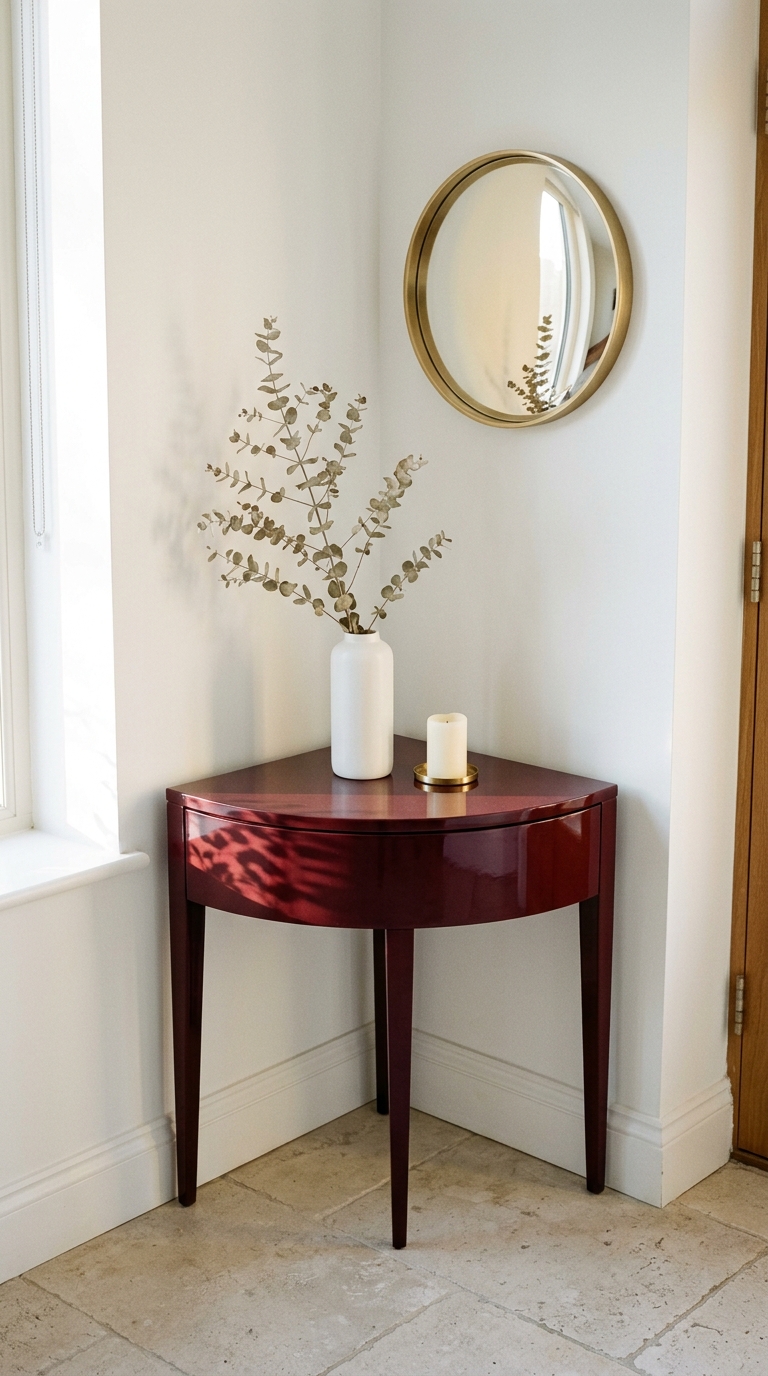
Corners in small entryways get ignored constantly, and it’s such a waste of genuinely usable, stylish real estate. A corner doesn’t need to be a forgotten triangle of dead space — with the right piece, it becomes the most interesting spot in the room. A curved corner table, a tall floor lamp that tucks neatly into the angle, or even a simple corner shelf unit uses that awkward geometry to your advantage. The curve of a rounded piece especially plays beautifully against the hard right angles of walls meeting, and it creates a softness that the whole entry benefits from.
The secret with corners is choosing pieces that are designed for them rather than forcing a standard rectangular piece into an angular space. Curved furniture has had a genuine moment in interior design recently, and small curved console tables and accent tables are now widely available at accessible price points. If furniture isn’t your route, a tall corner floor lamp with a beautiful shade and a warm bulb does wonders — it adds light exactly where entryways tend to go dim, and it uses vertical space that would otherwise be completely empty.
Personalize It With Art That Means Something
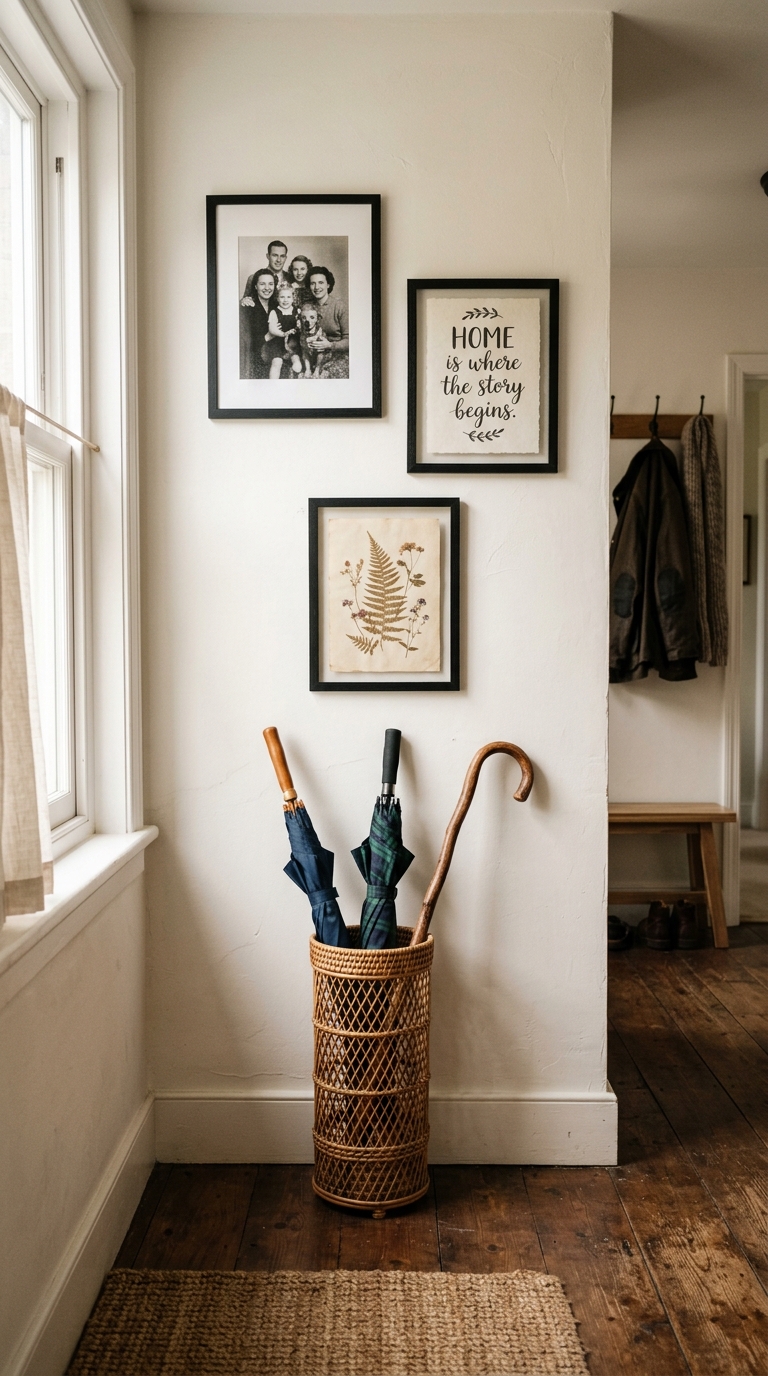
Art in the entryway does something deeply personal — it tells your story before you’ve said a word. The most memorable entryways we’ve ever walked into had something on the walls that felt genuinely chosen, genuinely loved, and genuinely human. Not a generic print from a big box store, not a filler piece that matched the rug — something with a heartbeat. A photograph from a trip that changed you, a painting from a local artist you found at a market, your child’s framed drawing, a print from a poet whose words feel like home. Any of these, framed simply and hung with intention, makes your entryway feel irreplaceable.
You don’t need a large piece or a perfectly coordinated gallery wall — though those are wonderful if that’s your style. A single meaningful artwork hung at eye level can carry an entire small entryway if it’s something you genuinely love. Lean a larger framed piece against the wall on top of your console rather than hanging it if you’re renting or just love the casual, collected look. Mix frame finishes if you’re doing a small cluster — matte black, warm brass, and natural wood together look eclectic in the best way, the kind of collected-over-time energy that no algorithm can manufacture.
Embrace Minimalism When Space Is Truly Tiny
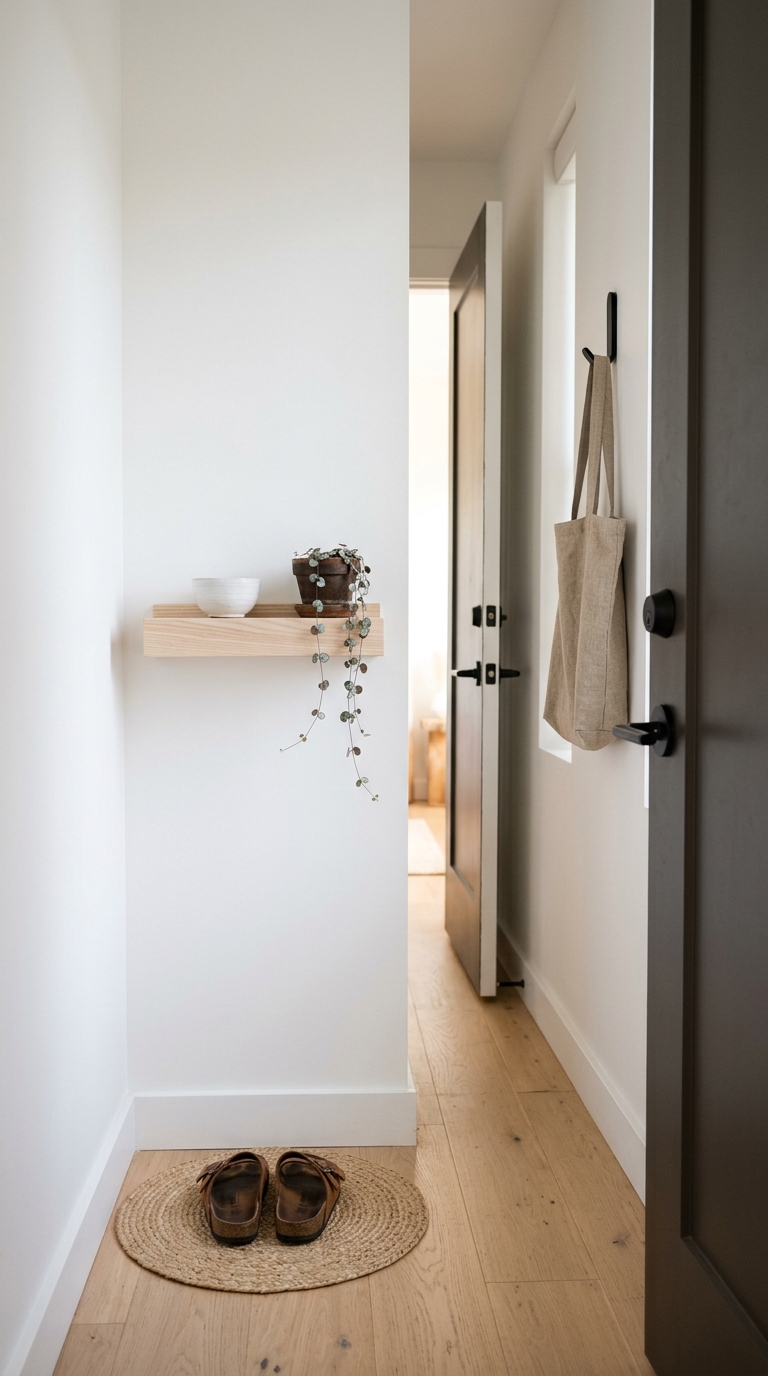
Sometimes the most powerful design decision you can make is restraint. In a truly tiny entryway — we’re talking the kind where you open the door and you’re basically already in the living room — minimalism isn’t a style preference, it’s a superpower. One hook. One small mat. One beautiful object that makes you happy. That’s genuinely enough, and when done with intention, it looks more considered and more confident than an entryway stuffed with twice the furniture trying to compensate. The discipline of choosing less creates more breathing room, more calm, and more visual clarity in a space that can otherwise feel immediately overwhelming.
The trick to minimalism that feels warm rather than cold and clinical is texture. A single textural element — a chunky woven mat, a rough ceramic bowl, a linen bag hanging from a simple hook — adds the sensory richness that makes a spare space feel human rather than sterile. Stick to a two or three-color palette maximum: a wall color, a neutral, and one warm accent. Keep the floor as clear as possible — it’s the fastest way to make a tiny space feel larger. And edit ruthlessly on a regular basis. A minimalist entryway doesn’t stay that way on its own; it takes a quick reset every week or two, and that small effort pays off in the daily calm it gives you every single time you come home.
Your entryway is the first story your home tells — and now you have twelve beautiful ways to make that story worth hearing. You don’t need to try all of them at once; in fact, please don’t. Pick one idea that genuinely lit something up in you when you read it, and start there this week. Move a plant, hang a mirror, buy a tray — something small and real and yours. The most beautiful homes don’t get that way overnight; they get that way because someone kept making small, loving choices. Your front door is waiting, and everything on the other side of it is about to feel a little more like the sanctuary you deserve.