10 Small Living Room Ideas That Make Every Inch Count
Have you ever walked into a tiny living room and thought, “There’s no way this can look good”? We’ve all been there. But here’s the truth — small living rooms are not a design problem. They’re a design challenge, and honestly, one of the most rewarding ones to solve.
Whether you’re working with a 10×12 space or a narrow studio corner, the right ideas can completely transform how a room feels, flows, and functions. We’re not talking about tricks that only work in magazine photos. These are real, practical solutions that actual people use in actual small homes.
Let’s dig in.
Idea 1: Use a Light, Neutral Color Palette to Open Up the Space
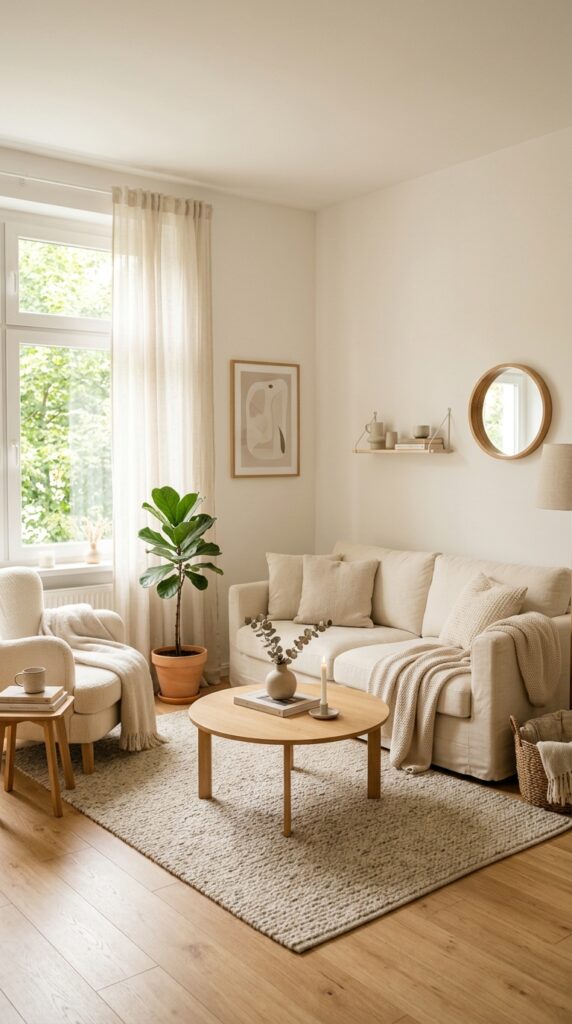
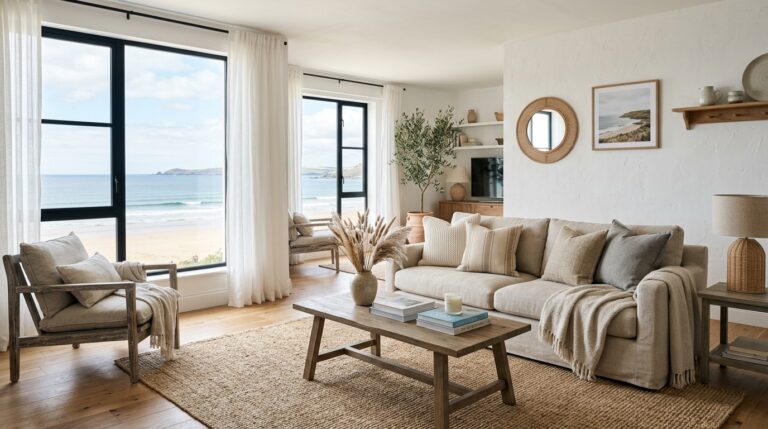
Color is the single most powerful tool you have in a small living room. Light colors reflect natural and artificial light, which makes your walls feel like they’re stepping back instead of closing in.
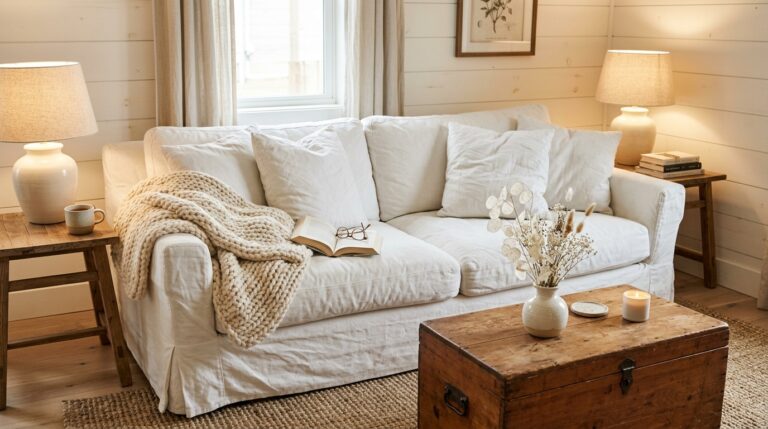
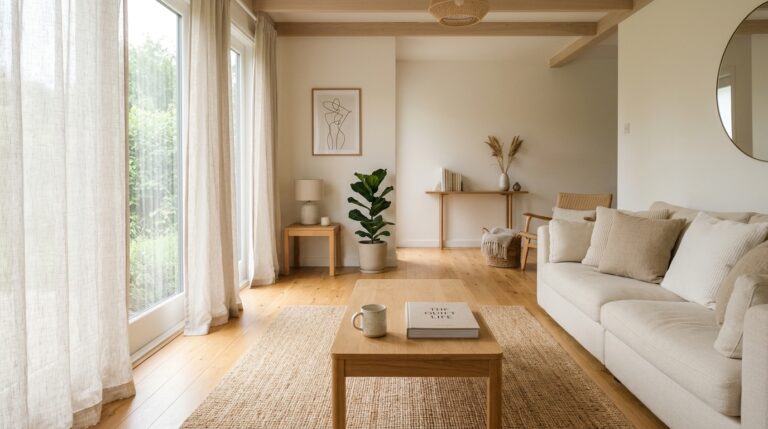
Think soft whites, warm creams, pale greiges, and light sage greens. These shades don’t drain the energy from a room — they breathe life into it. Paint not just your walls but also your ceiling in the same light tone. When the ceiling matches the walls, the eye doesn’t stop at a contrast line above your head. The room suddenly feels taller.
Practical tip: If you’re renting and can’t paint, use large light-colored curtains that run floor to ceiling. The visual effect is almost identical.
- Choose matte or eggshell finishes — they scatter light more softly than gloss
- Stick to one or two neutrals max to avoid visual noise
- Use warm whites instead of stark, cool whites for a cozy feel
- Add depth with textured fabrics like boucle or linen instead of contrasting paint colors
Idea 2: Choose Multi-Functional Furniture That Works Twice as Hard
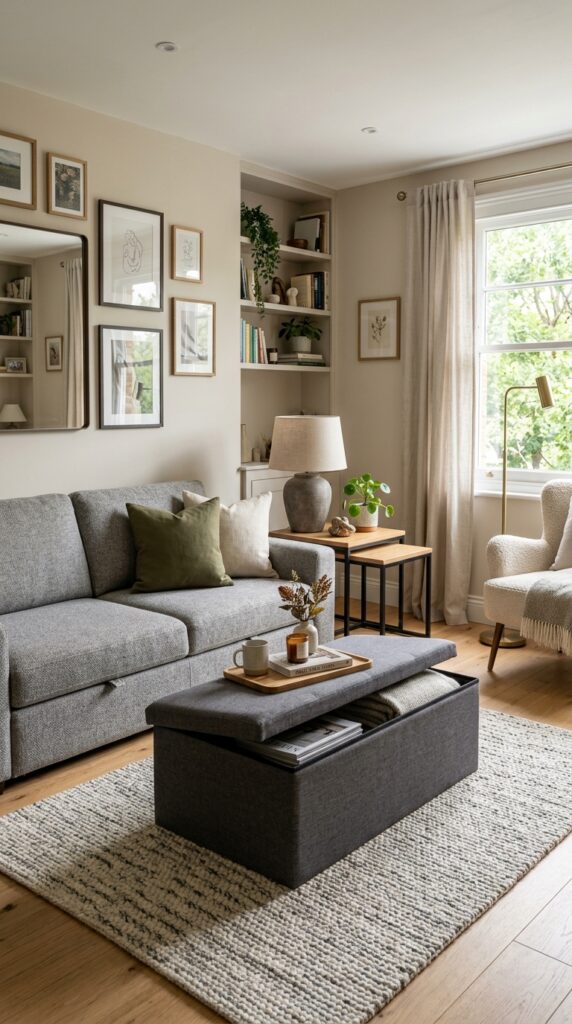
In a small living room, every single piece of furniture needs to justify its presence. If it only does one thing, think twice before bringing it in.
A storage ottoman, for example, replaces a coffee table, provides seating for guests, and hides your blankets and board games inside. A sofa with built-in storage under the seat cushions gives you hidden space without taking up extra floor area. A console table placed behind your sofa can act as a desk, a bar cart, or a display shelf.
Here’s something most people overlook: nesting tables. They sit together as one compact unit but pull apart when you need surface space. When company leaves, they tuck right back in.
- Lift-top coffee tables double as a work-from-home desk
- Sofa beds or daybeds handle overnight guests without a guest room
- Ottomans with trays on top serve as both seating and a coffee table
- Benches at the foot of a loveseat add seating and storage at once
Real scenario: A friend of mine lives in a 300-square-foot apartment. She replaced her bulky TV stand with a floating media console mounted to the wall. That one swap freed up nearly three feet of floor space — and suddenly her living room could fit a small armchair she’d been wanting for two years.
Idea 3: Mount Your TV on the Wall to Free Up Floor Space
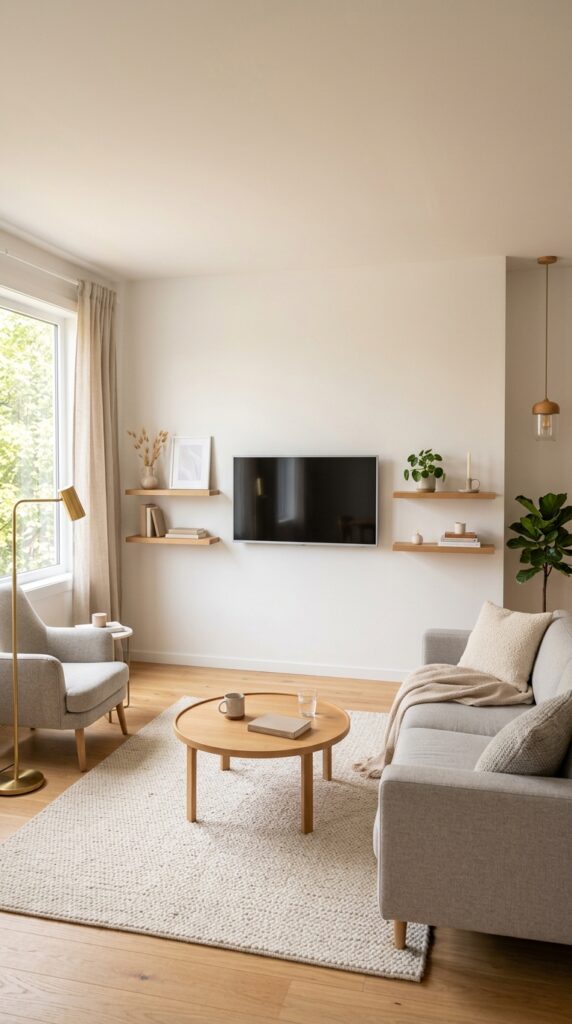
This one change does more for a small living room than most people expect. A wall-mounted TV eliminates the need for a TV stand or entertainment unit, which often eats up the most precious floor real estate in the room.
When you mount the TV at the right height — eye level when seated, usually around 42 to 48 inches from the floor to the center of the screen — you also improve your viewing experience. No neck strain, no awkward angles.
Pair the mounted TV with floating shelves on either side. Use those shelves for books, plants, and a few decorative objects. You’ve created a built-in look without actually paying for a built-in.
Practical tip: Hide your cables inside the wall or use a slim cable raceway that you paint to match your wall color. Nothing breaks the clean look of a mounted TV like a dangling cord situation.
- Use a full-motion mount so you can angle the screen from different seating positions
- Float a narrow media shelf below the TV for your devices — keep it minimal
- Leave breathing room above and below the TV — don’t crowd it with shelves
- Choose a TV size proportional to your room — bigger isn’t always better in small spaces
Idea 4: Bring In Mirrors to Double the Visual Space
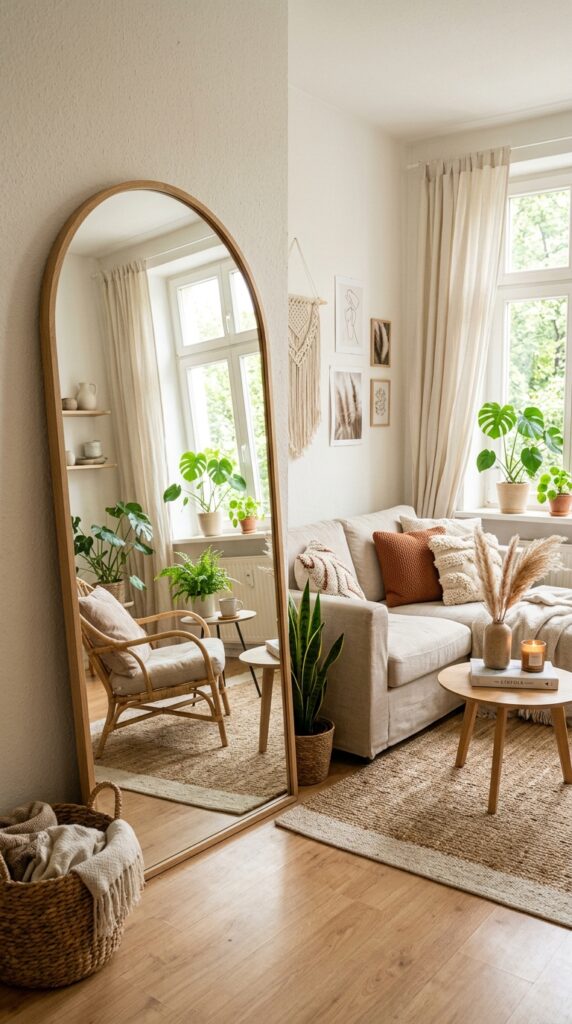
Mirrors are basically free square footage. A well-placed mirror reflects light and creates the illusion that your room extends beyond its actual walls. This is one of the oldest tricks in interior design — and it still works beautifully.
The key is placement. Hang a large mirror on the wall directly across from your window. It will bounce natural light back into the room and create a second “window” effect. Your room will feel noticeably brighter and more open, even on a cloudy day.
Don’t limit yourself to one standard rectangular mirror above the sofa. Lean a tall floor mirror in a corner. Group three smaller mirrors in varying shapes on a gallery wall. Use a mirrored tray on your ottoman to add subtle reflection at furniture level.
- Avoid placing mirrors where they reflect cluttered or unattractive areas
- Arched mirrors add softness and work beautifully in modern and boho styles
- Antique or aged mirrors add character without feeling sterile
- Position mirrors at eye level for the most natural and effective reflection
Idea 5: Choose the Right Size Rug — and Place It Correctly
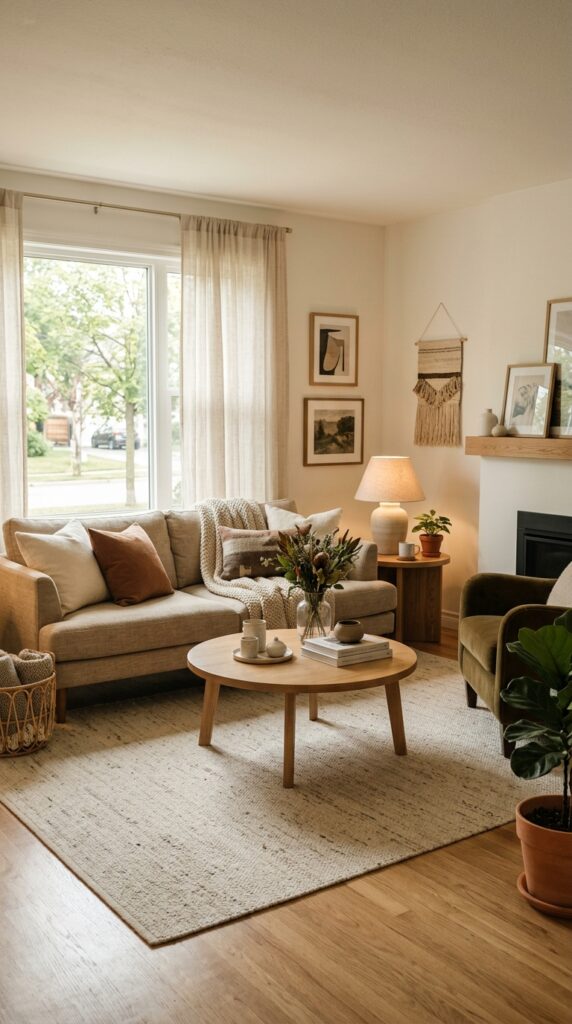
Most people in small living rooms make one of two mistakes: they choose a rug that’s too small, or they skip the rug entirely. Both choices make the room feel disconnected and unfinished.
A rug that’s too small floats awkwardly in the center of the room and makes your furniture look like it’s hovering. The right rug grounds everything and visually anchors the seating area into one cohesive zone.
In a small living room, go for a rug that’s large enough for the front legs of all your major furniture pieces to sit on it. This creates a unified look. If you can’t find the right size, layer a smaller rug over a natural fiber base like jute — it’s an affordable way to get a larger visual footprint.
- Light-colored rugs with simple patterns keep the floor from feeling heavy
- Low-pile rugs work better in small spaces — they don’t add visual bulk
- Avoid dark, busy patterns that chop up the floor visually
- Round rugs work wonderfully in small square rooms — they soften corners and improve flow
Idea 6: Go Vertical — Use Your Walls All the Way Up
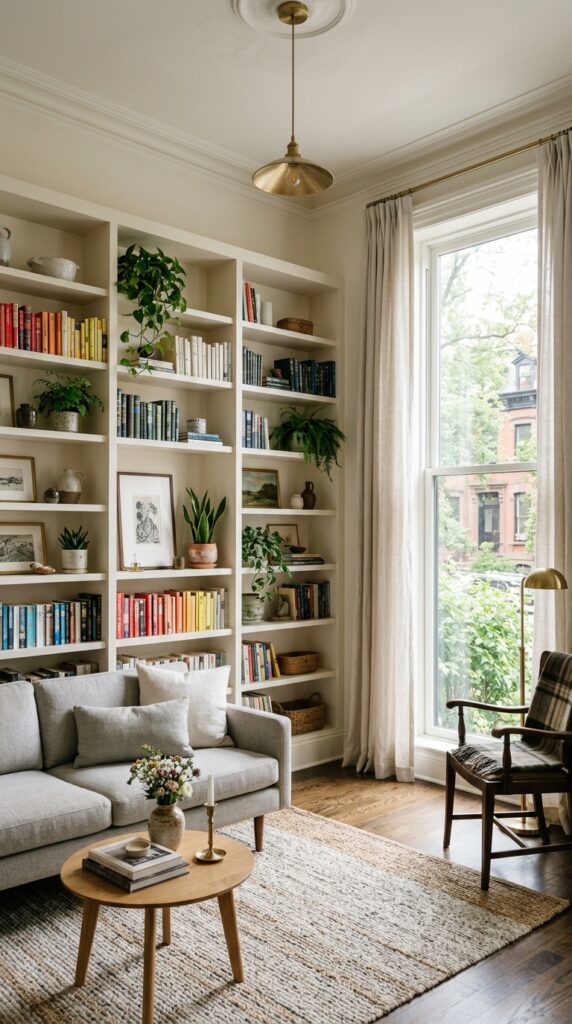
When floor space is limited, think upward. Most people decorate from eye level down and completely ignore the upper third of their walls. That’s wasted opportunity.
Floor-to-ceiling bookshelves make a dramatic statement and give you enormous storage without consuming floor space. Even in a small living room, a full-height shelving unit feels intentional and impressive — not cramped.
If built-ins aren’t in your budget, use tall freestanding shelves and anchor them to the wall for safety. Paint them the same color as your wall to make them feel like part of the architecture. This trick, called “blending,” makes the shelf disappear visually and lets the things on the shelves do the talking.
- Hang curtain rods as high as possible — close to the ceiling — to draw the eye upward
- Stack decorative items vertically on shelves instead of spreading them horizontally
- Use the top shelf for less-used items stored in matching baskets or boxes
- Vertical stripes in wallpaper or decor accents add perceived height instantly
Idea 7: Edit Your Decor — Less Is Genuinely More
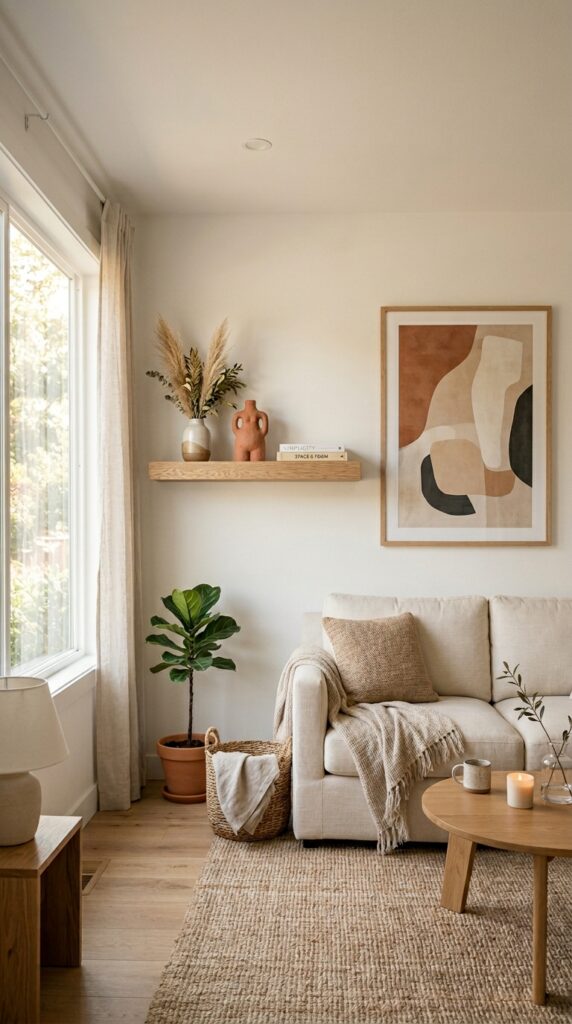
Here’s something that sounds obvious but is surprisingly hard to do: stop adding things. In a small living room, every extra object competes for visual attention. The more items you have, the smaller and more chaotic the room feels.
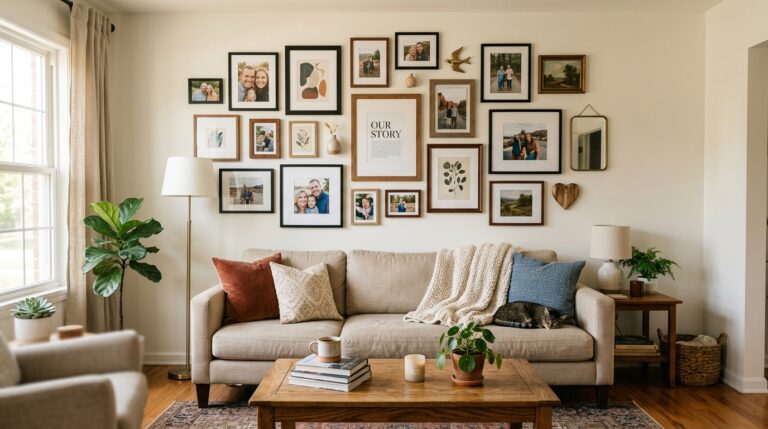
Editing your decor is not about making your space look bare or boring. It’s about being intentional. Display fewer items, but choose ones you genuinely love and that have visual weight. One large piece of art on a wall reads far better than six small, unrelated frames scattered around.
Think of your living room like a well-curated boutique, not a storage room. Every item earns its place.
- Choose three to five decorative objects per surface and commit to that limit
- Group items in odd numbers — three candles, five books — for natural visual balance
- Rotate your decor seasonally instead of displaying everything at once
- Keep 30 percent of your shelf space empty — breathing room is part of the design
Practical tip: Do a decor audit. Remove everything from the room, then only bring back in what you truly love. You’ll be shocked how much you were keeping out of habit rather than intention.
Idea 8: Use Furniture With Exposed Legs to Create a Floating Effect
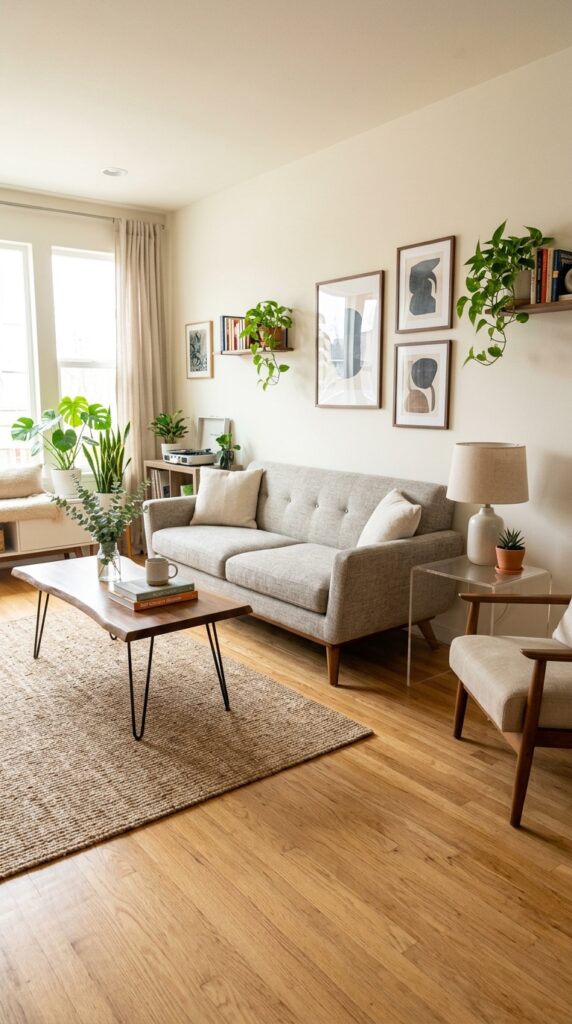
This is a subtle detail that makes a huge difference. Furniture with visible legs — sofas, chairs, side tables, sideboards — allows you to see the floor beneath them. That continuous line of flooring makes the room feel open and expansive.
Compare that to a sofa with a solid base that sits directly on the floor. It creates a visual block. Your eye stops at the furniture instead of traveling across the room. In a small space, that stopping point makes everything feel more compressed.
Choose a sofa with slim tapered legs. Pick a coffee table with hairpin legs. Even your TV console will look lighter and less bulky if it’s elevated on legs rather than sitting flush with the floor.
- Acrylic or lucite tables take this concept even further — they’re almost invisible
- Avoid heavy, solid-base furniture in small rooms whenever possible
- Light wood tones for legs keep things warm without adding visual heaviness
- Legs that match your floor color create a seamless, spacious feel
Idea 9: Control Your Lighting With Layers Instead of One Overhead Light
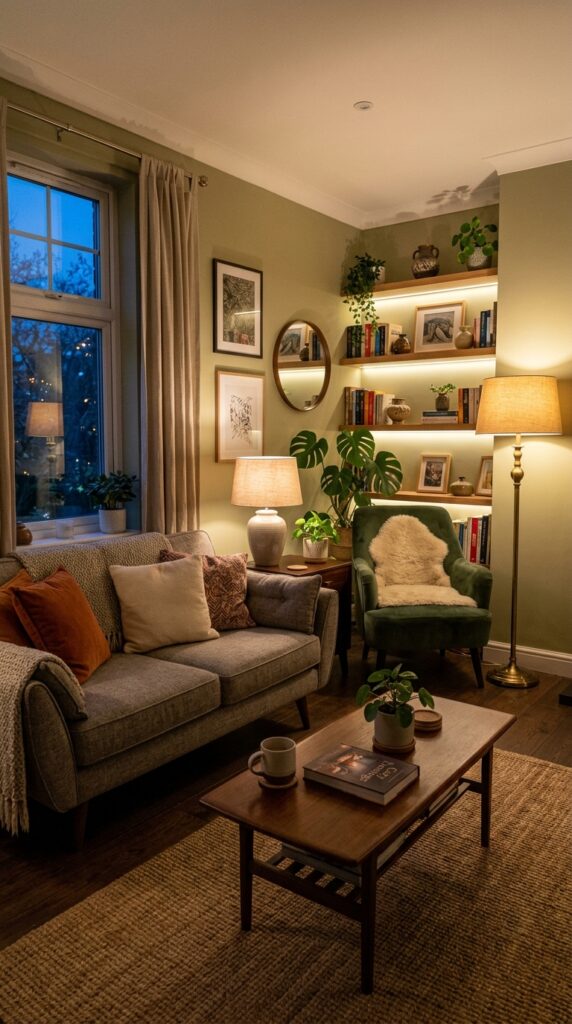
Overhead lighting alone flattens a small room. It creates harsh shadows and makes everything look one-dimensional. Layered lighting, on the other hand, adds depth, warmth, and the feeling of a larger, more intentional space.
Think about it in three layers: ambient lighting (your general illumination), task lighting (for reading or working), and accent lighting (for atmosphere and highlighting decor). When you use all three together, your room gains dimension and character that no overhead fixture can achieve alone.
A floor lamp in the corner adds warmth and draws the eye to that part of the room, making the space feel larger. LED strip lighting behind a floating shelf adds a beautiful glow that makes the wall recede. Table lamps at sofa-side height create that cozy, intimate atmosphere that feels like home.
- Use dimmable bulbs wherever possible — control the mood instantly
- Warm white bulbs (2700K-3000K) make small rooms feel cozy, not clinical
- Avoid multiple overhead can lights that all point in the same direction
- Sconces mounted on walls free up floor and table space while adding great light
Idea 10: Define Zones to Make the Space Feel Purposeful
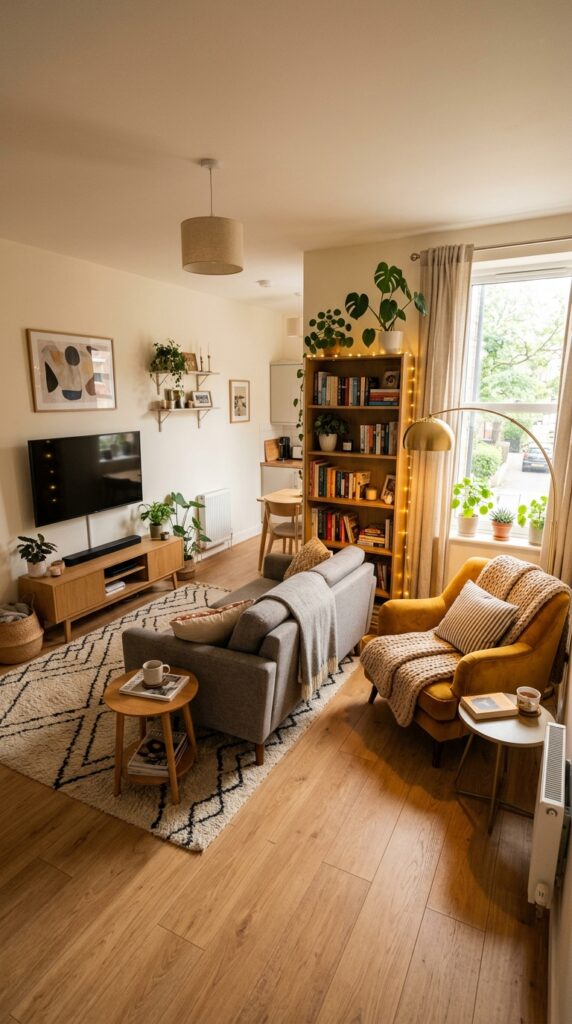
Even in a small living room, you can create distinct zones — a reading nook, an entertainment area, a conversation corner. When a room has clear zones, it feels organized and intentional. Without them, a small room feels like one undifferentiated blob of stuff.
You don’t need walls to create zones. Use your rug to define the main seating area. Place a floor lamp and a single armchair with a small side table in the corner — that’s your reading nook. Position your sofa so it faces the TV while also leaving a clear path to the window — that natural flow creates a sense of purpose.
Even in 200 square feet, you can make someone feel like they’ve walked through different parts of a thoughtfully designed space.
- Use the back of your sofa as a subtle room divider in an open-plan space
- Different lighting zones — bright for reading, dim for TV — reinforce each area’s purpose
- A small bookshelf turned perpendicular to the wall can act as a mini partition
- Different textures or accent colors in each zone create subtle visual boundaries
Wrapping It All Up
Small living rooms don’t need more space — they need smarter decisions. And the beautiful thing is that once you start applying even two or three of these ideas, the transformation feels dramatic. You start to see your space not as a limitation but as an invitation to be genuinely creative.
Start with the ideas that feel most doable right now. Maybe it’s editing your decor this weekend, or repositioning your existing rug. Small changes build momentum. Before long, your living room will feel like the most intentional, comfortable space in your home — no extra square footage required.