10 Living Room Decor Ideas That Will Make You Fall in Love With Your Space All Over Again
Have you ever walked into someone’s living room and immediately felt something shift inside you — like the space itself was saying welcome, stay a while? That feeling isn’t magic. It’s intentional design, and you can absolutely create it in your own home.
Whether you’re starting from scratch or just tired of the same old look, these 10 living room decor ideas will give you real, actionable inspiration — not the kind you pin and forget, but the kind you actually do. Let’s get into it.
Idea 1: Build a Gallery Wall That Tells Your Story
Blank walls are a missed opportunity. A gallery wall is one of the most personal things you can add to a living room, and when done right, it becomes the first thing every guest notices.
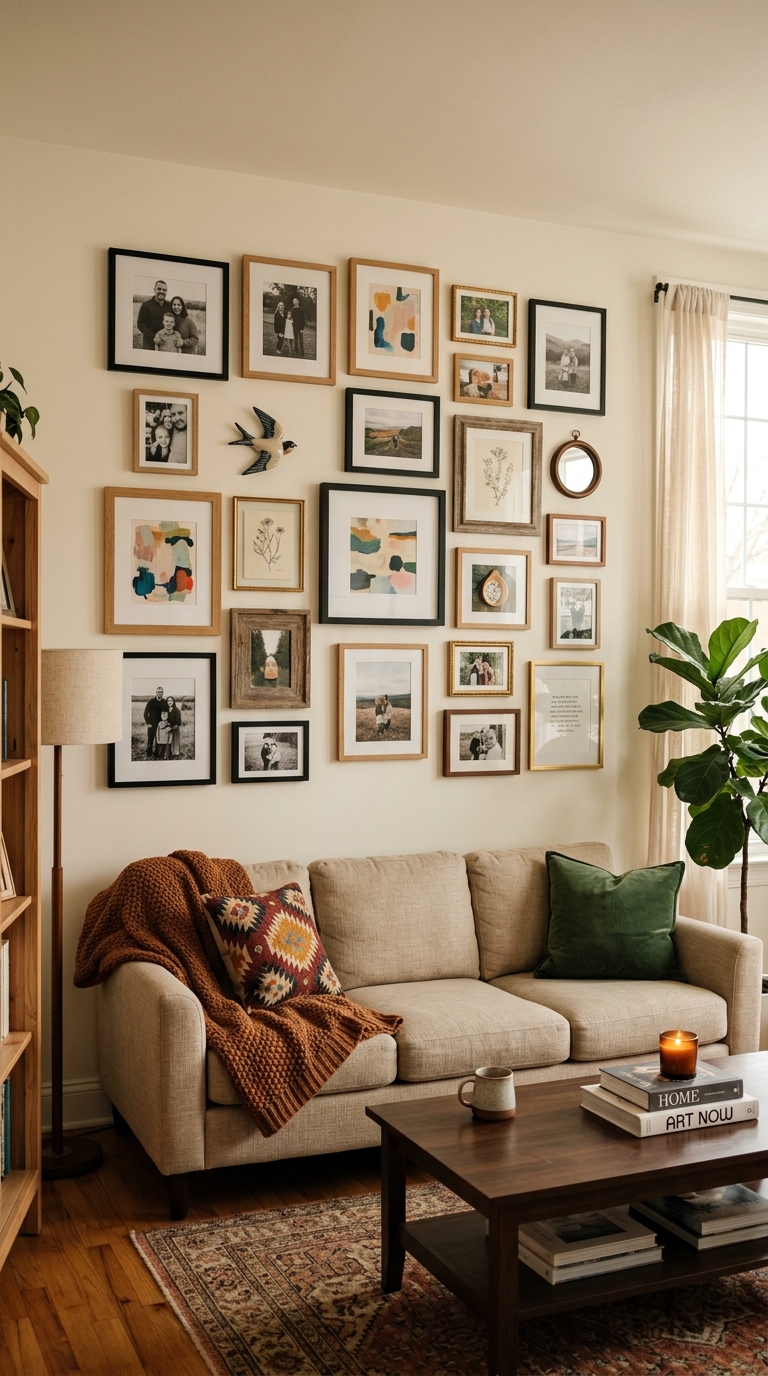
The key is to stop thinking of it as a collection of frames and start thinking of it as a visual autobiography. Mix family photos with art prints, vintage maps, quotes that mean something to you, and even your kids’ drawings in proper frames. That variety is what makes it feel alive rather than staged.
How to get it right:
- Lay everything on the floor before hanging a single nail
- Use a mix of frame sizes — at least three different dimensions
- Stick to two or three colors across all the frames for visual cohesion
- Leave roughly 2 to 3 inches of space between each piece
- Anchor the wall with one large centerpiece, then build outward
A real tip from experience: cut paper templates of each frame, tape them to the wall with painter’s tape, and live with the layout for a day before committing. You’ll save yourself a dozen unnecessary holes in the wall.
Idea 2: Anchor the Room With a Statement Rug
If your living room feels like it’s missing something but you can’t figure out what, nine times out of ten the answer is the rug. A great rug doesn’t just sit on the floor — it holds the entire room together like glue.
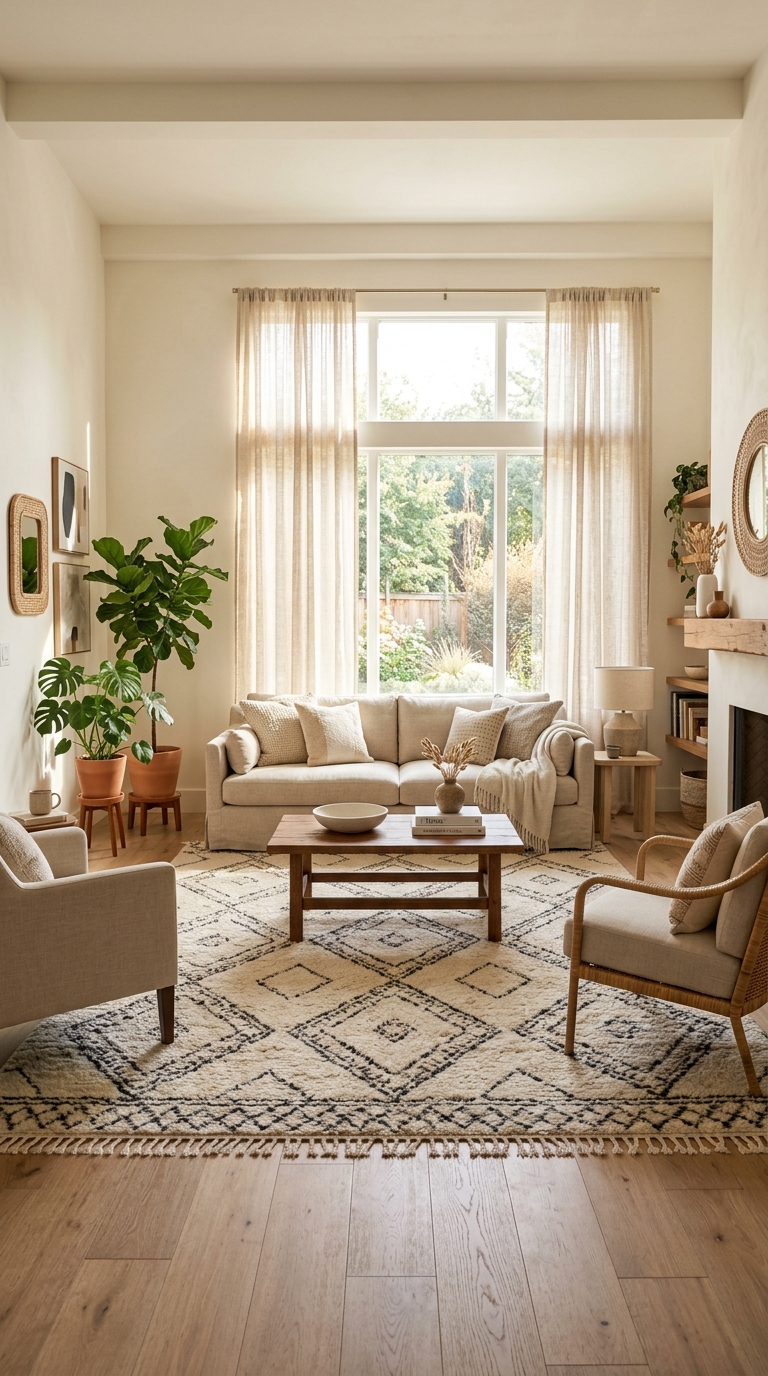
The most common mistake people make is going too small. Your rug should be large enough so that at least the front legs of every sofa and chair sit on it. When a rug floats in the middle of the room with all the furniture sitting off it, the space feels disconnected and awkward.
Go bold with pattern if your furniture is neutral, or choose a solid textured rug if your sofa or curtains are already doing visual work. A Moroccan-style berber rug, a vintage Persian, or a chunky jute weave can each completely transform the energy of a room.
Idea 3: Introduce a Velvet Sofa as Your Focal Point
Here’s something most people don’t realize: your sofa is the single most influential piece in your living room. Everything else responds to it. So if your sofa is beige and boxy and forgettable, your whole room suffers.
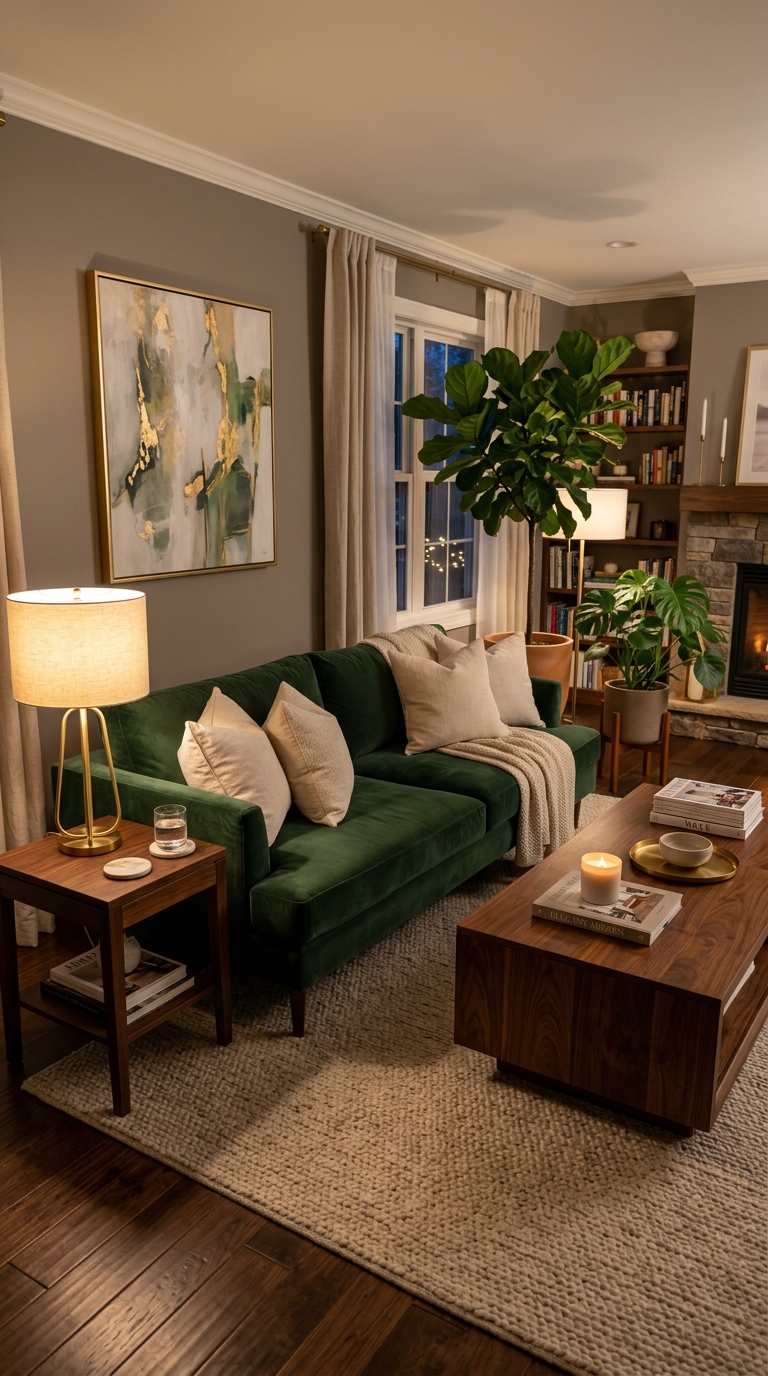
A velvet sofa in a rich color — think forest green, dusty rose, deep navy, or burnt terracotta — instantly elevates the entire space. Velvet has this incredible quality where it absorbs light differently depending on the angle, so it always looks interesting even when nothing else in the room is happening.
Pair a jewel-toned velvet sofa with:
- Brass or gold metal accents in lamps and side tables
- Cream or ivory throw pillows with subtle texture
- A dark wood coffee table to ground it
- A chunky knit throw draped casually over one arm
Don’t be afraid of color here. Neutral rooms are safe, but a well-chosen velvet sofa makes a room feel curated, confident, and genuinely stylish.
Idea 4: Use Layered Lighting to Set the Mood
Overhead lighting alone is the enemy of a cozy living room. If your only light source is a single ceiling fixture, your room will always feel flat, clinical, and uninviting — no matter how beautiful everything else is.
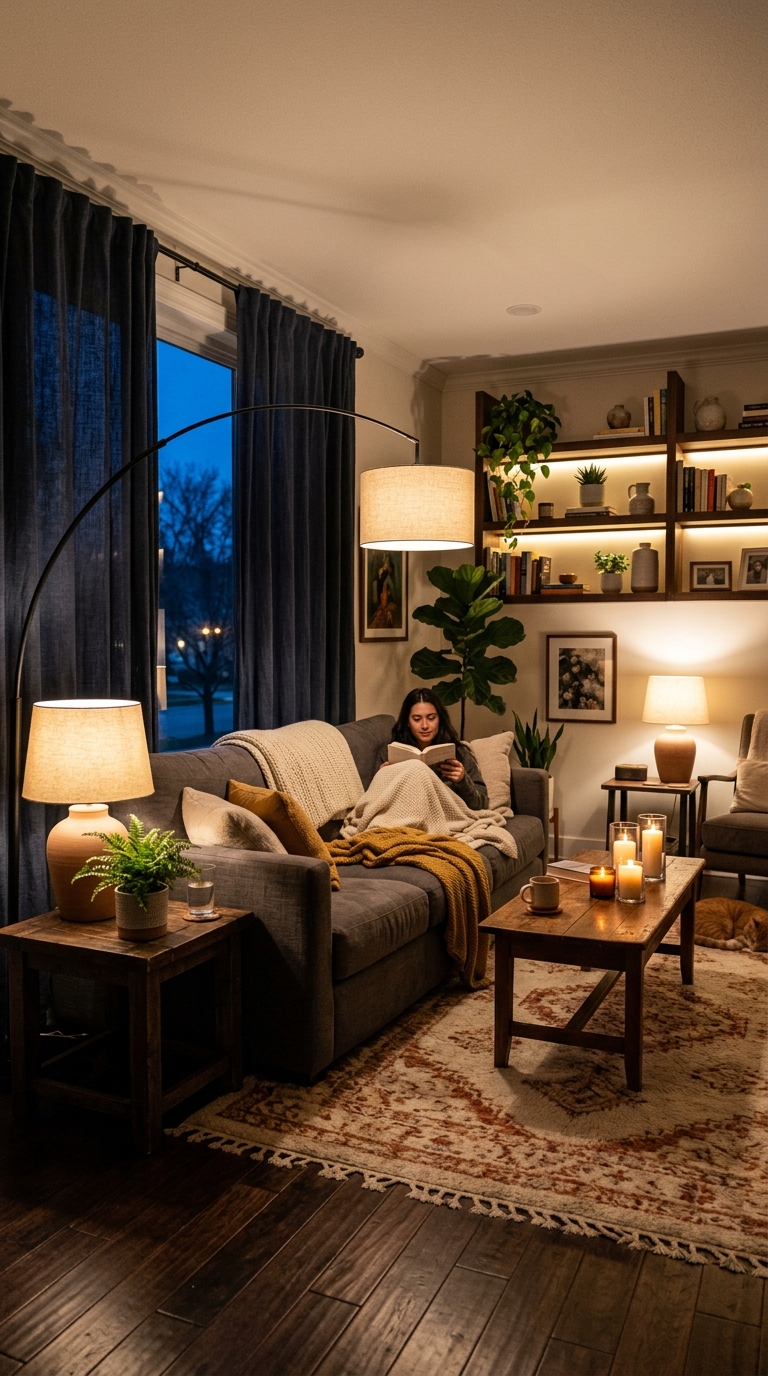
Great lighting has layers. You need at least three sources working together: ambient (the overall fill light), task (reading lamps, desk lamps), and accent (candles, LED strips behind shelving, picture lights over art). When you control those three independently, you can shift the mood of your room completely depending on the time of day or occasion.
Quick layered lighting setup that works:
- Floor lamp in a corner for soft ambient fill
- Table lamp on each side table flanking the sofa
- Candles or a candle lantern on the coffee table
- Dimmable overhead light as a backup only
Warm bulbs in the 2700K to 3000K range make everything look golden and inviting. Swap any cool white bulbs immediately — they make even gorgeous rooms look like a hospital waiting room.
Idea 5: Bring the Outdoors In With Indoor Plants
Plants do something for a living room that no piece of furniture can do — they make it feel alive. Literally. And you don’t need a green thumb or a massive budget to make it work.
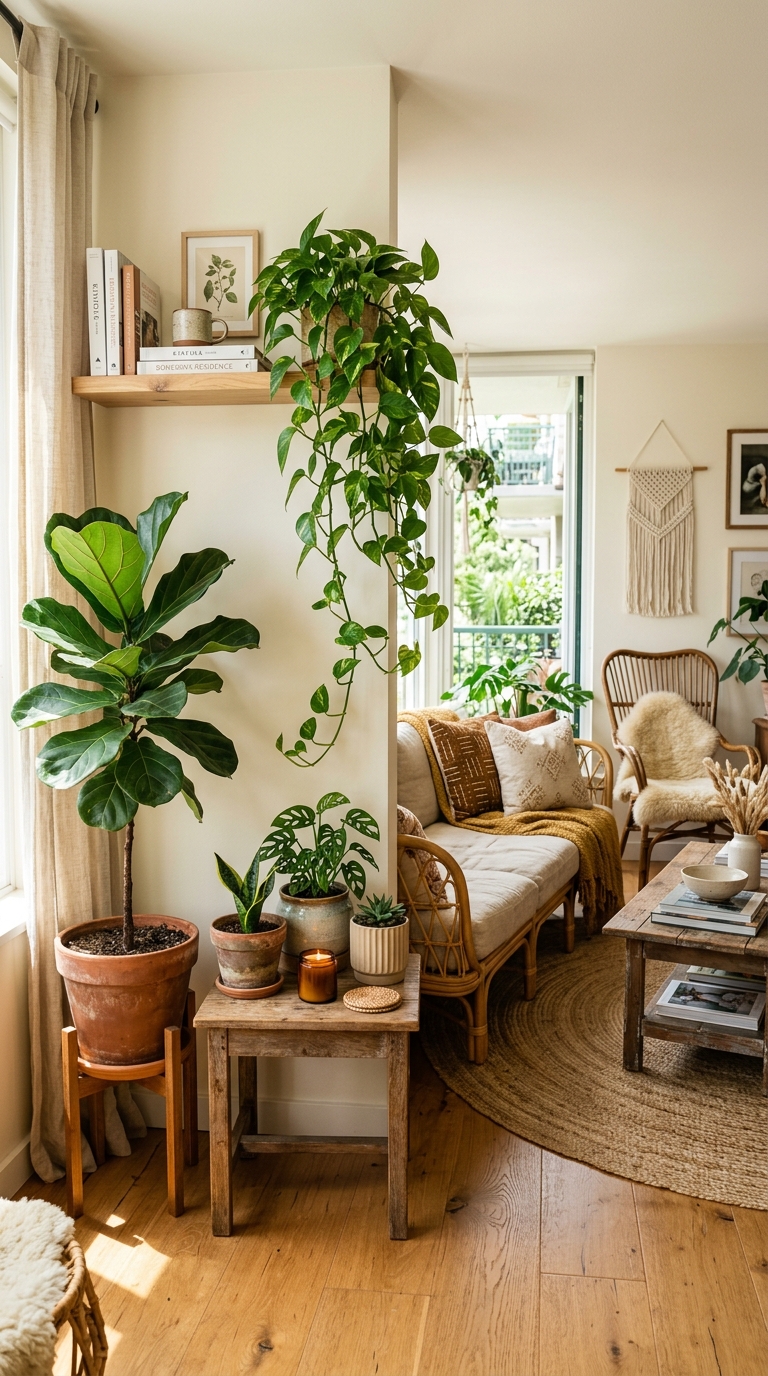
The trick is to think in terms of scale. One small succulent on a shelf is decoration. A large fiddle leaf fig in the corner, a trailing pothos on a high shelf, and a cluster of smaller plants on a side table together — that’s an interior design moment.
Best plants for living rooms (even if you forget to water):
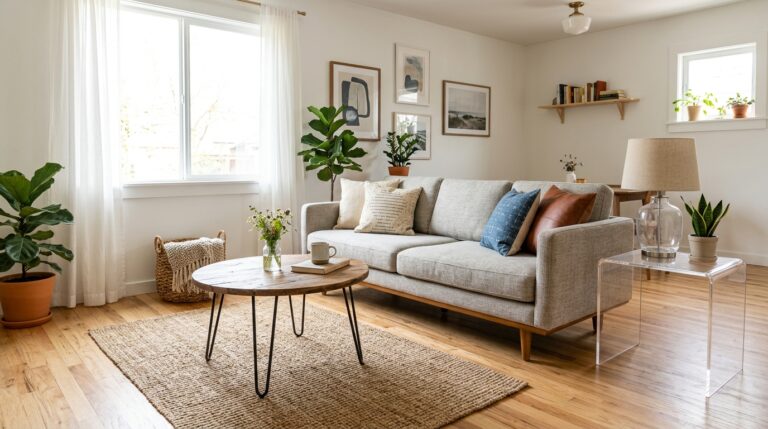
- Fiddle Leaf Fig — dramatic and sculptural, loves bright indirect light
- Pothos — nearly indestructible, trails beautifully from high shelves
- Snake Plant — tolerates low light and irregular watering like a champ
- ZZ Plant — glossy leaves, extremely forgiving
- Rubber Plant — bold dark leaves, makes a strong visual statement
Use a mix of pot materials — terracotta, ceramic, and woven baskets — to add texture to the plant display itself. And cluster plants in odd numbers (three or five together) rather than spacing them evenly around the room.
Idea 6: Add a Bookshelf and Style It Intentionally
A bookshelf in a living room says something about who you are. But an unstyled bookshelf — where books are just crammed in randomly — misses a massive design opportunity.
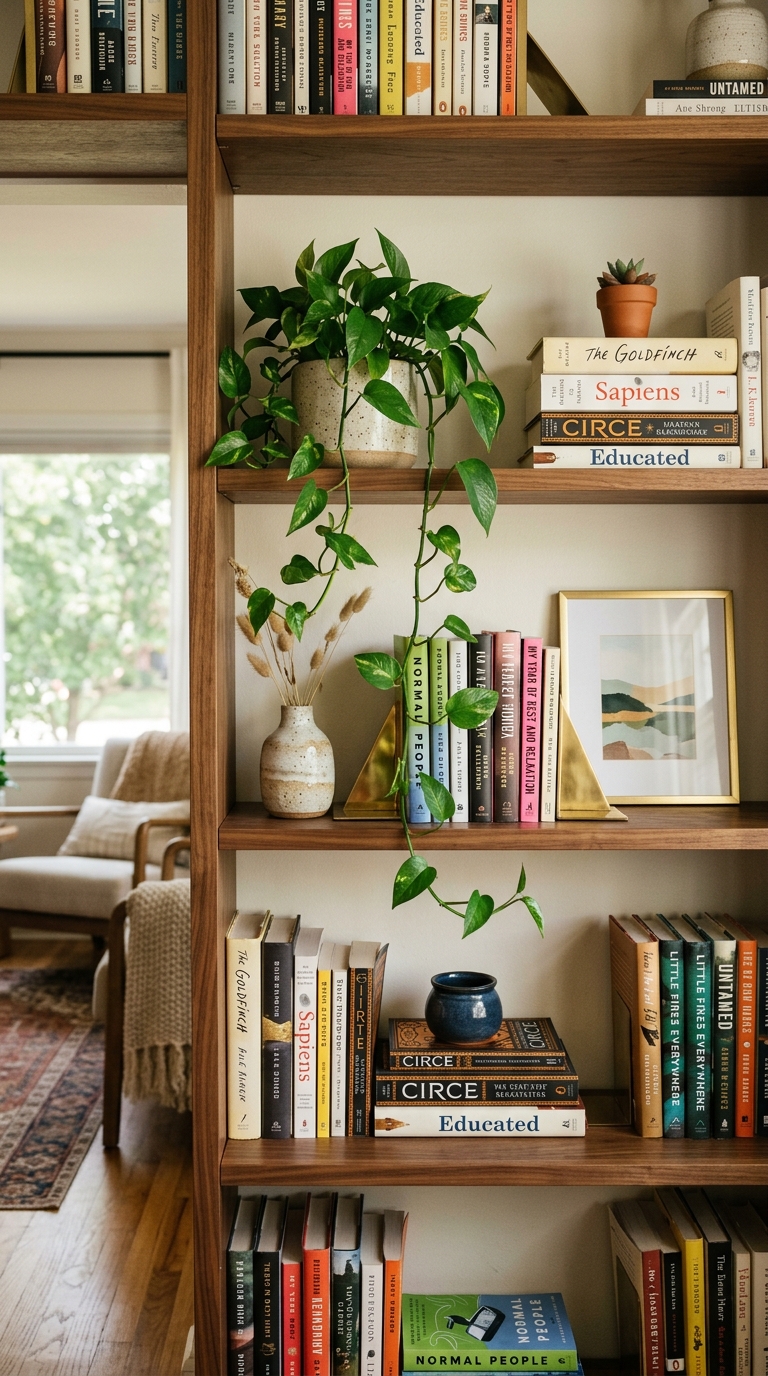
The secret to a great styled bookshelf is the ratio: roughly 60% books and 40% decorative objects. You want the shelf to look collected and personal, not like a library or a store display.
How to style a living room bookshelf:
- Stack some books horizontally, stand others vertically — vary the rhythm
- Add small plants or trailing vines between book stacks
- Include one or two sculptural objects — a vase, a ceramic bowl, a figurine
- Lean a small framed print or mirror against the back of a shelf
- Use bookends that are interesting in themselves — marble, brass, or sculptural shapes
- Leave some breathing room — negative space is part of the design
Color-coding your books is a popular approach that works beautifully if you have enough volumes to pull it off. But mixing naturally also looks great if the objects you place around them are intentional.
Idea 7: Create a Cozy Reading Nook Within the Living Room
You don’t need a separate room to have a reading nook. You just need one intentional corner. And once you create it, it becomes everyone’s favorite spot in the house — including yours.
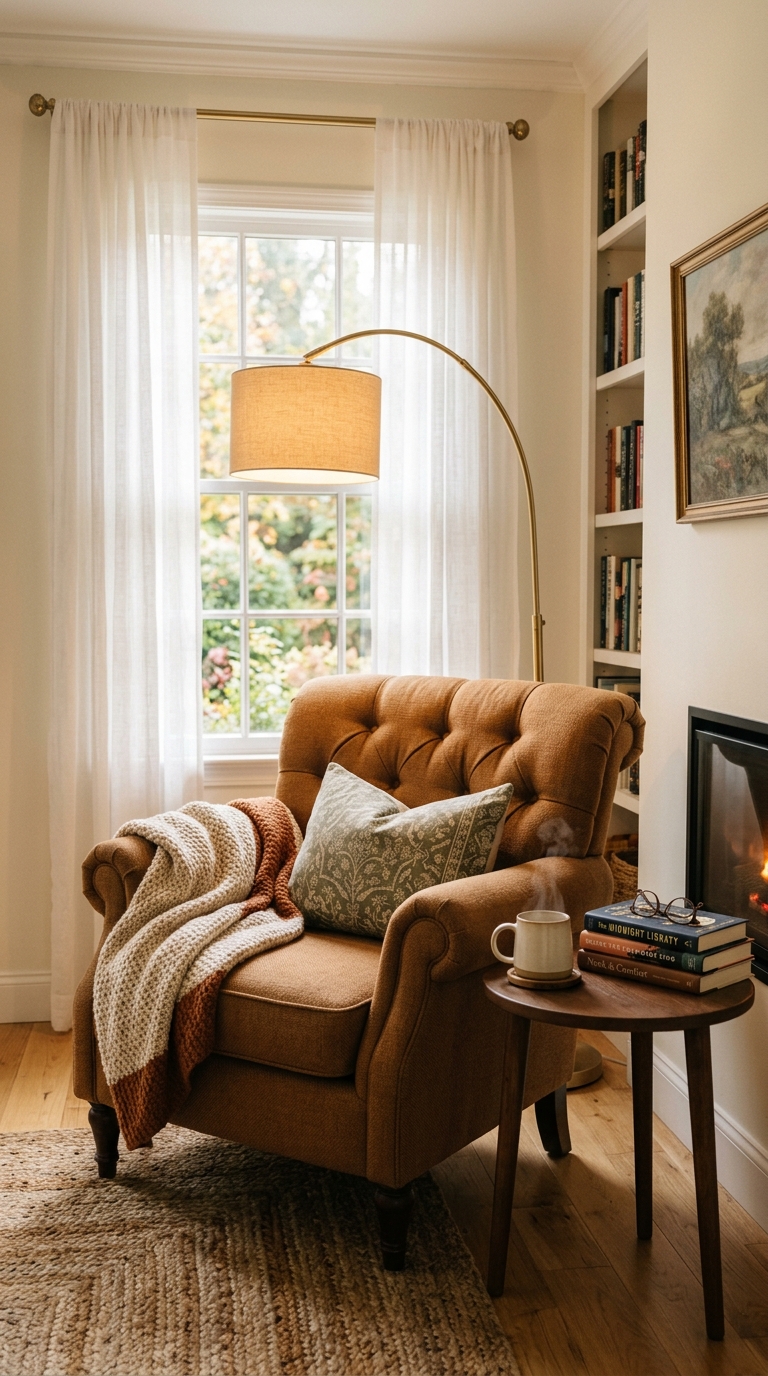
The recipe is simple: one great chair, good light, a small side table for your drink, and a soft throw within reach. That’s it. What makes it a nook rather than just a chair in a corner is the sense of enclosure and intention around it.
To create that enclosure feeling:
- Position the chair so it faces slightly away from the main seating area
- Add a tall plant or floor lamp behind it to frame the space
- Hang one piece of art specifically for that corner
- Use a small side table that holds a lamp, books, and nothing else
- Add a footstool or pouffe so you can fully stretch out
An arched floor lamp works particularly well here because it swoops over the chair and creates a natural canopy effect. If you can angle the chair toward a window, even better — natural light plus a good lamp gives you perfect reading conditions any time of day.
Idea 8: Upgrade Your Coffee Table Styling
The coffee table is the center of your living room — literally. It sits right in the middle of everything, so it deserves more thought than a random stack of magazines and a TV remote.
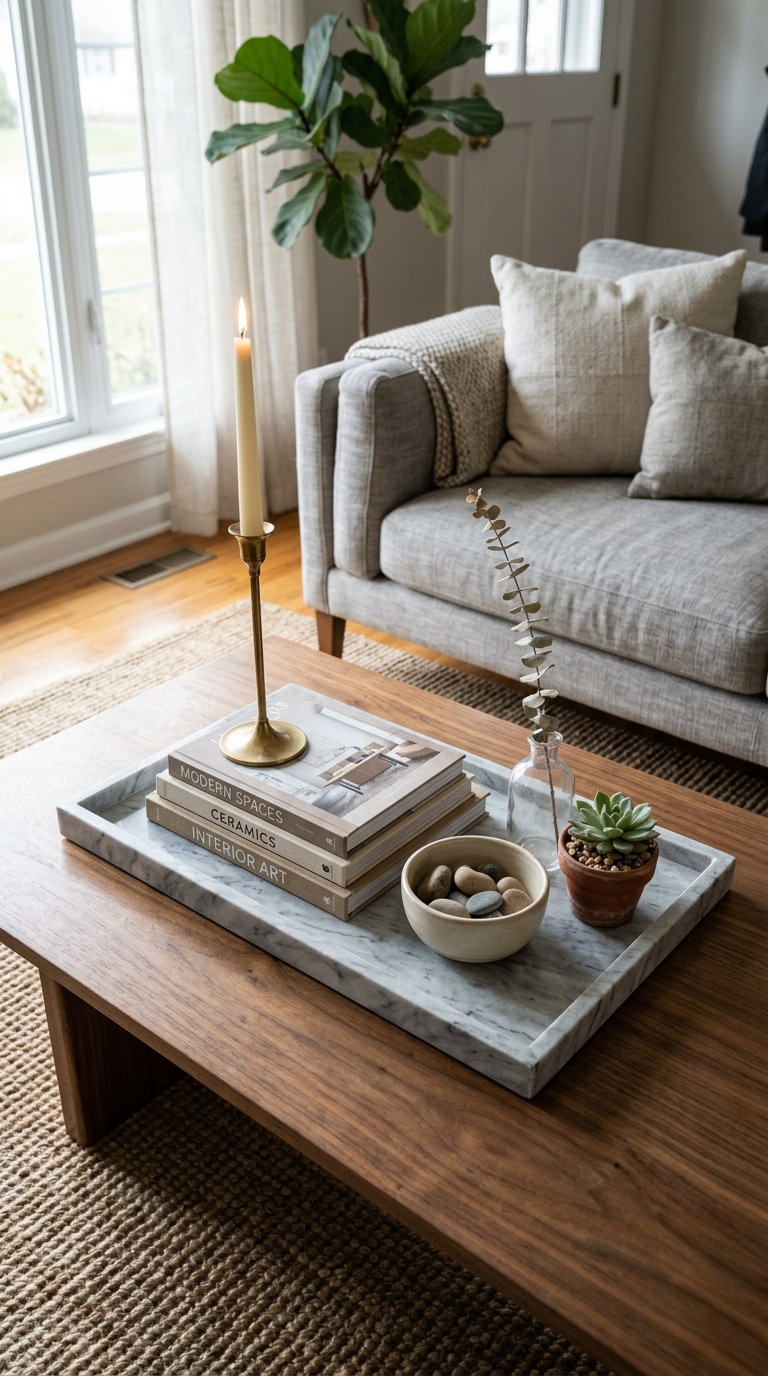
Great coffee table styling follows a simple principle: create a small vignette that feels curated but not precious. It should look lived-in and intentional at the same time.
A coffee table styling formula that works every time:
- One tray to anchor and contain smaller items
- One tall element — a vase with stems, a tall candle
- One low element — a decorative bowl, a stack of books
- One natural element — a small plant, a stone, dried botanicals
- One personal object — a unique find, a coaster set you love
Keep it slightly asymmetrical. Symmetry is formal and stiff. A slight imbalance reads as relaxed and stylish. And always leave enough clear surface for an actual drink — the coffee table has a job to do.
Idea 9: Paint an Accent Wall in a Bold Color
If a full room repaint feels overwhelming, one accent wall is your answer. It adds depth, drama, and personality without requiring you to commit the entire room to one color. And honestly, sometimes one bold wall does more for a space than repainting every surface.
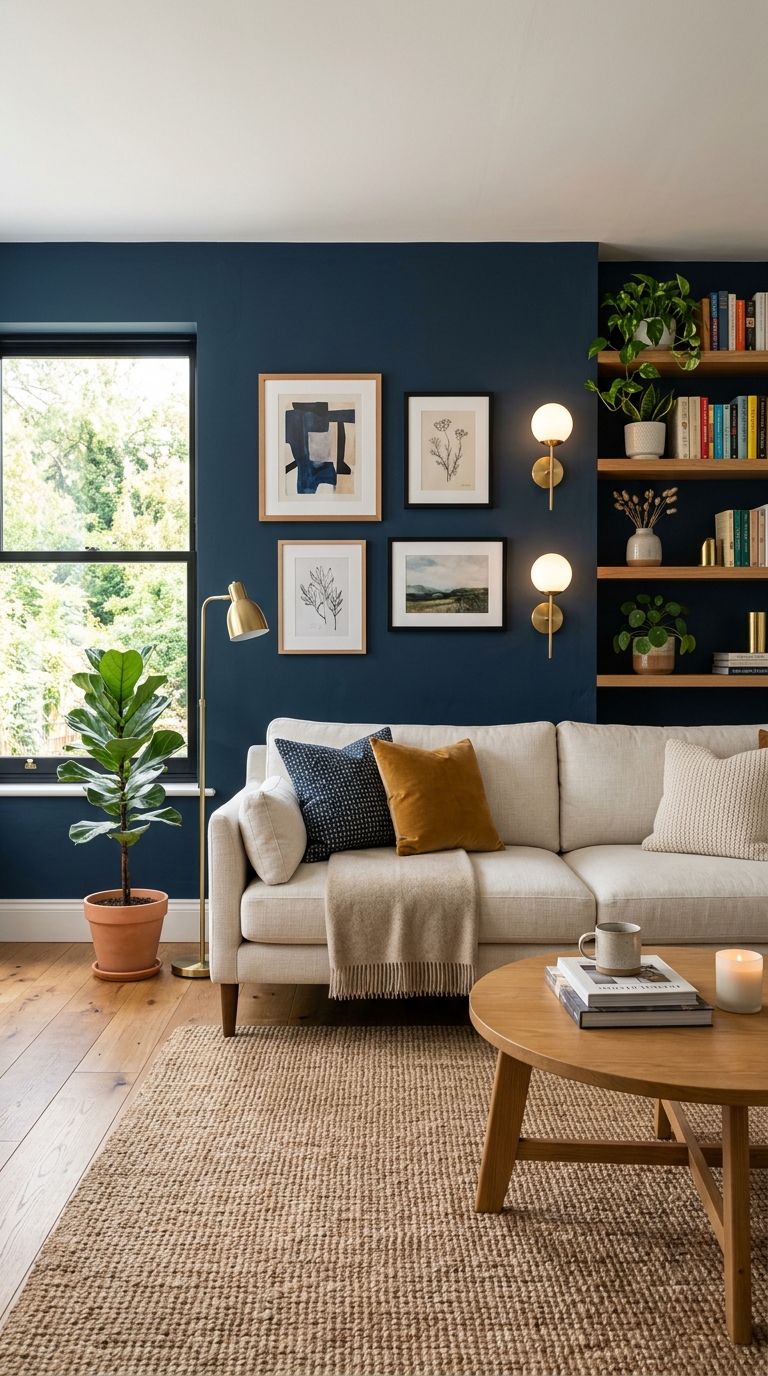
The best accent wall is almost always the wall your sofa sits against — your natural focal point when you walk into the room. Colors that work beautifully for this:
- Deep navy or midnight blue — classic, sophisticated, works with almost every furniture color
- Forest or hunter green — organic, grounding, pairs gorgeously with wood tones
- Warm terracotta or rust — earthy, inviting, particularly stunning in west-facing rooms that catch afternoon light
- Charcoal or near-black — dramatic, makes art and lighter furniture pop
- Dusty mauve or sage green — softer and more unexpected than you’d think
Use a matte or eggshell finish rather than satin on accent walls — it photographs better, hides imperfections, and looks more intentional. And if you’re nervous, sample paint is your best friend. Brush a 12-by-12-inch square on the wall and live with it for 48 hours before committing.
Idea 10: Mix Textures to Create Depth and Warmth
This is the idea that separates good rooms from great ones — and it’s the one most people overlook. Texture is what makes a room feel warm and layered rather than flat and showroom-perfect.
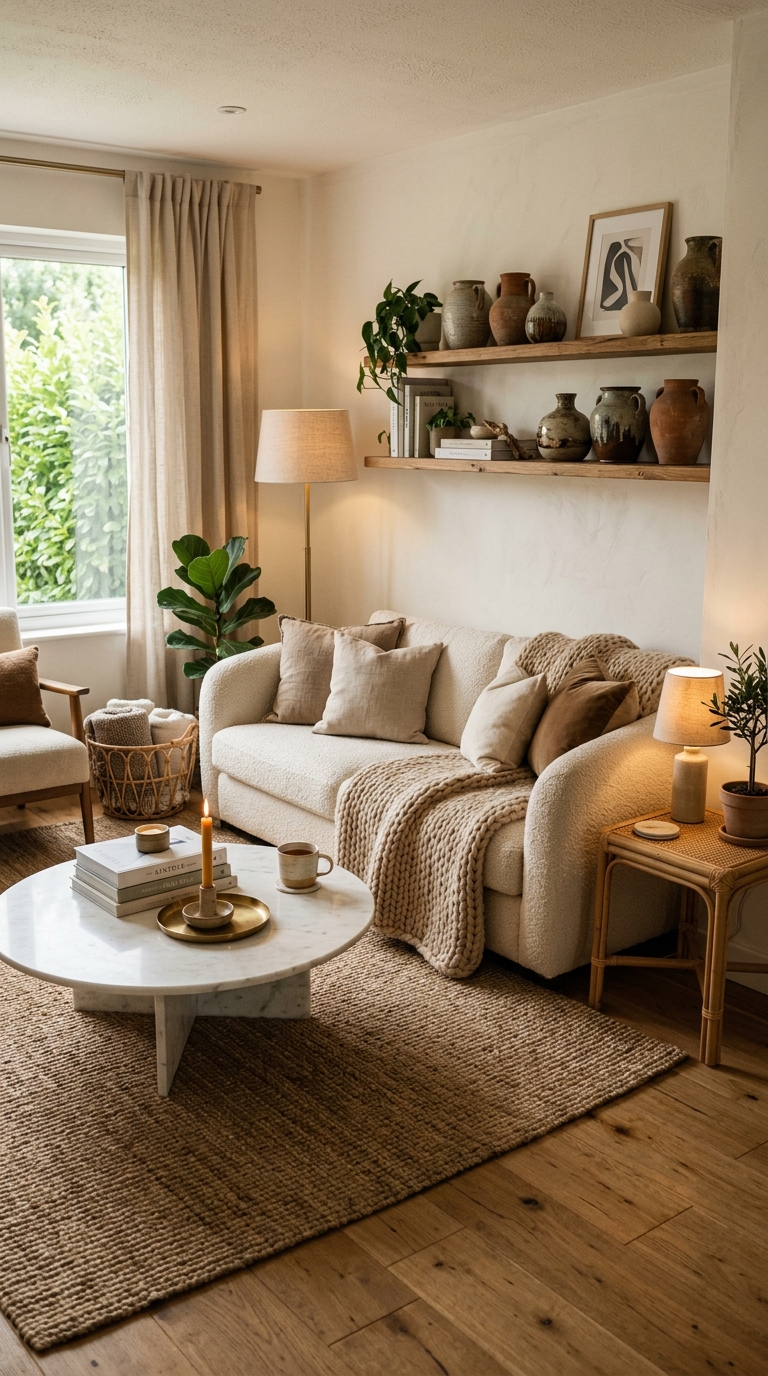
When everything in a room is the same texture — smooth fabric sofa, smooth rug, smooth curtains, smooth throw pillows — the room feels cold even if all the colors are warm. But when you mix matte and shiny, rough and smooth, soft and structured, the room comes alive.
Texture combinations that always work:
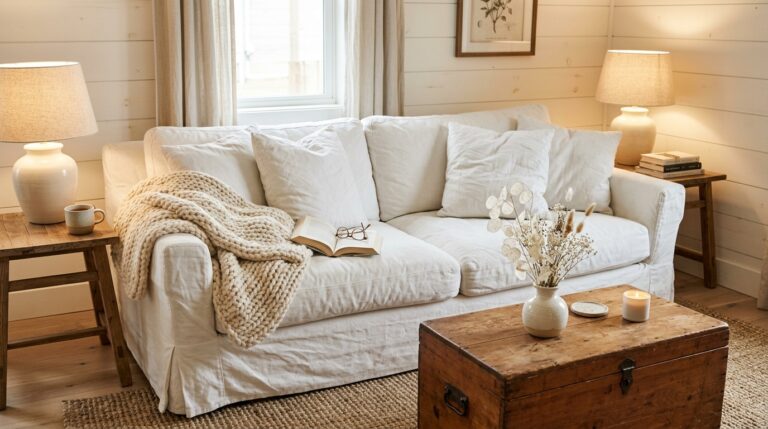
- A linen or cotton sofa paired with a chunky knit throw
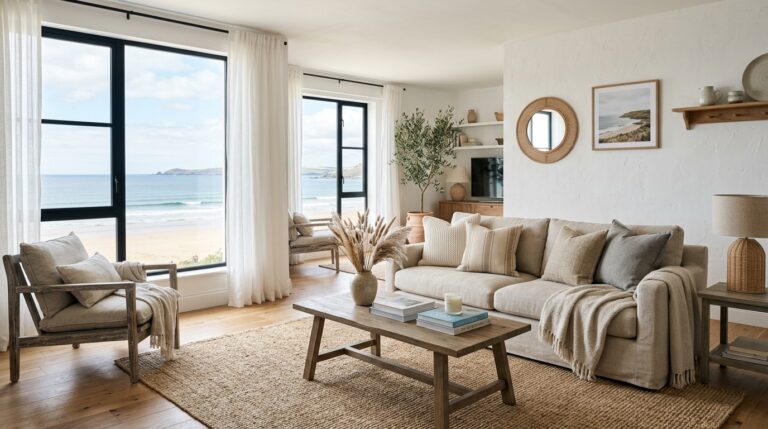
- A smooth marble coffee table alongside a rough jute rug
- Velvet pillows next to woven basket textures
- Glossy ceramic vases near matte terracotta pots
- Smooth leather with fluffy shearling or boucle
You don’t need to buy anything new to experiment with this. Swap out throw pillows, add a woven basket, drape a knit blanket, move a ceramic piece from another room. Small changes in texture make a surprisingly big difference to how the whole space feels — not just looks, but actually feels when you’re in it.
Putting It All Together
You don’t need to do all ten of these at once — and honestly, you probably shouldn’t. The best living rooms evolve over time. They pick up pieces that mean something, layers that tell a story, and adjustments that respond to how you actually live in the space.
Start with one idea that genuinely excites you. Maybe it’s that velvet sofa you’ve been eyeing, or finally tackling that blank wall with a gallery. Do that one thing well, and the rest of the room will start to show you where it wants to go next.
Your living room should feel like the best version of home. Not a showroom, not a magazine spread — yours. And with these ideas as your starting point, you’re already halfway there.