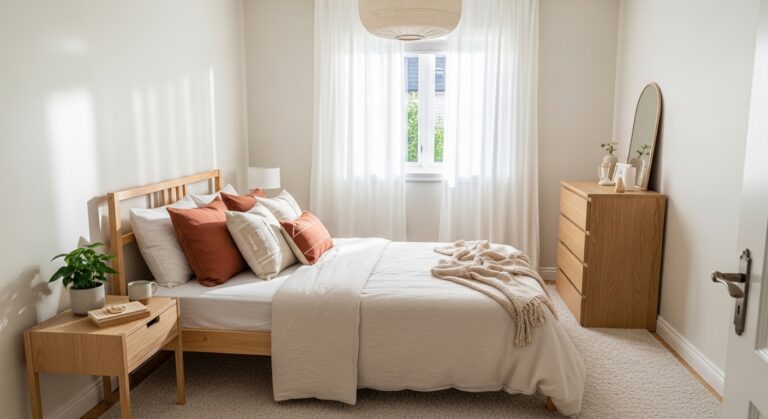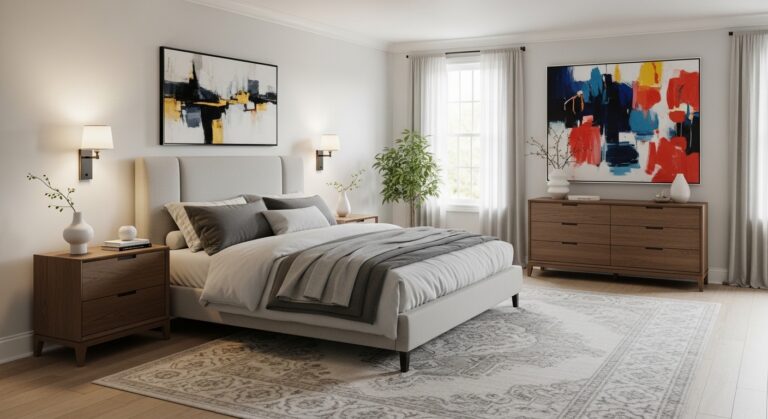
11 Minimalist Bedroom Ideas for a Clean and Calm Look
Have you ever walked into a hotel room and felt an immediate wave of calm wash over you — even before you sat down? That’s not an accident. That’s minimalism doing its job.
Your bedroom should feel like that every single day. Not sterile or empty, but intentionally peaceful. A space where your mind slows down the second you walk in. The good news? You don’t need to tear down walls or spend a fortune to get there. You just need the right ideas and a willingness to let go of what doesn’t belong.
Here are 11 minimalist bedroom ideas that will genuinely transform the way you feel in your own space.
Idea 1: Start With a Neutral Color Palette

Color sets the emotional tone of a room before anything else does. In a minimalist bedroom, your goal is calm — and nothing creates calm quite like a well-chosen neutral palette.
Think soft whites, warm greiges, dusty taupes, and muted sage greens. These tones don’t compete for your attention. They simply exist, quietly, and let everything else breathe.
Here’s what works beautifully in practice:
- Warm white walls paired with natural linen bedding create an airy, restful feeling that never goes out of style
- Greige (grey + beige) is the secret weapon of interior designers — it’s neutral without feeling cold
- Dusty sage or muted olive adds just enough color to feel alive without overpowering the space
- Stick to two or three tones maximum — one dominant, one secondary, one accent
A real tip from experience: test your paint color at three different times of day before committing. Natural morning light, afternoon sun, and evening lamp light will all show you a completely different shade.
Idea 2: Choose a Low-Profile Platform Bed
The bed is the centerpiece of any bedroom. In a minimalist space, you want it to feel grounded — literally close to the floor, visually calm, and completely unfussy.
A low-profile platform bed does all of this without trying too hard. It sits close to the ground, eliminates the need for a box spring, and instantly makes a room feel more open and spacious — even in smaller bedrooms.
What to look for when choosing yours:
- Simple, clean lines with no ornate headboard carvings or decorative footboards
- Natural wood finish in walnut, oak, or ash for warmth without heaviness
- Upholstered options in muted linen or boucle work beautifully if you want a softer look
- Under-bed storage drawers are a smart addition that keeps floor space clean
Keep your bedding simple too — one fitted sheet, one duvet, maybe two pillows. Skip the decorative throw pillow collection. You’ll feel lighter immediately.
Idea 3: Embrace Negative Space

This one is the hardest for most people — and also the most transformative. Negative space is the empty space in a room. The wall that holds nothing. The corner that stays bare. The nightstand with only one object on it.
We’ve been conditioned to fill space. A blank wall feels unfinished. An empty corner feels wasted. But in a minimalist bedroom, that empty space IS the design.
Here’s how to start practicing this:
- Remove one piece of furniture from your bedroom and live without it for a week — you’ll likely never bring it back
- Leave at least one full wall completely bare — let the paint or texture speak on its own
- Resist the urge to place something in every corner — an empty corner creates visual rest
- Clear your nightstand down to one or two items — a lamp, a book, your water glass
The practical benefit here is real: rooms with more negative space feel larger, more relaxed, and easier to clean. Your brain isn’t visually processing dozens of objects every time you look up.
Idea 4: Use Natural Materials and Textures

Minimalism doesn’t mean cold or lifeless. The warmth in a minimalist bedroom comes from texture — and specifically from natural materials that feel honest and grounded.
When a room uses only one or two colors, texture becomes your primary design tool. It’s how you create visual interest without adding clutter.
Materials that genuinely work:
- Linen bedding — slightly wrinkled, lived-in, and incredibly beautiful
- Raw or oiled wood on bed frames, nightstands, or floating shelves
- Jute or sisal rugs that add warmth underfoot without competing visually
- Rattan or wicker accents in small doses — a lamp shade, a small basket
- Stone or ceramic on a nightstand — a simple vase or tray adds quiet elegance
The key is restraint. Choose two or three natural materials and repeat them throughout the space for a cohesive, intentional look.
Idea 5: Install Floating Shelves Instead of Bulky Furniture

One of the fastest ways to visually free up floor space in a bedroom is to move storage upward. Floating shelves mounted directly on the wall give you functionality without the visual weight of traditional furniture.
This works especially well in smaller bedrooms where every square foot matters.
Smart ways to use floating shelves minimally:
- Mount two small shelves on either side of the bed as floating nightstands — cleaner and more modern than traditional bedside tables
- One shelf above the bed can hold a small plant, a book, or a simple decorative object
- Keep shelves at 70% capacity — never fill them to the edge — that remaining space is part of the design
- Choose shelves in natural wood or matte white to blend seamlessly with your walls
The rule of thumb: if you can’t justify why an object belongs on the shelf, it doesn’t belong there. Every item should earn its place.
Idea 6: Simplify Your Lighting Design

Lighting in a minimalist bedroom does two things: it creates ambiance and it stays invisible during the day. You want fixtures that disappear when you’re not using them and create a warm, cozy glow when you are.
Layered lighting — without the clutter of multiple lamp styles and power cords — is the goal here.
Here’s a practical lighting approach that works:
- Recessed ceiling lights on a dimmer switch give you full flexibility with zero visual noise
- A single sculptural pendant light above the bed serves as the room’s art piece and light source combined
- Wall-mounted reading sconces replace bedside lamps entirely — no cord, no table space used
- Warm-toned bulbs (2700K–3000K) create a golden, relaxing glow versus the harsh cool light of standard bulbs
- LED strip lights under the bed frame add a subtle, grounding warmth to the room at night
Avoid multiple competing light sources at different heights. Consistency creates calm.
Idea 7: Declutter Your Wardrobe System

You can have the most beautifully designed minimalist bedroom in the world — and a pile of clothes on the chair will undo all of it in seconds. Clothing clutter is the number one enemy of a calm bedroom.
The solution isn’t hiding everything in a closet and calling it done. It’s building a system that makes staying tidy easy.
What actually works in practice:
- A built-in wardrobe with handleless doors keeps everything hidden without visual noise — clean, flat surfaces only
- An open clothing rail with only your current season’s pieces — minimal, curated, and surprisingly beautiful when done well
- A designated “chair” rule — if you use a chair for dumped clothes, replace it with a small wall hook or just eliminate the chair entirely
- Folding baskets in muted tones inside your wardrobe for items that don’t hang
- One drawer, one category — socks in one, underwear in one, never mixing categories
The wardrobe system you create has to match your real behavior, not your ideal behavior. Be honest with yourself about how you actually live.
Idea 8: Bring in One Statement Plant

In a minimalist bedroom, one well-chosen plant does more than an entire collection of decorative objects. It adds life, texture, color, and even air quality improvement — all in one quiet, natural gesture.
The emphasis here is on one. A single plant, chosen and placed with intention, creates a focal point without creating clutter.
The best options for a minimalist bedroom:
- Fiddle leaf fig — dramatic, sculptural, and beautiful in corners with natural light
- Snake plant (Sansevieria) — incredibly low maintenance, architectural shape, and tolerates low light brilliantly
- Peace lily — soft, elegant, and one of the few flowering plants that thrives indoors with minimal care
- Monstera deliciosa — bold leaf shape creates visual interest without needing multiple plants
- Potted olive tree — if your room gets good light, this brings a quiet Mediterranean calm to the space
Choose a simple pot in matte white, terracotta, or raw cement. The pot is part of the design — skip anything with patterns or bright colors.
Idea 9: Use Curtains to Add Softness Without Busy Patterns

Window treatments are one of the most underrated elements in bedroom design. In a minimalist space, curtains serve two purposes: they control light, and they add softness to what might otherwise feel like a stark room.
The wrong curtains — too short, too patterned, too heavy — can visually shrink a room and add unnecessary noise. The right ones make the ceiling feel higher and the room feel dreamier.
Here’s exactly what to look for:
- Floor-length curtains hung close to the ceiling, not at window frame height — this tricks the eye into seeing a taller room
- Sheer linen in ivory or white for daytime softness that lets light filter through beautifully
- Blockout linen curtains in a neutral tone for a darker, more restful sleep environment
- Avoid busy patterns entirely — stripes, florals, and geometric prints all add visual noise
- Pinch pleat or eyelet style looks clean and intentional without fussiness
One practical tip: buy curtains that are at least 2.5x the width of your window. When pulled open, they stack neatly to the sides and the window looks dramatically larger.
Idea 10: Create a Dedicated Morning and Evening Ritual Corner

A minimalist bedroom isn’t just about aesthetics — it’s about how the space supports your life. One of the most valuable things you can add to a calm bedroom is a small, dedicated corner that supports your daily rituals.
This isn’t a cluttered vanity table covered in products. It’s a quiet, intentional corner designed around one or two habits.
Ideas for how to set this up:
- A simple wooden stool or small chair with one soft throw — your reading seat, your meditation spot
- A small low table or tray holding only what you use every single morning — your journal, your skincare essentials, one candle
- A wall hook nearby for tomorrow’s outfit — a small act of preparation that makes mornings calmer
- A grounding scent — a single candle or a small diffuser with a calming essential oil like lavender or sandalwood
This corner tells your brain: this is where I slow down. That kind of intentional design works on a psychological level, not just a visual one.
Idea 11: Keep Your Bedroom Tech-Free or Tech-Intentional

The final idea might be the most impactful one — and it has nothing to do with furniture or decor. It’s about what you deliberately choose to leave out.
Technology in the bedroom — TVs, charging cables draped across nightstands, multiple devices glowing through the night — is the silent enemy of a calm, minimalist space. Visually and psychologically, it pulls your room in the opposite direction of peace.
Here’s a realistic approach that doesn’t require going cold turkey:
- Remove the TV entirely — if this feels impossible, start by covering it when not in use with a simple panel or moving it to a media cabinet with doors
- Use a single cable management solution — one wireless charging pad on your nightstand, tucked clean
- Charge your phone outside the bedroom — use a traditional alarm clock instead (yes, really — it works)
- If you use a tablet or laptop in bed, have a designated drawer or basket where it lives when not in use — out of sight, out of mind
- Smart bulbs with a bedtime routine can work beautifully — they dim automatically, removing the decision from your evening
The goal is intention, not perfection. Even reducing visible technology by 50% will change the entire energy of your bedroom.
Bringing It All Together
Here’s the thing about minimalism that nobody tells you at the start: you don’t have to do all 11 ideas at once. In fact, trying to transform everything in a weekend is the fastest route to feeling overwhelmed and giving up.
Start with one idea. The one that excited you most as you read through this list. Maybe it’s the neutral color palette. Maybe it’s finally clearing off that nightstand. Maybe it’s swapping your curtains for something simpler.
Do that one thing well. Live with it for a week. Notice how it makes you feel. Then move to the next one.
Minimalist bedrooms aren’t built in a day. They’re built through a series of small, deliberate decisions over time — each one removing a little more noise and creating a little more calm.
The bedroom you’ve been imagining — that quiet, clean, genuinely restful space — is completely within reach. You already know what to do.