
15 Front Yard Landscaping Ideas That Will Make Your Neighbors Stop and Stare
Have you ever pulled into your driveway and felt absolutely nothing? No pride, no joy, just… a yard. If that sounds familiar, you’re not alone — and the good news is, transforming your front yard doesn’t have to cost a fortune or require a landscape architecture degree. Whether you’re working with a tiny strip of grass or a sprawling half-acre, the right landscaping ideas can completely change how your home feels from the street.
I’ve spent years helping homeowners rethink their outdoor spaces, and I can tell you this with confidence: your front yard is the first conversation your home has with the world. Let’s make it a great one.
Here are 15 front yard landscaping ideas that are practical, beautiful, and completely achievable — even if you’ve never planted a single flower in your life.
1. Create a Welcoming Pathway With Natural Stone
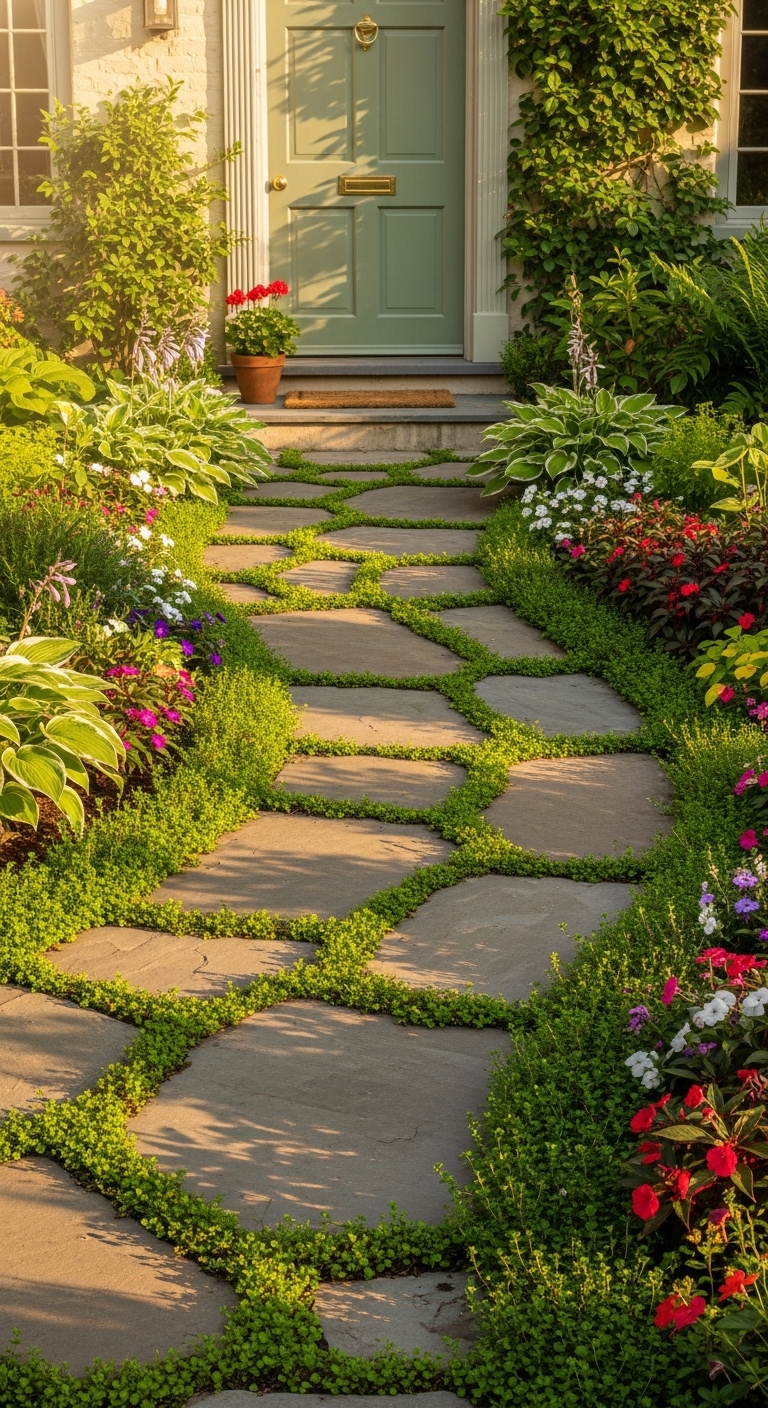
Nothing draws the eye — and the feet — like a beautifully laid stone pathway leading from the sidewalk straight to your front door. This isn’t just about looks. A well-designed path tells visitors “you belong here,” and that feeling is priceless.
Use irregular flagstone, bluestone, or even reclaimed brick for a relaxed, organic feel. Space the stones slightly apart and fill the gaps with creeping thyme or moss — both are low-maintenance and add incredible texture. For a more polished look, go with uniform pavers set in a straight or gently curved line.
Practical tips:
- Curve the path slightly — straight lines feel institutional, curves feel inviting
- Light the path with solar stake lights for evening curb appeal
- Use gravel or pea stone between pavers to improve drainage
2. Go Bold With a Colorful Flower Border
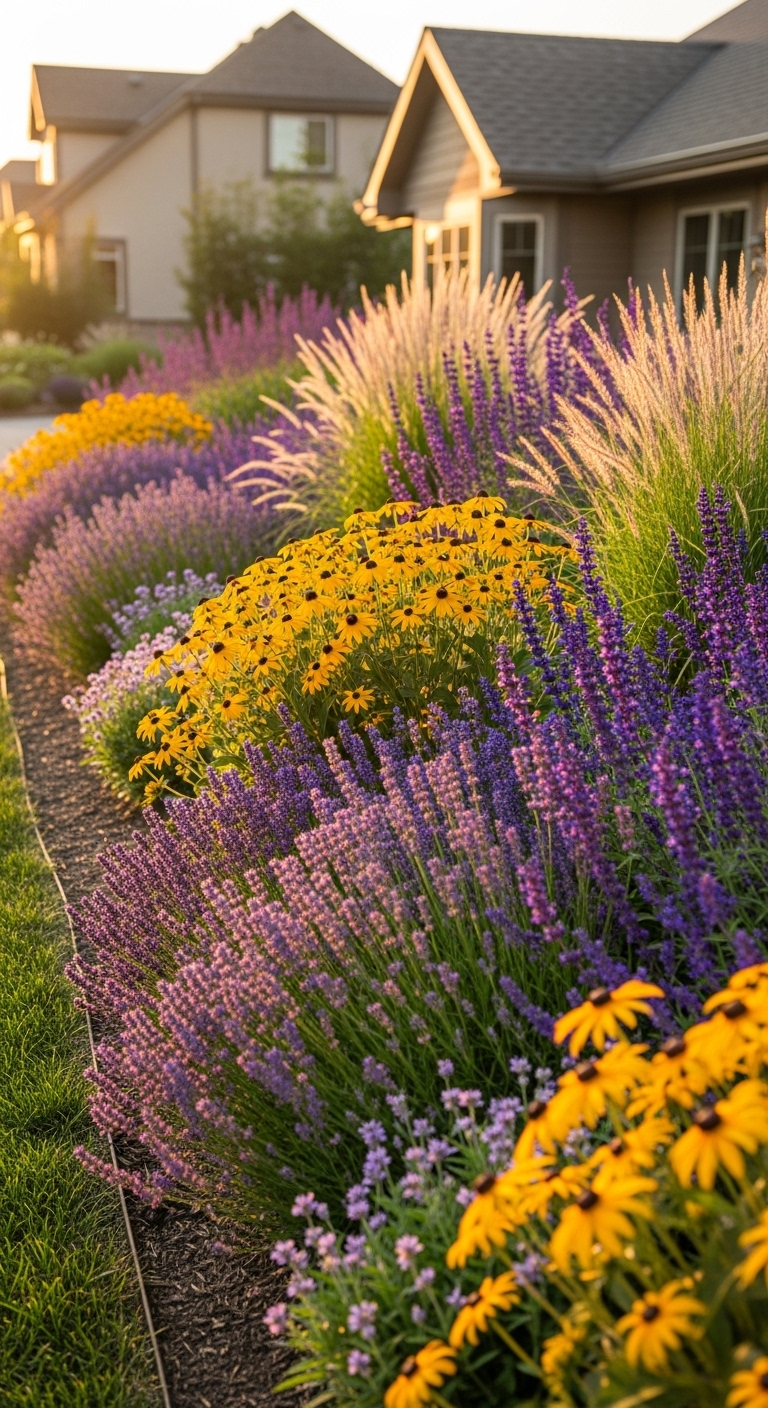
If your yard currently has a flat, uniform look, a layered flower border along the front edge of your property or along your home’s foundation will change everything. The secret is layering — tall plants in the back, medium in the middle, low growers at the front.
Think black-eyed Susans, lavender, salvia, and ornamental grasses together. Mix textures and bloom times so something is always in color from spring through fall. This approach is what landscape designers call a “continuous color strategy,” and it works beautifully in almost any climate.
Practical tips:
- Choose at least one plant that blooms in each season
- Group plants in odd numbers — threes and fives look most natural
- Repeat the same color in two or three spots to create visual rhythm
3. Replace Grass With a Low-Maintenance Gravel Garden
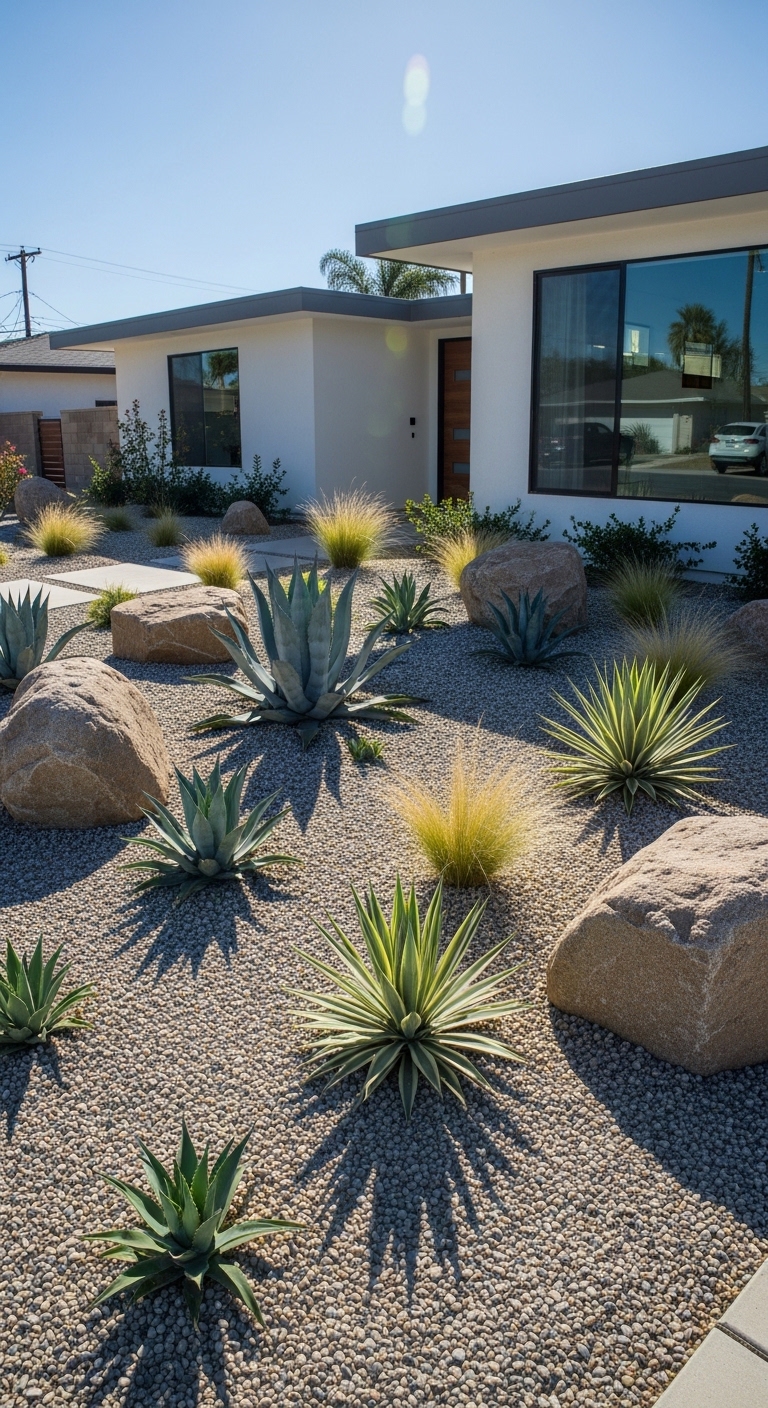
Lawn care is genuinely exhausting. Mowing, edging, fertilizing, watering — it never ends. More homeowners are swapping traditional turf for gravel gardens, and honestly, the results can look stunning when done right.
Use decomposed granite or river rock as your base, then add drought-tolerant plants like agave, lavender, ornamental grasses, and yucca throughout. Add a few larger boulders for structure, and you’ve got a yard that looks designed, not abandoned.
Practical tips:
- Lay a quality landscape fabric first to suppress weeds
- Mix rock sizes — uniformity looks fake
- Add one or two statement plants as focal points
4. Plant a Statement Tree as a Focal Point
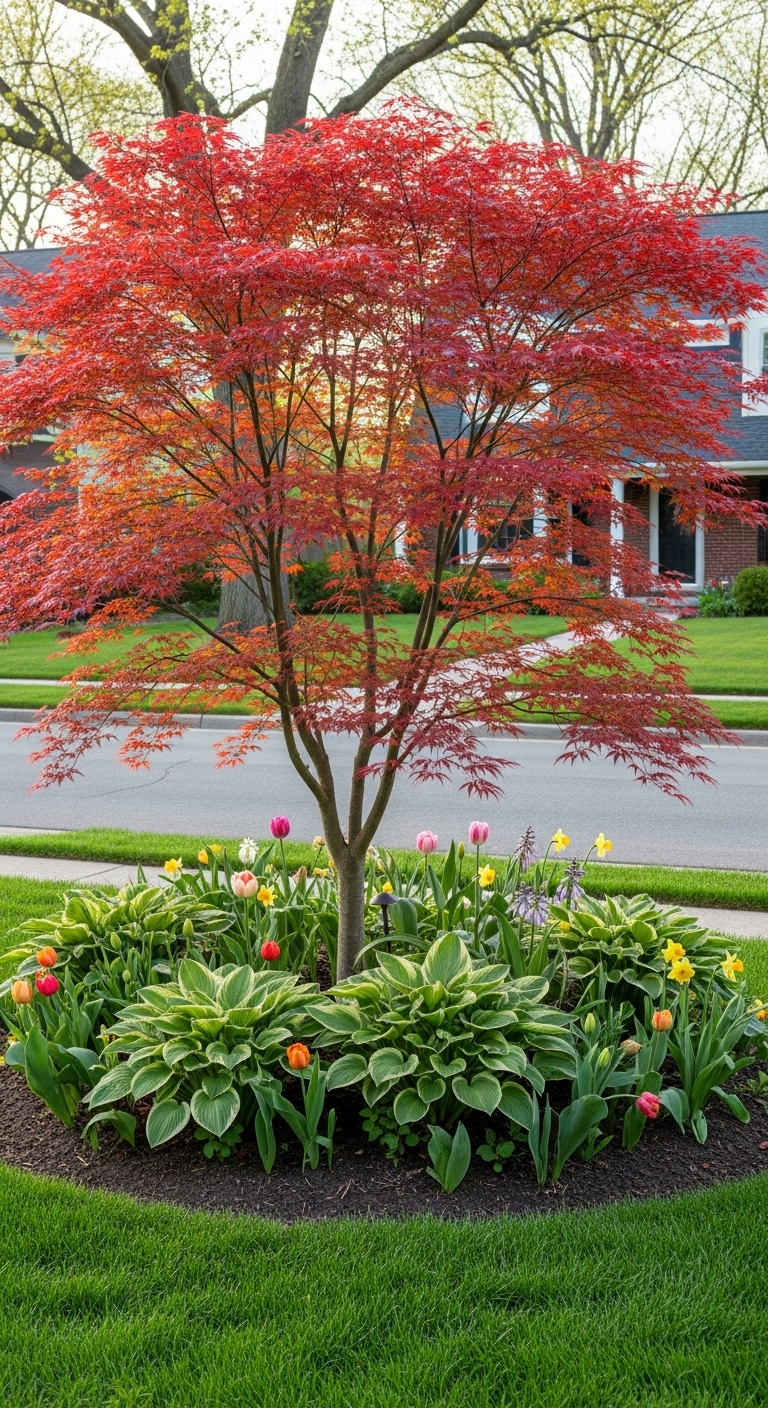
Every great front yard has one thing that anchors the whole design. More often than not, that anchor is a single statement tree. A Japanese maple, a weeping cherry, a crape myrtle — any of these planted in the right spot instantly gives your yard personality and scale.
Place your statement tree slightly off-center in the yard rather than dead-center. This creates a more dynamic composition. Underplant it with a ring of hostas, pachysandra, or seasonal bulbs to complete the look.
Practical tips:
- Choose a tree with multi-season interest — spring blooms, summer shade, fall color
- Keep the tree at least 10 feet from your foundation
- Mulch around the base to retain moisture and define the space
5. Add Raised Garden Beds Along the Foundation
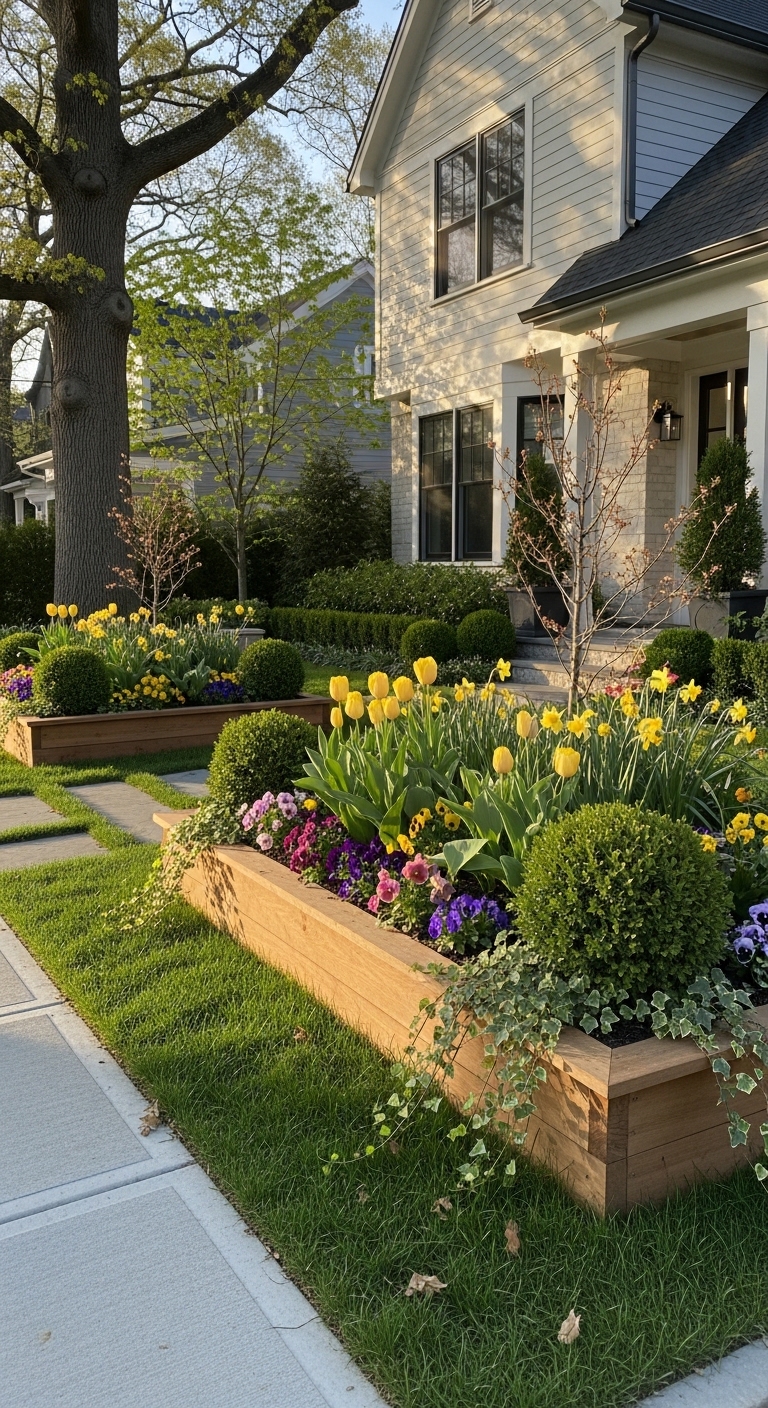
Foundation planting is one of the most impactful things you can do for curb appeal — and raised beds take it to the next level. They add dimension, look incredibly tidy, and let you control your soil quality completely.
Use cedar or composite raised beds along your home’s front wall and fill them with a mix of evergreen shrubs, seasonal flowers, and trailing plants. The evergreens give you year-round structure, and the seasonal plants let you refresh the look every few months without much effort.
Practical tips:
- Keep beds in proportion to your home — taller home, taller plantings
- Choose plants with varying foliage colors for depth
- Avoid planting too close to windows or utilities
6. Install a Rustic Wooden Fence With Climbing Vines
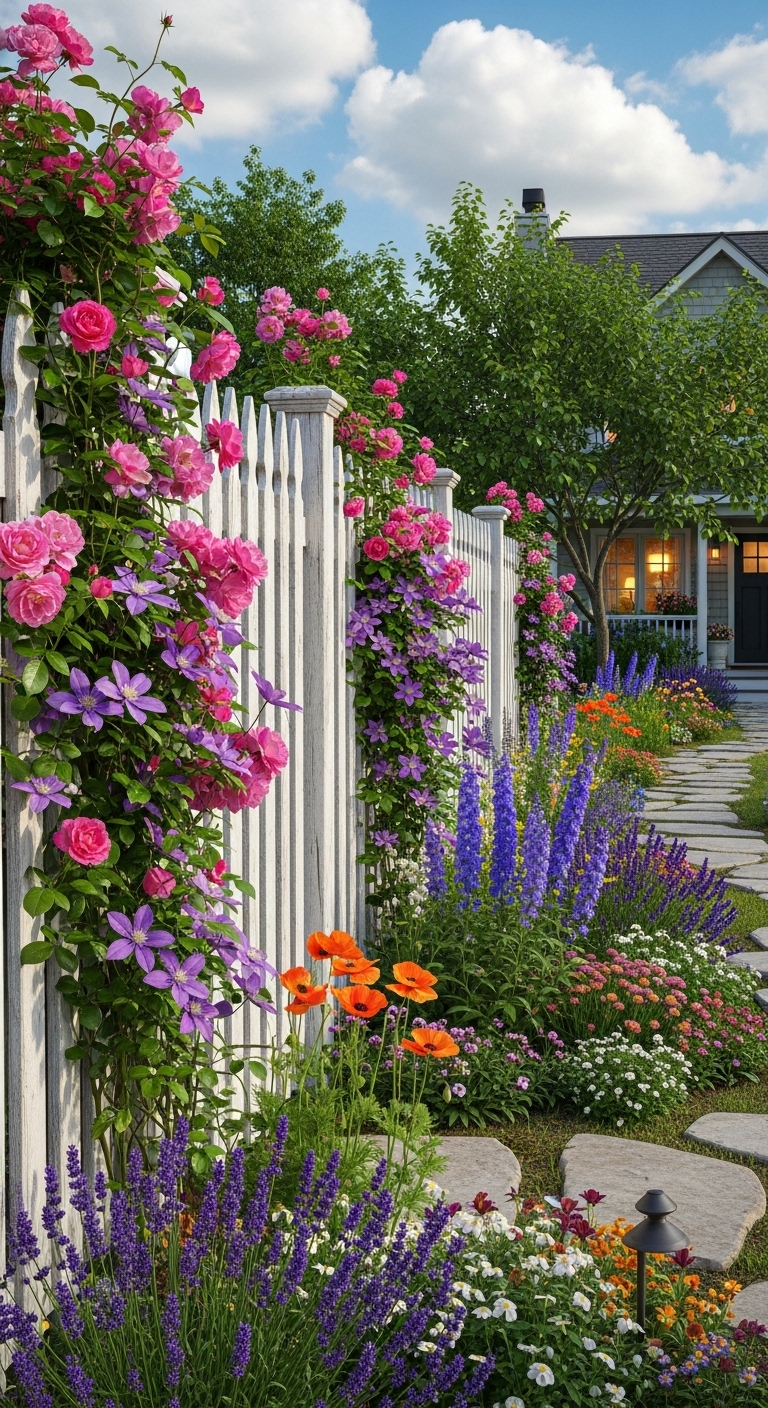
A fence doesn’t just define your property — it sets the entire mood of your front yard. A rustic wooden picket fence covered in climbing roses or clematis is one of the most romantically beautiful things you can do for your curb appeal.
Choose a fence height that’s welcoming rather than imposing — around three feet works beautifully for front yards. Train climbing roses or wisteria along the top rail. Within two seasons, you’ll have a front yard that looks like it belongs in a magazine.
Practical tips:
- Seal your fence annually to prevent weather damage
- Choose thornless climbing rose varieties if you have kids or pets
- Let vines grow naturally — don’t force them into perfect symmetry
7. Design a Symmetrical Formal Entrance
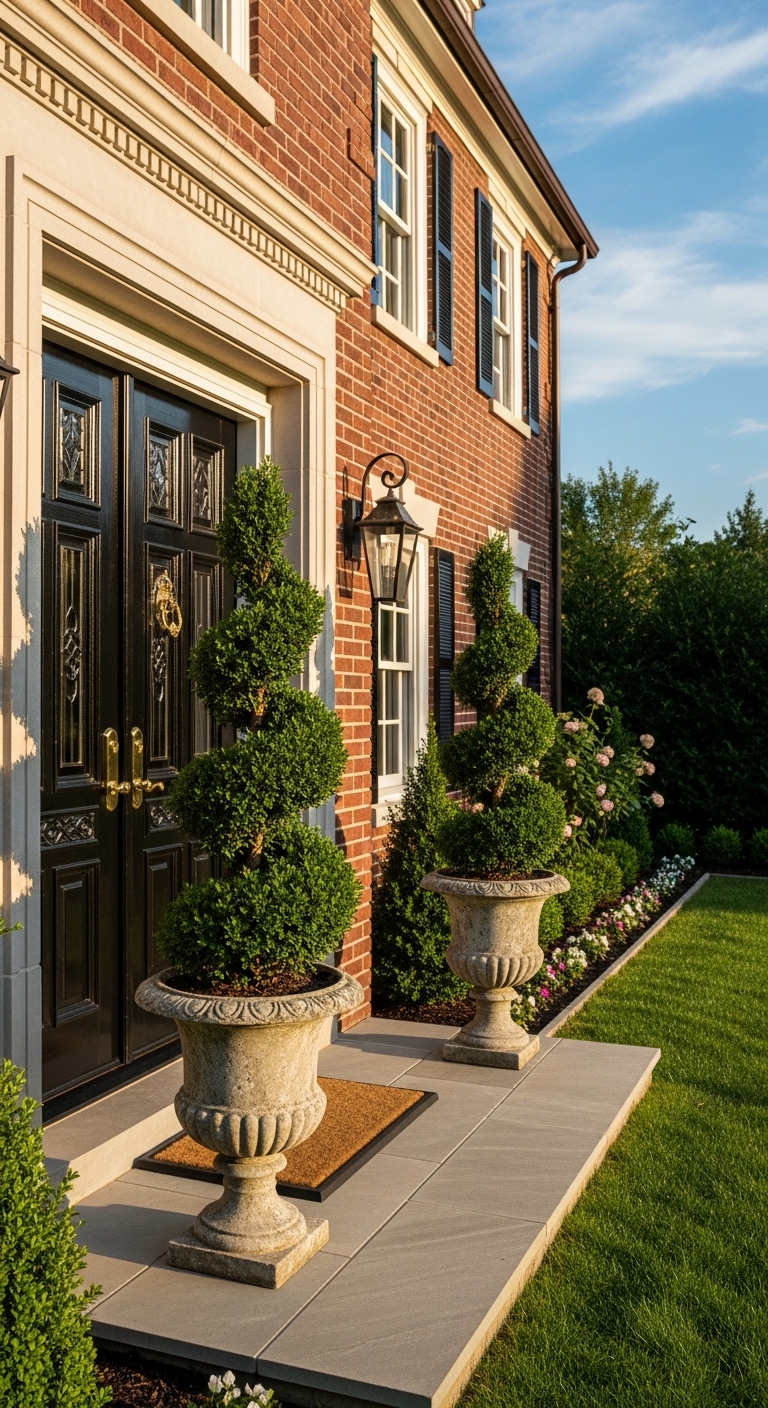
Symmetry is one of those design principles that works every single time. When you frame your front door with matching elements — twin boxwood topiaries, a pair of urns, identical lanterns — the whole entrance feels intentional and polished.
This idea works especially well for traditional, colonial, or craftsman-style homes. You don’t need to go over the top. Even two matching potted plants flanking your front door creates immediate visual harmony and makes your entrance feel curated rather than random.
Practical tips:
- Use weather-resistant containers so they last through every season
- Choose plants that stay compact — you don’t want them blocking your door
- Repot seasonally: tulips in spring, petunias in summer, mums in fall
8. Create a Butterfly and Pollinator Garden
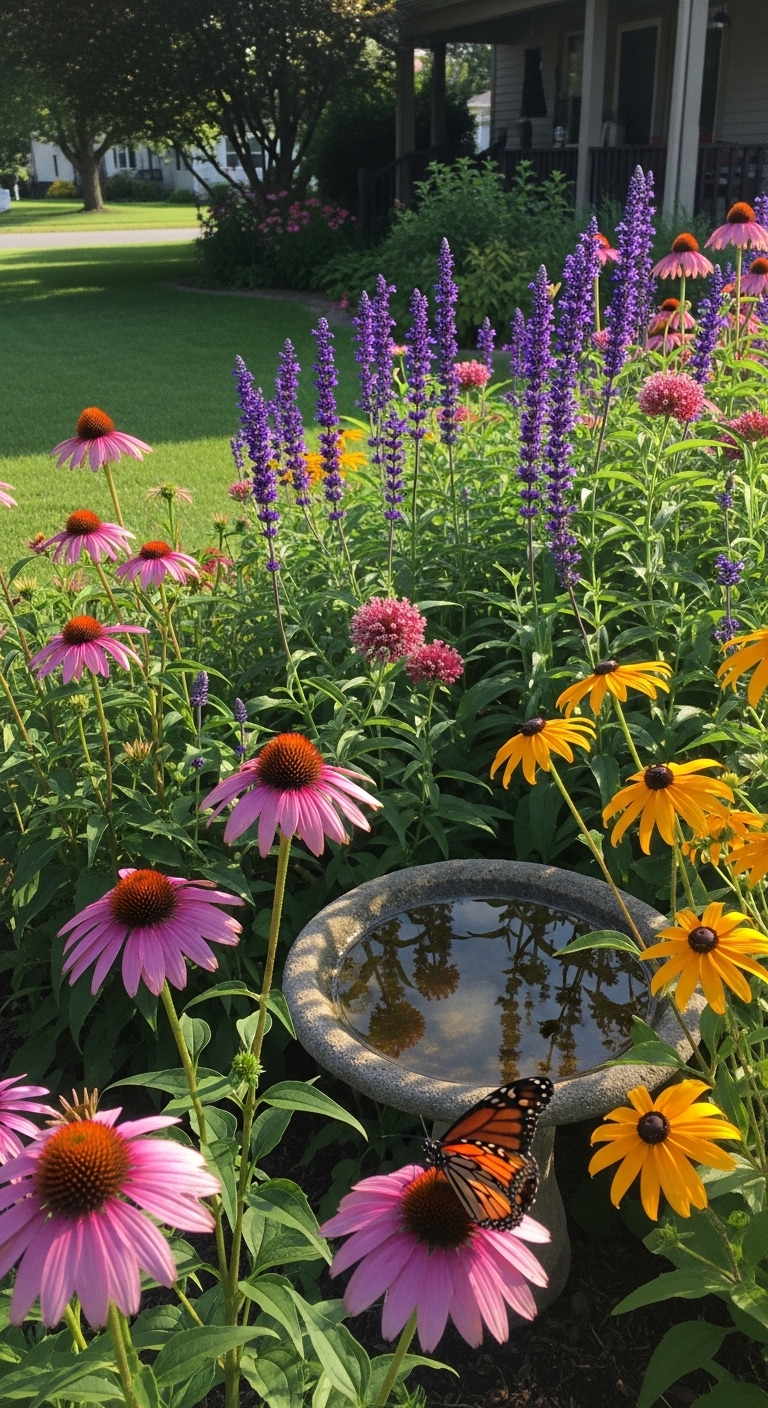
Here’s an idea that’s both beautiful and genuinely meaningful. A pollinator garden planted in your front yard attracts butterflies, bees, and hummingbirds, and it creates a living, moving landscape that’s endlessly fascinating to watch.
Plant milkweed for monarchs, coneflowers for bees, and salvia for hummingbirds. Add a shallow birdbath or small water dish, and you’ve created a mini ecosystem right outside your door. Neighbors and passersby will stop and watch — guaranteed.
Practical tips:
- Skip pesticides entirely in this garden
- Plant in large drifts rather than single plants for maximum impact
- Add a small sign labeling your garden as a certified pollinator habitat
9. Use Ornamental Grasses for Texture and Movement
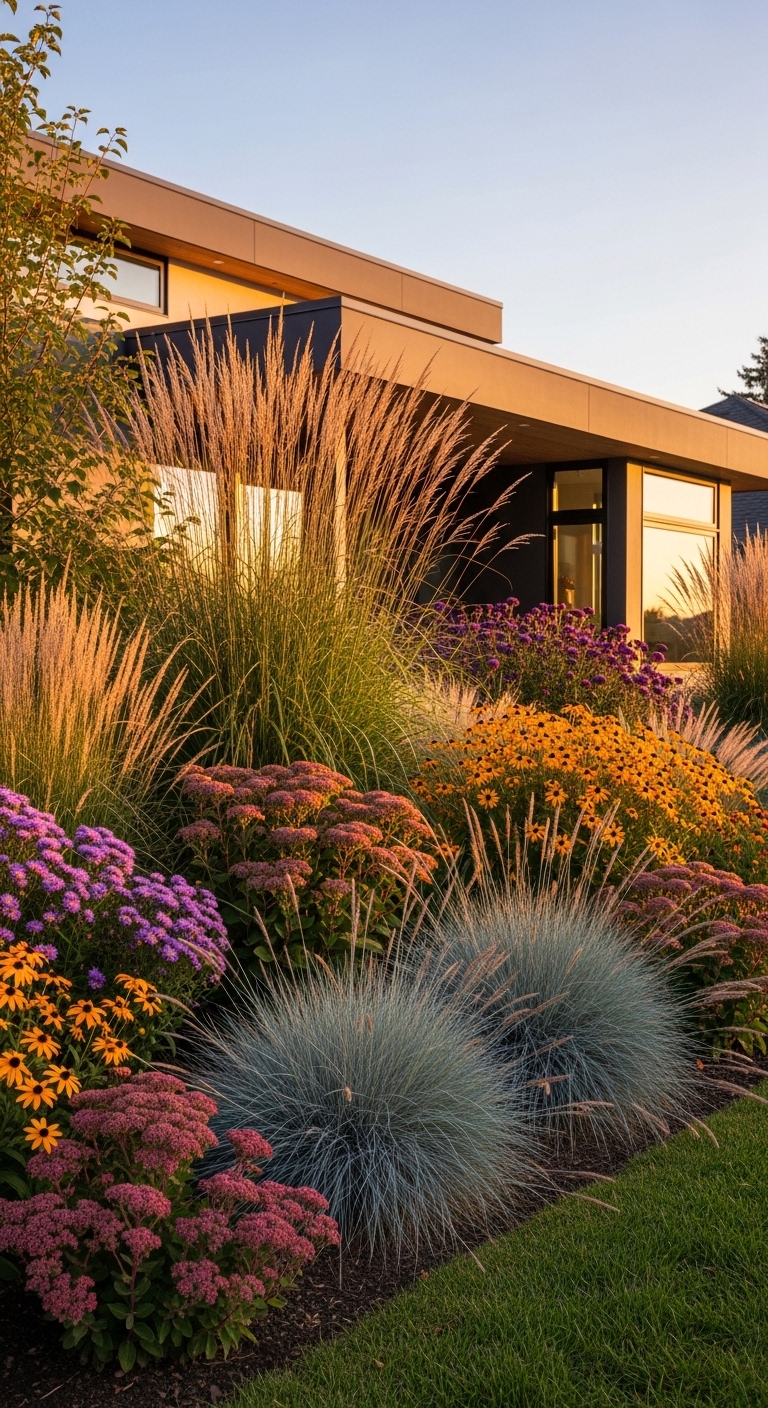
If you’ve never worked with ornamental grasses, you’re missing one of the easiest landscaping wins available. Grasses move in the breeze, they look gorgeous in every season, and they’re almost impossible to kill once established.
Varieties like Karl Foerster, Blue Oat Grass, and Maiden Grass add incredible texture against hardscape and traditional plantings. Use them as a border, a divider, or a standalone feature. In winter, their dried seed heads catch snow and light in ways that are genuinely beautiful.
Practical tips:
- Cut grasses back hard in late winter before new growth starts
- Mix different heights for a layered, natural effect
- Combine with late-blooming perennials for a fall show
10. Add Landscape Lighting for Evening Curb Appeal
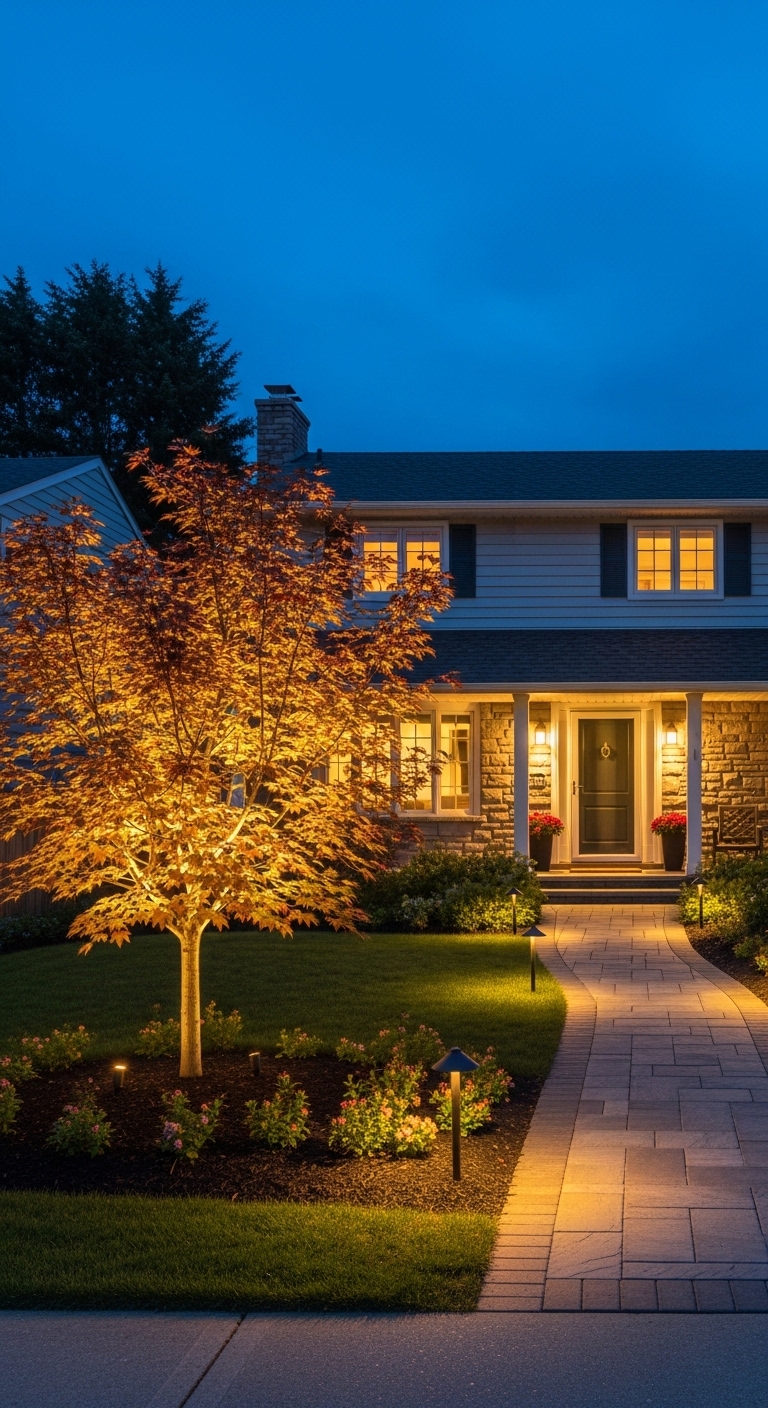
Most homeowners put all their landscaping energy into daytime appearance. But here’s something most people overlook: your home gets seen just as often at night. The right landscape lighting transforms your front yard after dark into something genuinely stunning.
Use uplights to highlight your statement tree, path lights along your walkway, and a focused spotlight on your front door. Layer warm white lights rather than cool blue tones — warm light feels welcoming, cool light feels clinical.
Practical tips:
- Use LED fixtures — they last years and use minimal electricity
- Put your lighting system on a timer or smart plug
- Avoid overlighting — subtle and strategic always beats bright and overwhelming
11. Build a Charming Front Yard Seating Area
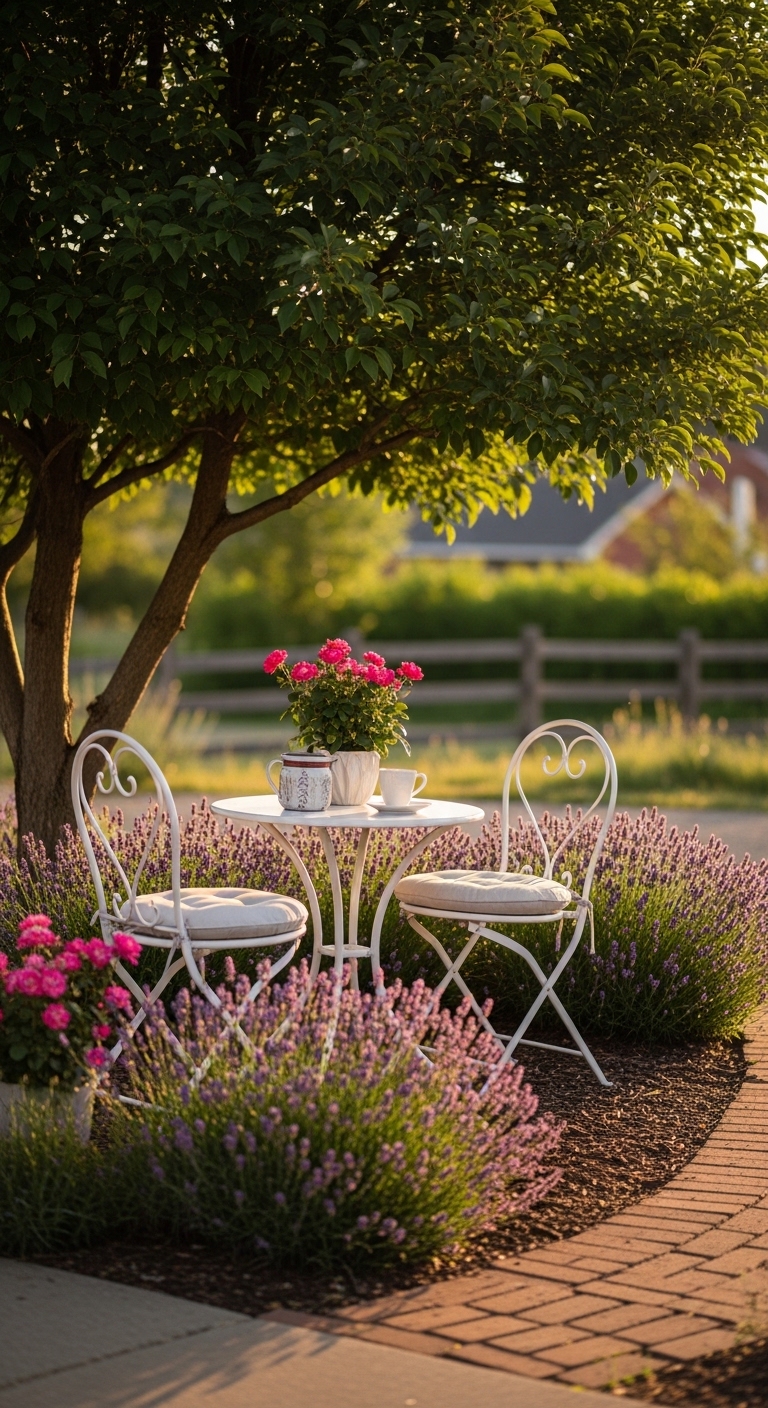
Who says your backyard gets all the outdoor living? A small seating area in the front yard — a bench, two chairs, or even a porch swing on a covered stoop — instantly humanizes your home and makes it look lived-in and loved.
Tuck a small bistro set under a shade tree, or add a wooden bench along your garden path. Surround it with fragrant plants like lavender or roses so the experience of sitting there is genuinely sensory and relaxing. This is one of those ideas that sounds simple but has an outsized effect on how your home feels.
Practical tips:
- Use weather-resistant furniture — teak, metal, or quality resin
- Add a small side table for drinks and books
- Create privacy with tall ornamental grasses or a trellis with climbing vines
12. Install a Decorative Mailbox Garden
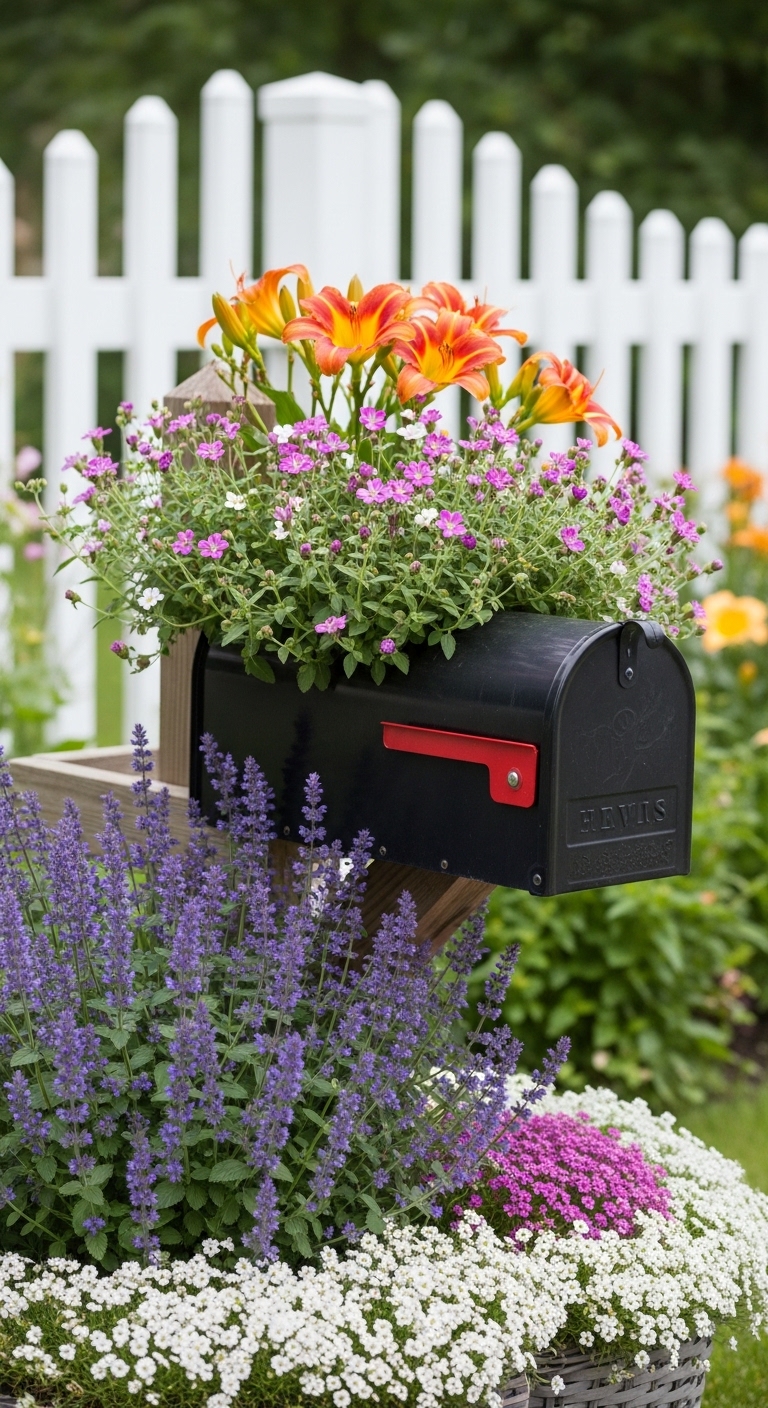
Your mailbox is one of the most overlooked real estate in your entire front yard. Dress it up with a small garden bed at its base, and suddenly something purely functional becomes a genuine design feature.
Plant low-growing perennials and annuals around the mailbox post — catmint, daylilies, and sweet alyssum work beautifully together. Paint your mailbox to match your front door for a cohesive, intentional look. It’s a tiny detail that tells people you care about every corner of your property.
Practical tips:
- Keep plantings low enough not to block the mailbox opening
- Choose drought-tolerant plants since this area often gets overlooked during watering
- Replace the mailbox post if it’s rotting — a fresh post makes the whole thing look new
13. Go Native With a Wildflower Meadow Strip
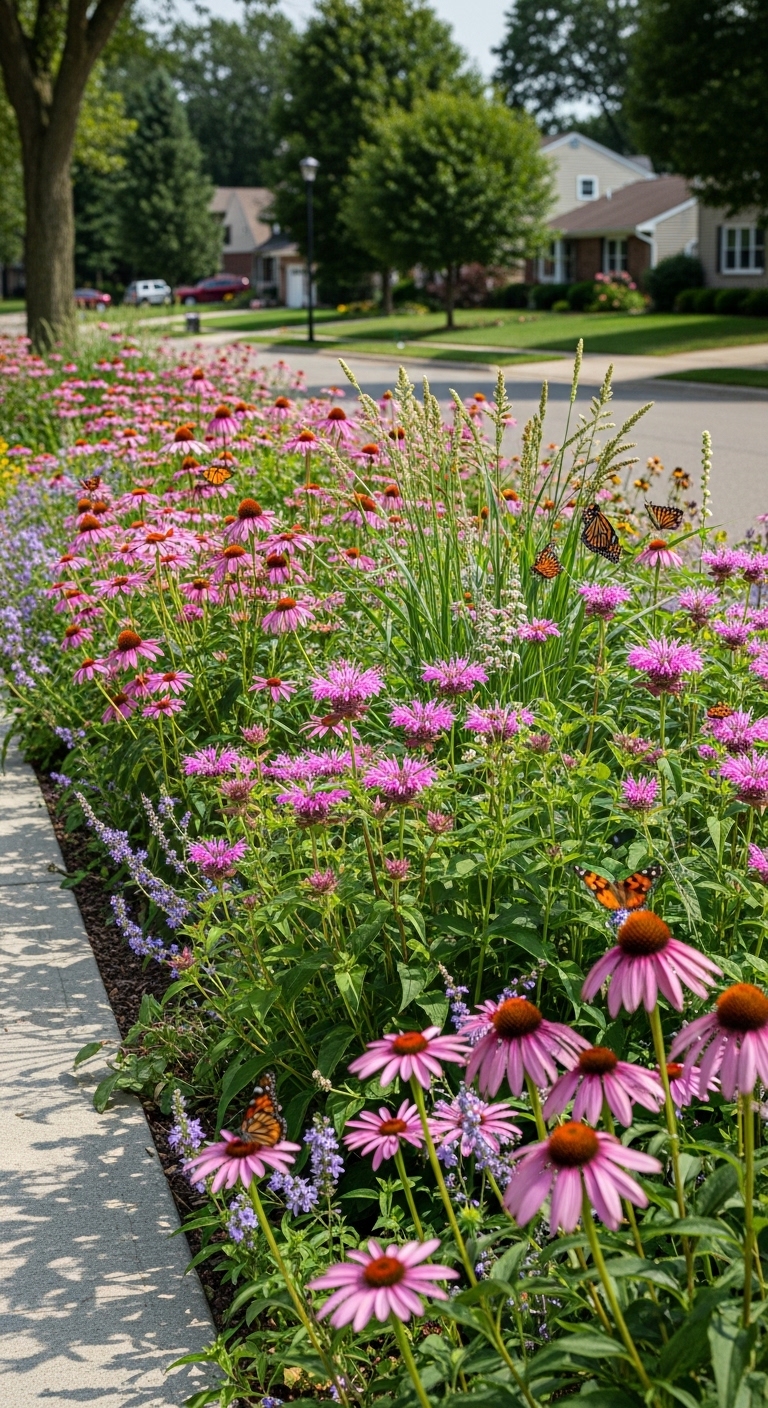
If you have a narrow strip between your sidewalk and the street — often called a hellstrip or parkway — turning it into a native wildflower meadow is one of the most rewarding landscaping projects you can take on.
Plant native wildflowers like coneflowers, wild bergamot, and prairie dropseed grass. These plants evolved in your region, so they need almost no supplemental water or care once established. They’ll attract pollinators by the hundreds and give your front yard a relaxed, naturalistic beauty that stands out in a neighborhood full of plain grass strips.
Practical tips:
- Check local ordinances before planting — some municipalities have rules about hellstrips
- Add a small sign identifying it as a native plant garden to educate neighbors
- Expect the first year to look sparse — by year two, it explodes
14. Use Evergreen Shrubs for Year-Round Structure
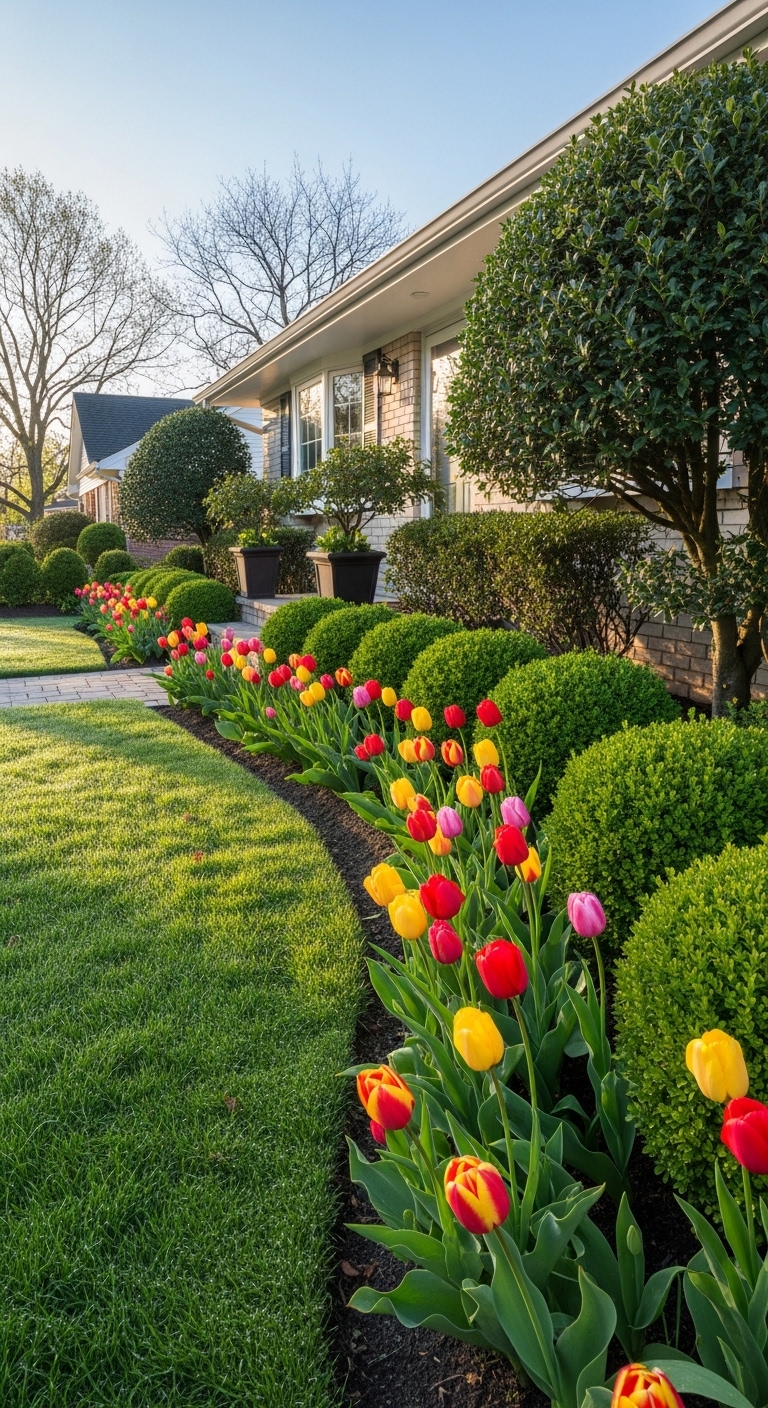
Here’s the landscaping truth that most beginners learn the hard way: seasonal color is gorgeous, but structure is what makes a yard look great twelve months a year. Evergreen shrubs are the backbone of any well-designed front yard.
Boxwood, Holly, Inkberry, and Arborvitae all provide dense, year-round greenery that frames your home beautifully. Use them along your foundation, as corner anchors, or as a low informal hedge along your property line. Then layer seasonal plantings in front for color and personality.
Practical tips:
- Choose slow-growing varieties to minimize pruning
- Plant evergreens in fall for the best root establishment
- Shape them lightly every spring — heavy shearing damages their natural form
15. Design a Water-Smart Xeriscape Front Yard
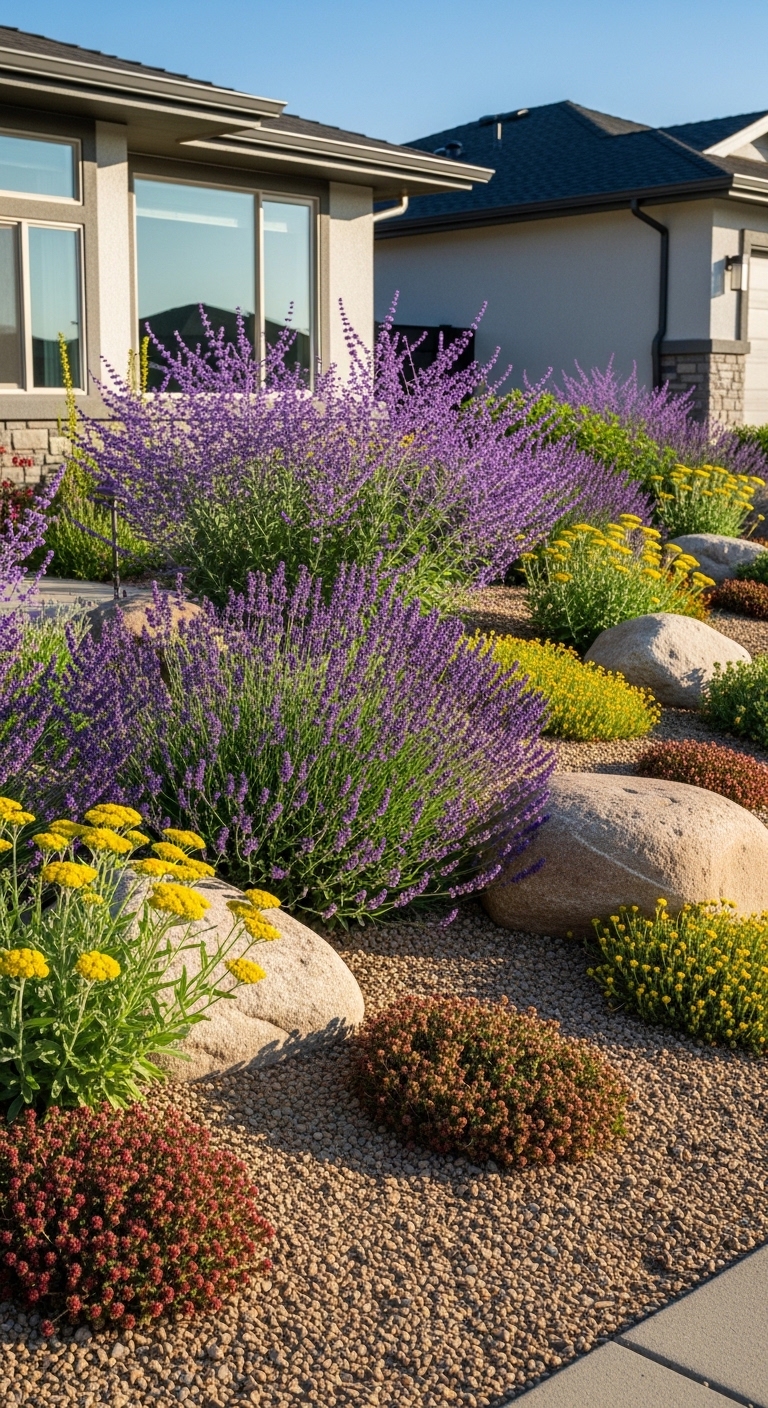
Water bills are rising everywhere, and traditional lawns are genuinely thirsty. Xeriscaping — designing a landscape that needs minimal irrigation — is one of the smartest long-term investments you can make in your front yard.
Combine drought-tolerant plants like Russian sage, yarrow, sedum, and lavender with mulch, gravel, and strategically placed boulders. The result looks anything but dry or sparse — a well-executed xeriscape is lush, textural, and endlessly interesting. And once established, your water usage drops dramatically.
Practical tips:
- Group plants by water needs — high, medium, and low — in separate zones
- Use a two-to-three-inch layer of mulch to retain soil moisture
- Add a rain gauge so you know when nature is doing your watering for you
Final Thoughts: Start Small, Think Big
Here’s the thing about front yard landscaping — you don’t have to do all 15 of these ideas at once. Pick two or three that genuinely excite you and start there. Even one well-executed idea, like a stone pathway or a statement tree, can completely transform how your home looks and feels from the street.
The best front yards aren’t the ones with the biggest budgets. They’re the ones where someone clearly cared. And now that you have these ideas in your back pocket, caring has never been easier.
So go outside, look at your front yard with fresh eyes, and ask yourself: what’s the one thing that would make me smile every time I pull into the driveway? Start there. The rest will follow.