10 Stunning Bedroom Decor Ideas to Transform Your Space
Have you ever walked into your bedroom at the end of a long day and felt… nothing? No sense of calm, no warmth, no “this is my space” feeling? That moment of disconnect is more common than you think — and it’s also completely fixable.
Your bedroom is the one room in your entire home that belongs purely to you. It’s where you start your mornings, end your nights, and spend roughly a third of your life. So why settle for a space that feels like a hotel room you don’t particularly like?
The good news is you don’t need a full renovation or a designer’s budget to completely transform how your bedroom looks and feels. What you need are the right ideas, a clear direction, and a little inspiration. That’s exactly what we’re diving into today — 10 stunning bedroom decor ideas that genuinely work, pulled from real spaces, real transformations, and real people who fell back in love with their rooms.
Let’s get into it.
Idea 1: Build a Statement Wall With Textured Wallpaper
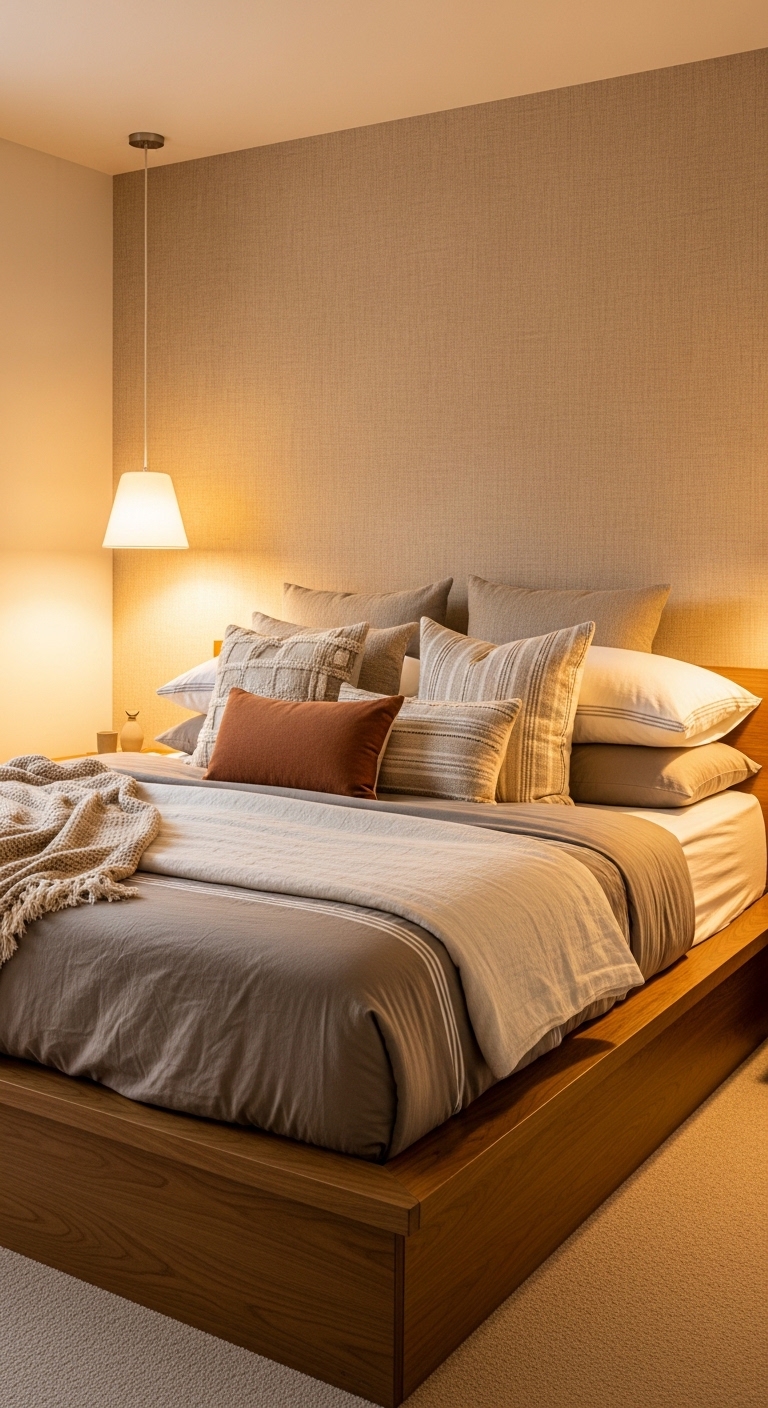
If there’s one change that delivers the biggest visual impact for the least effort, it’s a statement wall — and textured wallpaper is the secret weapon most people overlook.
Forget the flat, printed wallpaper of the 1990s. Today’s textured options mimic grasscloth, linen, concrete, wood grain, and even hand-applied plaster. When you place one of these on the wall directly behind your bed, the entire room shifts. Suddenly, your headboard looks intentional. Your bedding looks curated. The whole space feels like someone actually thought about it.
The key is choosing a texture that complements your existing furniture rather than competing with it. If your furniture is dark wood, go for a warm linen-style texture in oatmeal or clay tones. If you’re working with lighter pieces, a moody charcoal grasscloth adds gorgeous depth without overwhelming the room.
Practical tips to get this right:
- Stick to one wall — the one your bed sits against. More than that becomes chaotic.
- Peel-and-stick textured wallpaper has genuinely improved in quality. It’s a great low-commitment starting point.
- Layer wall sconces on either side of the textured wall to highlight the texture with light and shadow.
- If your room is small, choose a lighter textured tone to keep things feeling open.
Idea 2: Layer Your Lighting for Instant Ambiance
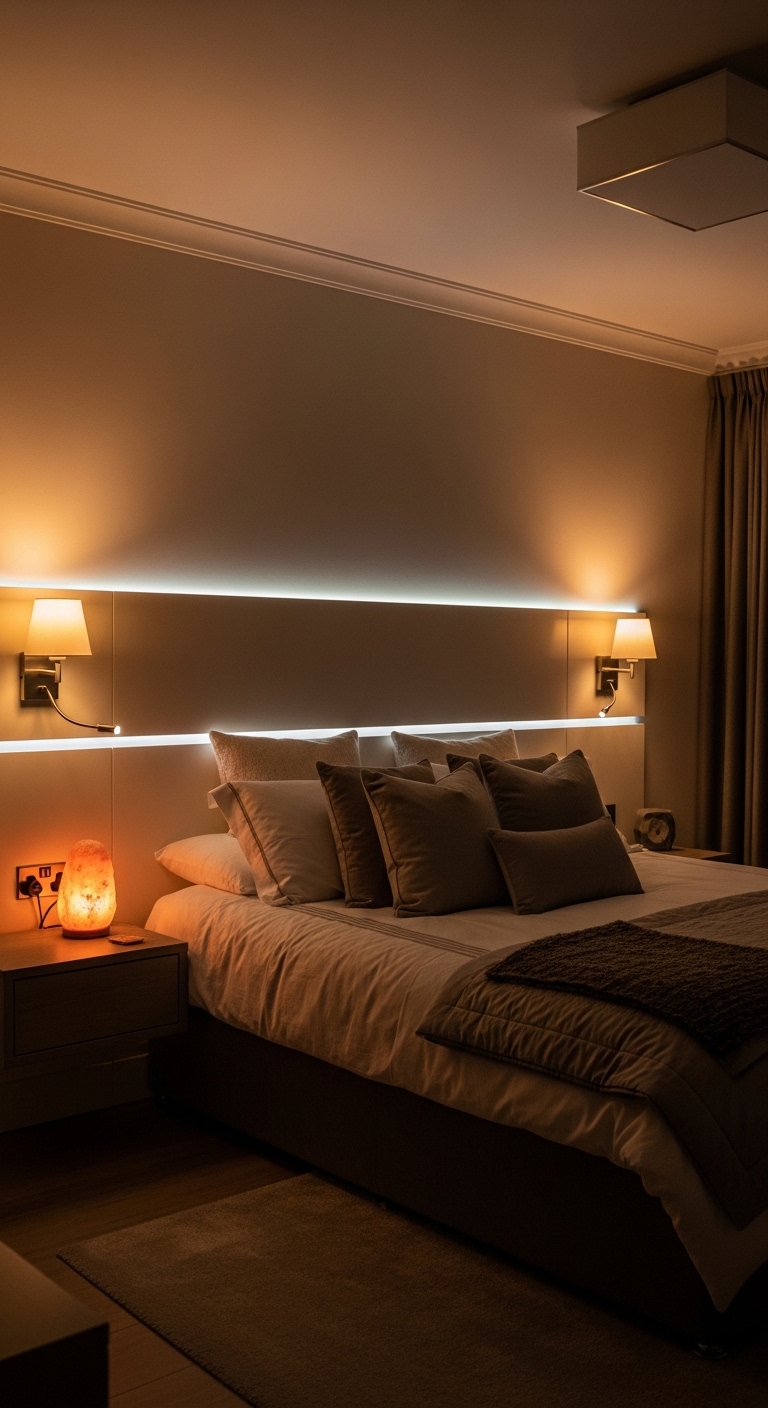
Here’s something most people get completely wrong about bedroom decor: they focus entirely on furniture and forget that lighting is what actually sets the mood.
Think about the best hotel room you’ve ever stayed in. Chances are, the lighting wasn’t coming from one harsh overhead fixture. There were layers — a warm lamp on the nightstand, maybe a subtle glow from behind the headboard, a reading light positioned just right. That layered effect is what made it feel luxurious.
You can recreate this in your own bedroom without spending a fortune. The goal is to have at least three light sources operating at different heights and intensities. This gives you full control over the atmosphere depending on whether you’re winding down, reading, or just relaxing.
What layered lighting actually looks like in practice:
- Ambient light: A dimmable ceiling fixture or flush mount that fills the room with soft, even light
- Task light: Adjustable wall sconces or clip-on reading lamps right by the bed
- Accent light: LED strip lights behind a floating headboard panel, or a warm Edison bulb lamp on a dresser
- Mood light: A Himalayan salt lamp, a candle cluster on a tray, or a small table lamp in a corner
Switch your bulbs to warm white (2700K–3000K range). That single change makes any room feel ten times cozier. Pair that with a simple dimmer switch and you’ve given yourself a tool most designers swear by.
Idea 3: Invest in a Luxurious Bedding Set That Anchors the Room
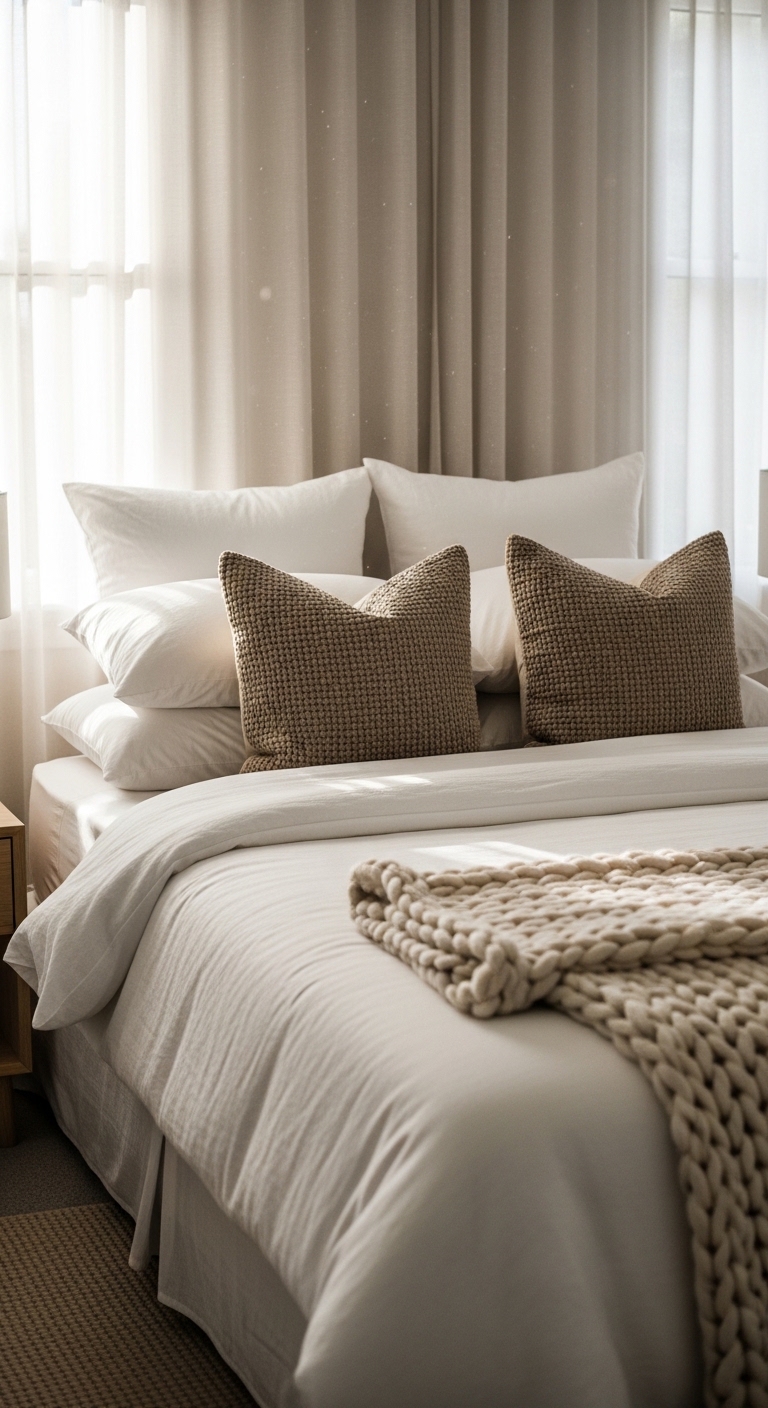
Your bed is the centerpiece of your bedroom. Everything else in the room rotates around it — literally and visually. So when your bedding looks flat, wrinkled, or thrown-together, the entire room suffers. When your bedding looks beautiful, it pulls everything together even if nothing else in the room has changed.
Luxury bedding doesn’t have to mean spending thousands of dollars. It means choosing the right fabrics, the right colors, and knowing how to layer them the way interior stylists do it on set.
The most approachable approach? Start with a high-quality white or off-white duvet cover in a natural fabric like cotton percale or linen. These photograph beautifully, feel amazing against your skin, and create a clean canvas that works with literally any room color or style.
How to style your bed like a pro:
- Use two Euro shams (those big square pillows) at the back — they add instant height and structure
- Layer two standard pillows in front of them in coordinating pillowcases
- Add one or two accent throw pillows in a texture or pattern that ties into your room’s color palette
- Fold a chunky knit throw or a linen blanket across the bottom third of the bed
- Choose a fitted sheet that actually fits — a baggy fitted sheet ruins even the most expensive bedding
One real tip: slightly rumpled linen bedding looks intentional and effortlessly chic. It’s low maintenance and incredibly stylish. If you’ve been ironing your sheets, you can stop.
Idea 4: Bring Nature Indoors With Indoor Plants and Greenery
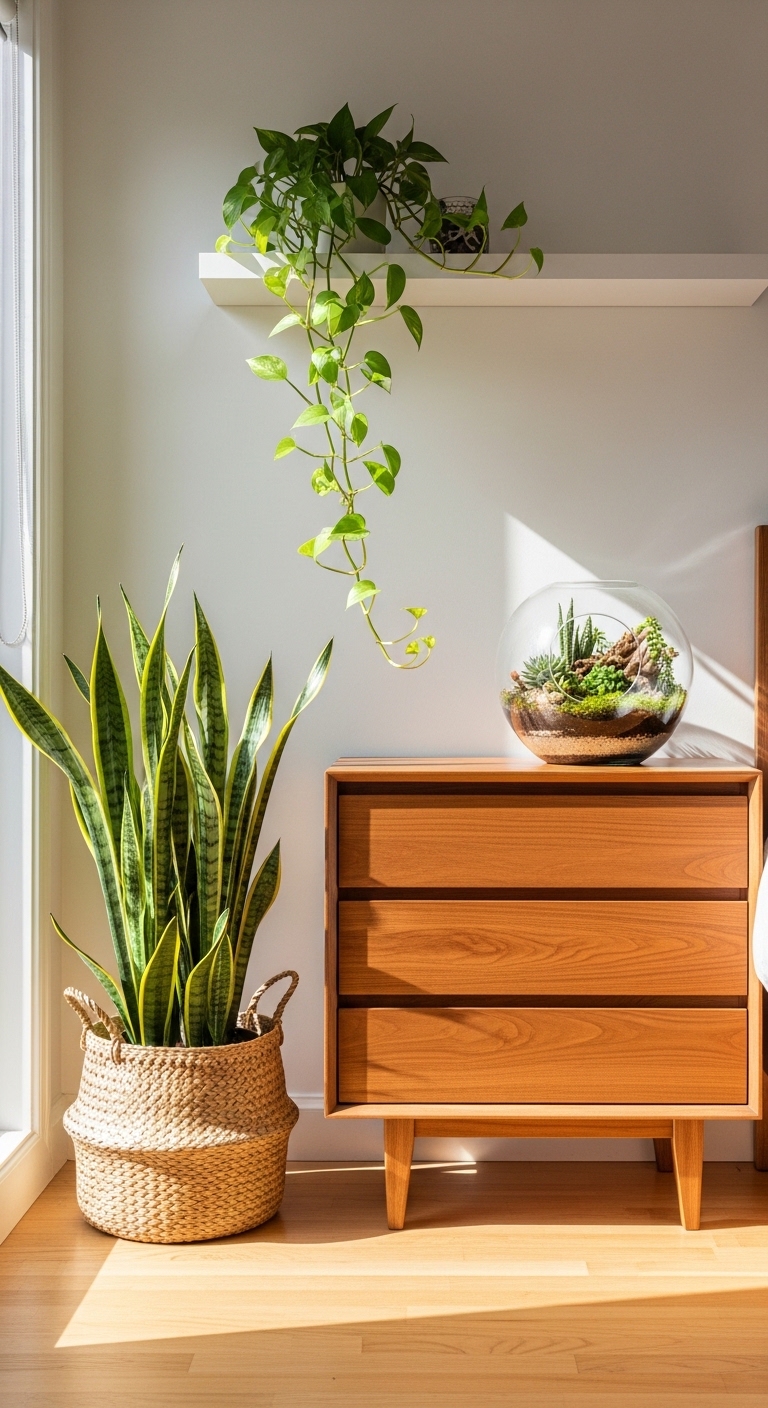
There’s a reason every stunning bedroom photo you see on Pinterest or in design magazines has at least one plant in it. Greenery doesn’t just decorate a space — it transforms the energy of it. It makes a room feel alive, breathable, and genuinely calming in a way that no piece of furniture can replicate.
The good news is you don’t need a green thumb or a sunlit room with floor-to-ceiling windows to make this work. There are incredible plant options that thrive in low-light bedroom conditions and require almost no maintenance.
Plants also improve air quality, reduce stress levels according to multiple environmental psychology studies, and add organic shapes that soften the hard lines of furniture and walls.
Best plants for bedrooms (even for beginners):
- Pothos: Practically indestructible, trails beautifully from a shelf or hanging planter
- Snake plant: Thrives in low light, looks architectural and modern
- Peace lily: Produces white blooms, tolerates shade, and genuinely filters air
- ZZ plant: Glossy leaves, extremely drought-tolerant, looks expensive
- Monstera deliciosa: Dramatic and lush if you have a brighter corner to spare
Styling tip — don’t just stick one small plant on a windowsill and call it done. Create a plant moment. A tall snake plant in a woven rattan planter in the corner, a trailing pothos on a floating shelf above the dresser, and a small succulent on the nightstand creates a cohesive, layered botanical feel.
Idea 5: Add a Reading Nook or Cozy Corner
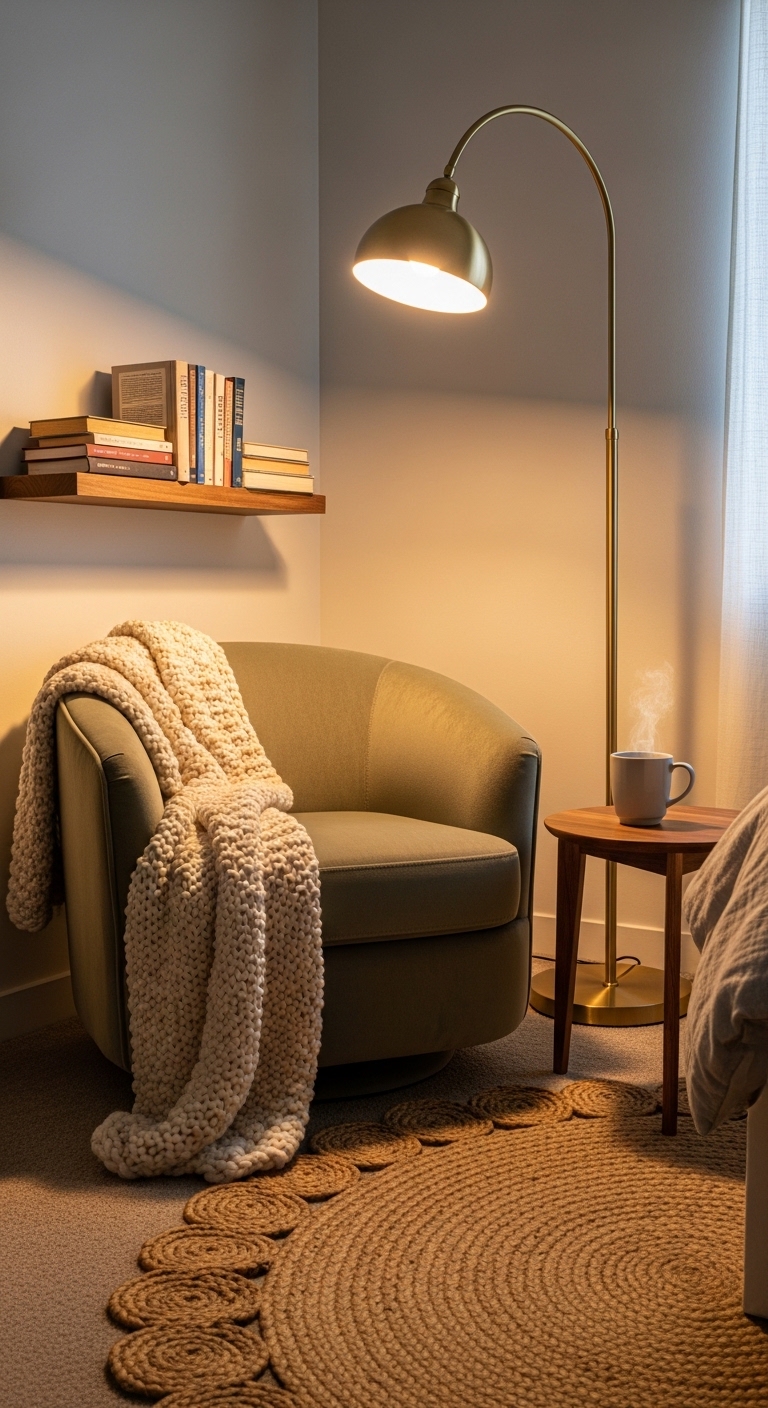
One of the most underused opportunities in bedroom design is the forgotten corner. Most of us dump a laundry chair there (you know the one) or leave it completely empty. But that corner has serious potential — it can become the most inviting spot in your entire home.
A reading nook or cozy corner doesn’t require a large space. Even a 4×4 foot area is enough to create something genuinely special. The goal is to build a spot that feels intentional, comfortable, and separate from the sleep zone — a little retreat within your retreat.
How to build a bedroom reading nook from scratch:
- Start with a comfortable chair — a rounded accent chair or an oversized bean bag both work beautifully
- Add a small side table or a wooden stool to hold a drink and a book
- Position a floor lamp right beside the chair so the light falls perfectly over your shoulder
- Layer in a soft throw blanket draped over the arm of the chair
- Add a small bookshelf, a wall-mounted floating shelf for your current reads, or a woven basket for magazines
- Place a small area rug underneath to define the zone and make it feel purposeful
The chair choice matters more than anything else here. Choose something you actually want to sit in — not just something that looks good in a photo. Comfort and aesthetics can coexist beautifully in this space.
Idea 6: Use Mirrors Strategically to Expand the Space
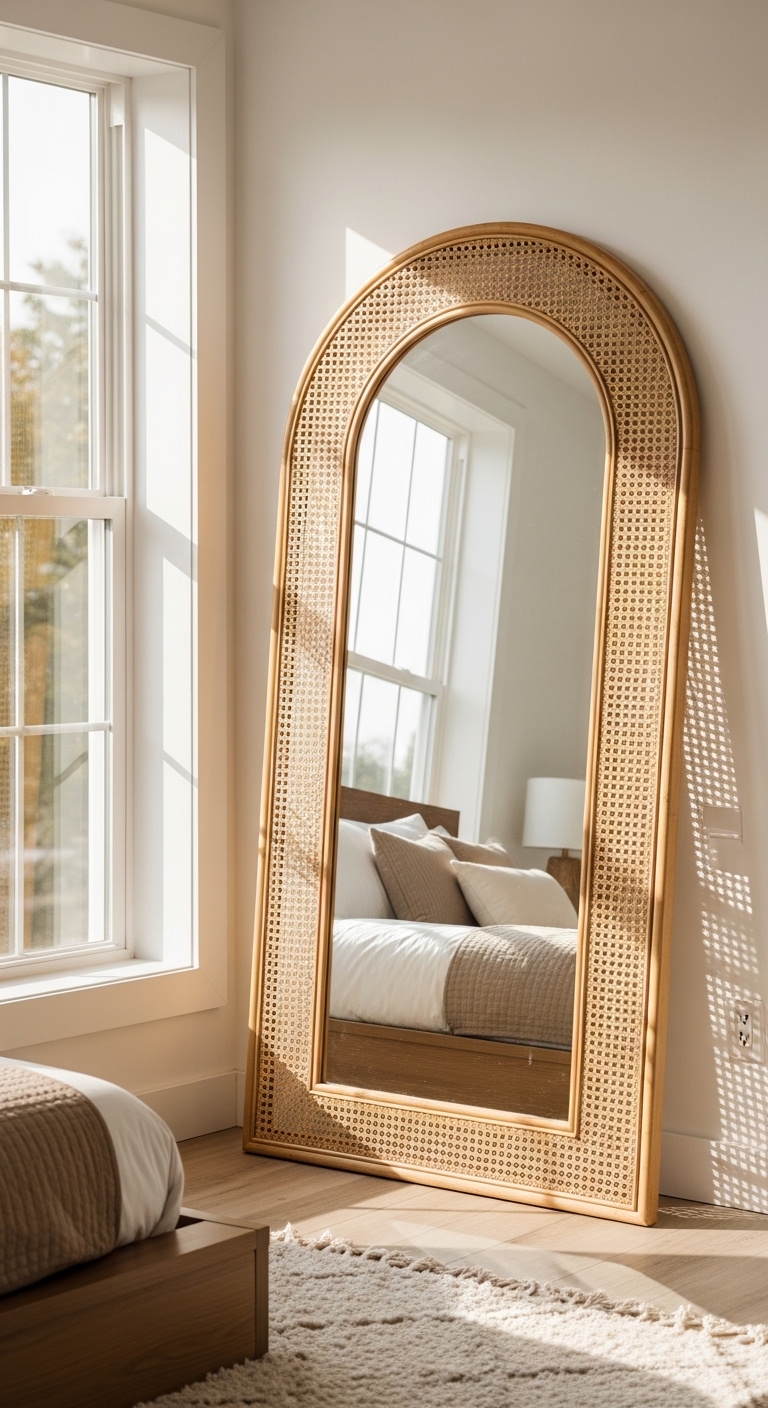
Mirrors are one of the most powerful (and criminally underused) tools in bedroom decor. When placed correctly, a mirror can make a small bedroom feel twice as large, bounce natural light around the room, and add a layer of visual interest that no painting or artwork can quite match.
The trick is placement and scale. A tiny mirror hung in a random spot does almost nothing. A large, well-positioned mirror changes the entire room.
Strategic mirror placement ideas that actually work:
- Lean a full-length mirror against the wall beside or opposite a window — it reflects natural light and makes the room glow
- Mount a large round or arched mirror above a dresser as a focal point instead of artwork
- Use a floor mirror in a dark corner to push light into spaces that feel cave-like
- Place two identical mirrors symmetrically on either side of the bed for a boutique hotel effect
Frame styles that work beautifully in bedrooms:
- Thin black metal frames for a modern, minimal look
- Arched rattan or wooden frames for a warm, organic feel
- Ornate gold or antique frames for a vintage or maximalist aesthetic
- Frameless mirrors for a clean, contemporary style
One thing to avoid: hanging a mirror directly opposite your bed. Many people find this unsettling, and it can actually interfere with restful sleep for light sleepers. Position it at an angle instead.
Idea 7: Incorporate Earthy, Warm Color Palettes
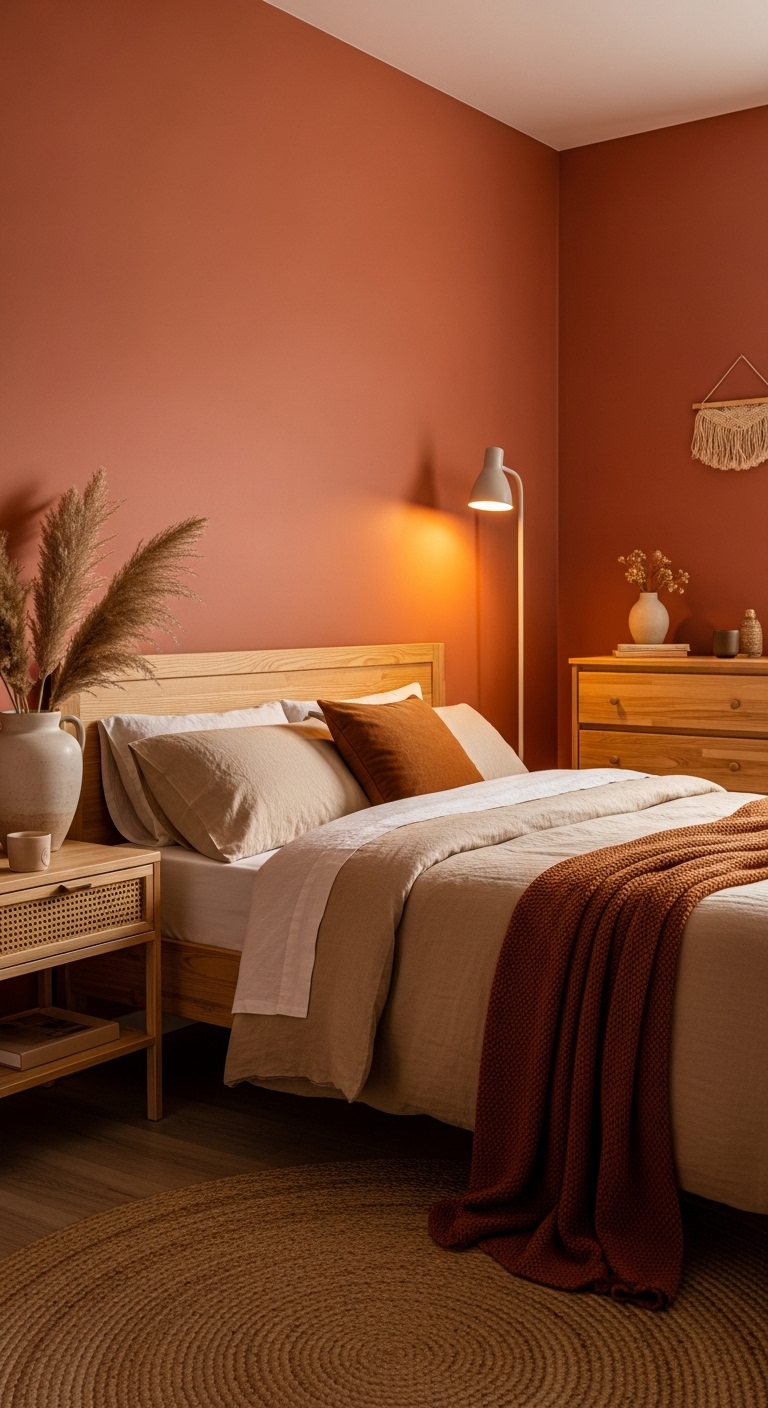
Color is the invisible architecture of a room. It shapes how you feel the moment you walk in — before you notice the furniture, the layout, or anything else. And right now, the most universally loved direction in bedroom color design is warmth.
Earthy palettes built around terracotta, warm taupe, sandy beige, dusty sage, and deep rust are having a serious moment — and for good reason. These tones mimic the natural world, which our nervous systems are literally wired to find calming and restorative.
You don’t have to paint every wall to bring this palette into your room. You can introduce it through bedding, throw pillows, rugs, curtains, and decorative accessories — layering tones gradually until the room feels cohesive and warm.
How to build an earthy bedroom palette:
- Pick one anchor color (like warm terracotta or dusty sage) and use it as your dominant tone
- Layer in two or three neutrals — warm white, natural linen, and muted oatmeal work beautifully
- Add one deeper accent — burnt sienna, forest green, or clay brown — in smaller doses through pillows or a throw
- Bring in natural materials (wood, rattan, linen, jute) to reinforce the earthy, organic feeling
Avoid using too many cool tones alongside warm earthy colors — cool gray and stark white can flatten the whole palette and strip out the warmth you’re trying to build.
Idea 8: Float Your Furniture Away From the Walls
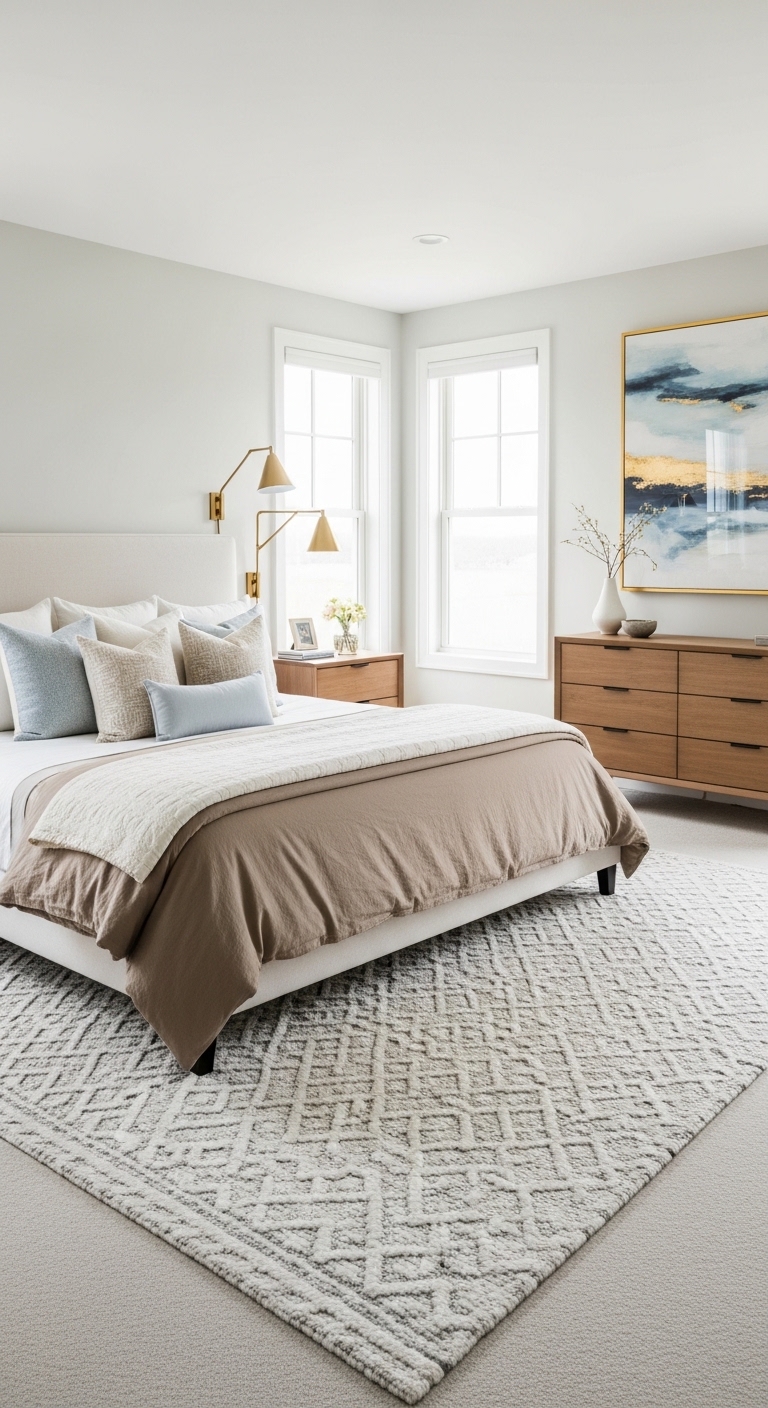
This sounds counterintuitive. Most people instinctively push furniture against walls to maximize floor space — but this approach almost always makes a room feel smaller and less intentional.
Floating your furniture — pulling pieces slightly away from walls and grouping them purposefully — creates visual breathing room, makes traffic flow feel natural, and gives your bedroom the grounded, curated feel of a professionally designed space.
Floating furniture basics for bedrooms:
- Pull your bed out from the wall by just 2–3 inches — this alone makes a surprisingly big visual difference
- If space allows, center the bed on the longest wall rather than tucking it into a corner
- Float your dresser slightly forward rather than flush against the wall, and hang artwork above it
- Position your nightstands so they feel balanced — matched pairs work beautifully, but intentionally mismatched pairs can look even more interesting
- Use area rugs to anchor furniture groupings and define zones within a larger room
If your room is genuinely small, this principle still applies — even 1–2 inches of breathing room between furniture and walls creates a visual difference. Pair floating furniture with wall-mounted lighting instead of table lamps to free up nightstand surface space.
Idea 9: Hang Curtains High and Wide for a Dramatic Effect
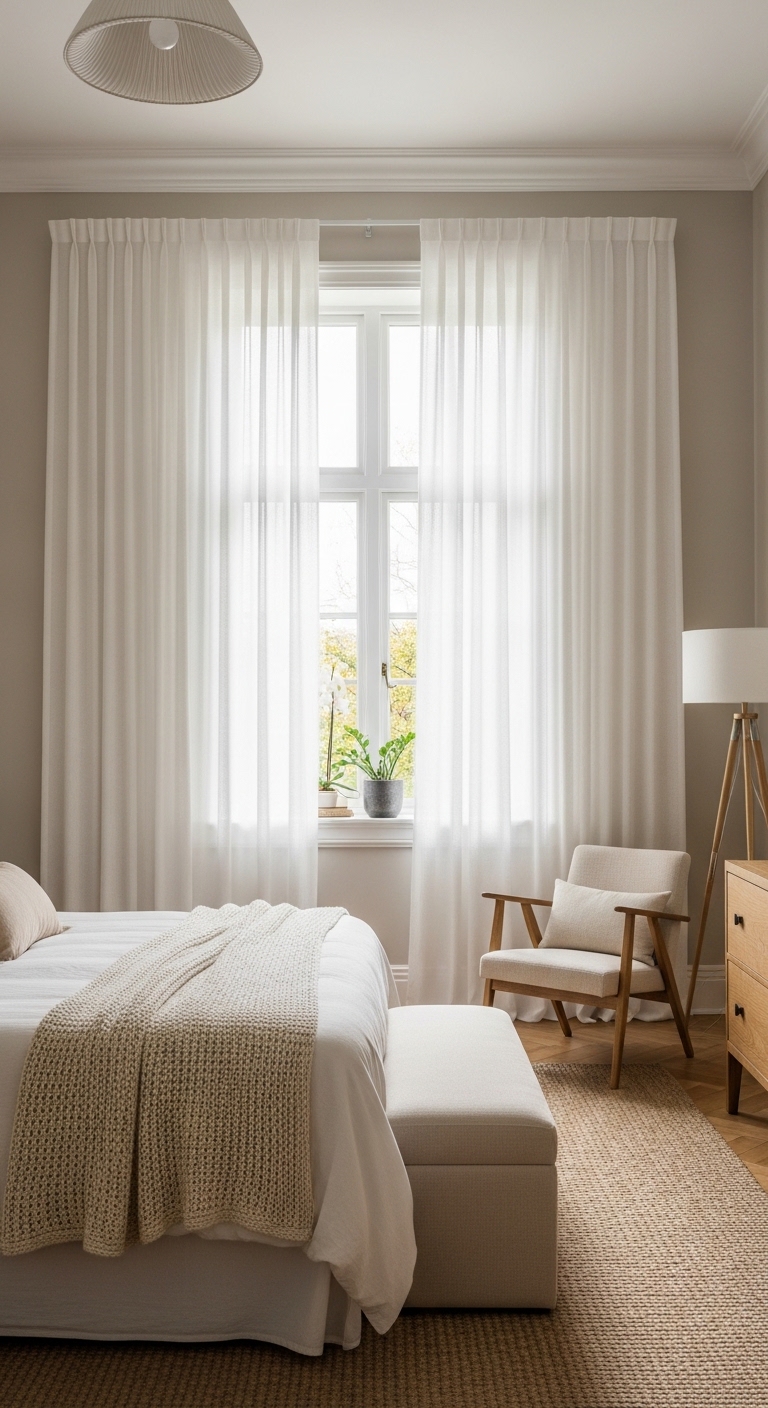
If there’s one interior design trick that designers quietly rely on more than almost anything else, it’s this: hang your curtains higher and wider than you think you should.
Most people hang curtains right above the window frame, which cuts the room short and makes ceilings feel lower. When you hang curtains just a few inches below the ceiling and extend the rod 8–12 inches beyond the window frame on each side, you visually stretch the room, make windows look larger, and create an elegant, dramatic effect.
This works in any size bedroom. In a small room, it’s practically magic — it creates the illusion of grandeur without changing a single thing structurally.
Curtain tips that make a genuine difference:
- Choose floor-length curtains that just barely skim or gently puddle on the floor — nothing in between
- Opt for fabrics with natural weight — linen, velvet, and cotton all hang beautifully
- Sheer curtains layered under heavier drapes give you light control and that layered, luxurious look
- Neutral curtain colors (white, cream, warm beige, soft gray) elongate a room and age extremely well
- Avoid short curtains at all costs — they’re one of the most common bedroom decor mistakes
The color of your curtain rod matters too. Matte black, warm brass, and brushed nickel all look intentional and polished. Avoid chrome — it tends to look cheap against warm room tones.
Idea 10: Personalize With a Gallery Wall That Tells Your Story
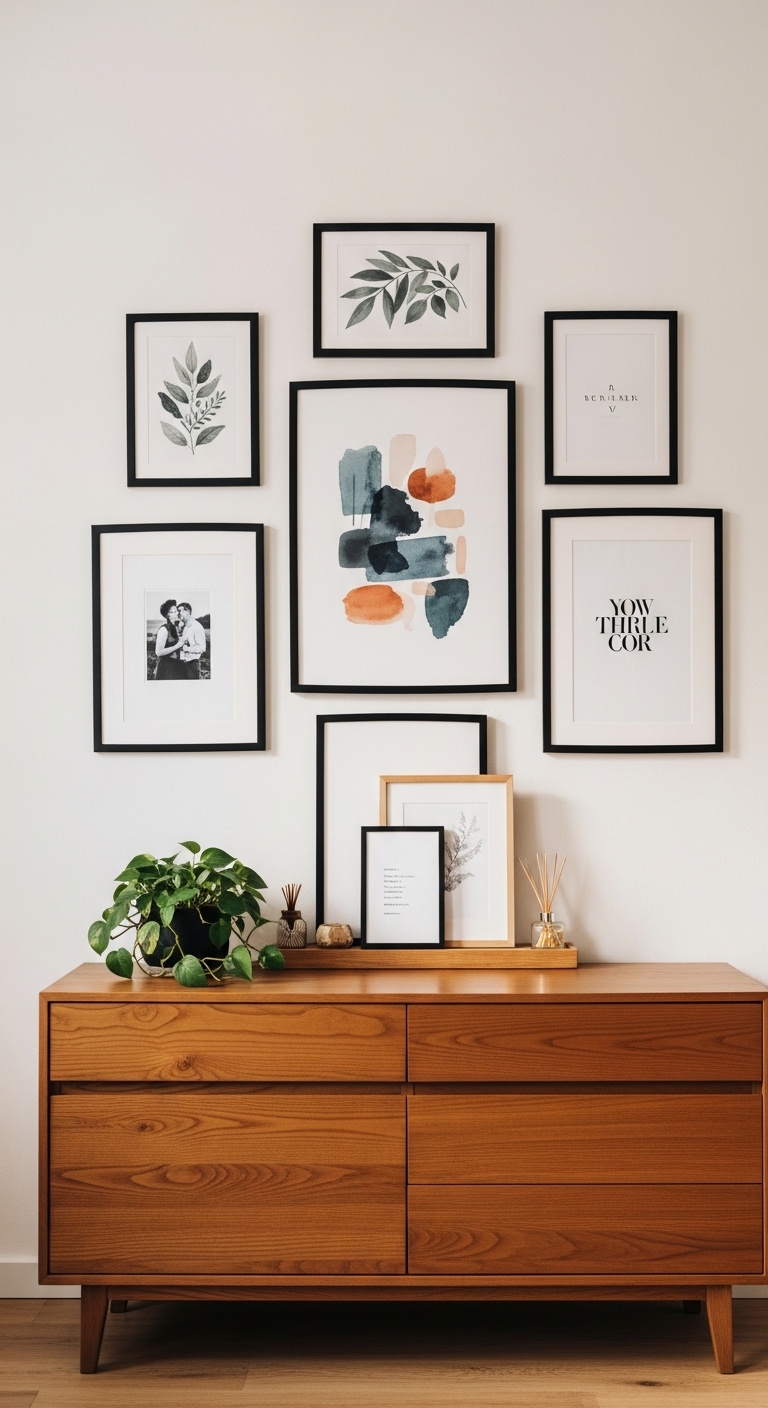
The final touch that separates a beautifully decorated bedroom from a truly personal one is the art on your walls. And a gallery wall — when done right — is one of the most expressive, flexible, and affordable ways to make a bedroom feel uniquely yours.
The key word is “curated.” A gallery wall isn’t about throwing up a collection of random frames. It’s about telling a visual story — a mix of photographs, artwork, prints, and objects that reflect who you are and what makes you feel at home.
How to create a gallery wall that looks intentional:
- Start by choosing a cohesive color palette for your prints — this doesn’t mean everything has to match, but there should be a visual thread connecting them
- Mix frame sizes and styles but keep them within one or two finishes (e.g., mix black frames of different sizes, or mix raw wood frames in different dimensions)
- Include a variety of content types — a personal photo, an abstract art print, a typographic quote, a botanical illustration, a postcard from a trip
- Lay everything out on the floor first before making a single hole in the wall
- Anchor the arrangement around one central larger piece, then build outward
- Leave consistent spacing between frames — 2–3 inches is the sweet spot
One idea that genuinely elevates a gallery wall: mix in a small shelf or ledge within the arrangement and lean a couple of frames against the wall on it. This adds dimension and makes the whole thing feel less flat.
Bringing It All Together
Here’s the truth about bedroom transformation: you don’t need to do all ten of these things at once. Pick one idea that resonates most right now — maybe it’s upgrading your bedding, or finally tackling that blank corner — and start there.
Real, meaningful decor changes happen gradually. You layer things in over time, you discover what you love, you edit out what doesn’t serve the space anymore. The rooms that feel the most beautiful and personal are never the result of one big shopping trip. They’re the result of thoughtful decisions made over time.
Your bedroom should feel like the best version of your own world. Warm, beautiful, personal, and completely yours. These ten ideas give you a real, achievable roadmap to get there — one stunning detail at a time.
Now go transform your space. You deserve a bedroom that genuinely feels like home.