23 Small Bedroom Ideas That Instantly Maximize Space & Style
Have you ever walked into your bedroom and immediately felt like the walls were closing in? You’re not alone. Millions of people live with small bedrooms every single day — and most of them think there’s nothing they can do about it. But here’s the truth: a small bedroom isn’t a problem. It’s just an untapped opportunity.
The right ideas can completely transform a tight, cluttered room into a cozy, stylish retreat that feels twice its actual size. And you don’t need to knock down walls or spend a fortune to get there.
Whether you’re working with a 10×10 room, a studio apartment corner, or a narrow guest bedroom, these 23 small bedroom ideas are going to change the way you see your space — and how you feel in it every single morning.
Let’s get into it.
Why Small Bedrooms Deserve More Credit
Before we dive into the ideas, let’s flip the script. Small bedrooms are not a design curse — they’re actually easier to make feel warm, intentional, and personal. Large rooms often feel cold and empty without serious furniture investment. A small room? It naturally feels snug and intimate when you set it up right.
The trick is understanding three things: function, flow, and visual tricks. Once you know how to work those three levers, your bedroom stops feeling cramped and starts feeling curated.
Now, here are the 23 ideas that actually work.
Idea 1: Use a Lofted Bed to Reclaim Your Floor
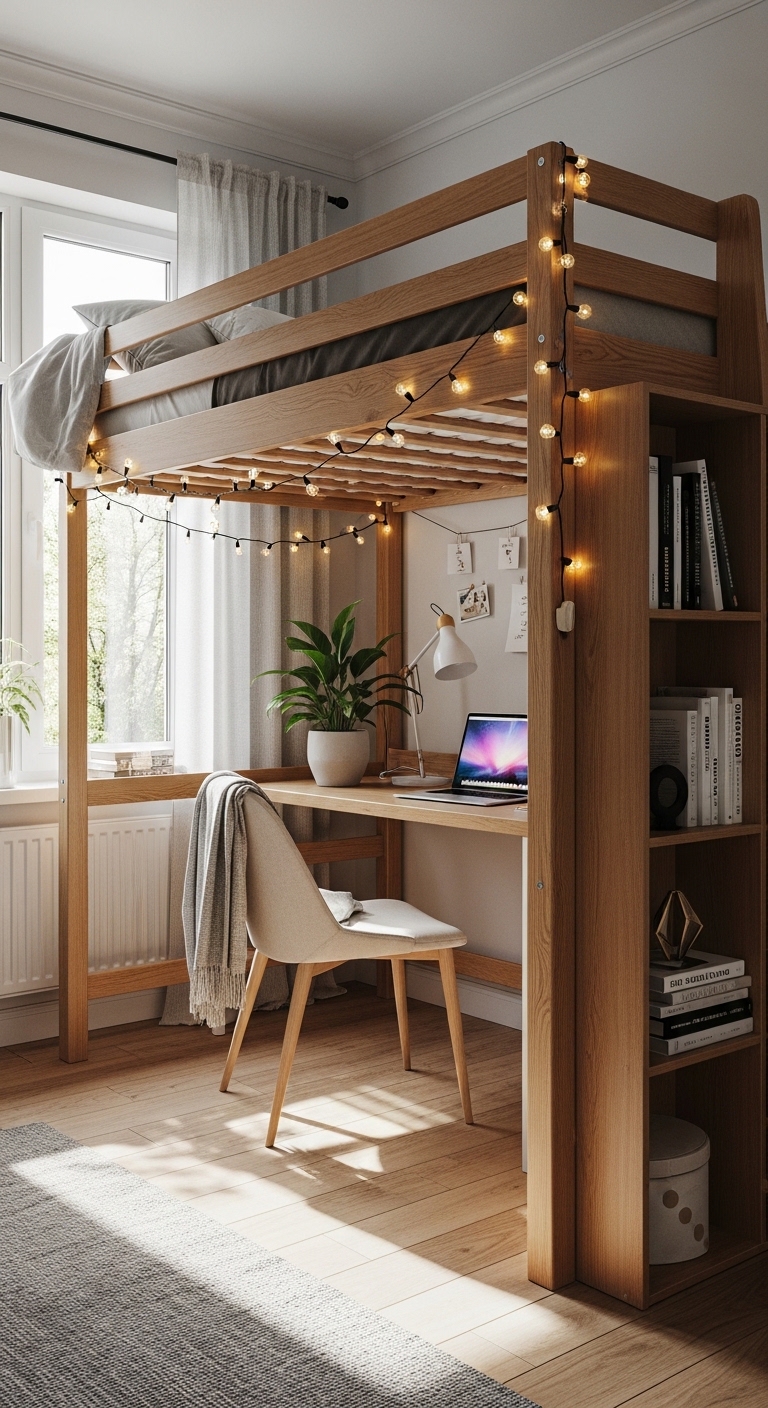
This is one of the most dramatic changes you can make in a small bedroom. A lofted bed lifts your sleeping area completely off the floor, which instantly frees up an entire zone beneath it. That space can become a study nook, a mini closet, a cozy reading corner, or even a small sofa area.
Think of the floor as your most valuable real estate in a small room. The moment you move the bed up, everything changes. You gain breathing room, visual space, and functional area all at once.
This works especially well in rooms with higher ceilings — even just 9 feet gives you enough clearance to make it comfortable and practical.
Idea 2: Mount Your Headboard on the Wall
Most people don’t realize how much visual and physical space a traditional freestanding headboard eats up. When you mount your headboard directly onto the wall, the bed feels anchored without taking up extra inches in your room.
Wall-mounted headboards also give you design freedom. You can make it as dramatic or as subtle as you want — a large padded panel, a wooden plank, a gallery-style arrangement. And because it’s attached to the wall, you don’t lose floor space behind or beneath it.
This small change makes your bedroom look intentionally designed rather than just furnished — and that’s a big deal in a tight space.
Idea 3: Choose a Bed With Built-In Storage
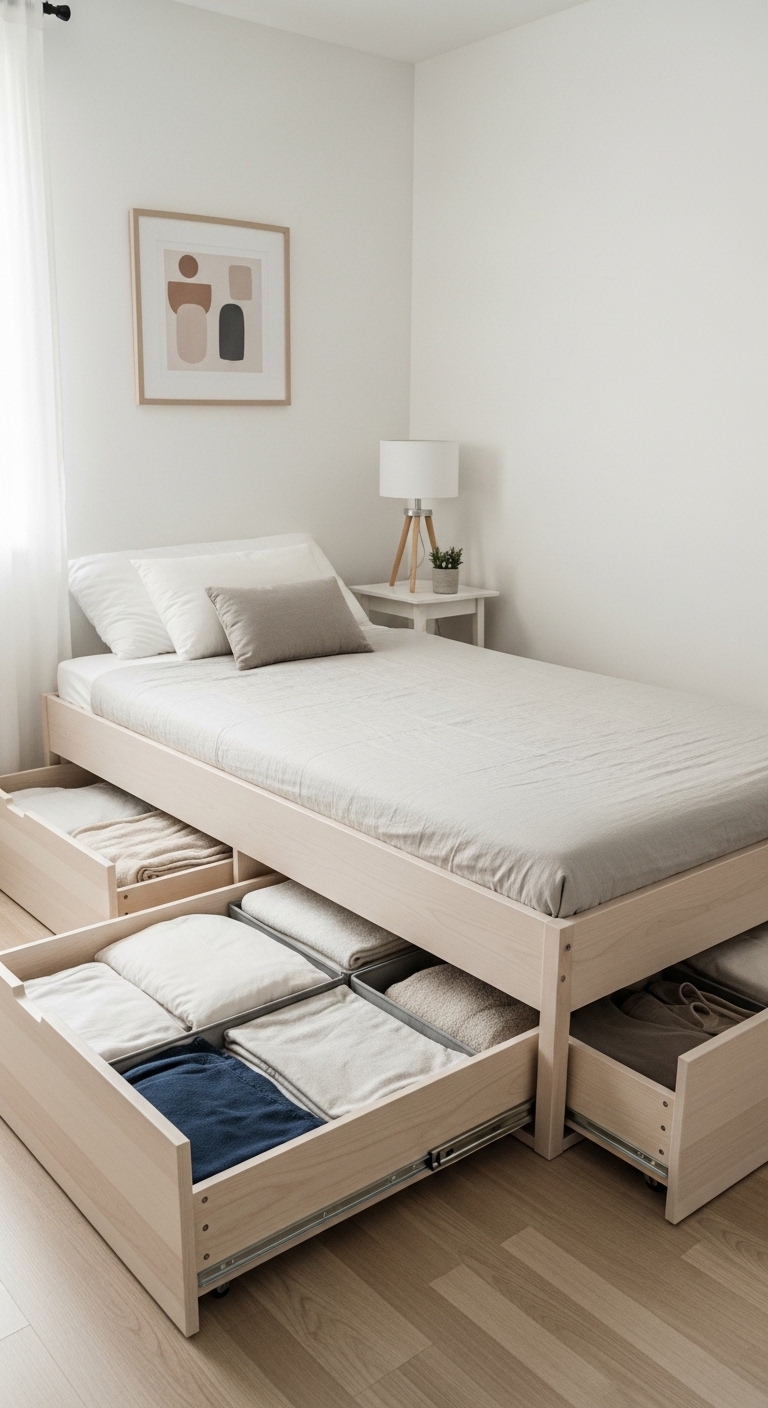
If your small bedroom has no closet — or a tiny one — a storage bed is basically your best friend. These beds feature drawers, hydraulic lift-up bases, or side cubbies built directly into the bed frame. You’re sleeping on top of your storage, which means you’re using space that would otherwise just be dead air under your mattress.
Here’s what you can store in a bed like this:
- Extra bedding and seasonal blankets
- Off-season clothing and shoes
- Books, magazines, and hobby supplies
- Extra pillows and cushions
One practical tip: hydraulic lift-up storage beds give you the most capacity, but pull-out drawer beds are easier to access daily. Think about your habits and pick accordingly.
Idea 4: Paint Your Walls a Light, Warm Neutral
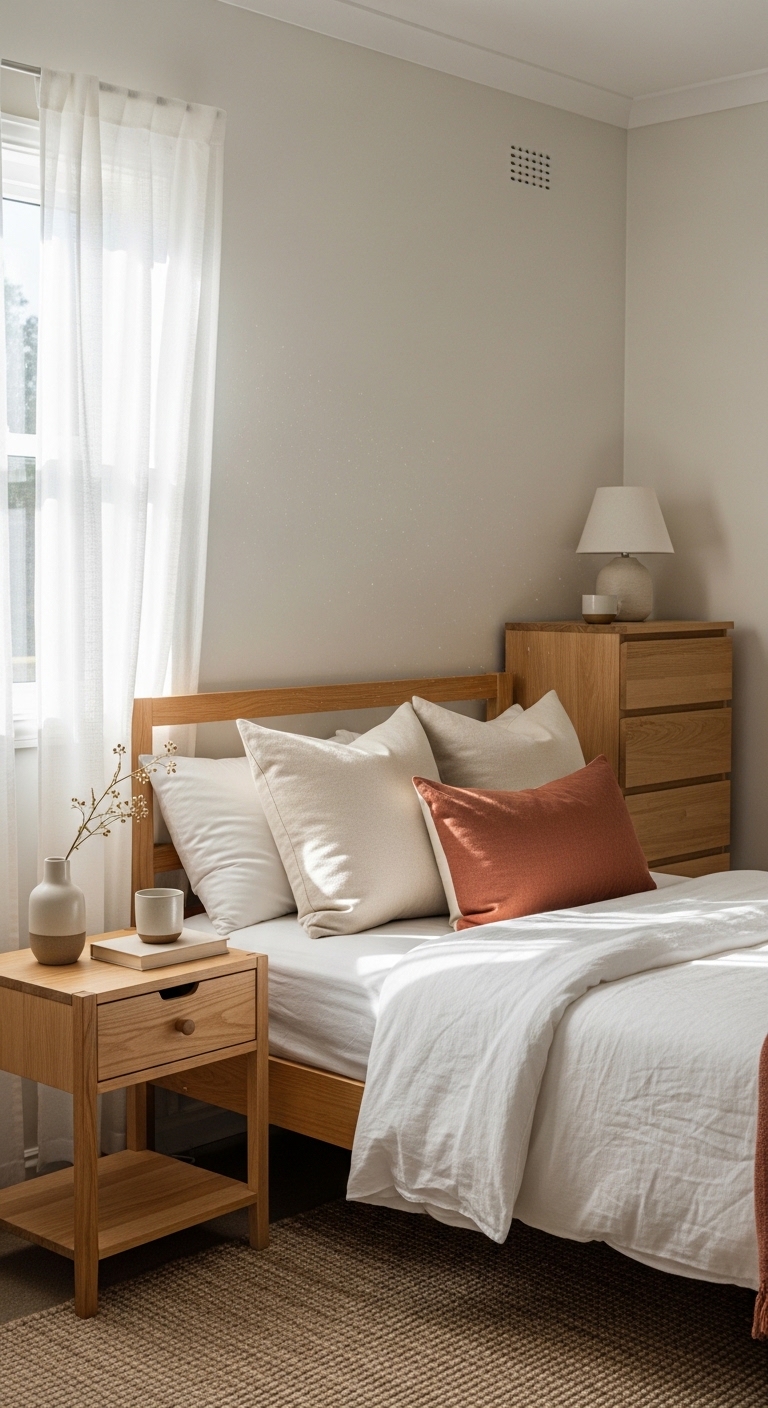
Color is one of the most powerful (and affordable) tools you have in a small space. Light, warm neutrals like soft white, warm cream, gentle beige, or barely-there greige make walls feel like they’re stepping back. The room breathes more.
A lot of people make the mistake of painting small rooms stark white because they think it will open things up. It does help, but it can also feel cold and clinical. Warm neutrals give you that same spaciousness with an added layer of coziness — which is exactly what a bedroom should feel like.
Paint the ceiling the same color as the walls if you really want to blur the boundaries and make the room feel taller and more expansive.
Idea 5: Add a Mirror That Does the Heavy Lifting
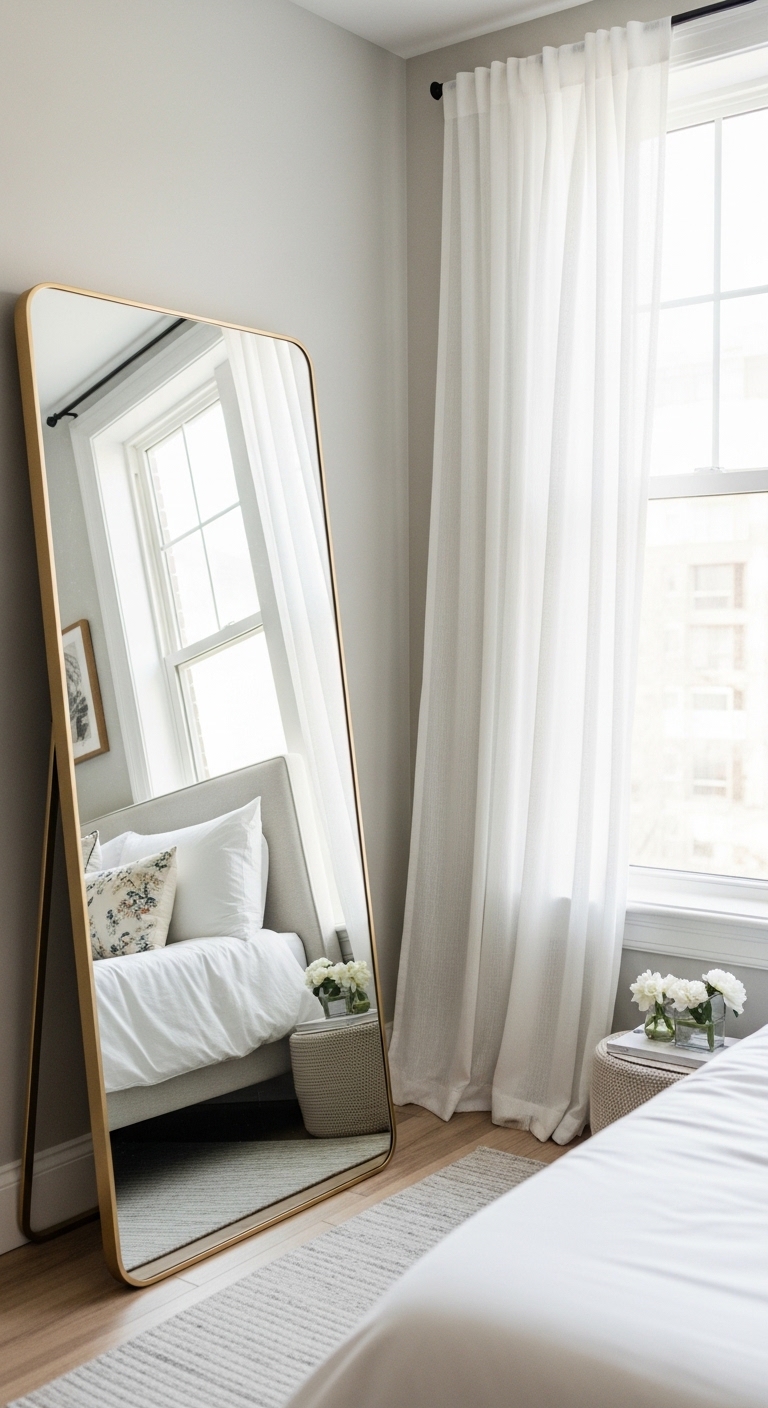
Mirrors are the oldest trick in the small-space playbook — and they still work like magic. A large mirror reflects light and visually doubles the depth of a room. Place one across from a window and watch how your bedroom suddenly feels twice as bright and twice as big.
You don’t have to go with a plain rectangle either. Leaning floor mirrors, arched mirrors, or even a panel of mirror on a wardrobe door all do the job beautifully.
One thing to avoid: placing mirrors directly facing your bed. For a lot of people, that feels uncomfortable. Try an angled placement or a side wall instead — you still get all the visual benefits without the odd reflection while you’re sleeping.
Idea 6: Go Vertical With Open Shelving
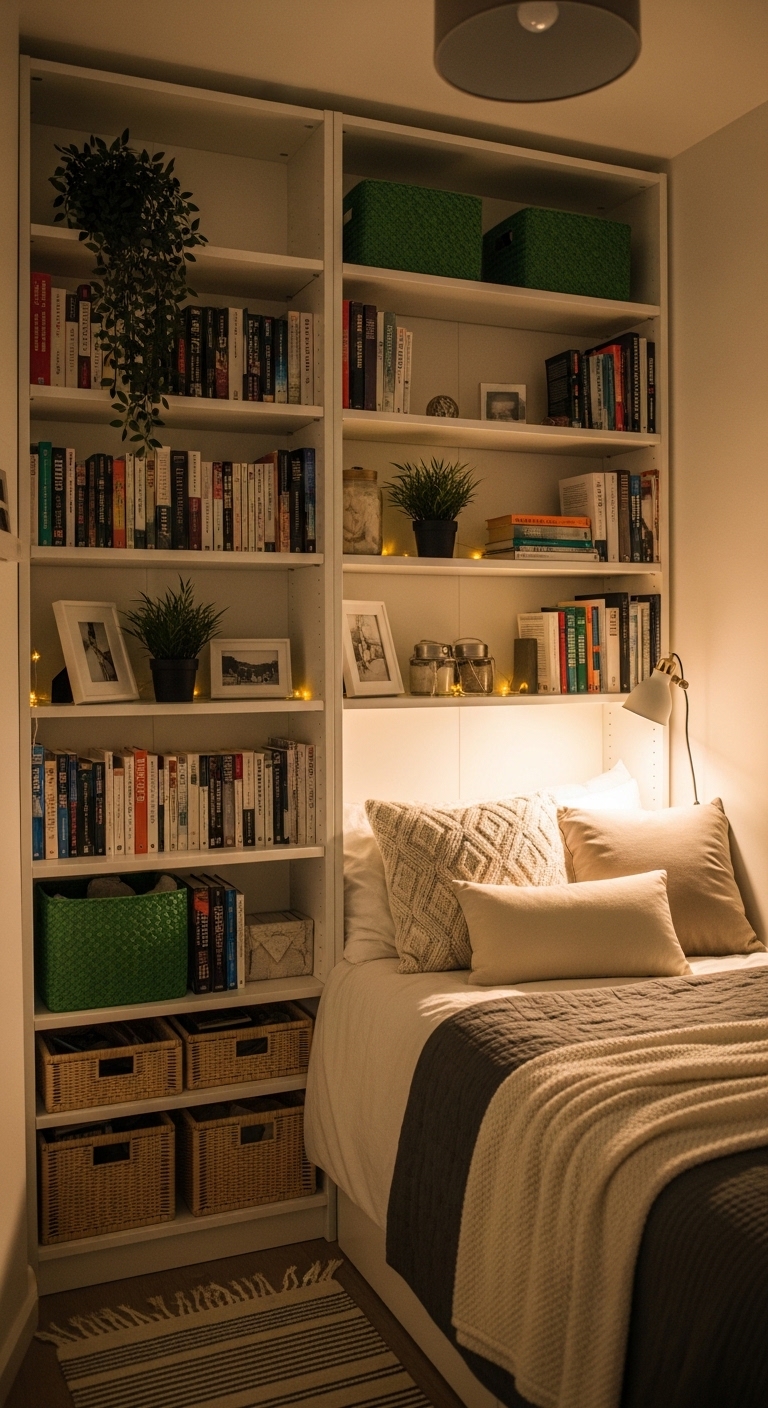
When floor space is limited, the only direction left is up. Tall vertical shelving draws the eye upward, which makes your ceiling feel higher and your room feel larger. It also gives you serious storage and display space without touching the floor plan.
The key is styling these shelves intentionally. A mix of practical storage — baskets, boxes — and decorative items keeps the look from feeling cluttered. Group things in odd numbers, vary the heights of objects, and leave some breathing room between items.
You can install open shelving above your desk, beside your bed, or along an entire accent wall. The more vertical you go, the bigger the visual impact.
Idea 7: Use Curtains That Hang High and Wide
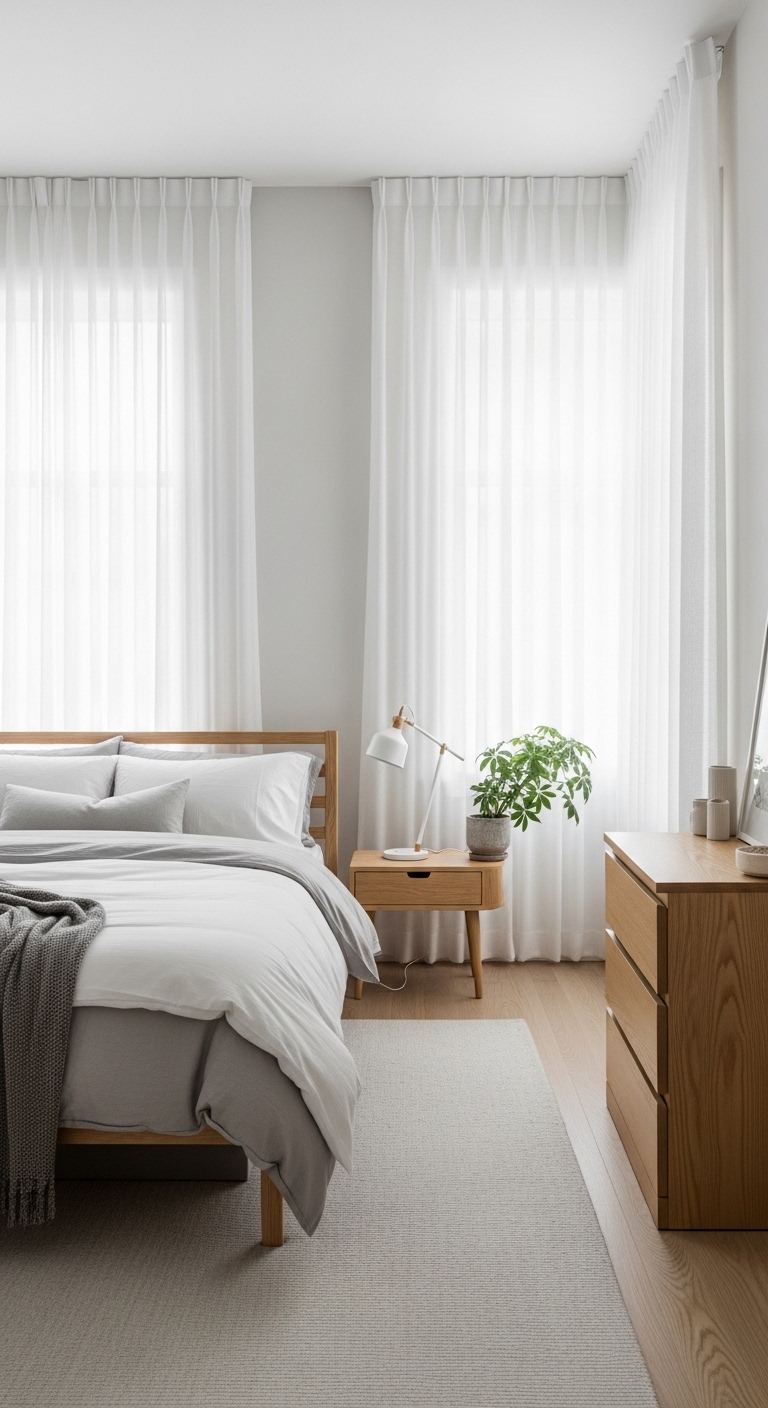
This is one of those ideas that sounds simple but genuinely transforms a room. Hanging your curtains as high as possible — ideally just a few inches from the ceiling — tricks the eye into thinking the wall is much taller than it is. And extending the curtain rod well past the window frame on both sides makes the window look wider and lets more light flood in when the curtains are open.
Most people hang curtains right above the window frame. It’s the default. But that default makes your ceilings look lower and your windows look smaller. Break that habit and you’ll immediately see the difference.
Stick with light, sheer fabrics for small bedrooms. Heavy blackout curtains can still work — just make sure the color stays light and the hang stays high.
Idea 8: Pick Furniture With Exposed Legs
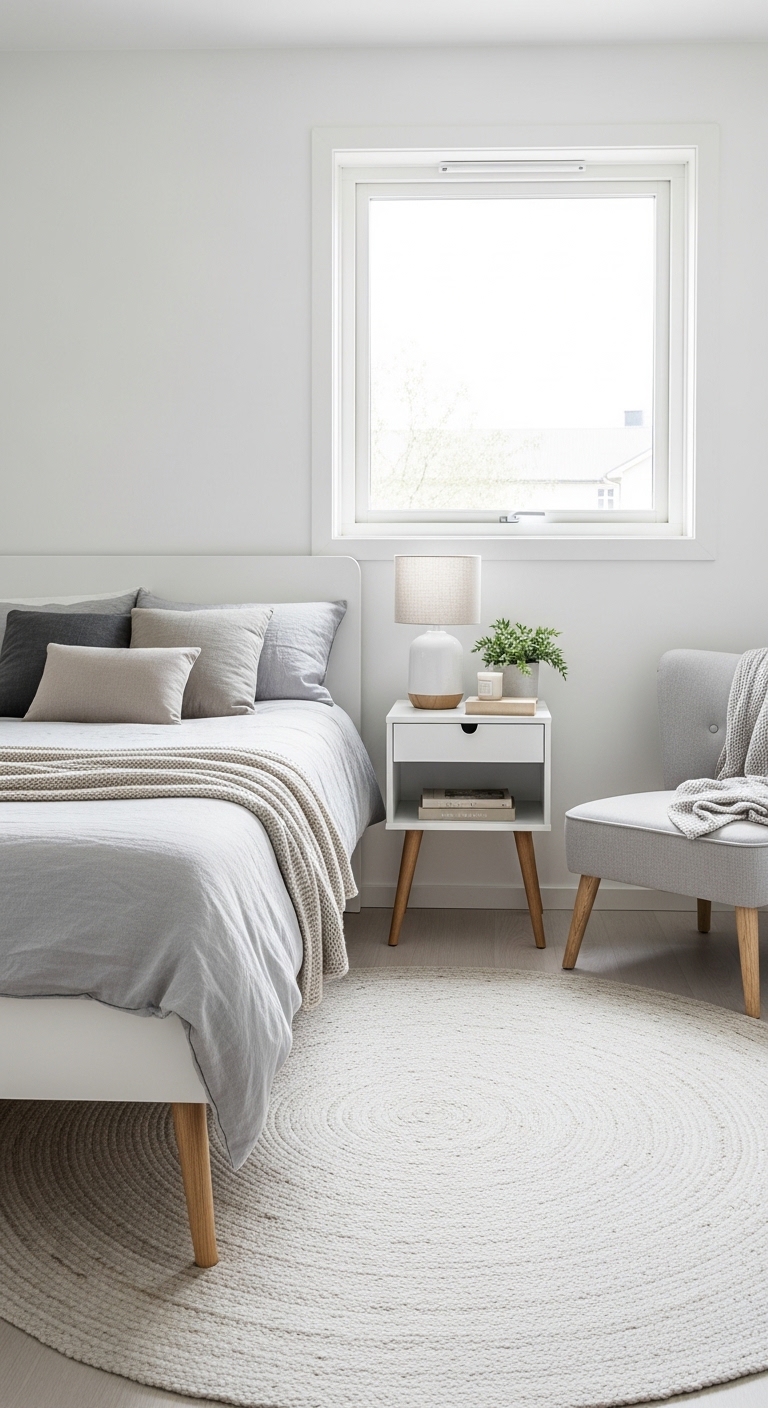
Furniture that sits directly on the floor creates a visual weight that makes a room feel heavier and smaller. But when furniture has legs — even slim, tapered ones — the floor is visible beneath it, which creates visual flow and makes the room feel more open.
This applies to everything: your bed frame, your nightstands, your wardrobe, your small chair if you have one. The more floor you can see, the lighter and airier the room feels.
Scandinavian and mid-century modern furniture styles are particularly good at this. Slim legs, light wood tones, simple silhouettes — it’s a combination that practically breathes space into any small bedroom.
Idea 9: Create a Focal Point With an Accent Wall
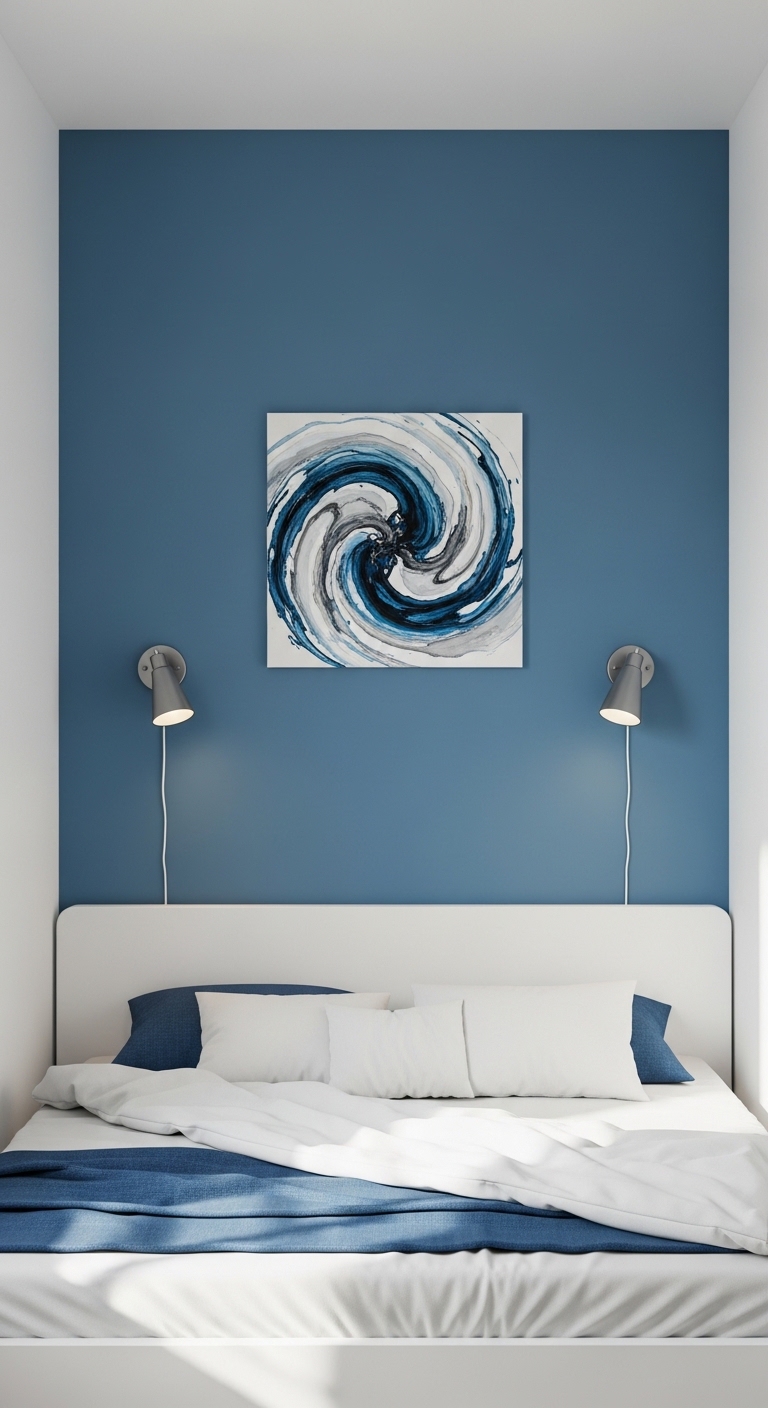
Counterintuitive as it sounds, adding a bold accent wall in a small bedroom actually helps the space feel more defined and intentional — which makes it feel bigger, not smaller. It gives your eye somewhere to land, which reduces the feeling of visual chaos.
The wall behind your bed is the natural choice. A deep, moody color, textured wallpaper, or even a simple wood panel treatment works beautifully here. The contrast with lighter surrounding walls makes the room feel layered and designed.
Keep the accent wall clean and simple. One large piece of art centered above the headboard is all you need to complete the look.
Idea 10: Invest in Multifunctional Furniture
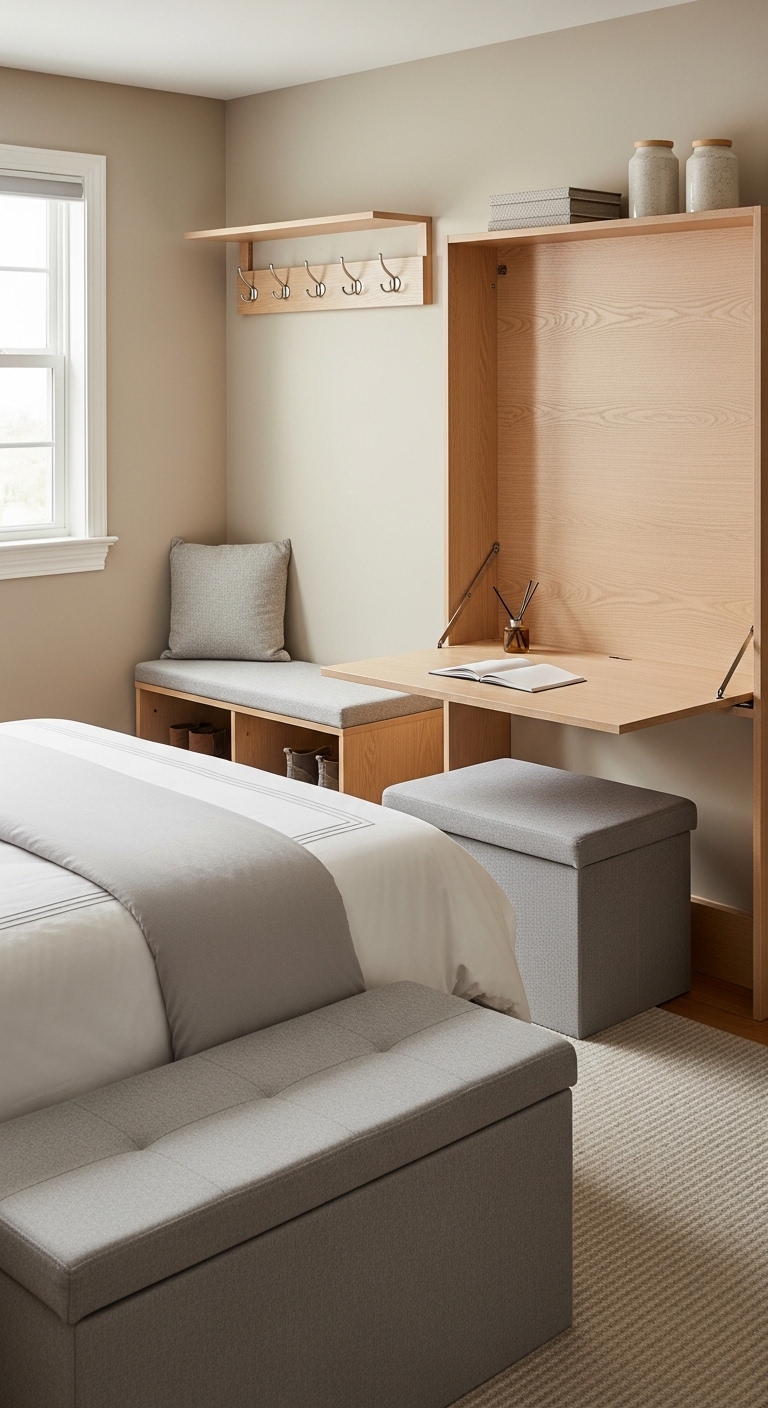
In a small bedroom, every piece of furniture needs to earn its place. That means if something only does one job, you have to ask yourself whether it’s worth the space it takes up.
Multifunctional furniture fixes that problem. Think:
- Ottoman with storage inside and surface seating on top
- Fold-down wall desk that disappears when not in use
- Nightstand with deep drawers instead of just a surface
- Bench at the foot of the bed with hidden storage inside
- Bookcase headboard that combines sleep and storage in one unit
The goal is to combine functions so you need fewer total pieces. Fewer pieces mean more breathing room — and a bedroom that actually feels restful.
Idea 11: Use Under-Bed Space Strategically
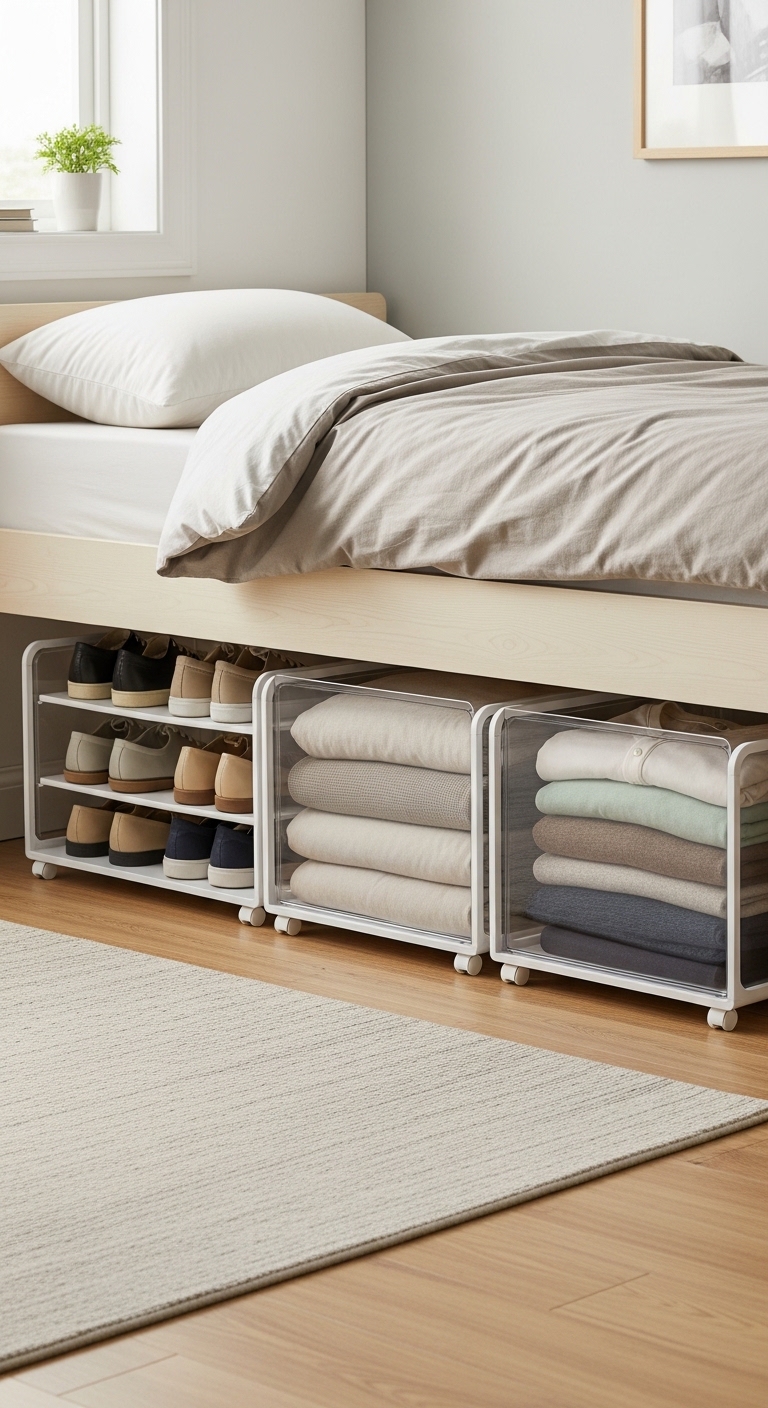
Most people waste an enormous amount of space right beneath their mattress. Under-bed storage is one of the easiest and most accessible ways to add serious capacity to a small bedroom without changing anything about the room itself.
Flat rolling bins, vacuum storage bags, and purpose-built under-bed containers can hold an impressive amount — seasonal clothing, extra blankets, shoes, even books. The key is keeping it organized so accessing it doesn’t become a headache.
If your current bed frame is too low to allow under-bed storage, consider adding bed risers. They cost very little and can elevate your bed by four to eight inches, creating a meaningful storage zone below.
Idea 12: Keep Your Color Palette Tight and Cohesive
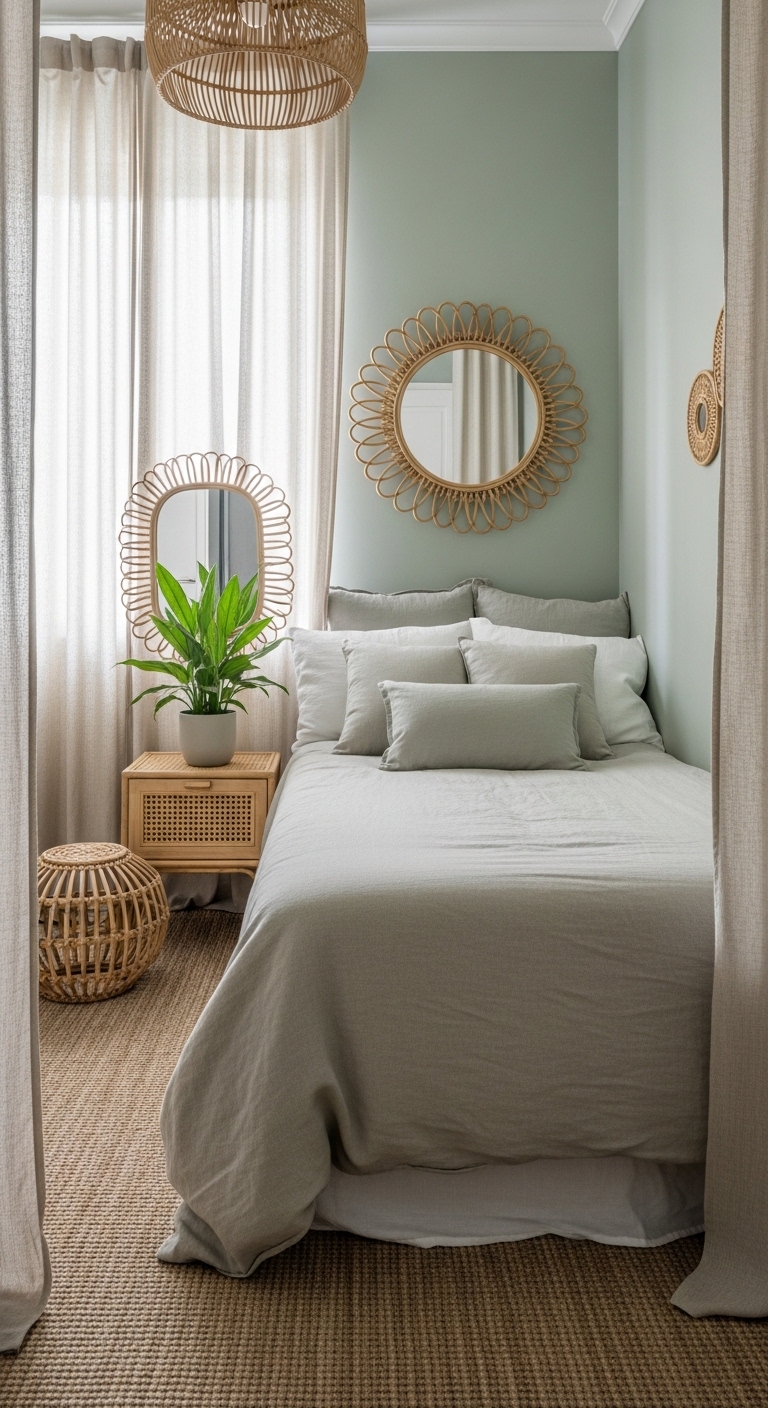
When you use too many colors in a small bedroom, the eye gets pulled in too many directions and the space feels fragmented and smaller. A cohesive, tight color palette does the opposite — it creates visual harmony, which translates to a sense of calm and spaciousness.
Aim for two or three colors max, all within the same family or tone. You can absolutely add texture and interest through materials — linen, cotton, rattan, wood — without introducing new colors. That layering keeps the look rich without making it busy.
Tonal dressing is one of the biggest trends in small bedroom design right now, and it works for exactly this reason. Same family, different shades, endless depth.
Idea 13: Install Recessed or Flush-Mount Lighting
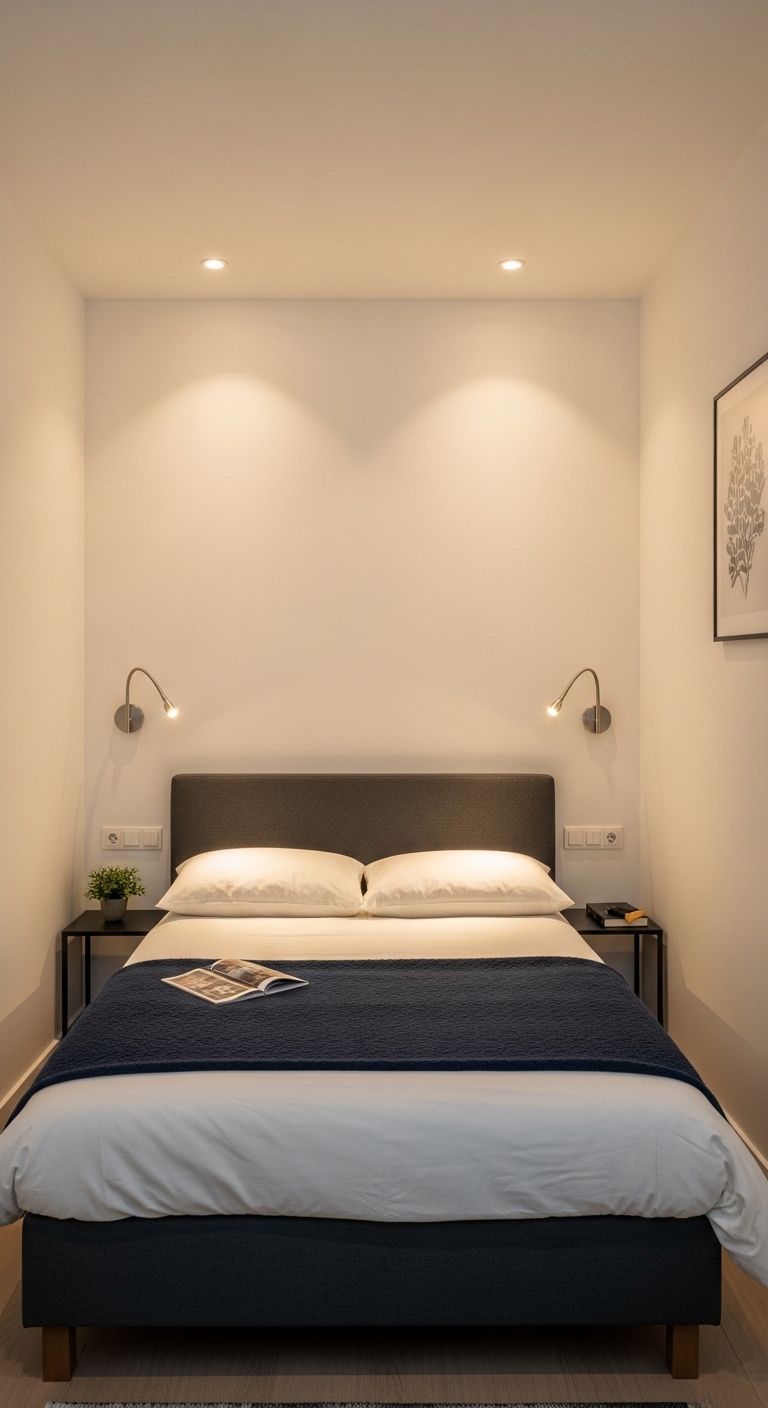
Table lamps are lovely — but in a small bedroom, they take up precious nightstand real estate and add visual clutter. Wall-mounted sconces or recessed ceiling lights give you all the function with none of the footprint.
Recessed lighting in particular is brilliant for small rooms because it doesn’t interrupt the visual plane of the ceiling at all. It just quietly lights the space without calling attention to itself.
Wall sconces beside the bed are equally great — they free up your nightstand completely, give you directional reading light exactly where you need it, and add a hotel-like elegance to even the smallest bedroom.
Layer your lighting: ambient overhead, task-based wall sconces, and maybe a small LED strip behind the headboard for a warm glow at night.
Idea 14: Choose a Low-Profile Bed Frame
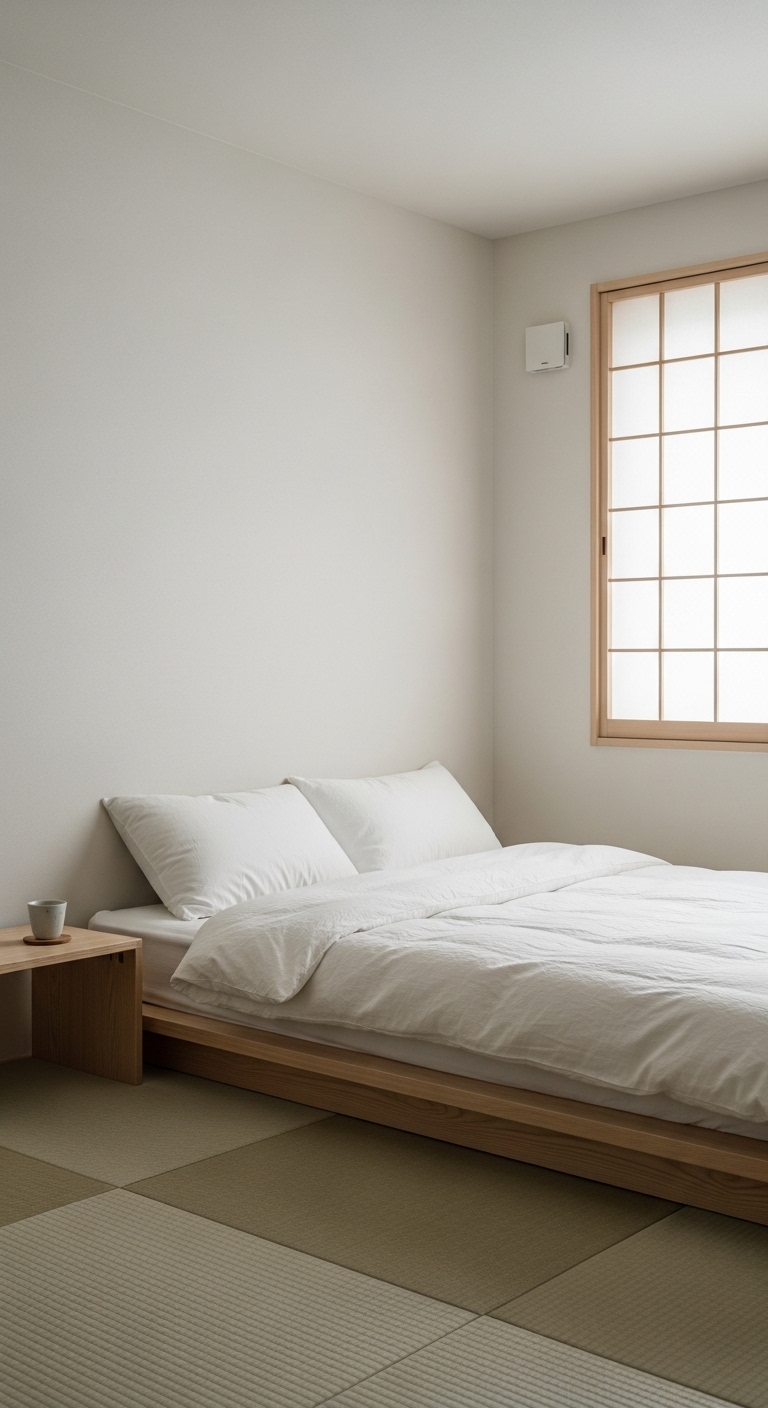
The lower your bed sits to the ground, the more ceiling height you visually gain above it. This is especially powerful in rooms with lower ceilings — a tall, bulky bed frame makes the ceiling feel like it’s pressing down. A low-profile or platform-style bed frame opens up the vertical space dramatically.
Japanese-inspired platform beds are the master class in this idea. They sit almost floor-level, create a grounded, serene aesthetic, and make even a tiny room feel meditative and open.
Pair a low bed with higher wall shelving and you get a beautiful visual contrast that makes the whole room feel proportionally designed.
Idea 15: Add a Small Desk That Doubles as a Nightstand
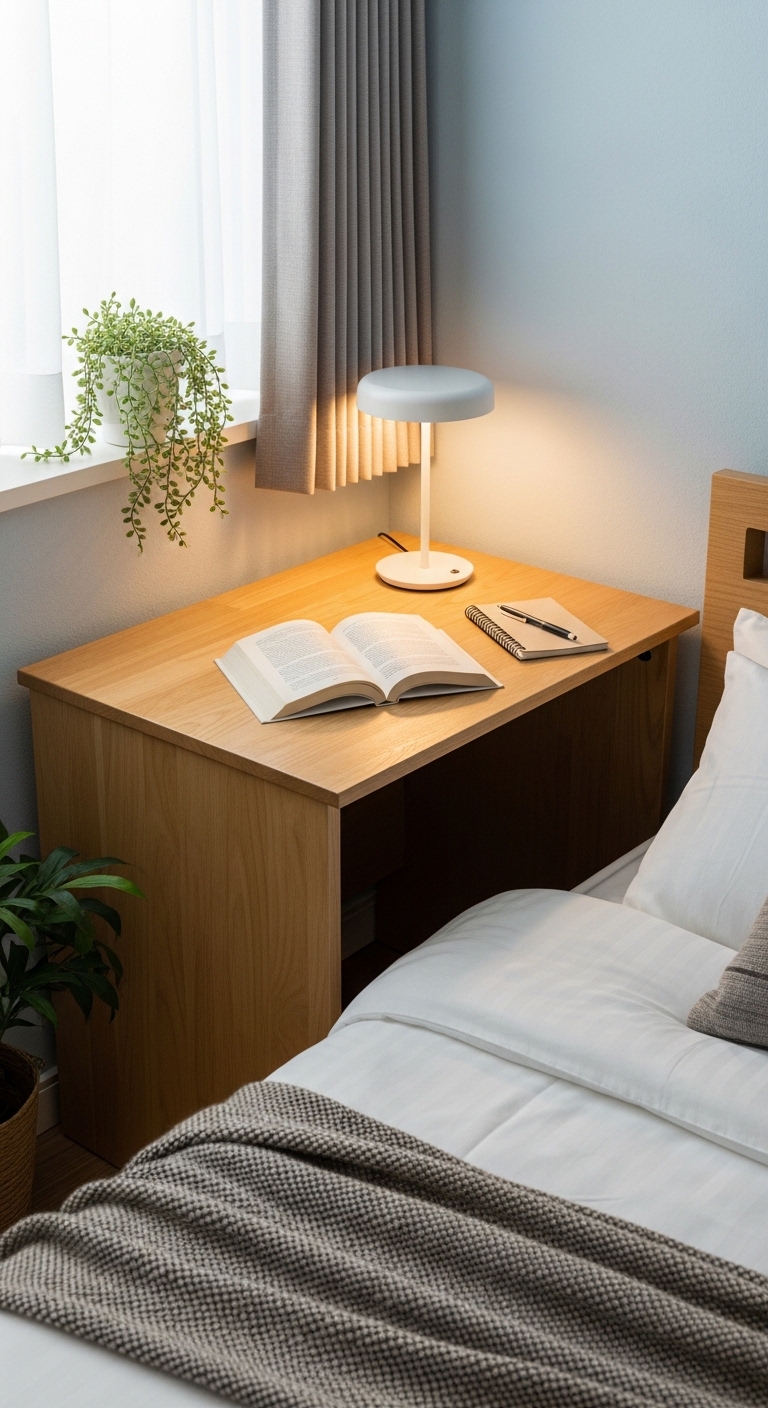
If you’re working from your bedroom or just need a small workspace, you don’t need a separate desk area eating up its own wall. A slim desk positioned right beside your bed can pull double duty as both your nightstand and your workspace.
Keep the desk surface simple — a lamp, a small plant, your current book, and a charging dock is all you need. During the day, your laptop opens up and it becomes a proper desk. At night, everything shifts aside and it becomes your nightstand.
This one move eliminates the need for a separate piece of furniture entirely, which in a small bedroom is always a win.
Idea 16: Declutter and Embrace Negative Space
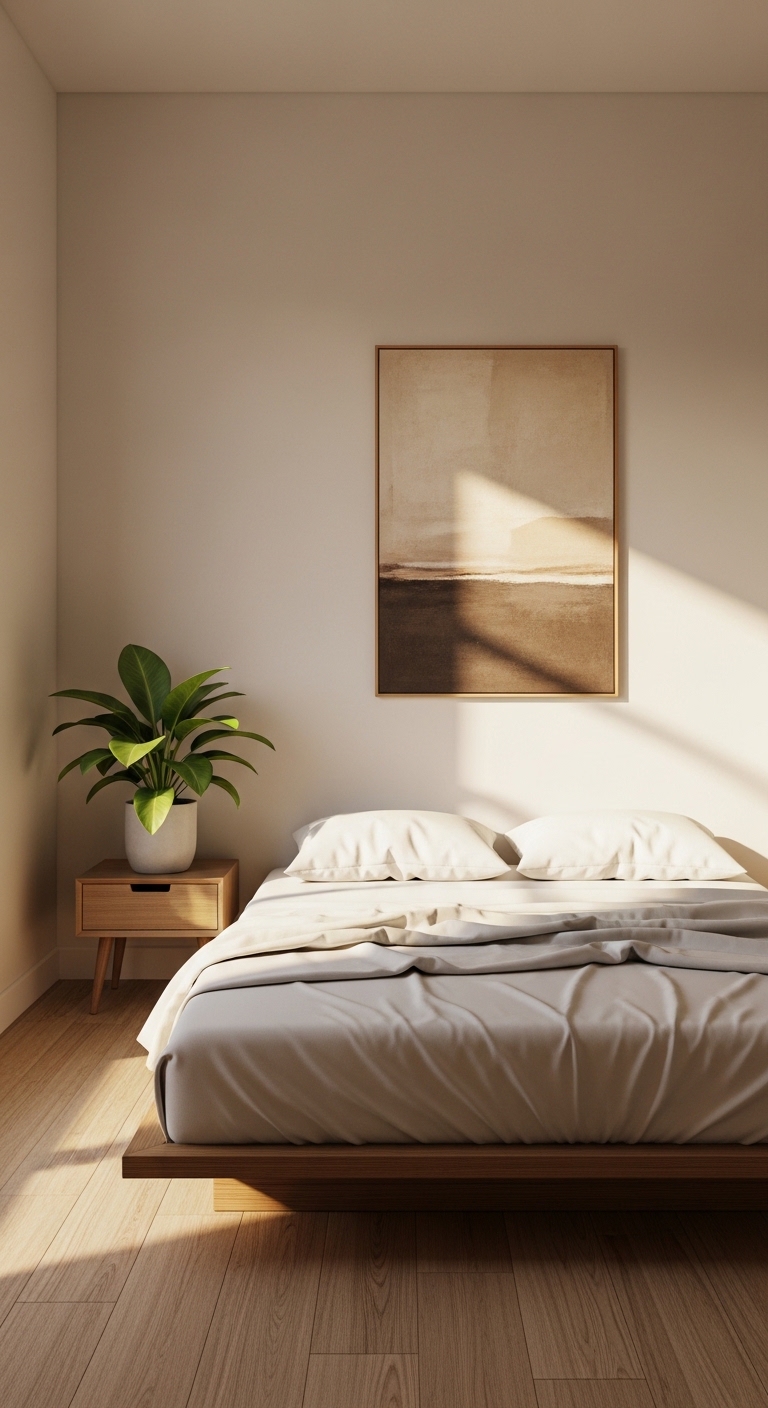
Here’s a truth that most design content skips right over: no amount of furniture tricks or color hacks will save a small bedroom from clutter. Clutter is the single biggest enemy of small spaces, and the only solution is to be ruthless about what stays in the room.
Every item in your bedroom should have a purpose and a place. If it doesn’t, it leaves.
Negative space — the empty areas around your furniture — is not wasted space. It’s breathing room, and it’s what makes a room feel considered and calm rather than chaotic. The more intentionally you curate your bedroom, the bigger and better it will feel, guaranteed.
Idea 17: Use Sliding or Pocket Doors
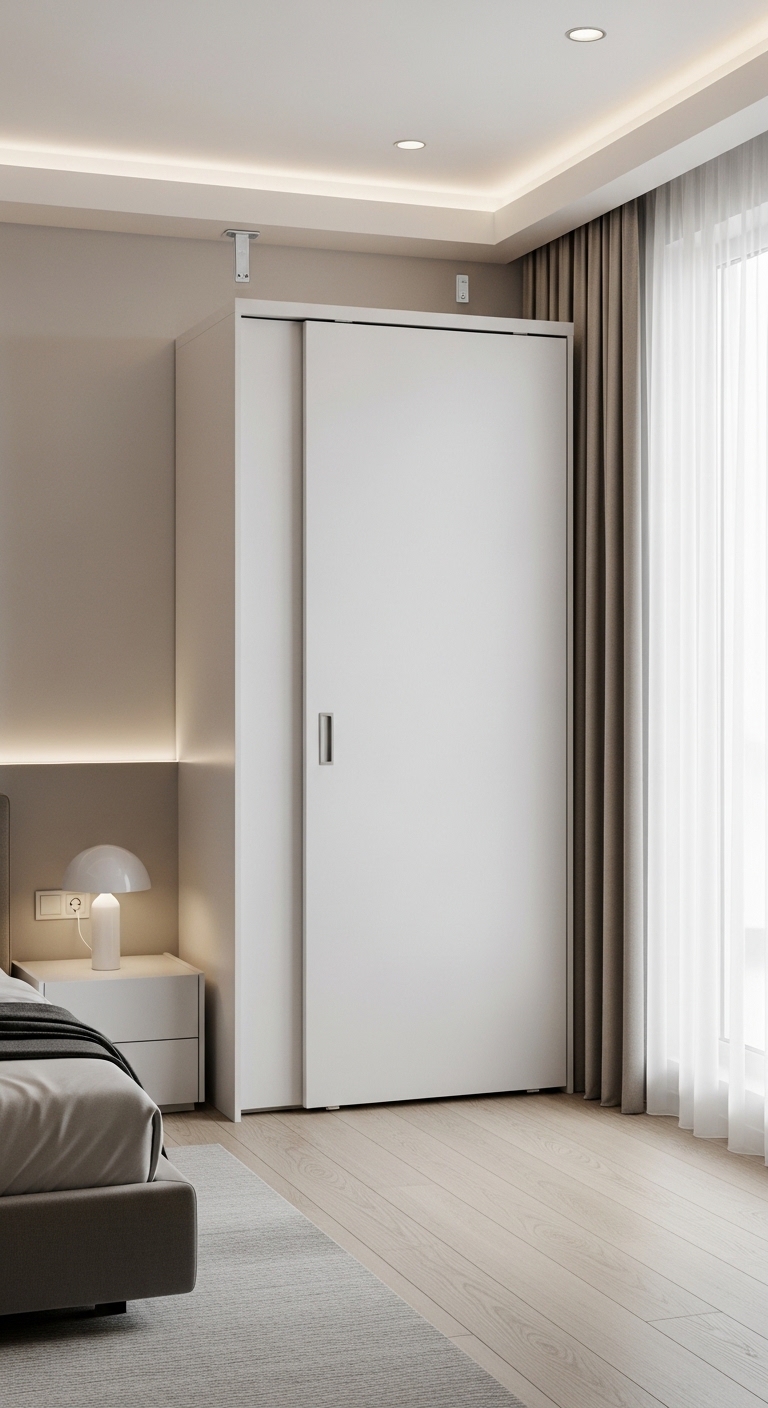
A traditional hinged door needs clearance space to swing open — typically a full door’s width of floor space that you can never use for furniture or anything else. In a small bedroom, that’s a significant chunk of real estate essentially wasted.
Sliding or pocket doors eliminate that problem entirely. They move along the wall (or disappear into it) and give you back that floor space completely. You can push furniture right up to where a hinged door would have swung, instantly gaining usable room.
Sliding wardrobe doors in particular are a game-changer. Floor-to-ceiling options with mirrored or matte panels look sleek and modern, and the reflective version doubles down by also bouncing light around the space.
Idea 18: Layer Rugs and Textiles for Depth Without Clutter
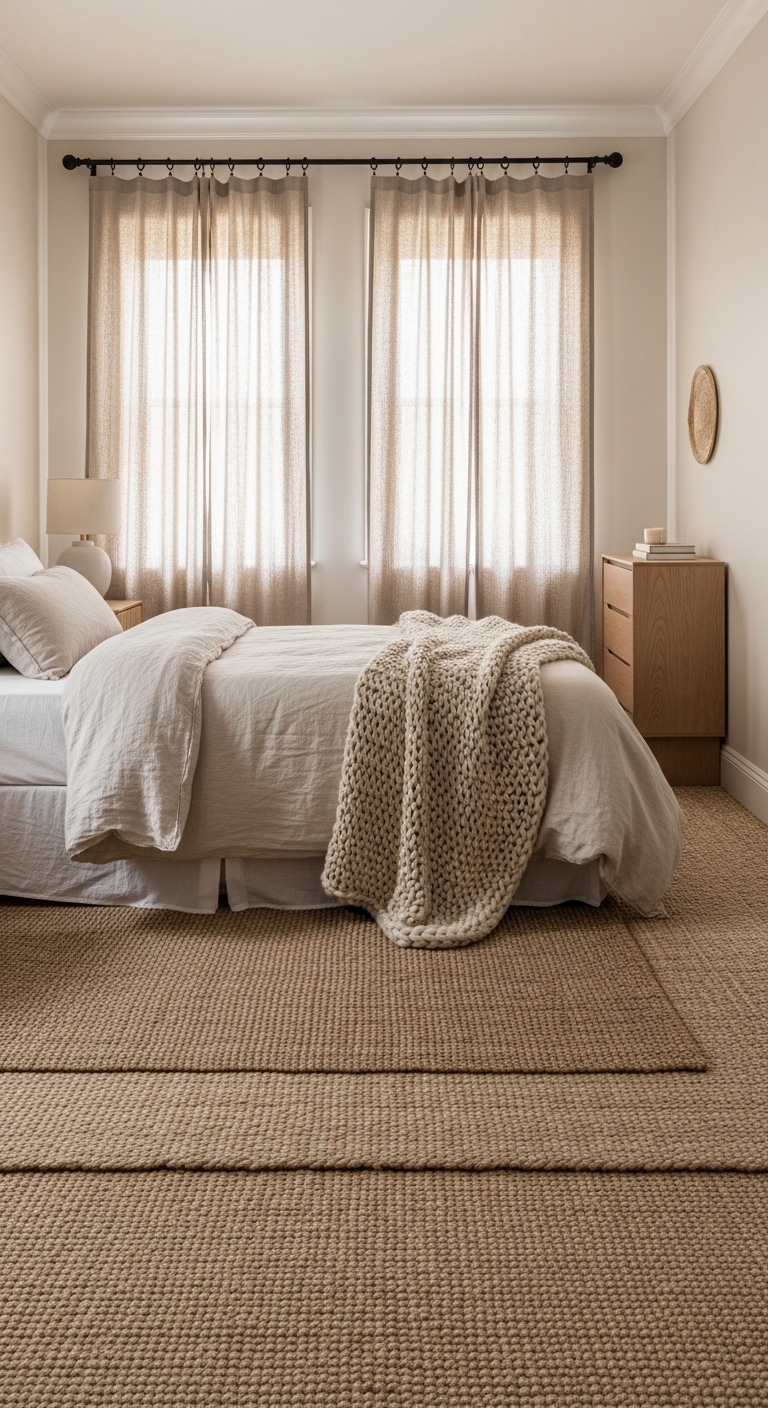
Texture is your friend in small spaces because it adds richness and depth without adding physical bulk. Layering rugs and textiles is one of the easiest ways to make a small bedroom feel curated, cozy, and visually interesting — without adding a single piece of furniture.
A medium-sized area rug beneath the bed grounds the space beautifully. Add a chunky knit throw over the foot of the bed, layer your pillows in varying textures (linen, cotton, velvet), and hang curtains in a material with some weight and drape.
The result is a room that feels warm, finished, and lived-in — which is the sweet spot for any bedroom, small or large.
Idea 19: Mount Your TV on the Wall
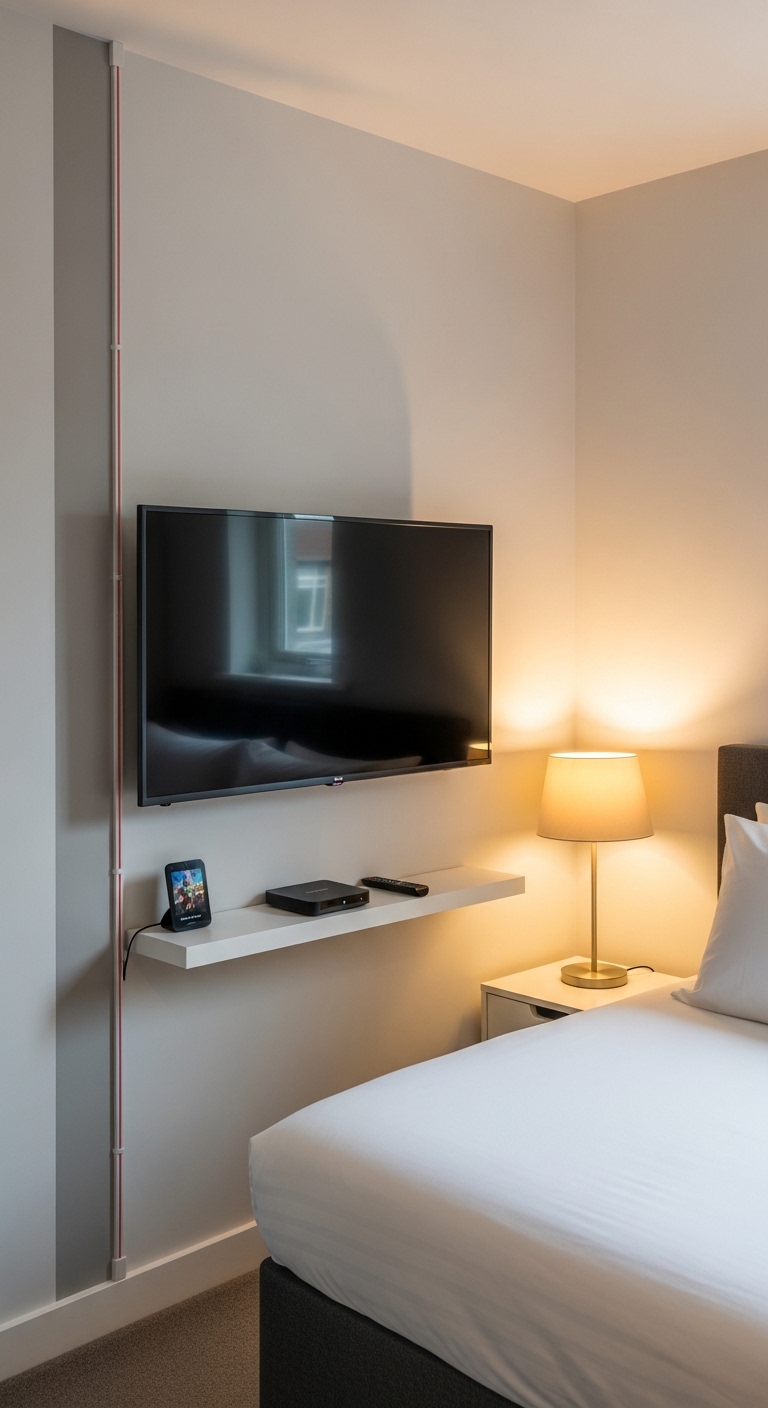
A TV stand or dresser-top TV setup in a small bedroom takes up floor space and usually forces your layout into an awkward configuration. Mounting the TV on the wall fixes both problems in one move.
A wall-mounted TV frees up floor space beneath it, lets you choose the exact right height, and looks significantly more modern and intentional. Pair it with a small floating shelf beneath for your streaming device and remote, and you’ve completely eliminated a piece of furniture from your room.
Clean cable management — either routing cables inside the wall or using a slim cable channel along the wall surface — keeps the whole setup looking polished rather than improvised.
Idea 20: Bring in One Statement Plant
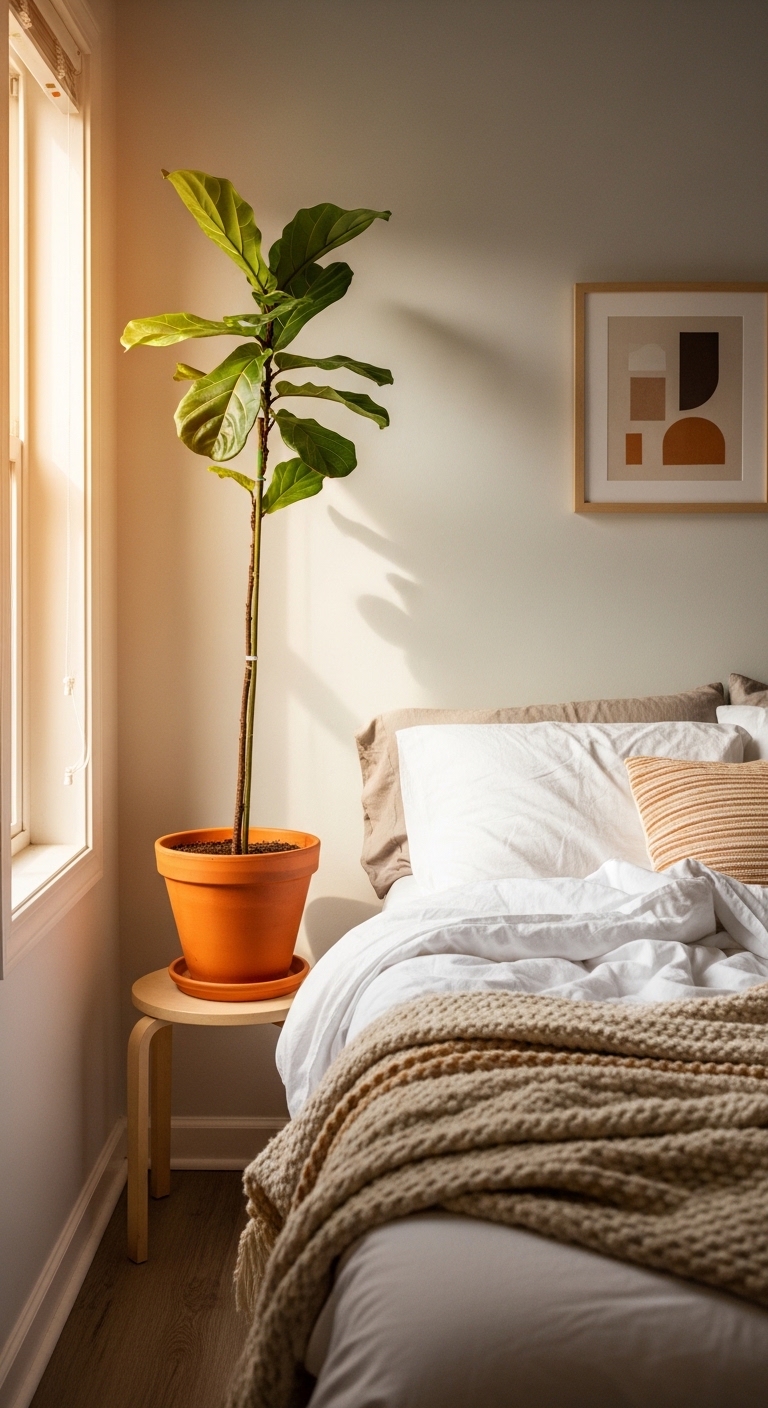
A single well-chosen plant does something in a room that no piece of furniture or color of paint can fully replicate: it brings life. In a small bedroom, one statement plant in a corner adds organic texture, a touch of color, and a sense of calm without taking up meaningful floor space.
Tall, slim plants like snake plants, fiddle leaf figs, or tall cacti work especially well because their vertical growth draws your eye upward — reinforcing that sense of height and space.
Keep it to one or two plants maximum in a small bedroom. More than that and you tip from fresh into overgrown. Let the single plant be a feature, not a collection.
Idea 21: Use Wallpaper on One Wall for Maximum Impact
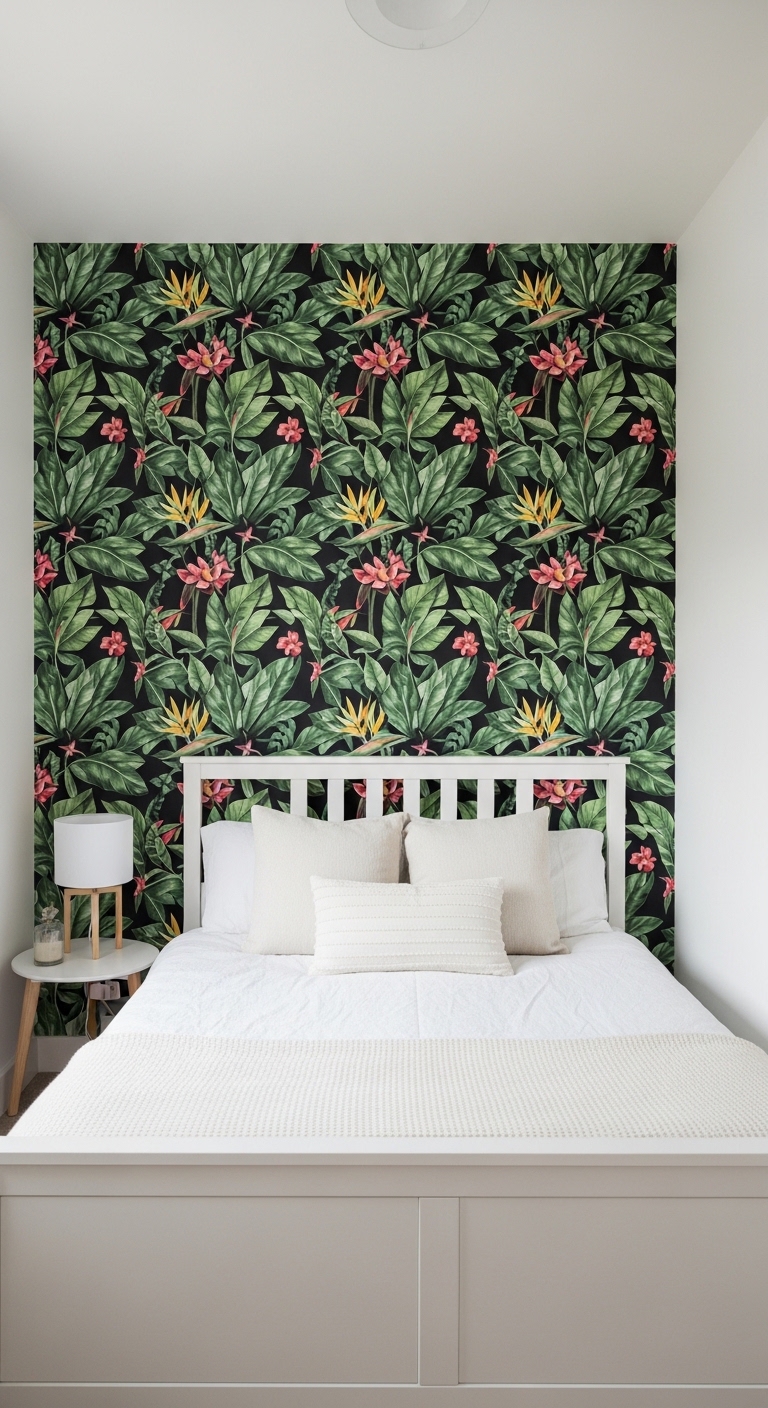
Wallpaper in a small bedroom used to be considered a design mistake — too busy, too overwhelming. But used on a single accent wall, wallpaper is actually one of the most effective ways to add personality and depth to a tiny space.
A botanical print, a subtle geometric, a soft abstract, or even a grasscloth texture on your headboard wall creates instant visual interest and makes the room feel designed from the inside out.
The rule is simple: one wall, one pattern, everything else clean and complementary. That restraint is exactly what makes it work.
Idea 22: Optimize Your Closet Space Inside
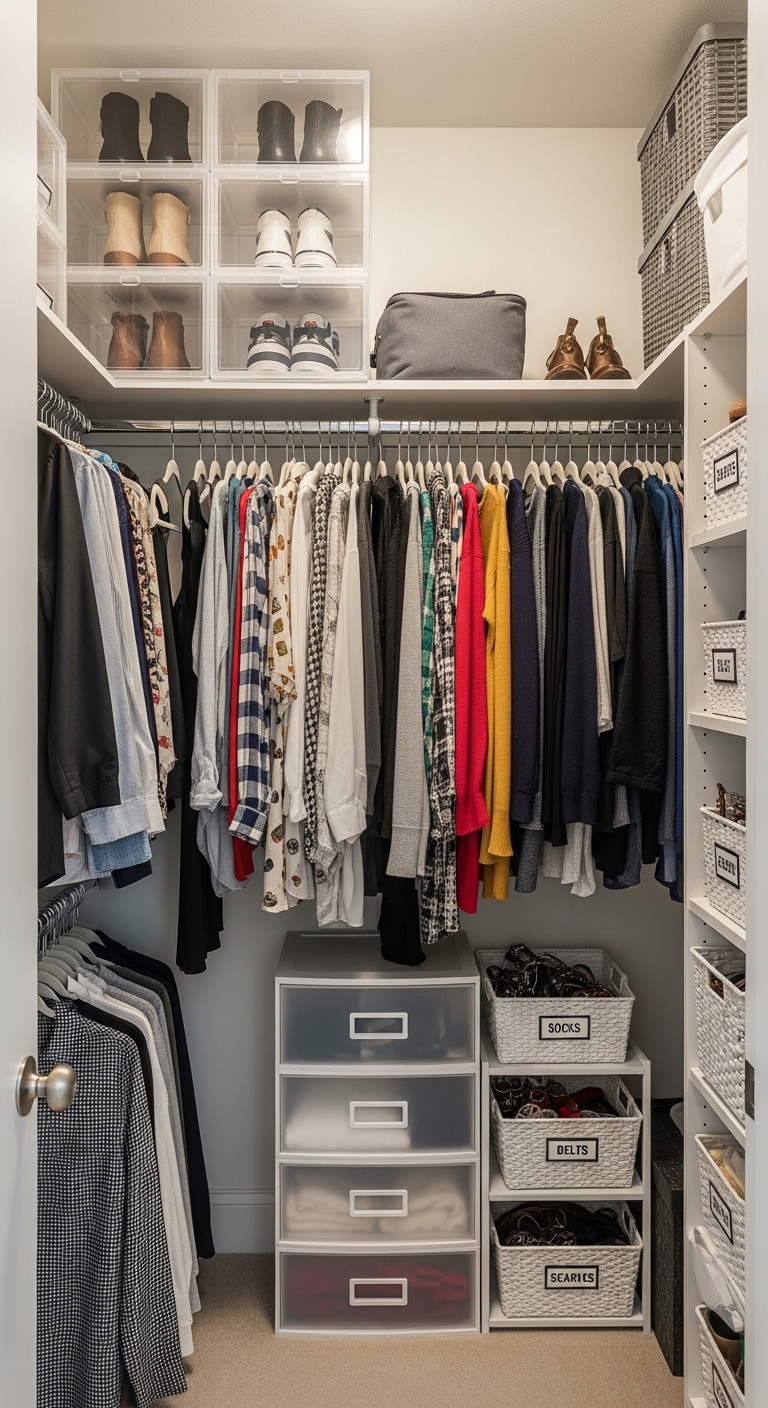
Everything you can store inside your closet is something that doesn’t have to live in your bedroom — and in a small room, that logic has a huge payoff. Most closets are dramatically underutilized, with a single hanging rod and wasted shelf space above and dead floor space below.
A closet organization system — even a simple DIY one — can double or triple your actual storage capacity:
- Add a second hanging rod below shorter garments
- Use slim velvet hangers instead of bulky plastic ones
- Stack clear shoe boxes on upper shelves
- Add a small drawer unit on the closet floor
- Use the inside of the door for hooks or a hanging organizer
The more efficiently your closet works, the cleaner and calmer your bedroom stays.
Idea 23: Make Your Bed the Star of the Show
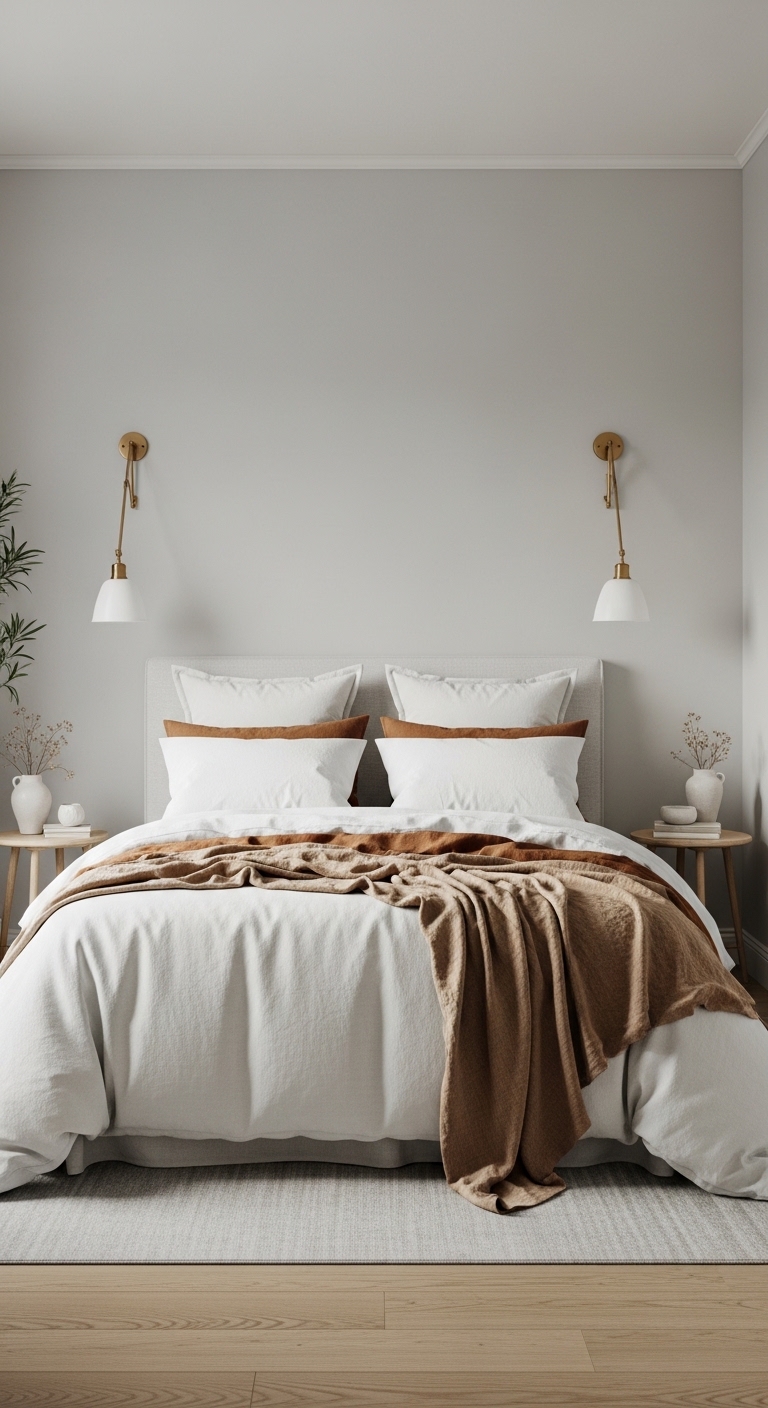
In a small bedroom, trying to do too much is always the problem. But when you simplify everything and let the bed be the undisputed focal point, something magical happens — the room suddenly feels intentional, restful, and much bigger than it actually is.
Invest in beautiful bedding. Layer your pillows intentionally. Style the throw with care. Make your bed every morning without exception.
When the bed is beautiful, it draws all the attention to itself and away from anything in the room that feels tight or limited. It sets the tone for the whole space, and in a small bedroom, tone is everything.
Bringing It All Together
You don’t have to try all 23 of these ideas at once — and honestly, you shouldn’t. The most effective approach is to pick three to five that resonate most with your specific room and your lifestyle, implement them thoughtfully, and then reassess.
Start with the highest-impact changes: paint color, lighting, and decluttering. These three alone will transform how your bedroom feels without spending much at all. Then layer in the furniture and storage solutions that make sense for your space.
Small bedrooms done right are not just livable — they’re genuinely beautiful. They’re cozy in a way that big rooms rarely achieve naturally. They’re intimate, personal, and when they’re well-designed, they feel like the best possible place to end your day and begin the next one.
Your small bedroom isn’t a limitation. It’s an invitation to be more intentional — and that always leads somewhere better.