How Can You Make a Small Kitchen Look Bigger Without a Renovation?
My first apartment kitchen was so small that I could touch both counters at the same time if I stretched my arms out, and for years I thought that meant I had to settle for a space that felt cramped and forgettable.
Then I started treating every inch like it mattered, and that tiny kitchen became the room I actually wanted to cook in every single morning, coffee in hand.
This list is everything I personally tested in my own small kitchens over the years, the wins and the lessons, so you can skip the trial and error and go straight to a kitchen that finally works.
Light-Reflecting Cabinet Color
I painted my own cabinets a soft warm white years ago, and the entire kitchen seemed to grow three feet wider overnight, just from how the light started bouncing around the room. Every morning the sun hits those doors and the whole space feels open and calm instead of boxed in, even though the actual square footage never changed at all.
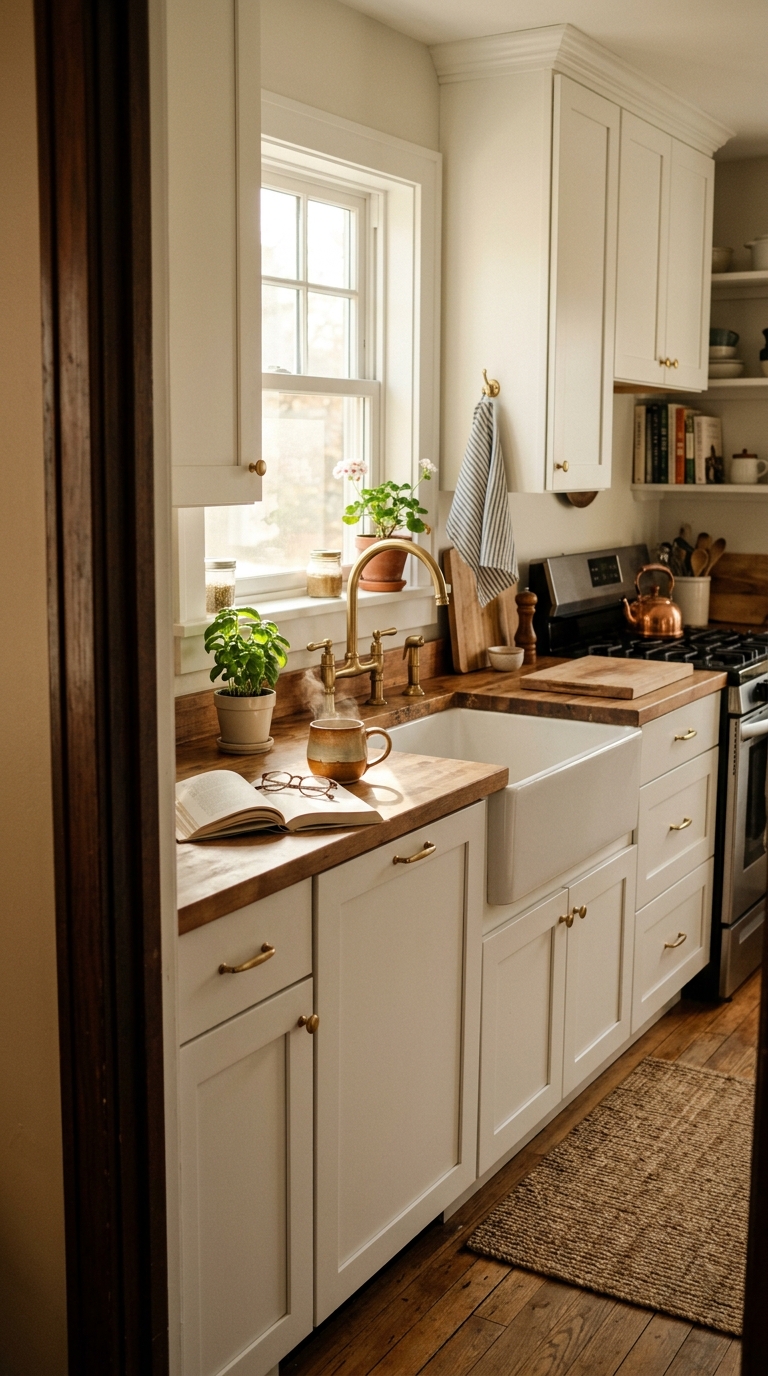
Try Benjamin Moore Simply White or Sherwin-Williams Snowbound for a warm undertone that avoids feeling clinical or cold. Pair it with brushed brass or warm nickel hardware and a butcher block counter for contrast. Honestly, this was the single cheapest change that made the biggest visual difference in my own home, hands down.
Open Shelving Above the Stove
I was nervous to remove my upper cabinets at first, worried the kitchen would look messier without doors to hide behind, but it did the exact opposite for me. Open shelving forced me to be more intentional with what I kept on display, and now my favorite bowls and glassware actually get to be part of the room instead of hidden away.
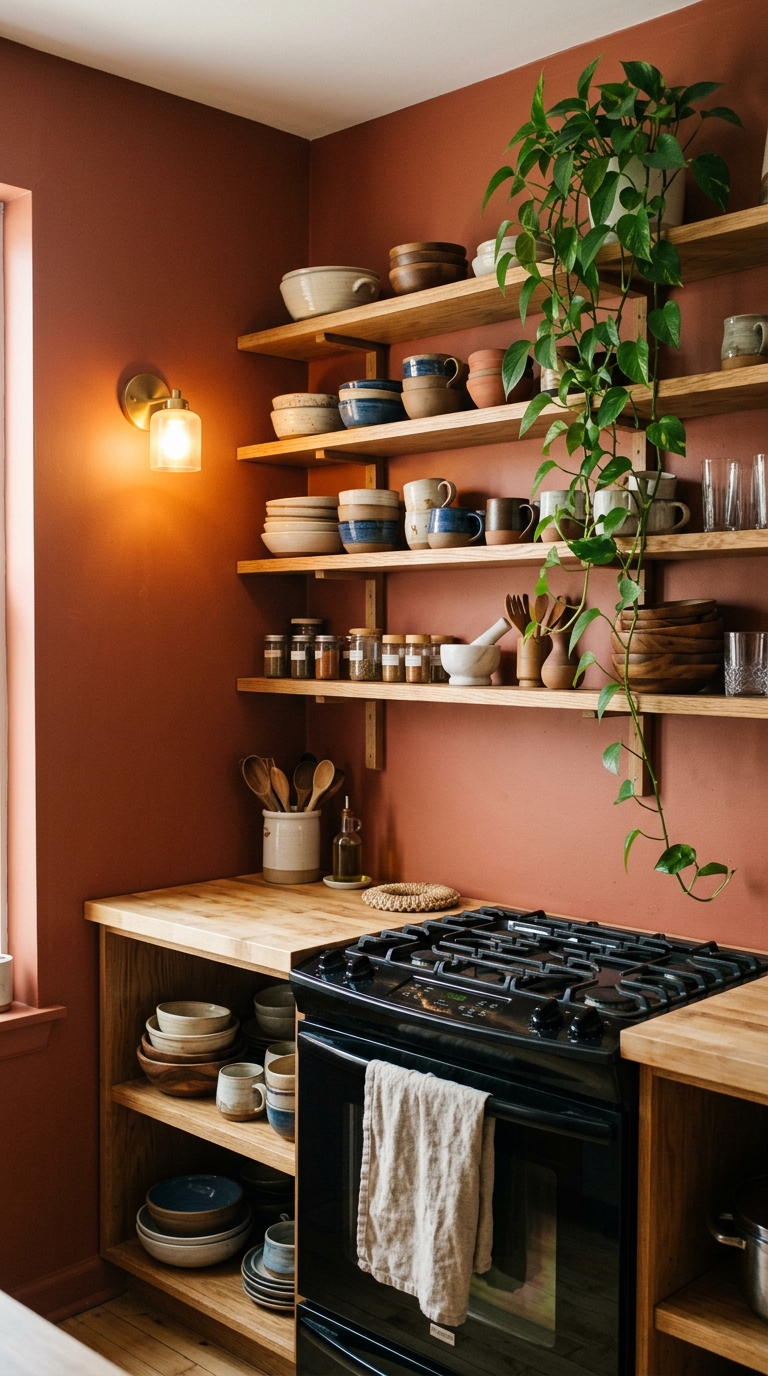
Use solid oak or walnut shelf brackets rated for at least twenty pounds, and only display what you use weekly. Group items by color for a calmer look rather than a cluttered one. My honest tip is to edit ruthlessly, because too many trinkets will undo the whole airy effect you are going for.
A Bold Backsplash Statement
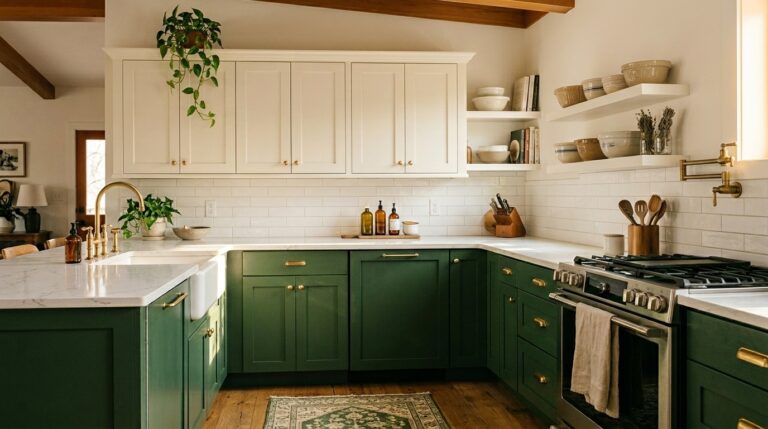
My sister kept telling me a small kitchen needed to stay neutral everywhere, but I painted my backsplash a deep cobalt and it became the first thing every guest mentions when they walk in. A bold backsplash gives a tiny kitchen a sense of personality and depth that plain white tile simply cannot deliver, no matter how clean it looks.
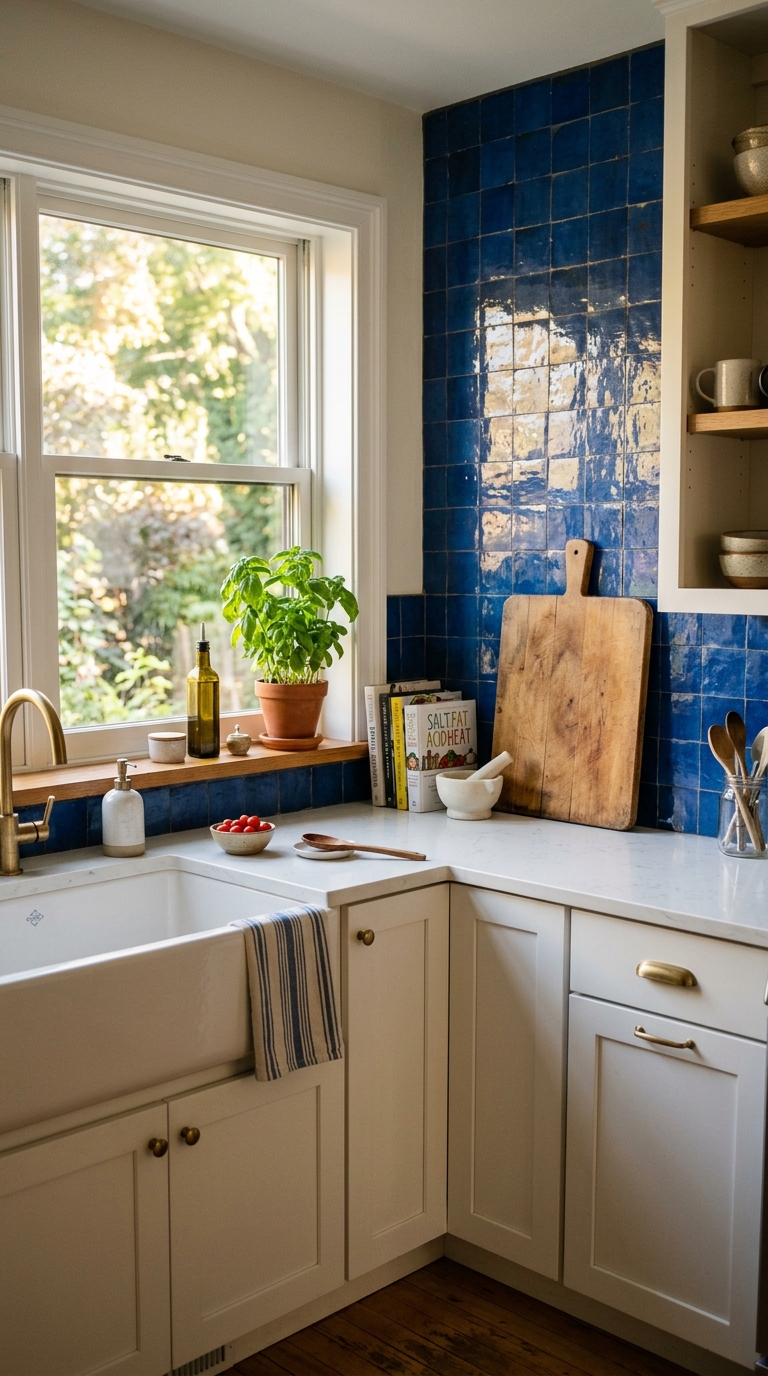
Zellige tile in cobalt or emerald reads as collected and intentional rather than trendy. Keep your countertops and cabinets neutral so the backsplash stays the star. I will say this much, commit fully to the color, because a half-hearted bold choice tends to look accidental instead of designed.
Under-Cabinet Task Lighting
For years I cooked in my own shadow because my only light source came from the ceiling, and I never realized how much that was working against me until I finally installed strips underneath my upper cabinets. Suddenly chopping vegetables and reading recipes became effortless, and the whole counter glowed with a warmth that made evening cooking feel almost cozy instead of like a chore.
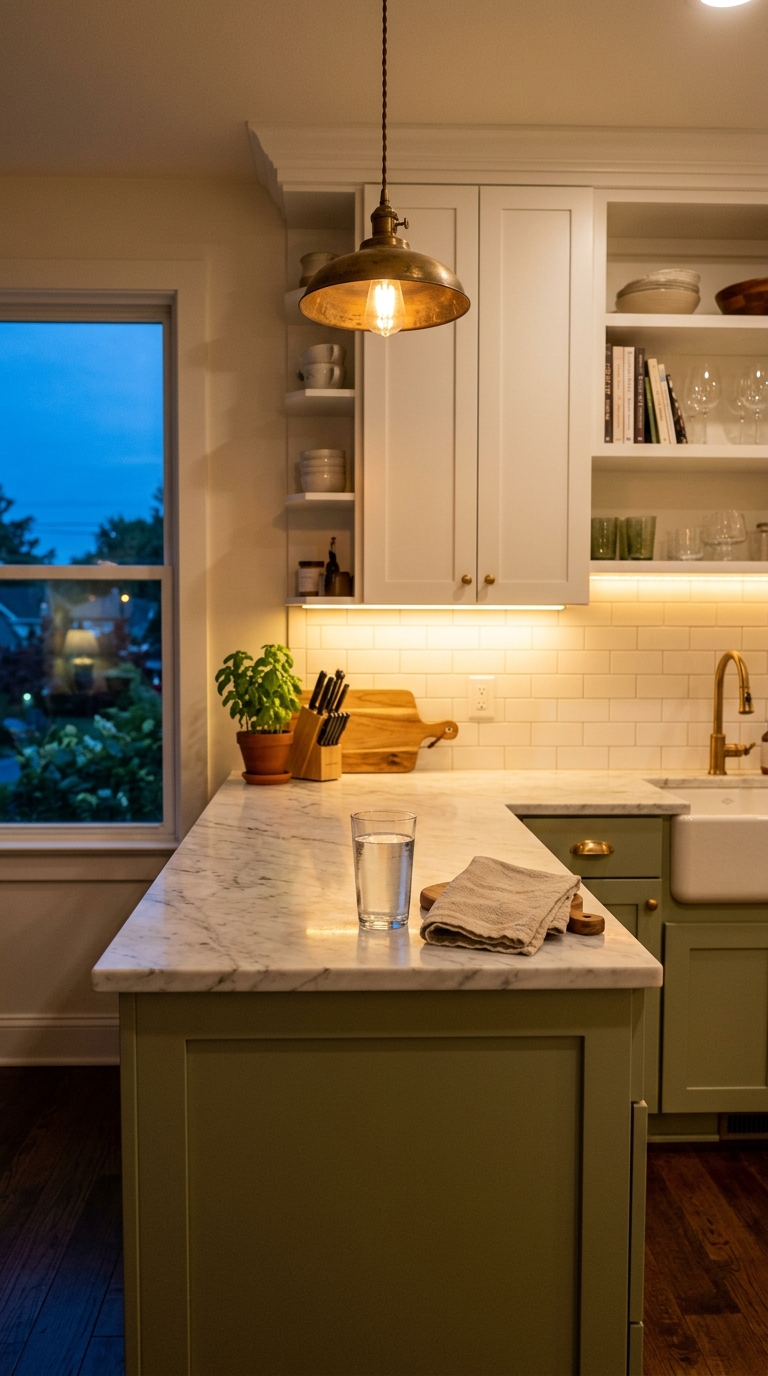
Choose warm white LED strips around 2700 Kelvin rather than cool white, which can feel clinical in a small space. Stick-on battery versions work great for renters who cannot wire anything in. My honest take is that this upgrade costs very little but changes how often you actually enjoy cooking dinner.
A Vintage Rug Underfoot
I found my kitchen rug at an estate sale for almost nothing, and it instantly made my cooking space feel like a real room rather than just a utilitarian work zone. There is something about worn patterns and faded color that softens hard tile underfoot and gives a small kitchen the same lived-in warmth you would expect from a living room.
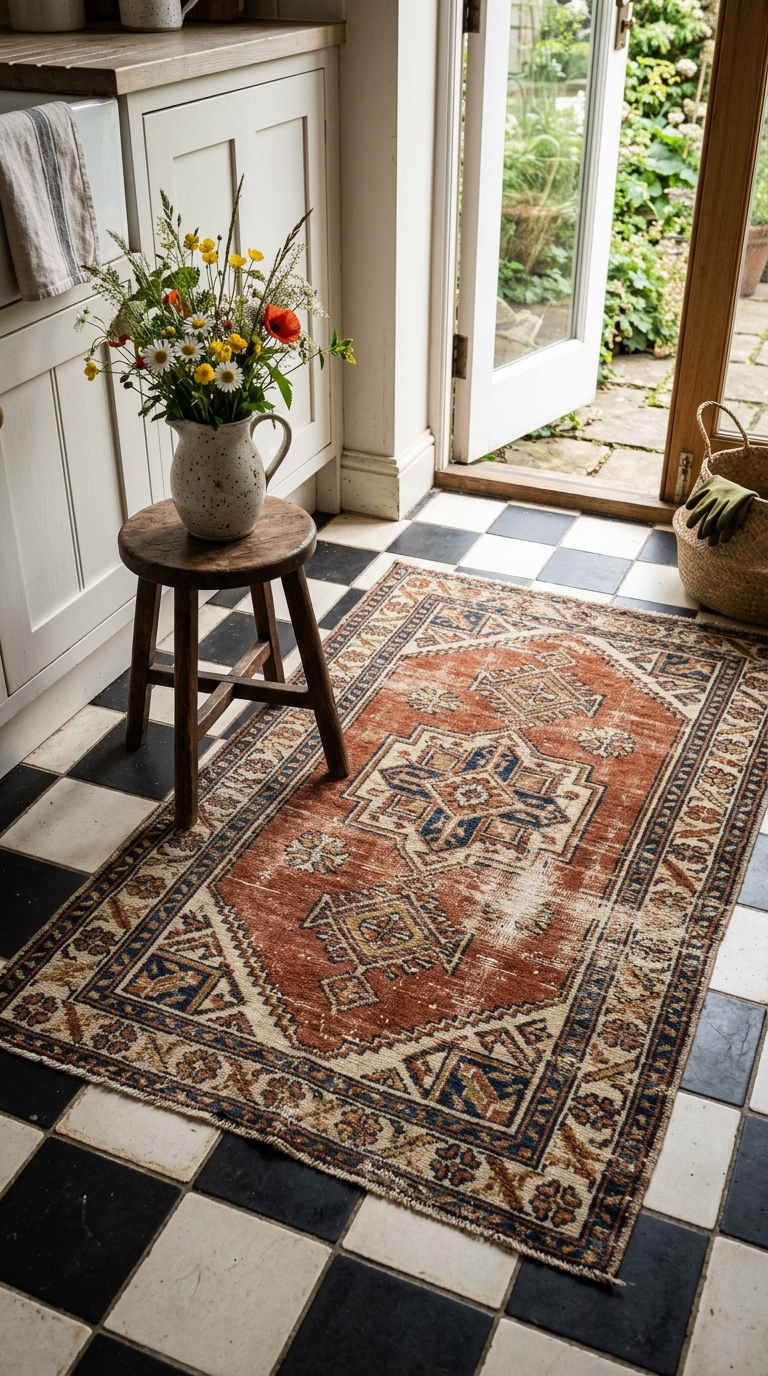
Look for wool or cotton blend vintage rugs in rust, cream, or faded blue tones that hide stains naturally. Keep the rug runner-sized so it does not block cabinet doors or foot traffic. My honest experience is that a flat weave survives kitchen spills far better than a plush pile ever will.
Glass Front Cabinet Doors
Swapping my solid cabinet doors for glass panes felt like a small thing at the time, but it completely changed how deep the kitchen felt visually, since you can suddenly see through to the wall behind instead of hitting a flat surface. It adds a layer of dimension that tricks the eye into reading the whole kitchen as more spacious than it really is.
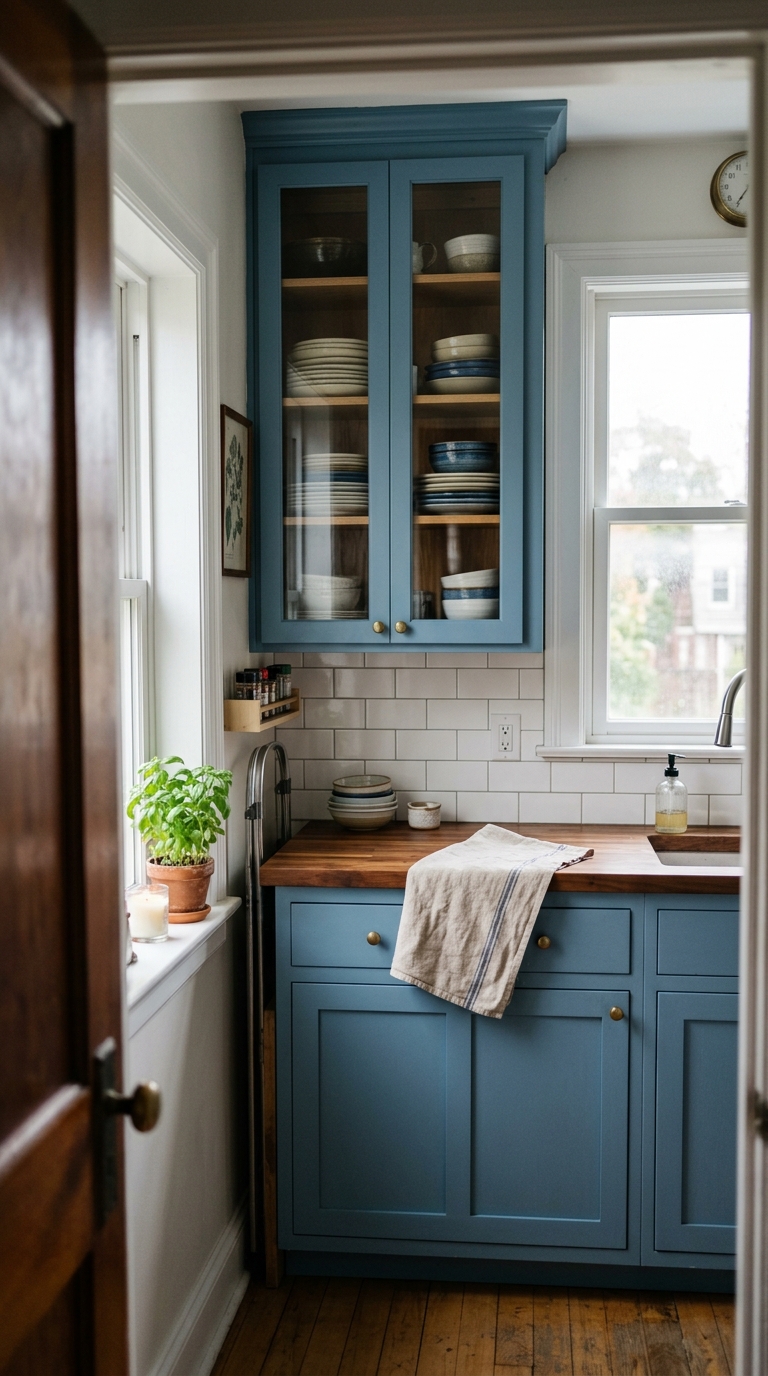
Dusty blue or sage paired with glass doors keeps the look soft rather than sterile. Arrange dishware by color and stack plates neatly since everything inside is now on display. My honest advice is to skip this if you are not willing to keep the inside tidy, because clutter shows through glass instantly.
A Compact Coffee Corner
My coffee corner started as just a tray I set up one weekend, and it became my favorite few square feet in the entire house, the spot I actually look forward to each morning before anyone else wakes up. Even in a tiny kitchen, carving out one small zone dedicated purely to a daily ritual makes the whole room feel more personal and less purely functional.
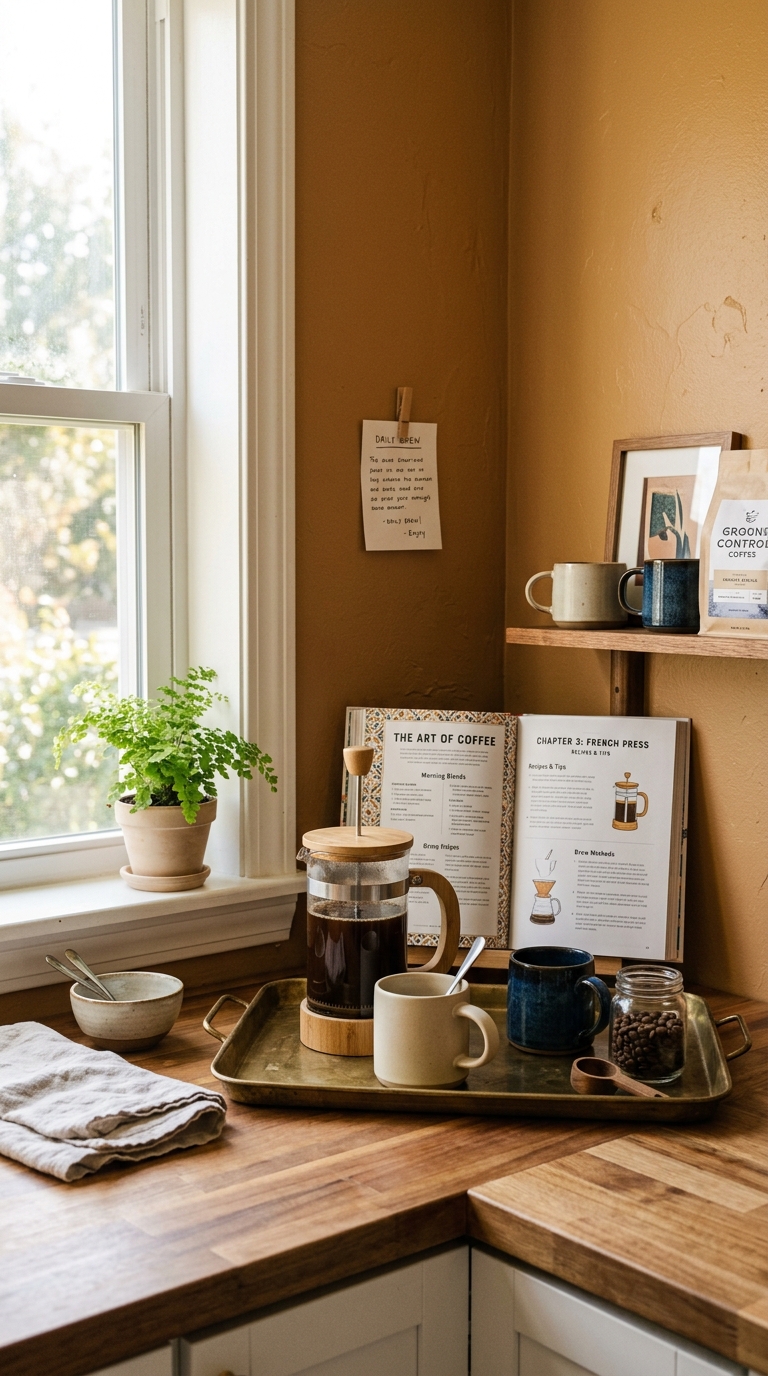
Use a wooden or brass tray to contain the French press, mugs, and canisters so the corner stays neat. Warm caramel or terracotta walls behind it add coziness without overwhelming a small space. My honest tip is to keep this corner small and edited, because it loses its charm the moment it spreads across the whole counter.
Two-Tone Cabinet Pairing
I was scared to commit to dark lower cabinets in such a small footprint, certain it would make the room feel heavier, but pairing charcoal below with cream above did the opposite and gave the kitchen a grounded, intentional look that flat white everywhere never achieved. The contrast draws the eye up and down instead of just sideways, which genuinely makes the room read larger.
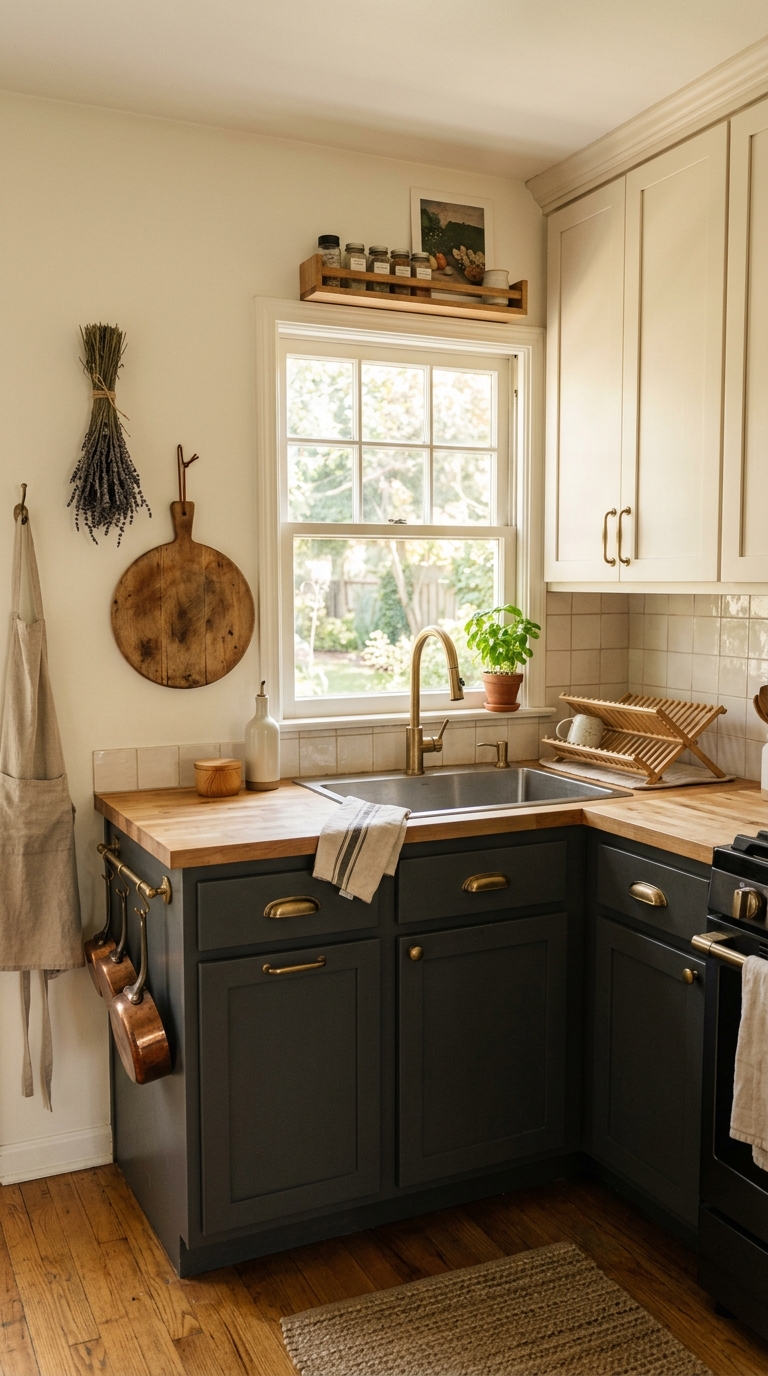
Try a charcoal like Sherwin-Williams Iron Ore on the lower cabinets and a soft cream like Farrow and Ball String on top. Brass or matte black hardware ties the two tones together. My honest experience is that this combination photographs beautifully and never feels dated season after season.
A Wall-Mounted Pot Rack
My cabinets were so full of pots that I dreaded reaching for anything on the bottom shelf, until I finally hung a simple iron rack on the wall and freed up an entire cabinet overnight. Watching my copper pots catch the afternoon light now feels less like clutter and more like the kitchen actually decorating itself for free.
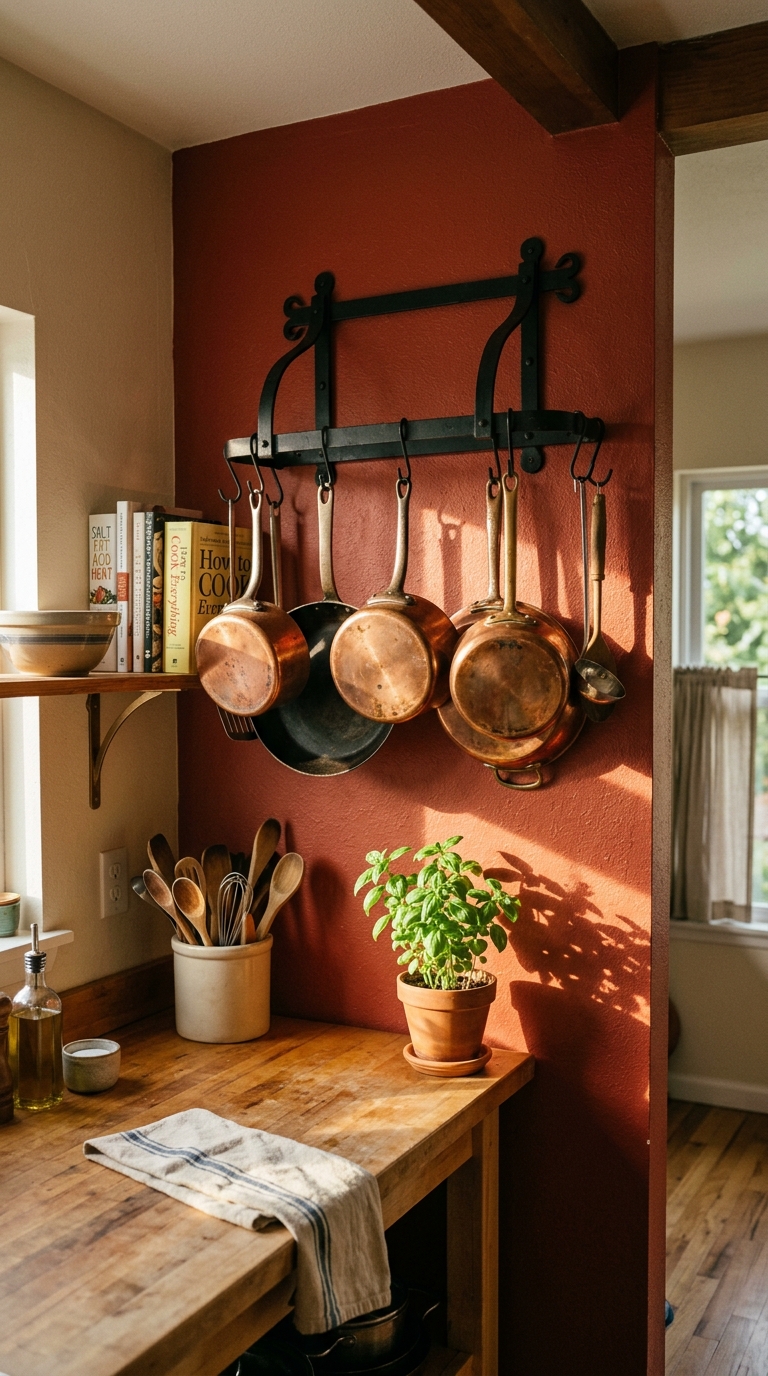
Choose a black iron or brass rack rated to hold at least thirty pounds, mounted into studs for safety. Hang your most attractive cookware, like copper or enameled cast iron, and store the rest. My honest tip is to keep the arrangement loose and slightly asymmetrical so it reads as curated rather than crowded.
A Single Statement Pendant
Every small kitchen I have lived in came with a flat, boring overhead fixture, and replacing it with one bold pendant was the fastest way I found to make the room feel finished and designed rather than builder grade. One striking light fixture draws the eye upward and gives even the tiniest kitchen a true focal point worth noticing.
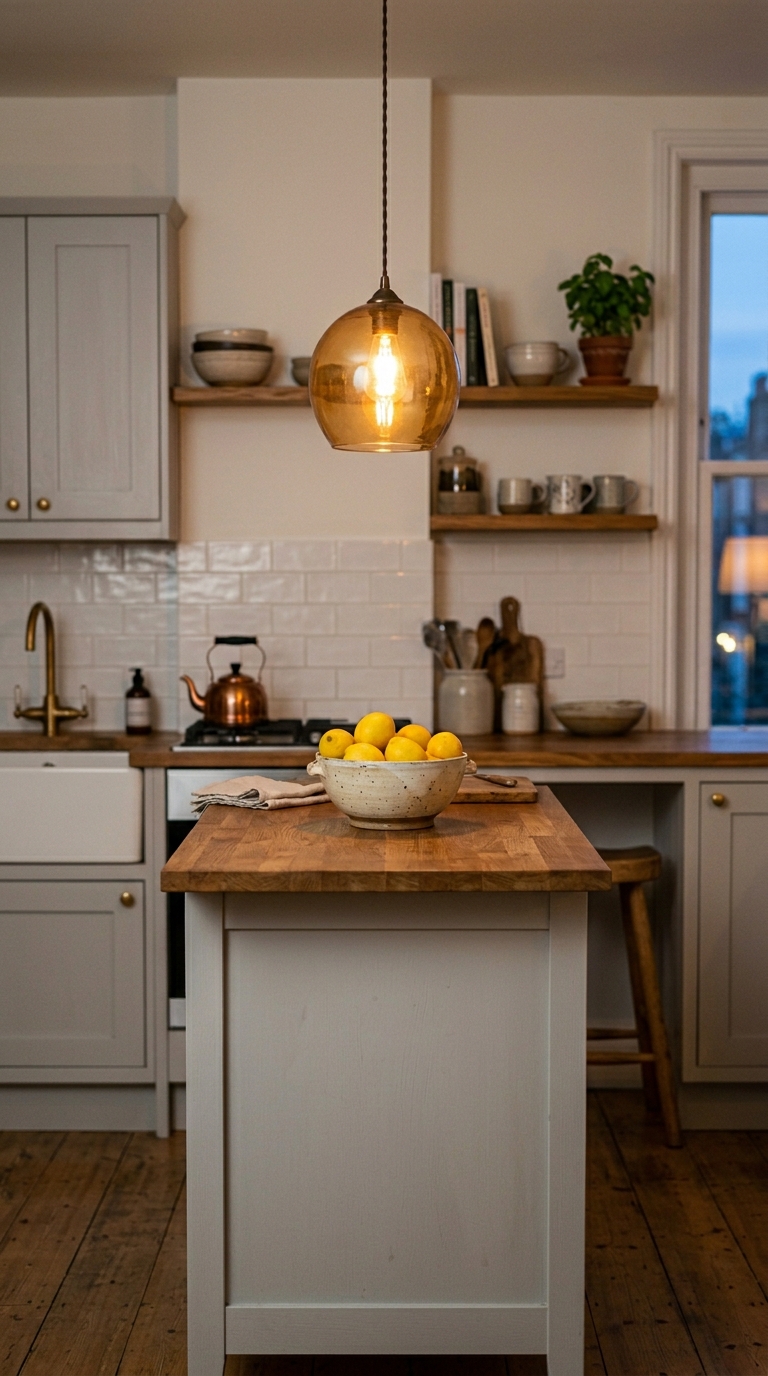
Look for an amber or smoked glass pendant that throws warm light rather than harsh white. Hang it low enough to feel intimate but high enough to clear your head comfortably. My honest opinion is that one great pendant does more for a small kitchen than any amount of extra storage ever could.
Floating Wood Shelving for Plants
I never thought my windowsill could hold more than a single sad plant until I added a thin floating shelf just above it, which doubled my growing space without taking over the counter below. Now my herbs get the sunlight they need and the kitchen smells like fresh basil and mint every time I brush past them while cooking.
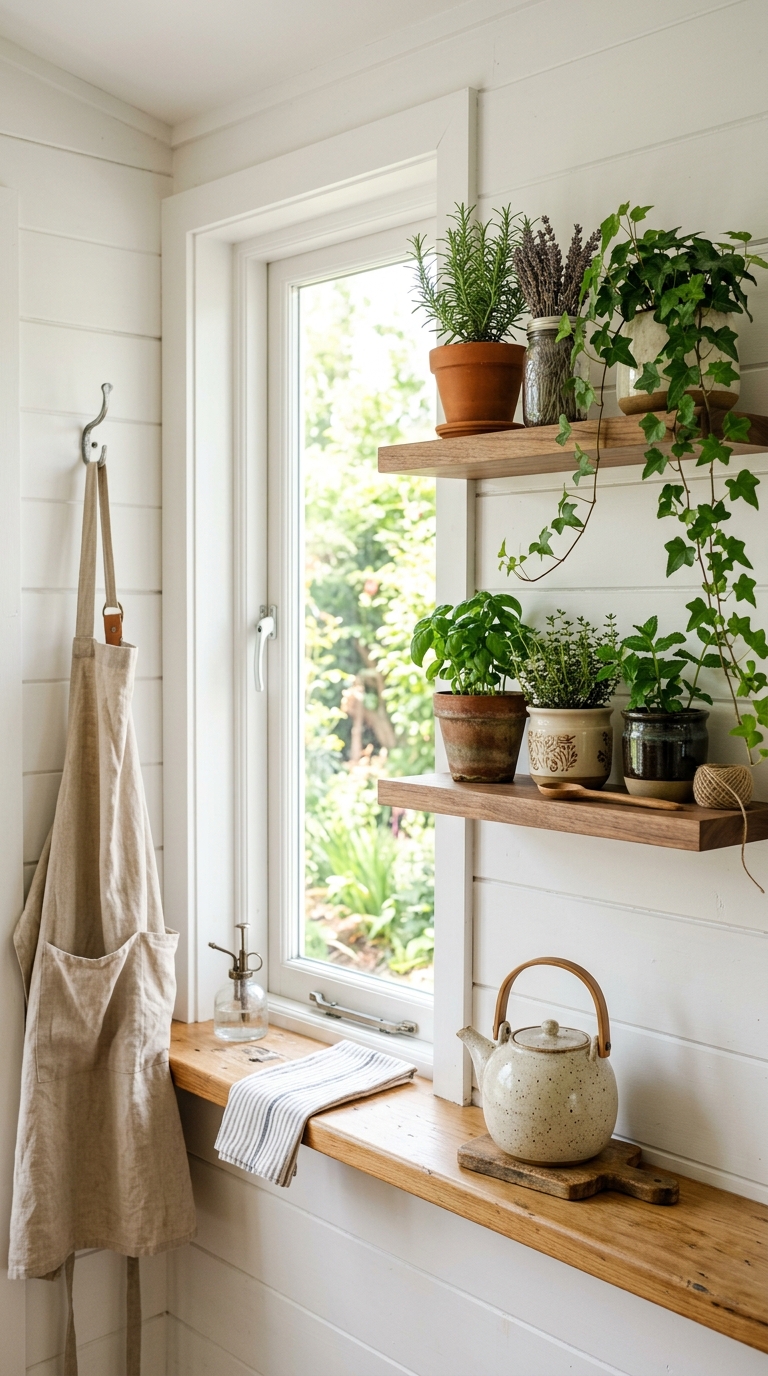
Use a slim walnut or oak floating shelf mounted just above eye level near your sunniest window. Stick to low-maintenance herbs like thyme, mint, or basil that thrive indoors easily. My honest experience is that living greenery brings more genuine life to a small kitchen than almost any decor item you could buy.
A Warm Painted Ceiling
Nobody tells you to paint your ceiling, so when I finally tried a warm butter yellow on mine, it felt like discovering a secret nobody else had shared with me yet. The color wraps the whole room in a gentle glow, especially in the late afternoon, and somehow makes a small kitchen feel intimate and sunlit rather than cramped or forgotten.
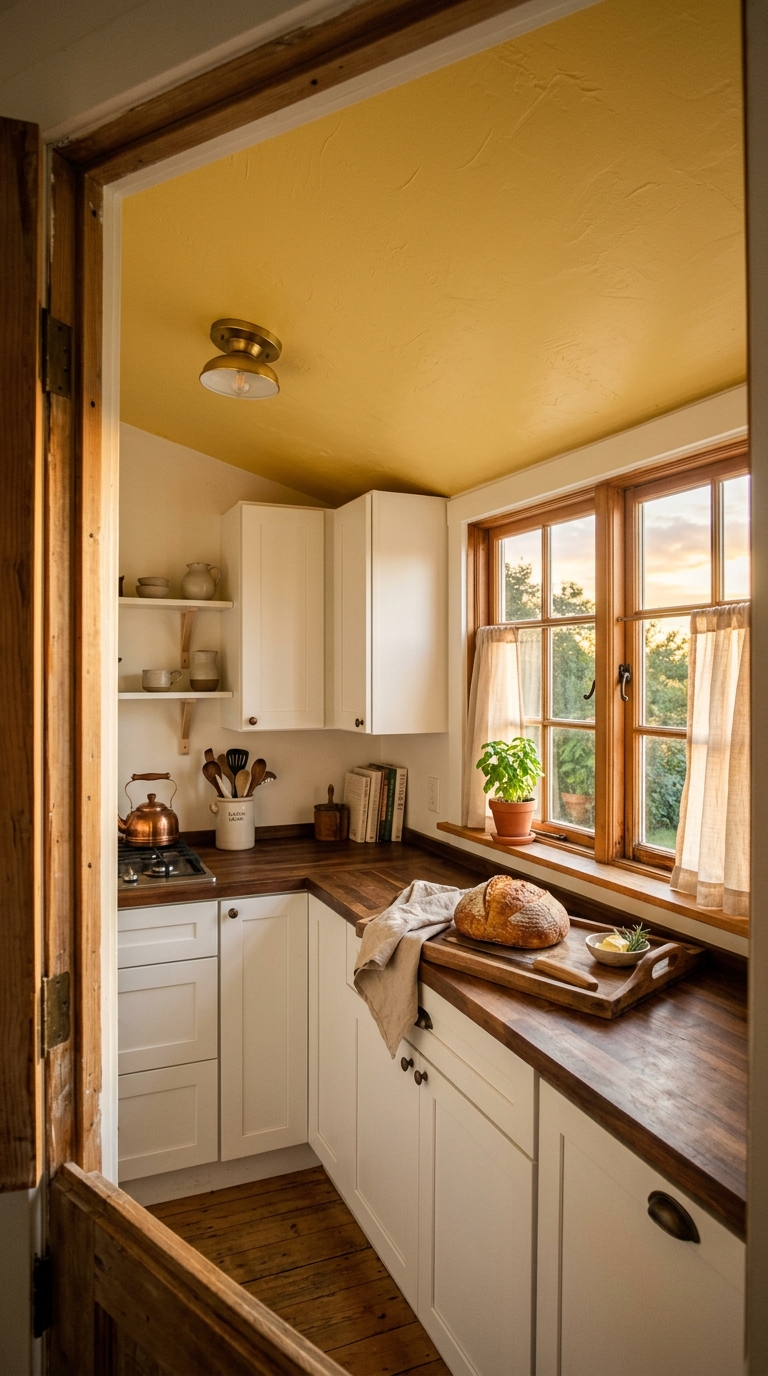
Try a soft butter yellow or warm cream on the ceiling while keeping your walls and cabinets lighter for balance. This works especially well in kitchens with limited natural light, since it fakes the feeling of sunshine. My honest tip is to test the color in both daylight and lamp light before committing, since ceiling tones shift dramatically under each.
Your kitchen does not need more square footage to feel like the heart of your home, it just needs choices that work with the space you already have every single day.
Pick just one idea from this list and try it this week, because that one small change is usually the spark that makes the rest of the room finally fall into place.