Minimalist Bedroom Ideas That Will Finally Make You Love Your Space
You wake up and the first thing you see is clutter — a chair buried under clothes, a nightstand crowded with half-finished things, walls that feel like they are closing in just a little. That feeling is not just about mess. It is about color. It is about the specific shade wrapping your walls every single morning. I lived inside that suffocating feeling for two years before I finally understood that minimalist decorating is not about removing everything you love. It is about choosing with real intention.
This article is my honest list of the twelve minimalist bedroom ideas that genuinely changed how I feel inside my own room. I tested every single one of these myself, made real mistakes along the way, and came out the other side with a bedroom I actually want to stay in. Whether you are starting from scratch or just exhausted by what you currently have, I want you to walk away from reading this with one idea you can act on today.
Soft Sage Green for a Calming Bedroom Retreat
There is something genuinely calming about waking up inside a room painted sage green. The color sits right at the edge of nature — close enough to the outdoors that your nervous system relaxes the moment you open your eyes. Morning light does something beautiful to it, shifting it from a warm grey-green to something almost golden depending on the hour. It never shouts. It just holds you, quietly and steadily, the way a good room always should.
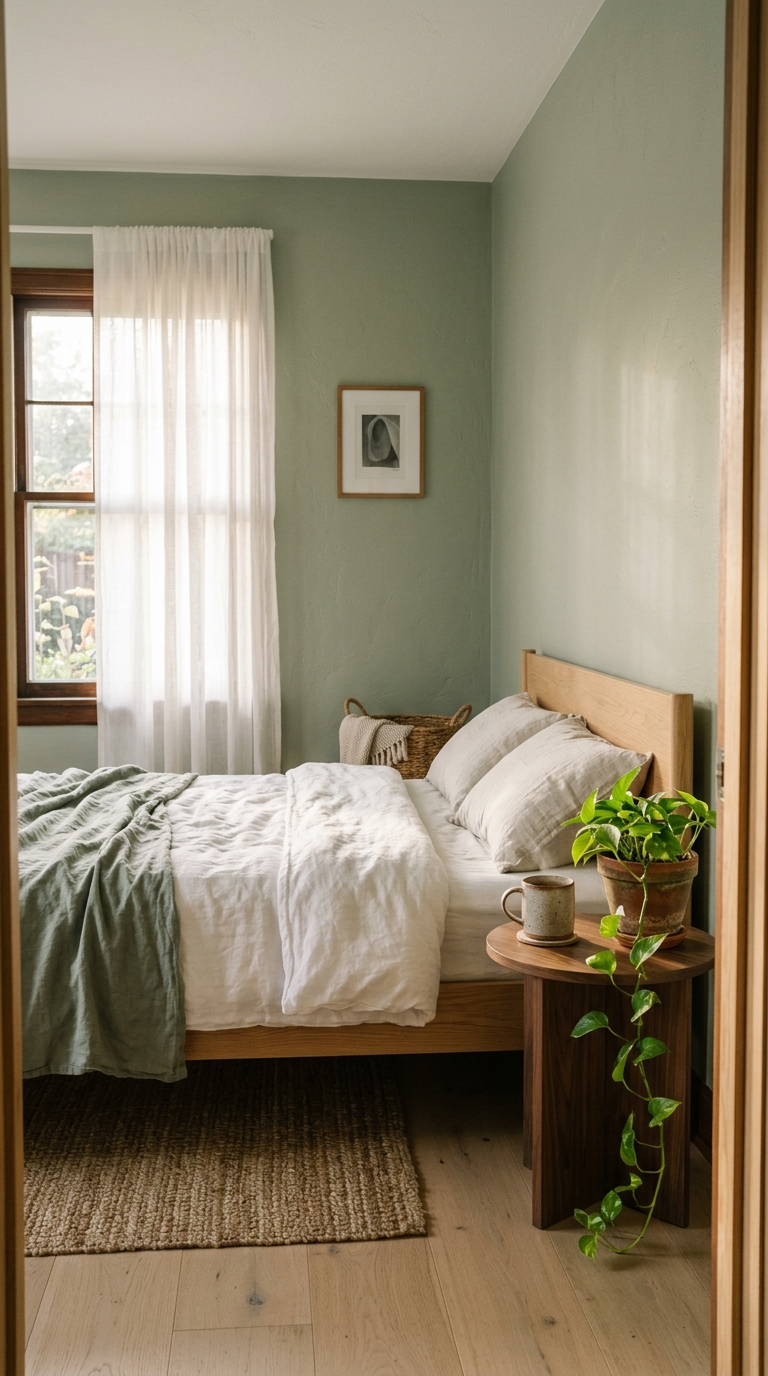
For this look, I recommend Sherwin-Williams Privilege Green. It carries a warm grey undertone that stops the room from feeling cool or clinical. Pair it with white oak furniture, ivory linen bedding, and terracotta accents for a palette that feels collected rather than decorated. I used this exact combination in my guest bedroom and every single person who walks in says it feels like a retreat. The undertones matter enormously — always test a large swatch before committing.
Warm Off-White That Feels Like Quiet Luxury
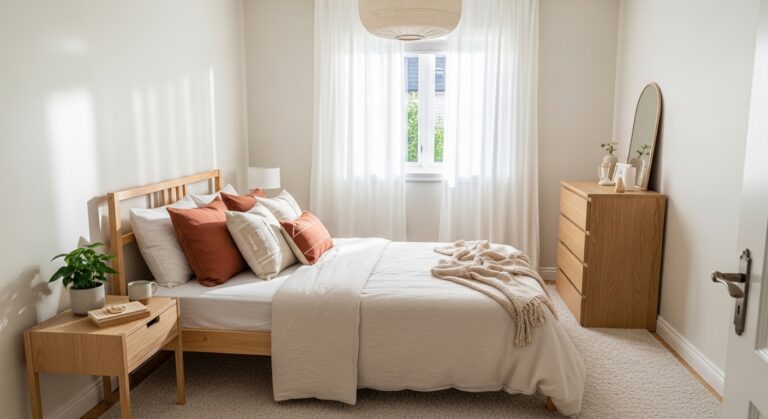
Warm off-white is the color that looks effortless but actually asks you to choose very carefully. The wrong off-white pulls yellow or pink and suddenly your room feels dated instead of elevated. The right one wraps the space in a kind of quiet luxury you cannot quite name but absolutely feel. It works because it reflects light generously without bouncing it harshly, keeping the room feeling open at seven in the morning and utterly cozy by nine at night.
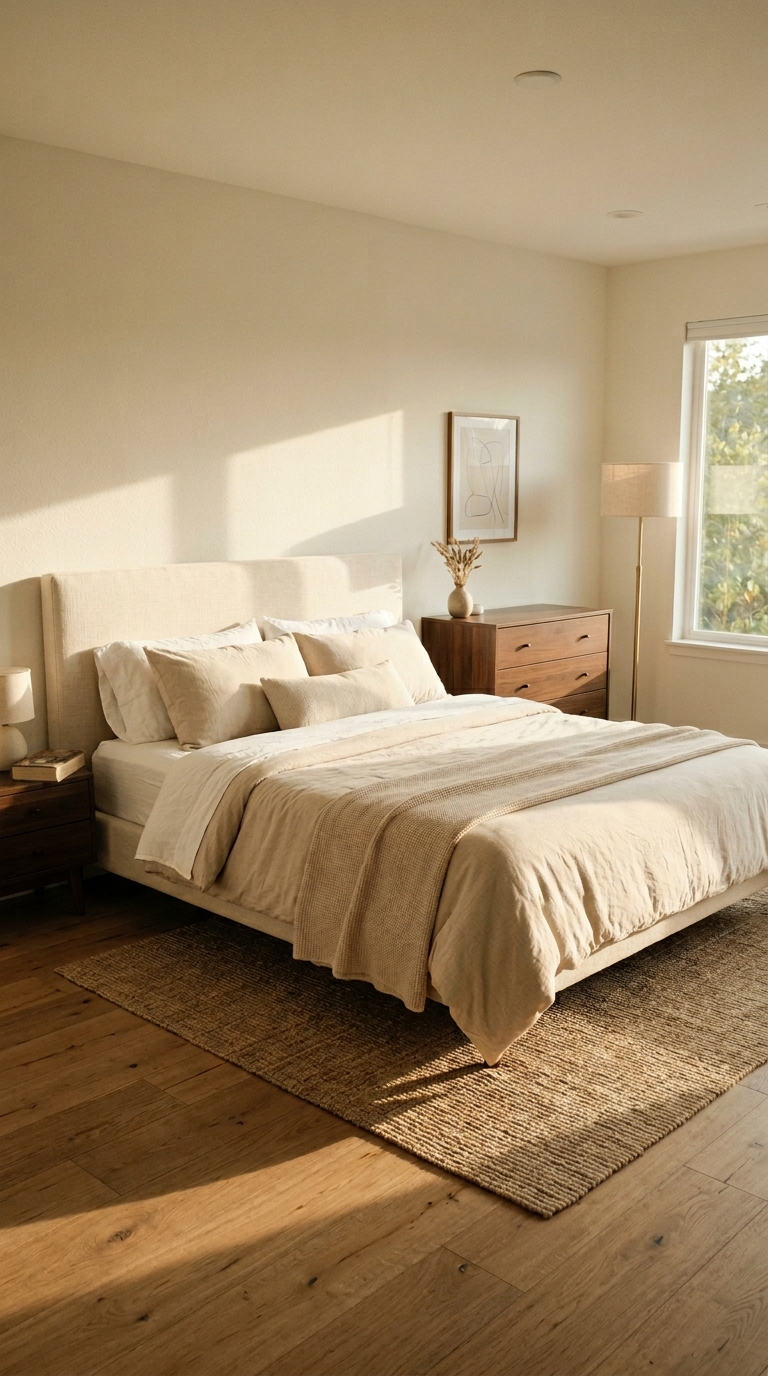
Benjamin Moore White Dove is the one I always come back to. It holds a barely-there warm undertone that pairs beautifully with natural linen, aged brass hardware, and matte black accents. I used it in my own bedroom last spring and it made everything I already owned look more intentional somehow — like the room had been edited rather than just repainted. Keep your bedding in ivory or oat tones rather than stark white and the whole thing will feel completely pulled together.
Dusty Blue for a Restful Sophisticated Bedroom
Dusty blue sits in that perfect middle ground between cool and calming, sophisticated and genuinely restful. It is the kind of color that looks completely different depending on your light source — in morning sun it leans silvery and fresh, in lamplight it deepens into something almost smoky and romantic. It photographs beautifully, which is why you see it everywhere on design accounts, but living inside it is even better than it looks on a screen.
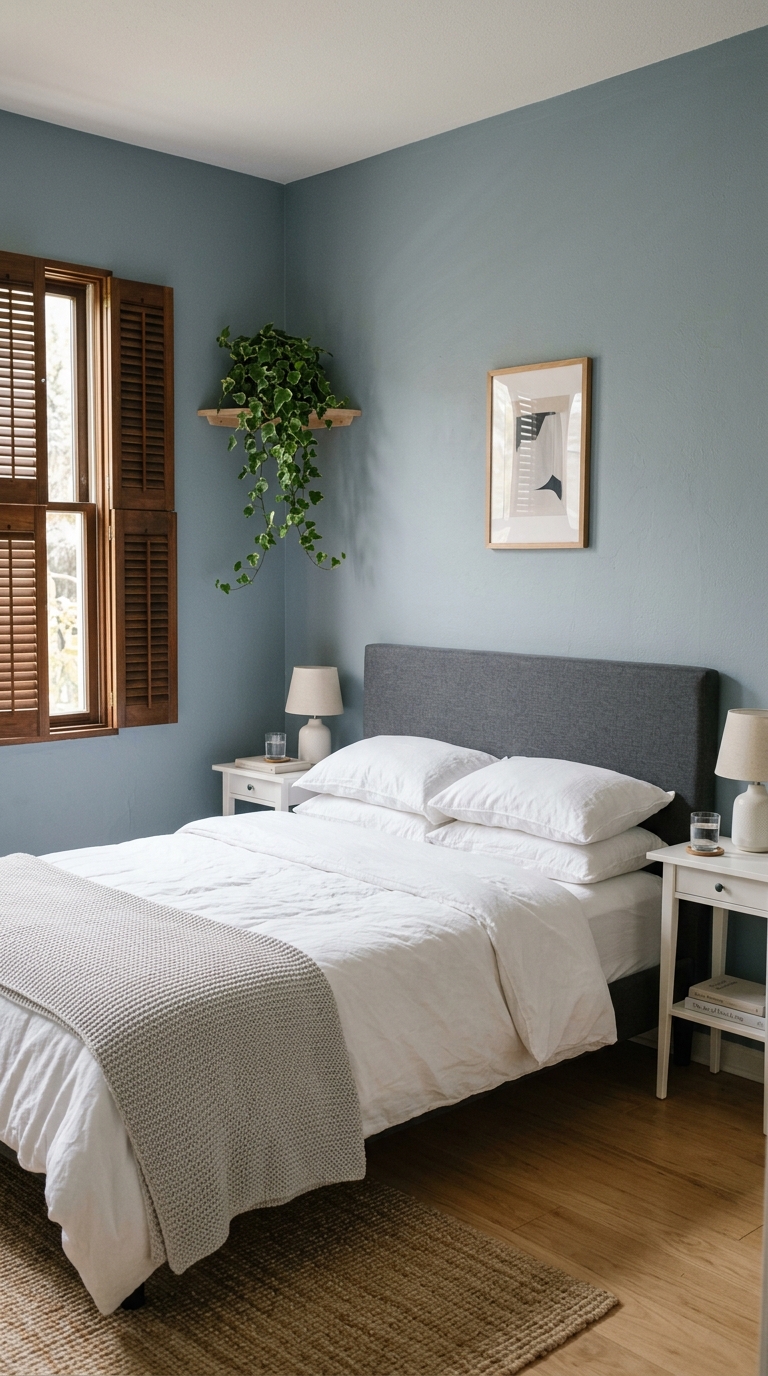
Farrow & Ball Mizzle is the shade I fell in love with first, and I have never fully moved on from it. The blue-green undertone makes it feel more interesting than a straightforward blue and keeps it from reading as a baby room color. Pair it with white cotton bedding, warm wood floors, and soft grey accents for a room that feels like a boutique hotel. I always tell people: if you want your bedroom to feel curated without trying hard, dusty blue is your answer.
Warm Greige The Neutral That Goes With Everything
Greige is beige that grew up. It has the warmth of a traditional neutral without any of that old-fashioned heaviness, and it layers with literally everything you already own. In a minimalist bedroom it works because it does not demand attention — it simply sets the stage and lets your textiles and natural materials be the thing the eye travels to. If you have been afraid to go bold but also bored of plain white, greige is the honest answer waiting for you.
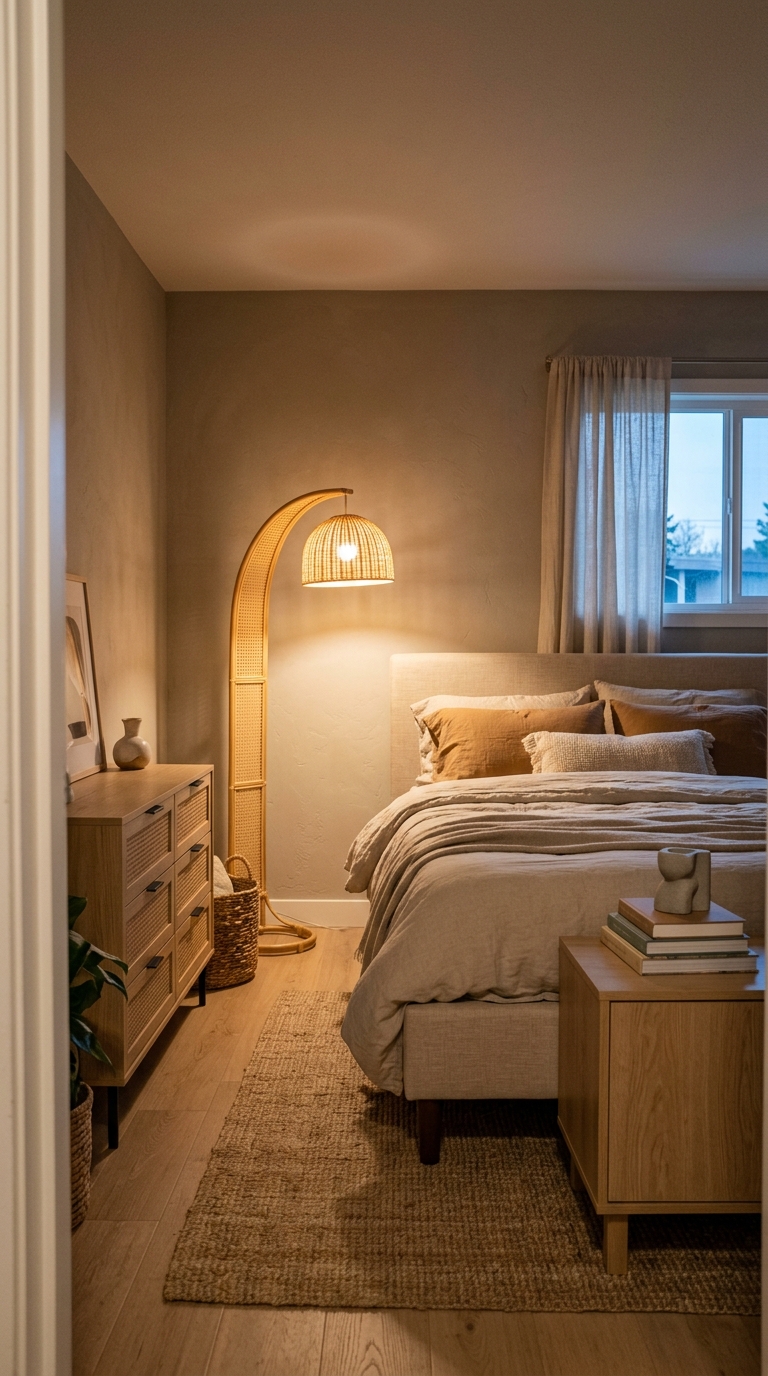
Sherwin-Williams Accessible Beige is my go-to for this look. It holds a green-grey undertone that keeps it from going muddy and makes it read as sophisticated rather than safe. Layer your bedding in ivory, camel, and off-white — all tone-on-tone — and bring in raw linen curtains that pool slightly on the floor. I did this in my own bedroom renovation and it is the most photographed corner of my entire home. The layering of neutrals is what separates greige done beautifully from greige done boringly.
Charcoal Accent Wall for Bold Minimalist Drama
One deep charcoal wall behind the bed creates an instant focal point in any minimalist bedroom without overwhelming the space or making you feel like you are sleeping inside a cave. The contrast between that single dark wall and the bright remaining three walls actually makes the room feel larger, which I did not believe until I tried it myself. The bed naturally becomes the centerpiece of the design, and everything you layer onto it — pillows, throws, textures — suddenly looks more considered and intentional.
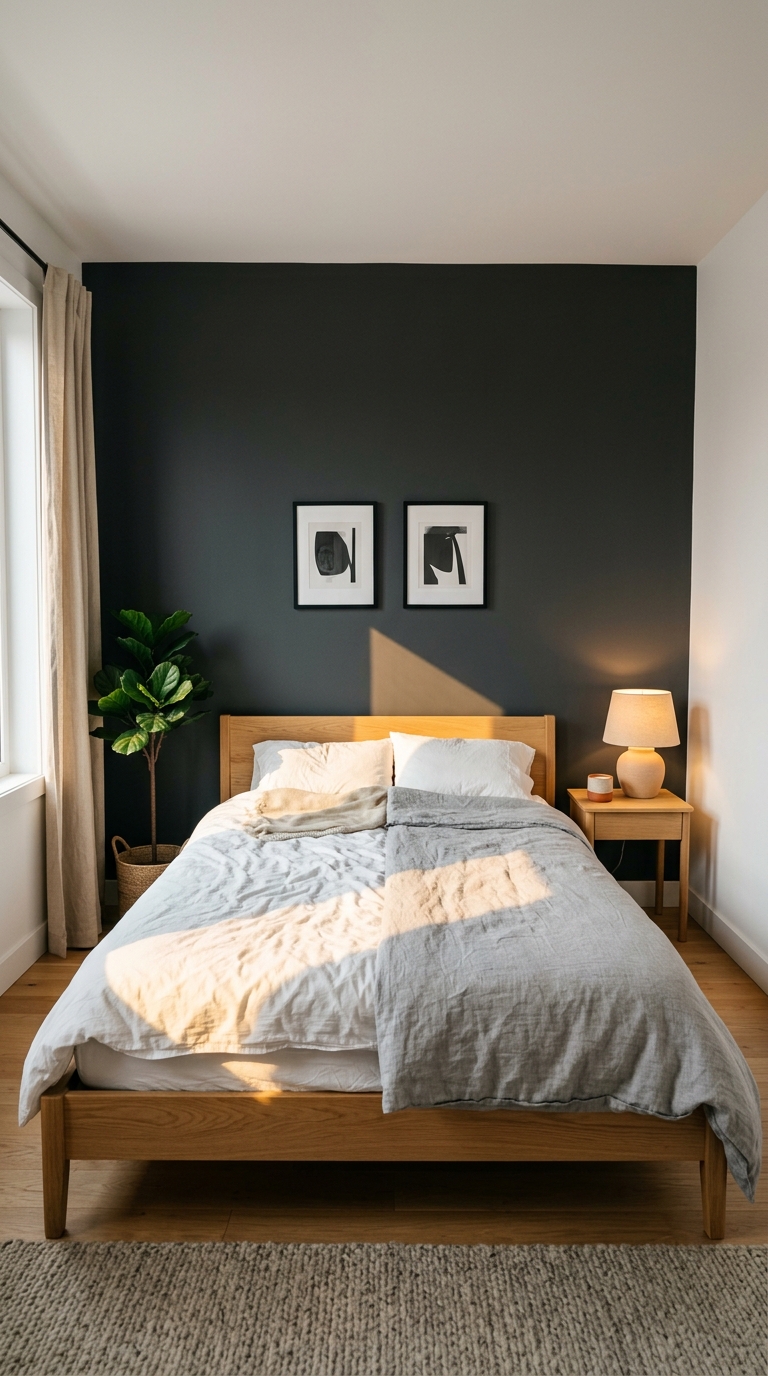
Benjamin Moore Wrought Iron is the charcoal I recommend every time. It has blue-black undertones that give it depth without reading as flat grey. Keep the remaining walls in crisp white or warm cream, choose natural wood furniture, and layer your bedding in white linen with one textured oat throw. I added a single warm Edison bulb lamp on the nightstand and the glow against that dark wall was genuinely beautiful. This is honestly the highest-impact single change you can make to a minimalist bedroom.
Terracotta Warmth for an Earthy Cozy Bedroom
Terracotta in a bedroom sounds like it could feel heavy or overpowering, but when you choose the right shade it brings in a warmth that feels like sunlight even on grey mornings. It is earthy, ancient, and completely at home in a minimalist space when you keep every other element simple and organic. I resisted it for years and then I painted one small bedroom in a washed terracotta tone and immediately understood why every designer was reaching for it. It makes you feel held.
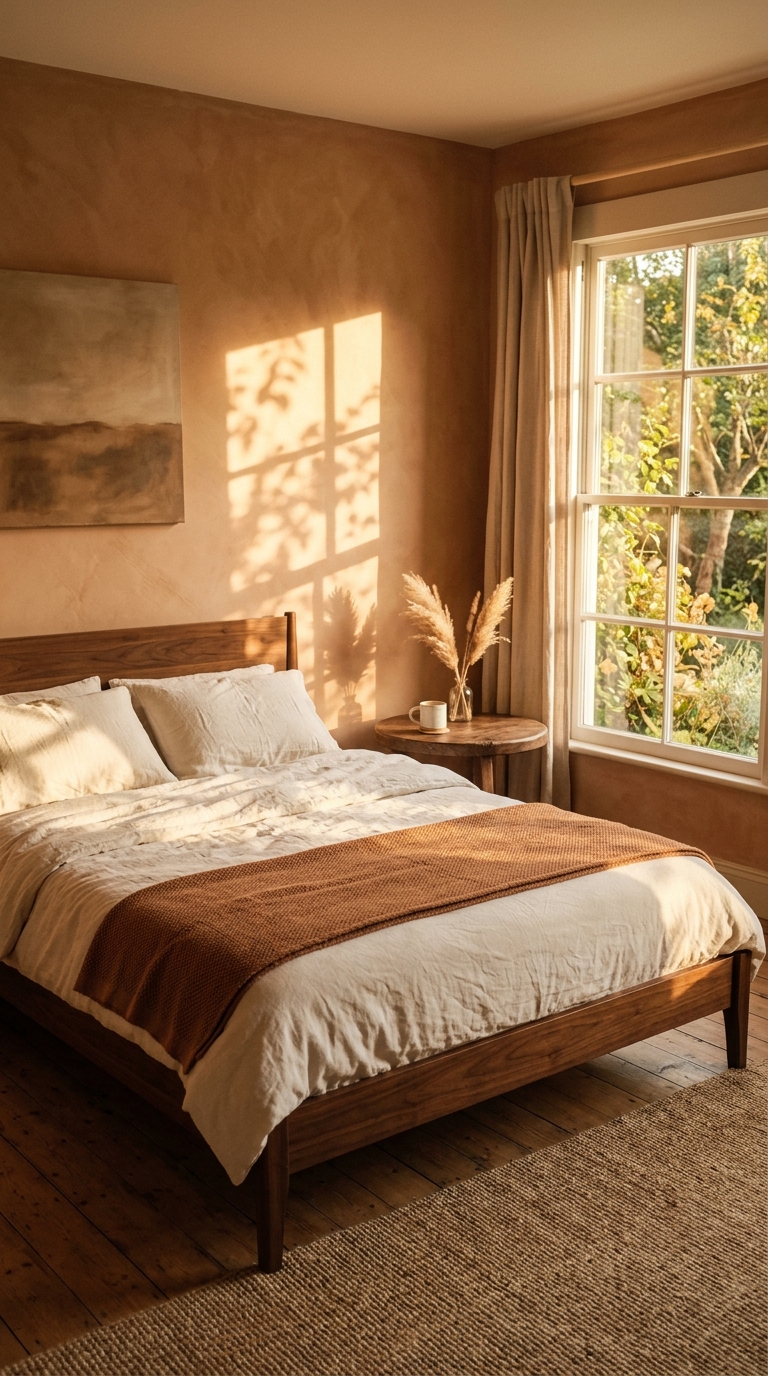
Farrow & Ball Red Earth is a nuanced choice here — it is not orange, not red, but something warmer and more complex. Look for shades with plenty of brown and grey in them rather than straight orange. Pair with linen bedding in ivory, raw wood furniture, and clay or neutral ceramic accents. Keep textiles minimal and let the wall do all the work. I always recommend adding a single large natural-fiber rug in this room — a jute or wool in oat or cream grounds the whole composition beautifully.
Pale Blush for a Soft and Romantic Minimalist Room
Pale blush is the color that manages to feel simultaneously romantic and minimal, which should not be possible but absolutely is in the right hands. It brings a gentle warmth into a north-facing room and adds femininity without tipping into saccharine. In natural morning light it barely reads as pink at all — it simply makes the room feel softer, kinder, and more human. I painted a study in this color and kept wishing I had used it in my bedroom instead. It is genuinely that good.
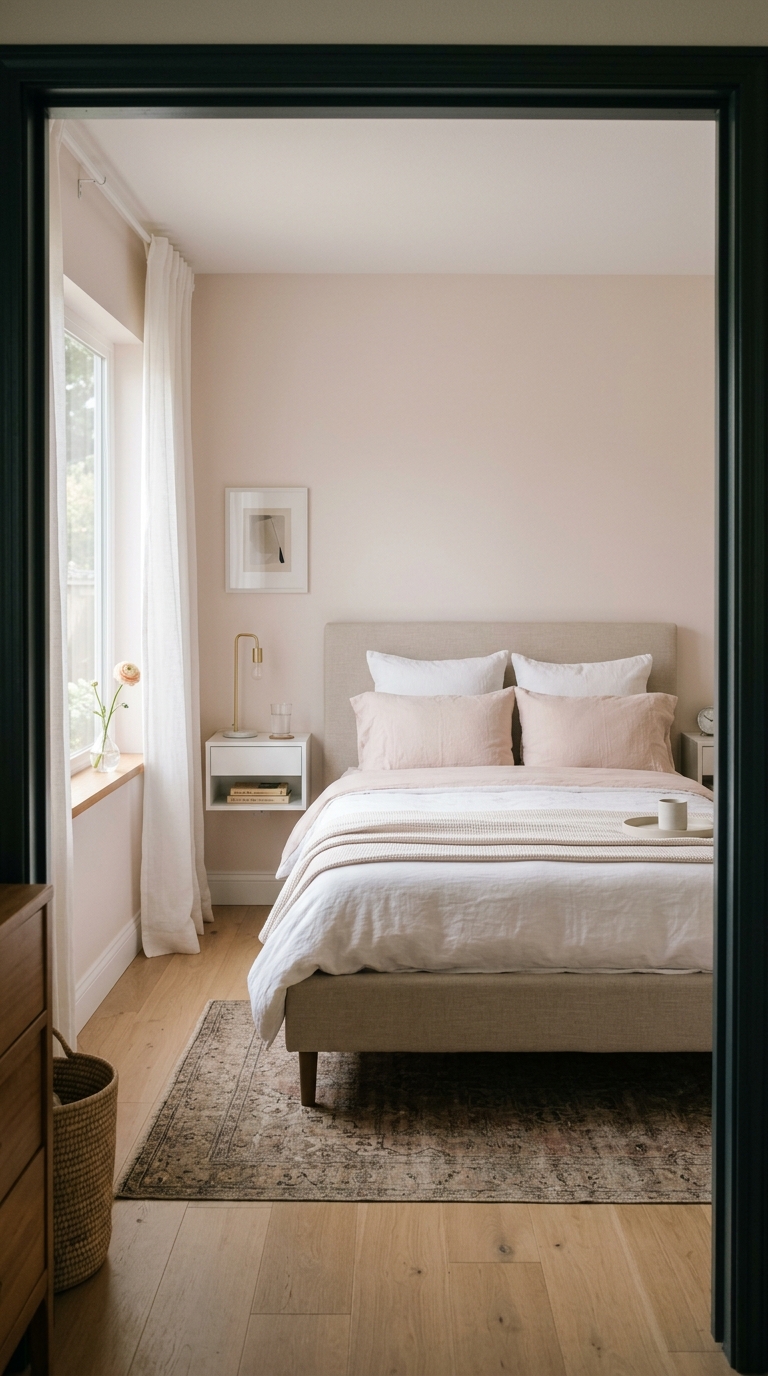
Sherwin-Williams Rosy Outlook is a blush that holds a nude undertone, keeping it sophisticated and quiet rather than obviously pink. Pair it with white furniture, warm brass hardware, and bedding in white, ivory, and the palest natural linen you can find. Resist adding any bold accents — the beauty of this color lives in its restraint. I like keeping the styling spare in a blush bedroom: one plant, one lamp, one beautiful object on the nightstand and absolutely nothing else.
Soft Linen White for an Airy Breathable Bedroom
Soft linen white is not the same as brilliant white — and that difference matters more than most people realise until they are staring at paint swatches under their bathroom light. Linen white carries warmth, breath, and a slight organic quality that makes a minimalist bedroom feel livable rather than cold. It is the color that allows everything else in the room to exist quietly beside it without fighting for attention. I think of it as the most generous background a bedroom can wear.
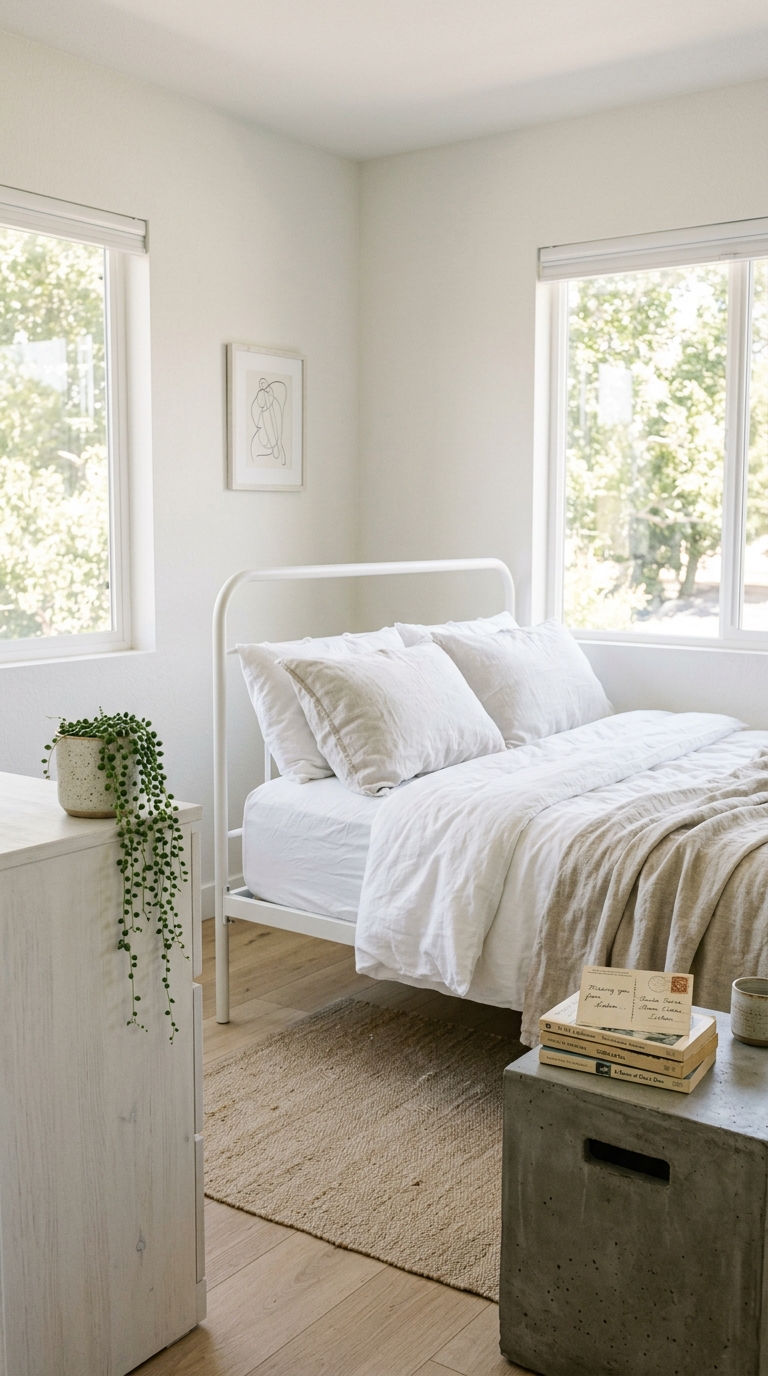
Benjamin Moore Linen White is my honest first recommendation and the name says everything. It leans warm and slightly creamy in natural daylight, and it pairs beautifully with textures — rough linen, soft cotton, smooth ceramic, raw wood. This color rewards a texture-forward approach to bedding and accessories because it makes every natural material look its absolute best. Keep furniture in white, off-white, or pale ash. This is the room you should create if you want to feel like you are living inside a slow morning every single day.
Muted Olive for a Deeply Peaceful Sanctuary Feel
Muted olive is one of those colors that photographs darker than it lives, and that surprise is part of what makes it so interesting to decorate with. In person it is earthy, intelligent, and deeply calming — not the bright grass green that many people imagine. It suits people who want their bedroom to feel like a real sanctuary, heavy with peace and completely cut off from the noise of the day. I have never walked into an olive-painted bedroom and wanted to leave quickly. Not once.
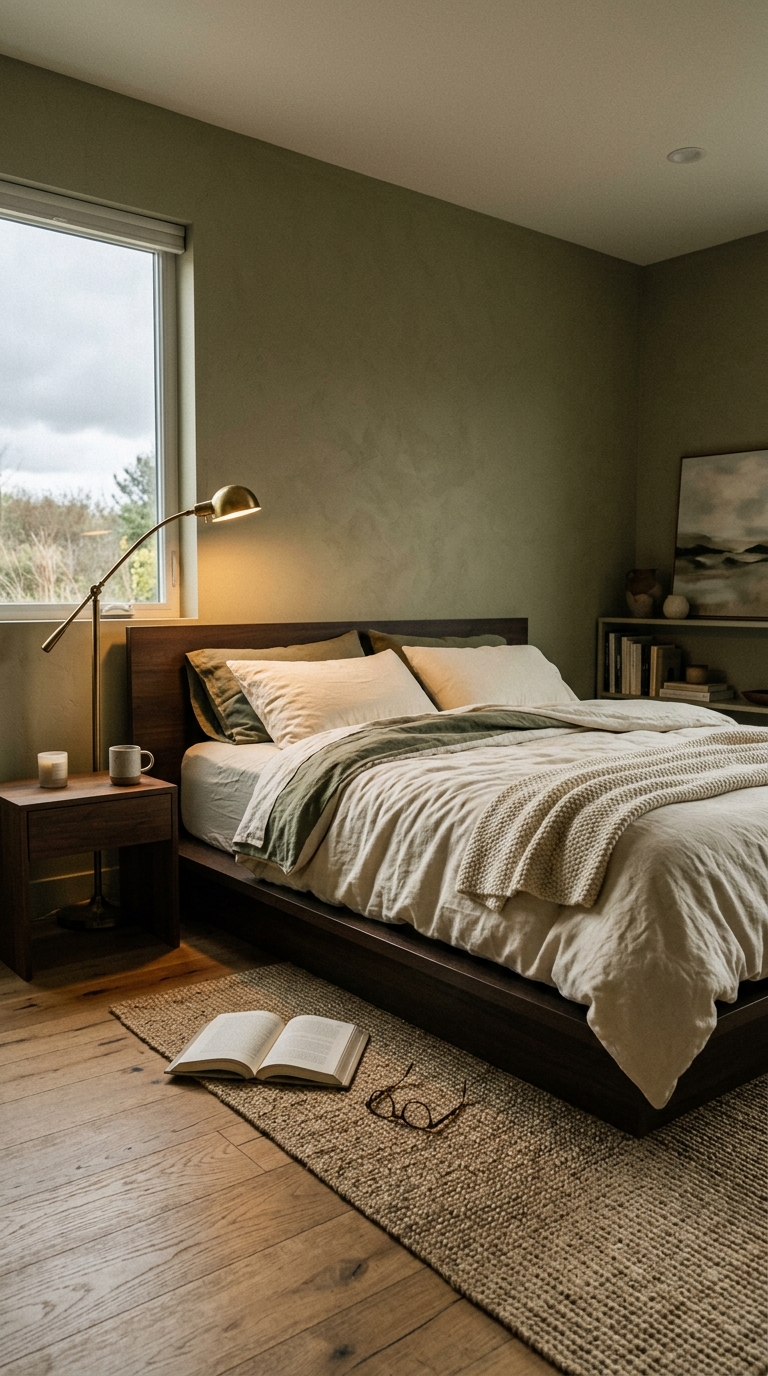
Farrow & Ball Mole’s Breath has enough warmth in it to keep olive from feeling cold, and I love it beside dark wood tones. Pair espresso or dark walnut furniture with ivory and cream bedding, and bring in aged brass or bronze hardware details. Keep the room uncluttered — this color works hardest when the space is very spare. I genuinely think muted olive is one of the most underused minimalist bedroom colors, probably because it sounds risky. It is not. It is just quietly extraordinary.
Pale Lavender for a Calm and Sleep Friendly Room
Pale lavender works in a minimalist bedroom because it sits at the intersection of neutral and color — it reads almost like a grey until the light shifts, and then suddenly the room glows with something soft and a little magical. It has a well-documented connection to rest and calm, which makes it a genuinely sensible choice for a bedroom rather than just a pretty one. I painted a reading nook in pale lavender and found myself sitting in it for hours longer than I ever did when it was white. The color changed my behavior.
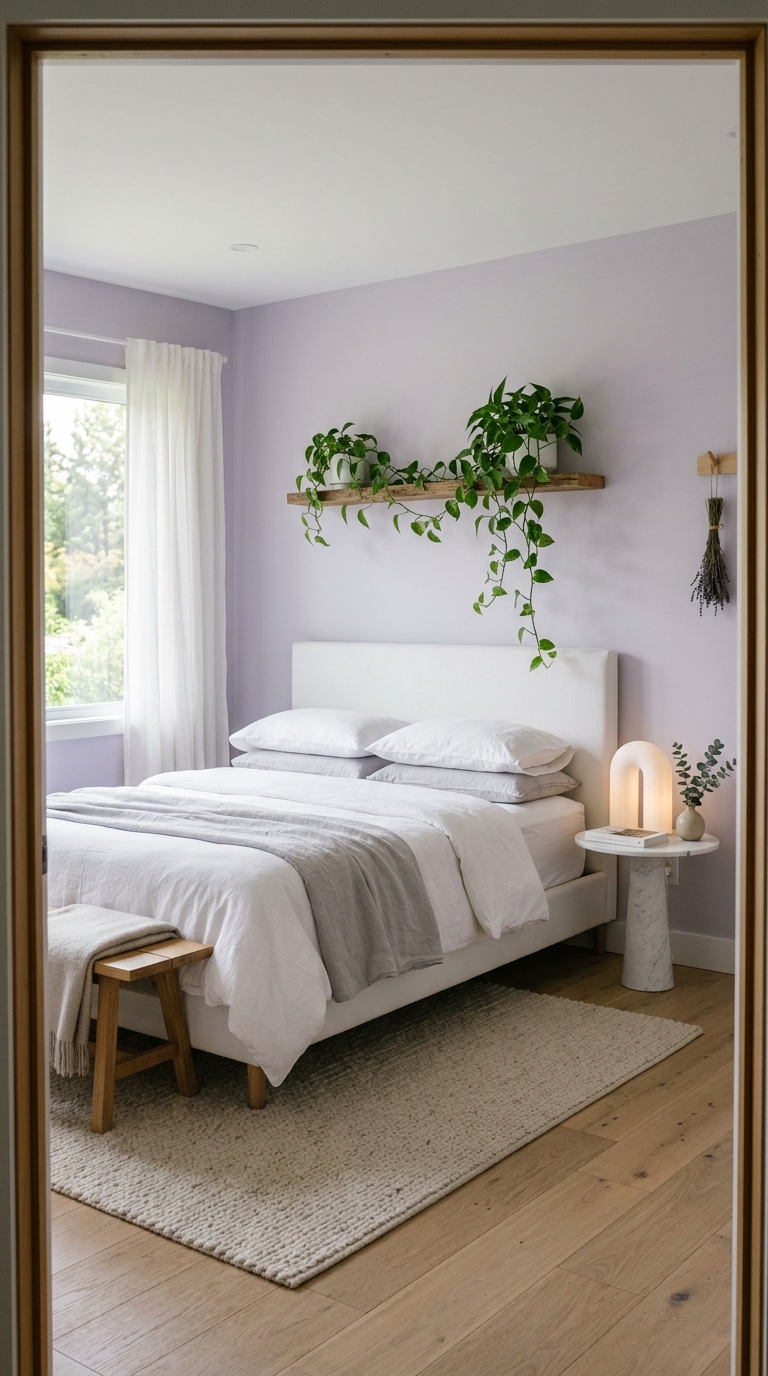
Sherwin-Williams Violet Mist is beautifully balanced between grey and purple without tipping too far in either direction. The grey undertone keeps it sophisticated and prevents the space from feeling childish. Pair with white furniture, soft grey textiles, and silver or matte white hardware. Avoid warm wood tones here — they fight the cool quality that makes this color so special. I always say: if you are someone who struggles to fall asleep, pale lavender deserves a genuine trial in your bedroom before you dismiss it.
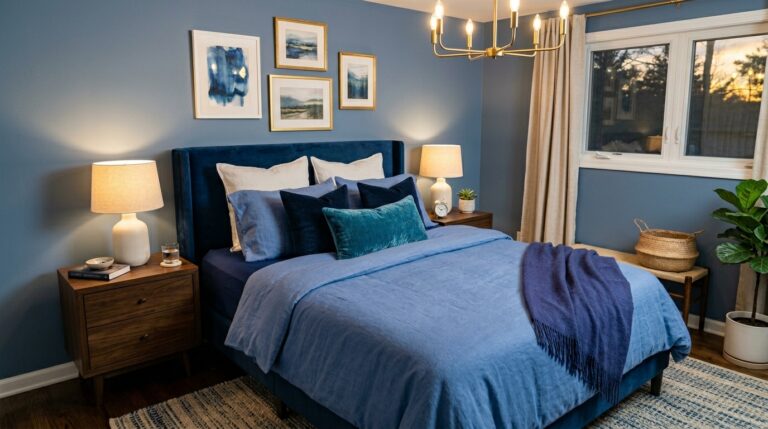
Deep Navy Feature Wall for Dramatic Bedroom Style
A deep navy wall does something to a bedroom that almost no other color can — it creates a sense of enclosure and depth that makes you feel like the room is holding you rather than simply surrounding you. In a minimalist space where the rest of the palette stays light and airy, that single dark wall becomes an anchor, a piece of visual drama that costs nothing but a can of paint. I always feel like navy bedrooms belong to people who take their rest seriously. There is a committed intentionality to it I genuinely admire.
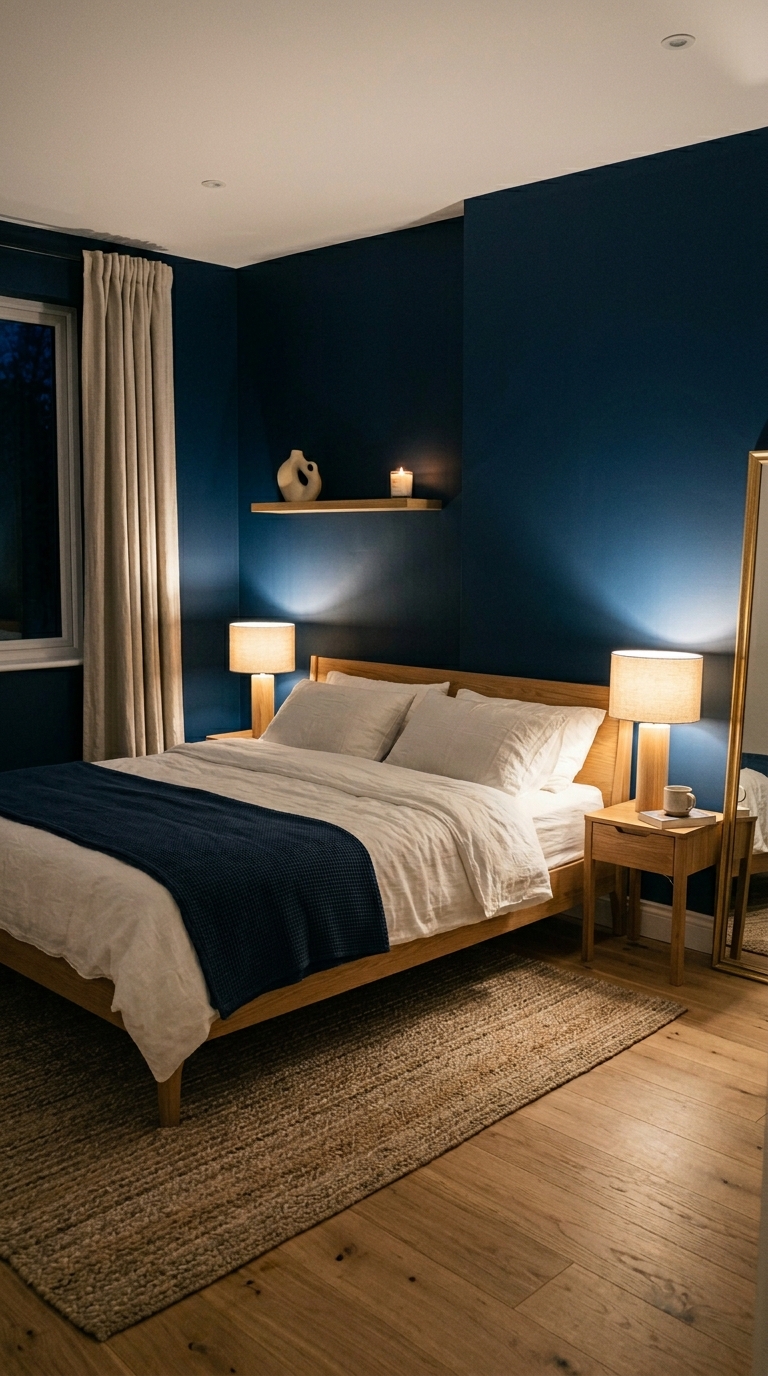
Benjamin Moore Hale Navy is the one I recommend most consistently. It holds a true blue tone with only the faintest grey whisper, keeping it feeling rich and deep rather than cold. Pair it with natural oak or light ash furniture, crisp white bedding, and warm brass or matte gold accents. Keep the remaining walls white — please resist the urge to paint all four walls, because the contrast is the whole point. One bold wall in a spare room is all the personality you will ever need.
Warm Mushroom Grey The Most Underrated Bedroom Neutral
Warm mushroom grey is the most overlooked neutral in minimalist bedroom design, and I want to change that because it is genuinely extraordinary to live inside. It is neither beige nor grey but something perfectly balanced between both, and it shifts moods throughout the day in a way that makes the room feel alive and ever-changing without being busy. On a grey morning it feels cozy and interior. In afternoon sun it warms into something almost caramel. By lamplight it deepens into a tone that makes you want to stay in bed permanently.
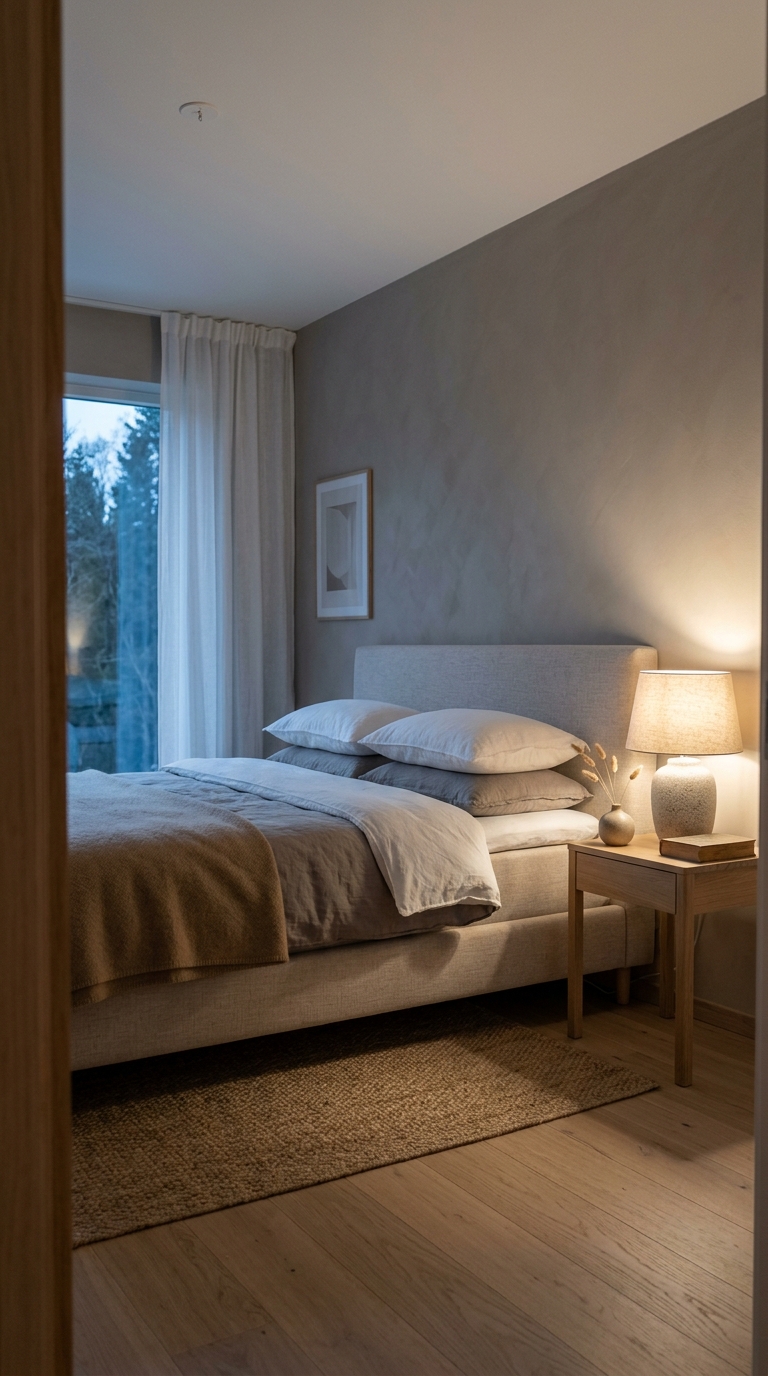
Farrow & Ball Elephant’s Breath is the benchmark for this look — the name is famously awkward and the color is famously perfect. It carries a warm lilac-grey undertone that elevates it well beyond ordinary beige. Pair with camel, ivory, and oat bedding in layered cotton and linen textures. Choose furniture in white, light ash, or pale oak. Keep accessories minimal and organic — dried botanicals, linen lampshades, simple ceramics. This is the color I recommend most to friends who want a bedroom that feels like an expensive hotel suite without spending like one.
Your bedroom is not just where you sleep. It is the first thing your eyes receive in the morning and the last thing they rest on at night. The color wrapping that space is not a small decision — it is a daily, cumulative experience that shapes how you feel about your home and honestly about your day. Every color on this list has something real and worth trying, but what I want most for you is that you stop waiting for the perfect moment and just pick one today.
Here at drizzlee, I always say that minimalist living is not about having less — it is about choosing better. One paint color, chosen with care and paired with intention, can transform an ordinary bedroom into the sanctuary you have been wishing for. Go pick your color. Buy the sample. Paint a large swatch on your wall and live with it for three days. You deserve a bedroom that genuinely restores you, and you are closer to that than you think.