13 Minimalist Living Room Ideas That Make Your Home Feel Like a Luxury Retreat
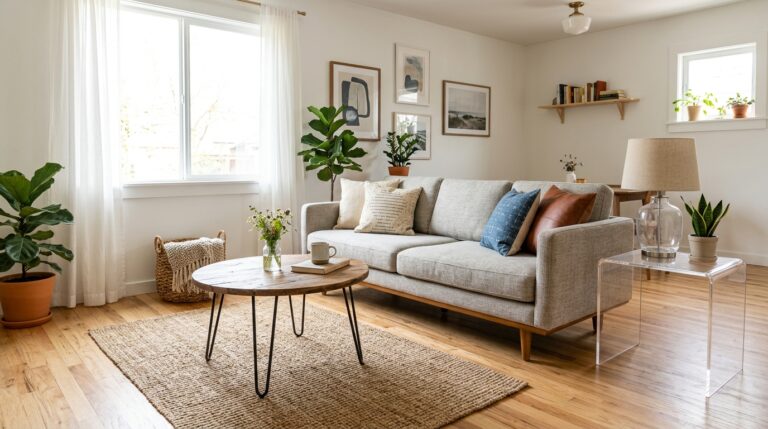
Have you ever walked into a room and immediately felt your shoulders drop, your breathing slow, and your whole body exhale? That’s the quiet magic of a truly minimalist living room — and it has absolutely nothing to do with empty spaces or cold, untouchable furniture. It’s about choosing the right things, placing them with intention, and letting each piece breathe.
This article is your personal guide to creating a living room that feels calm, beautiful, and deeply livable — all at once. Whether you’re starting from scratch or just tired of how your current space feels cluttered and chaotic, these 13 ideas will give you real, practical inspiration you can act on today. Let’s make your home feel like the retreat you actually deserve.
The Neutral Foundation That Does All the Heavy Lifting
The first thing you notice when you step into this kind of room is how effortlessly calm it feels — and it all starts with the walls, floors, and foundational pieces working in total harmony. Warm whites, soft sand tones, and gentle greige shades create a visual quiet that makes the whole room feel wider, taller, and more welcoming. Nothing fights for your attention. Everything just belongs.
Choosing your base palette is honestly the single most powerful decision you’ll make in this entire process. Pick one warm neutral and use it across at least 70% of your room — walls, sofa, large rug — before you introduce any other tone. Don’t go stark white unless your light is truly golden and warm, because cool whites under grey light can read as clinical and harsh. Test three paint chips on your actual wall, live with them for two full days, and let the light tell you which one feels like home.
A Sofa That Earns Its Square Footage
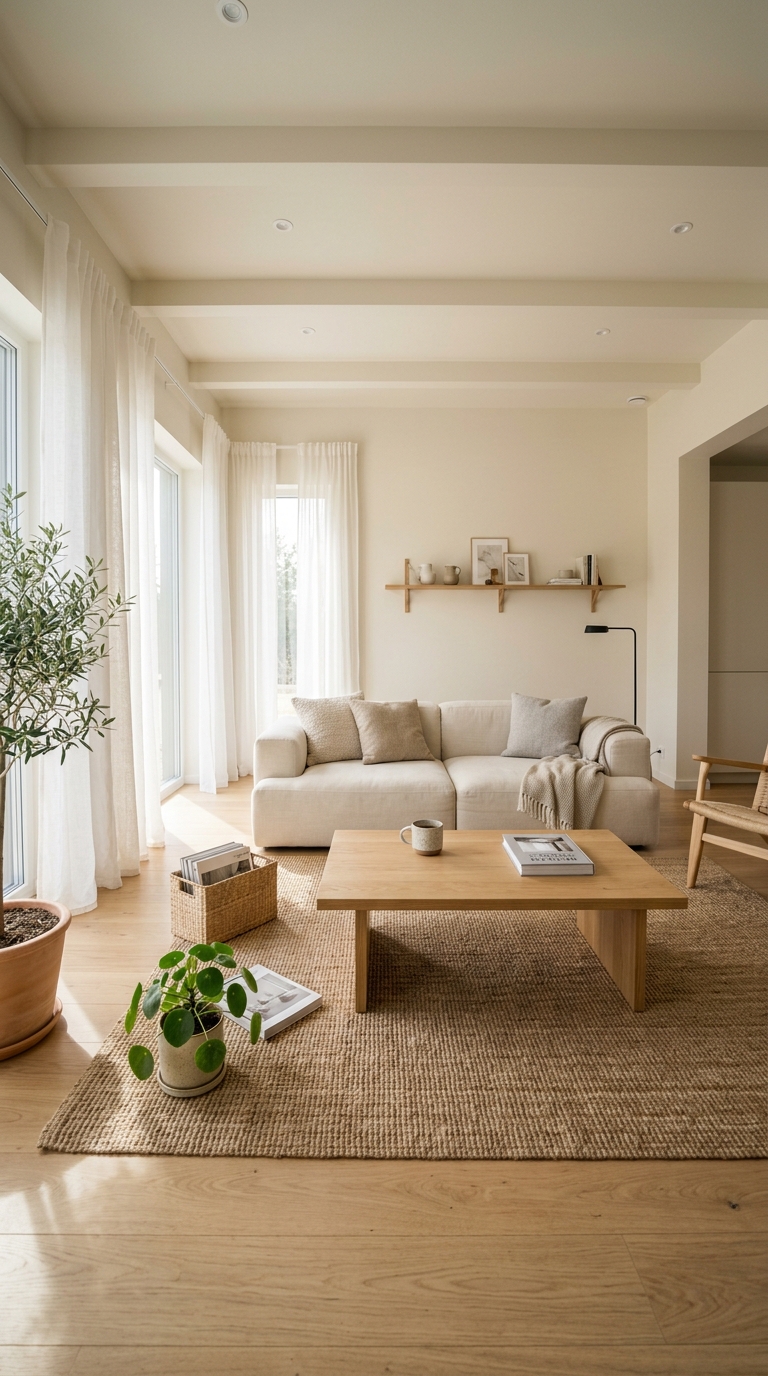
A sofa in a minimalist living room isn’t just a place to sit — it’s the emotional anchor of the entire space. When you choose well, it communicates warmth, restraint, and confidence all at once. Think clean-lined silhouettes with no ornate legs, no tufting, no fussy trim. A low-profile frame in natural linen, boucle, or soft cotton velvet gives you that effortless “I barely tried and it looks this good” energy that minimalist spaces are genuinely famous for.
When you’re shopping, resist the urge to size up just because the floor space technically allows it. A slightly smaller sofa with breathing room around it will always look more intentional than a massive sectional crammed wall to wall. Measure your room, then subtract at least 18 inches from every side of the sofa’s footprint. Leave that space open. Watch how much more luxurious the whole room instantly looks — even before you’ve changed anything else.
Warm Wood Tones That Keep the Room Feeling Alive
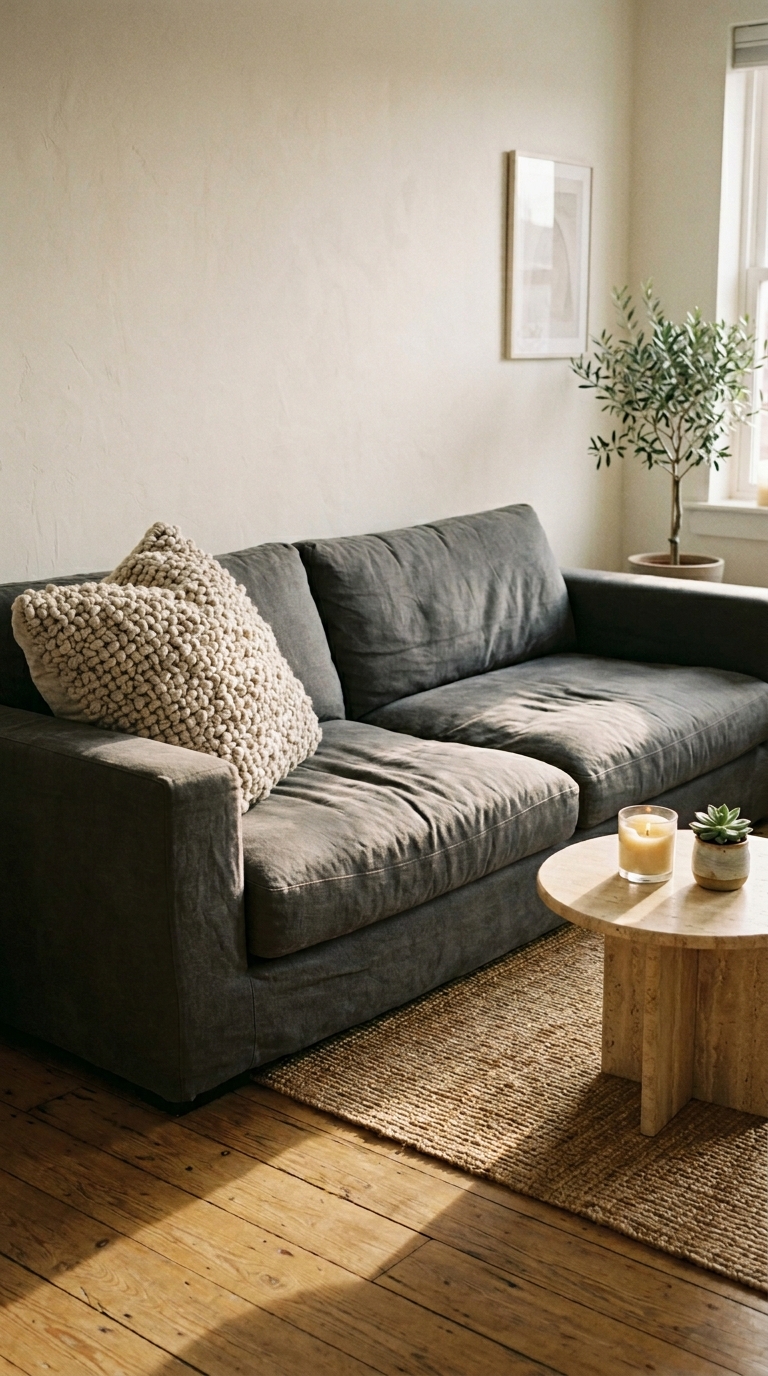
One of the biggest misconceptions about minimalist design is that it should feel cold — all concrete and steel with no warmth anywhere. But the rooms that actually stop people mid-scroll and make them whisper “I want to live there” almost always have wood somewhere in the frame. Walnut, oak, and teak bring organic texture and natural warmth that no paint color or fabric can fully replicate on its own.
The secret is to use one consistent wood tone rather than mixing multiple finishes, which can make a minimalist room feel accidentally mismatched. Pick your tone — light Scandinavian oak or deeper American walnut — and carry it through your coffee table, side tables, and shelving. You don’t need all three; even two pieces in the same wood family create a visual thread that ties the whole room together quietly and beautifully.
The One Statement Plant That Changes Everything
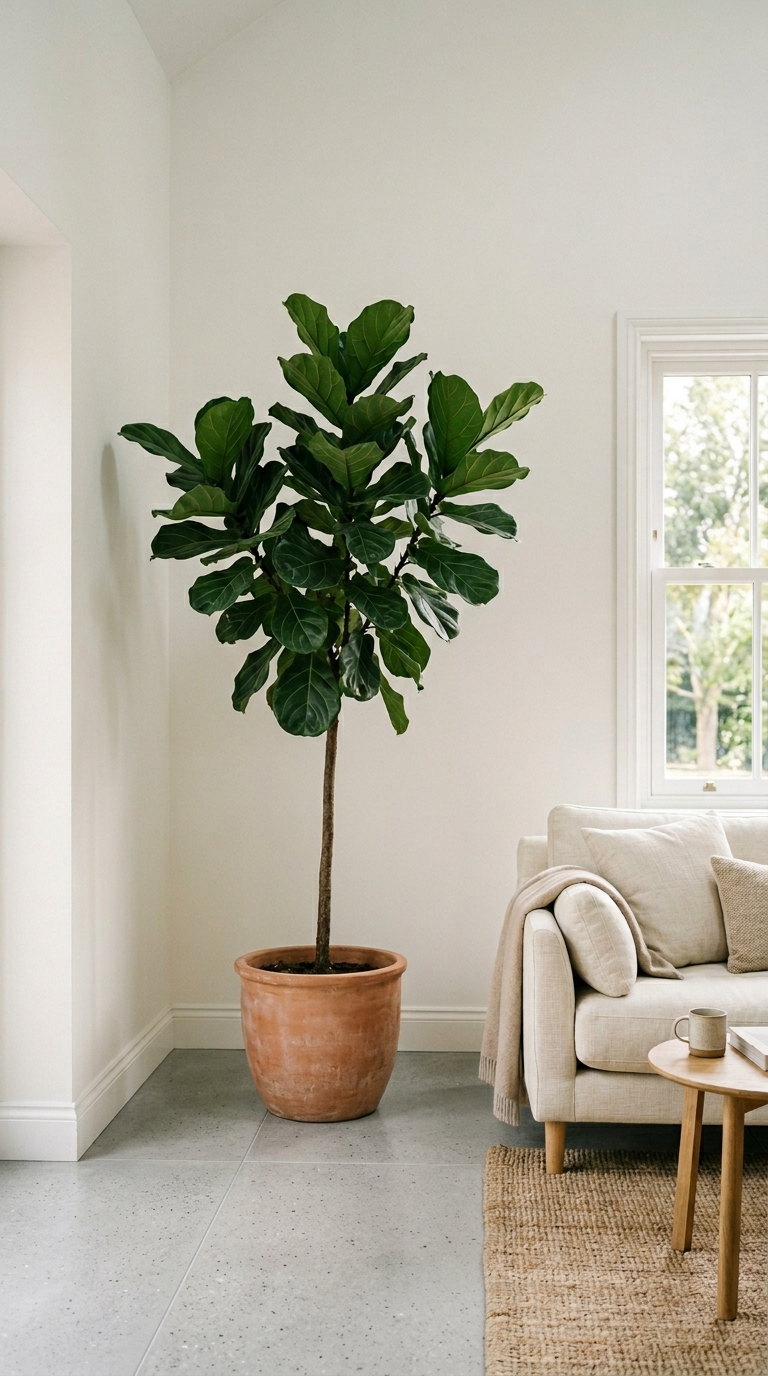
There is something almost transformative about a single, well-chosen plant in a minimalist living room. It does what no throw pillow or artwork can — it brings the space to life in a way that feels genuinely organic, seasonal, and real. A tall fiddle-leaf fig in a matte pot, a sculptural snake plant on a wooden stool, or a trailing pothos on a high shelf all create a kind of visual softness that makes the whole room feel cared for.
Don’t scatter five small plants around the room trying to create “nature vibes” — that approach almost always reads as cluttered in a minimalist context. Choose one large, architecturally interesting plant as your living room’s green anchor and let it command its corner fully. Pair it with a pot that matches your base palette — terracotta, matte black, or warm stone — and treat the plant like furniture. Give it real estate. Give it light. Let it grow into the room rather than hiding it in a dark corner where it’ll slowly decline.
Soft Lighting That Makes Every Evening Feel Intentional
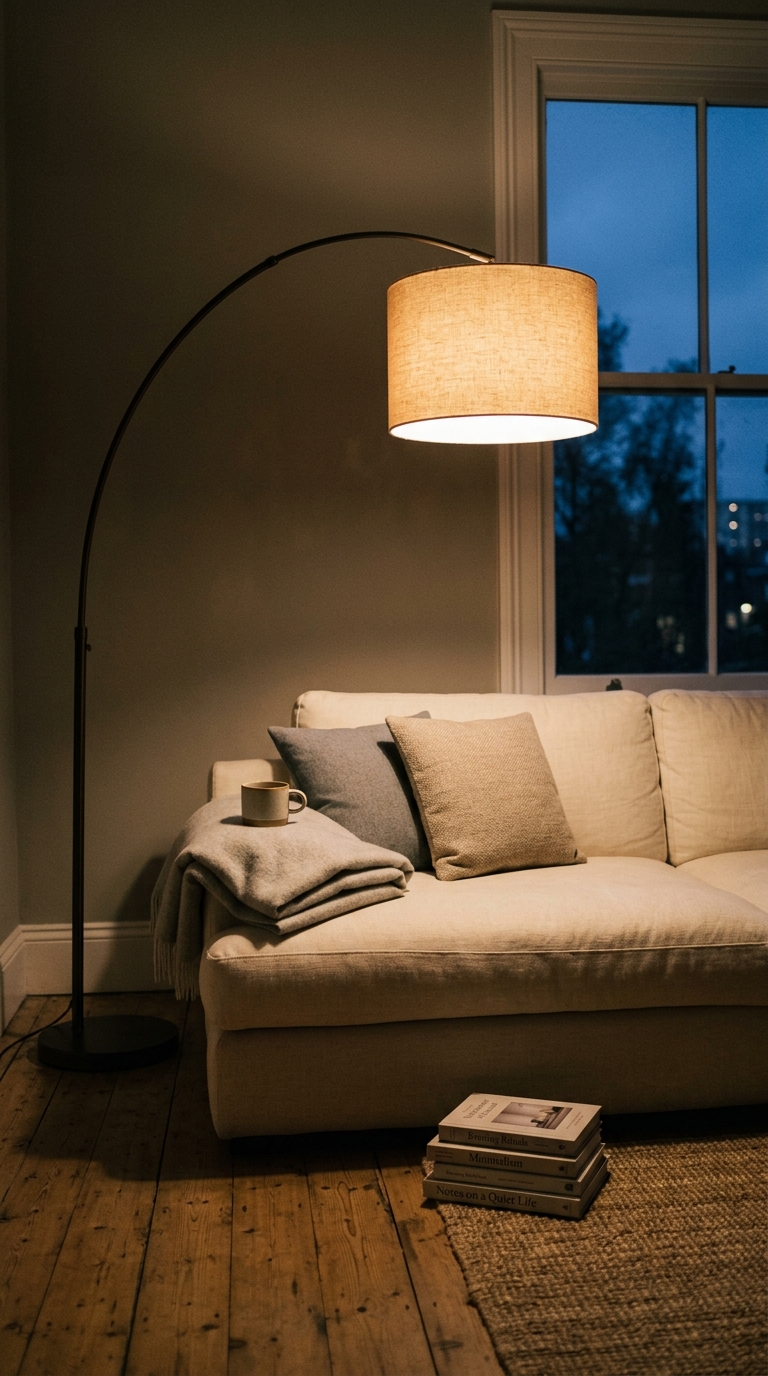
Walk into any truly beautiful minimalist living room after 6 p.m. and you’ll notice immediately — the lighting is doing something warm, layered, and completely intentional. Overhead lights are dimmed or off entirely. Floor lamps, table lamps, and occasionally a few candles carry the whole atmosphere. The room feels like a place you’d genuinely want to spend an evening in rather than just a space you pass through.
Getting your lighting right in a minimalist space means eliminating harsh overhead glare first and then building warmth from the floor and table level up. Invest in one beautiful arc floor lamp — it creates drama and function at once — and pair it with a smaller table lamp on the opposite side of the room to balance the light evenly. Bulbs matter enormously here: always go warm white, around 2700K, because anything cooler will strip the coziness out of every textile and wood surface you’ve worked so hard to choose.
A Rug That Grounds the Whole Room
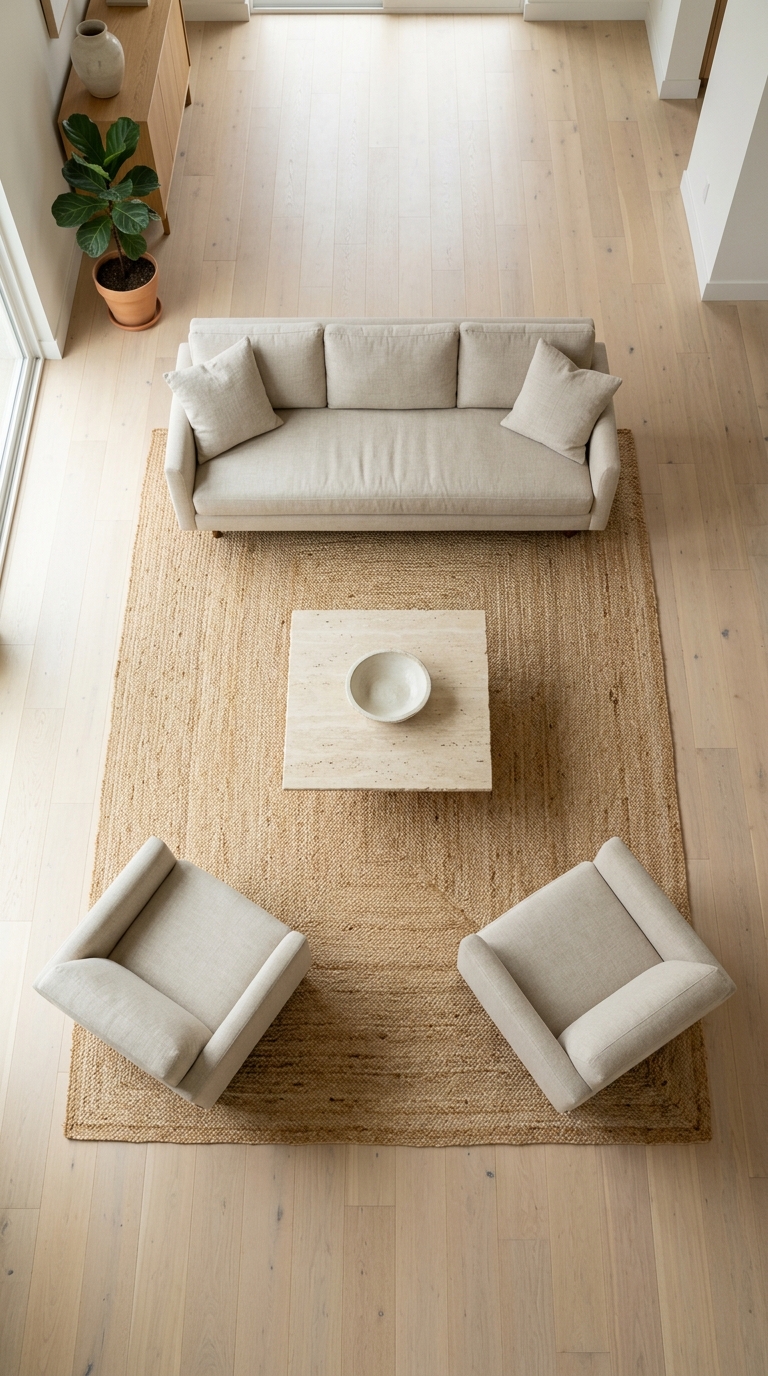
The rug is one of those pieces that people often underestimate — and then immediately regret when they see how dramatically the right one transforms a room. In a minimalist living room, the rug is doing enormous work: it defines the seating area, adds warmth underfoot, and introduces texture in a way that feels grounded and deliberate rather than decorative for decoration’s sake.
Size is the most common mistake people make, and it’s an expensive one to undo. Your rug should be large enough for all four legs of your sofa to sit on it — or at least the front two — because a too-small rug pushed toward the center of the room makes the whole space feel disjointed and oddly shrunken. For a standard living room, you’re usually looking at an 8×10 or 9×12 rug. Natural fibers like jute, wool, and cotton work beautifully in minimalist spaces because they add organic texture without competing with anything else in the room.
Thoughtful Shelving That Proves Less Really Is More
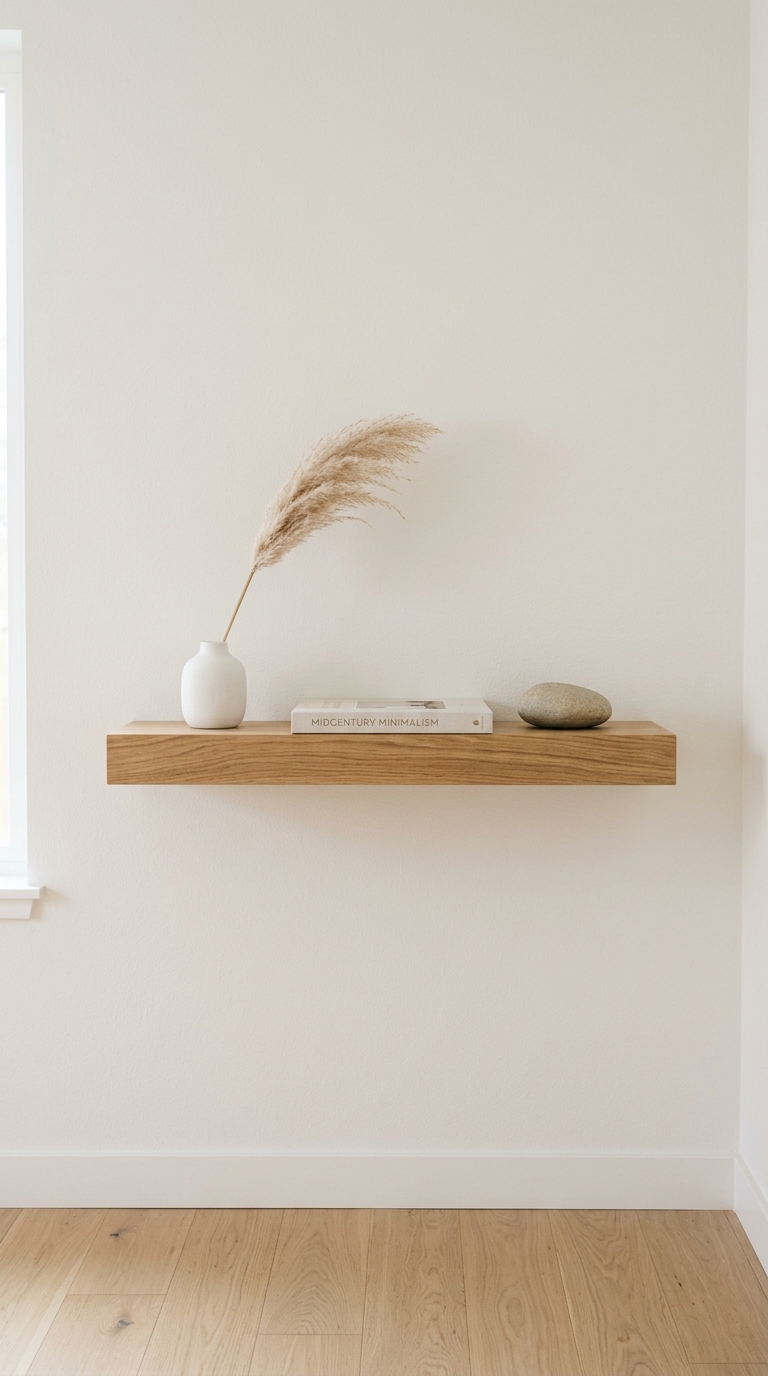
Open shelving in a minimalist living room is either the most beautiful thing in the space or the most stressful, depending entirely on how you edit what you put on it. The rooms that feel genuinely curated and considered keep their shelves almost uncomfortably spare — three objects where you’d normally put ten, with real, deliberate negative space between each one. That emptiness isn’t emptiness at all. It’s breathing room, and it makes every object on the shelf look like it was chosen with real intention.
When you’re styling your shelves, pull everything off first and start fresh. Group objects in odd numbers — one, three, or five — and vary the heights within each group so your eye moves naturally across the shelf rather than getting stuck. Rotate what you display seasonally so the space never starts to feel ignored or stale. A shelf that tells a quiet, considered story about who you are will always feel more beautiful than one that simply stores things in a slightly tidier way.
The Power of a Single, Meaningful Art Piece
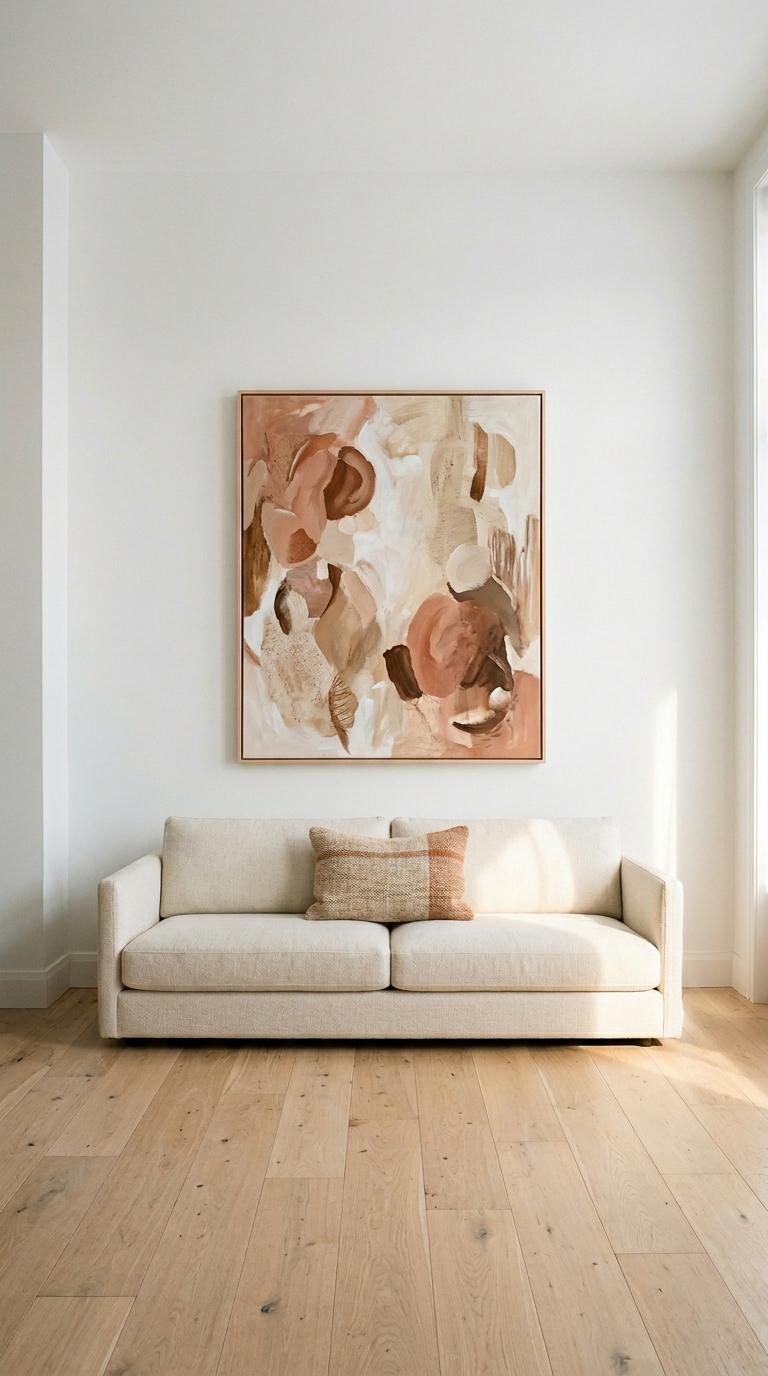
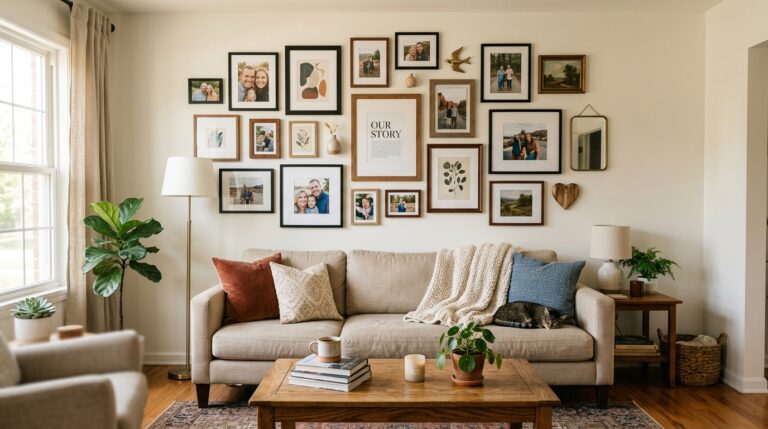
Art in a minimalist living room should feel like a quiet conversation, not a crowded gallery wall. One large, intentionally chosen piece carries infinitely more emotional weight than a collage of smaller frames that collectively overwhelm the eye. The scale matters enormously — a painting or print that feels slightly too big for the wall is almost always more impactful than one that floats awkwardly in too much surrounding space.
Hang your artwork at true eye level — which is 57 inches from the floor to the center of the piece, not the top of the frame — because this is the standard museums use and it’s the reason art in those spaces always feels naturally comfortable to look at. Choose something with a limited palette that pulls from two or three tones already present in your room, and don’t feel pressured to buy expensive original work. A single large print in a simple frame, matted well and hung with intention, can anchor an entire room.
Hidden Storage That Keeps Surfaces Beautifully Clean
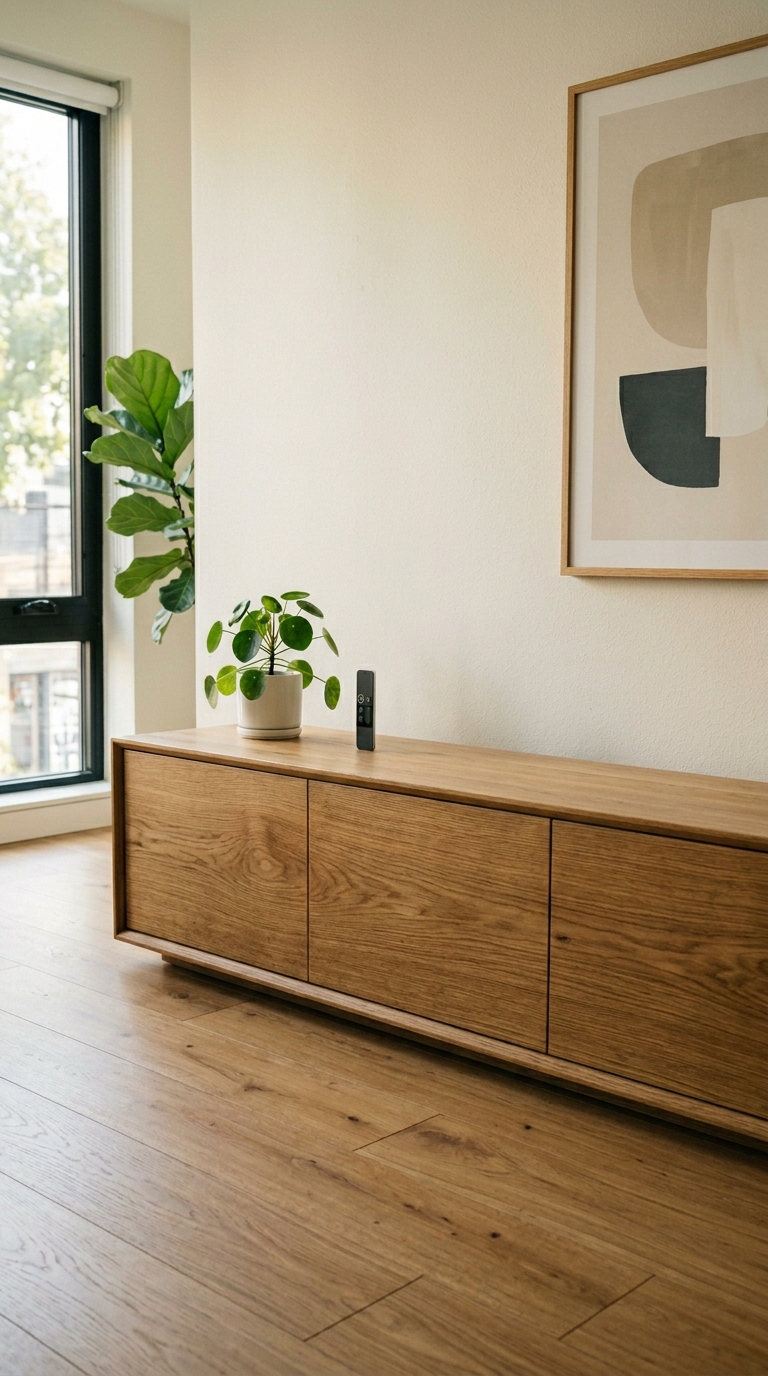
One of the most underrated secrets behind every beautiful minimalist living room you’ve ever admired is that the storage is completely invisible. Remote controls, charging cables, throw blanket extras, children’s toys, magazines — all of it lives inside something with a door on it. The visible surfaces stay almost entirely clear, and that single discipline creates the sense of calm that makes minimalist rooms feel like a completely different category of home.
Choose furniture that earns double duty — a coffee table with a lower shelf or hidden drawer, a media console with full-length doors, an ottoman that opens up for storage inside. The fewer flat surfaces things can accumulate on, the cleaner your room will feel without any additional effort on your part. This isn’t about being a tidiness perfectionist. It’s about designing a room where visual noise simply has nowhere to land.
A Reading Nook That Feels Like a Private World
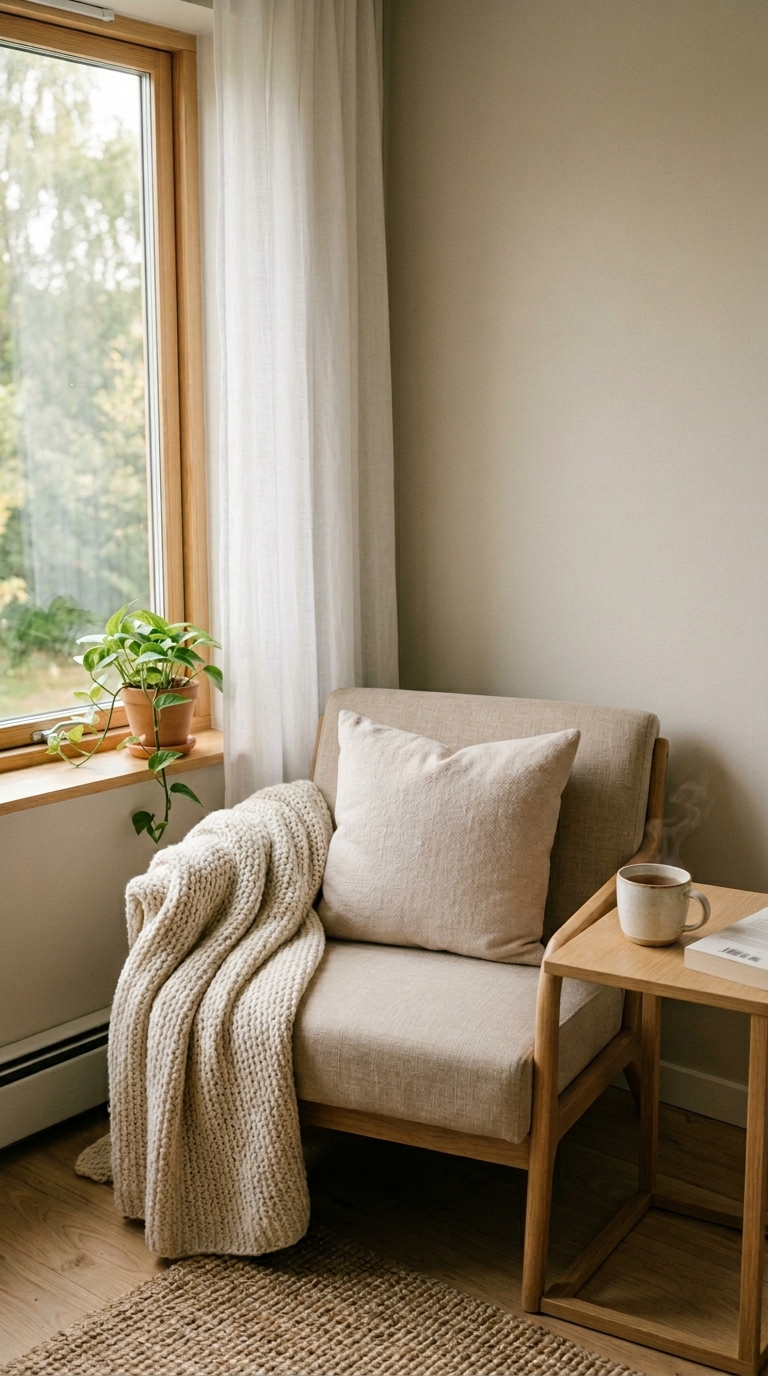
There is something genuinely restorative about a reading corner that is clearly meant for one person, in one comfortable chair, with nothing demanding their attention. It doesn’t require a separate room or even a large dedicated space — just a single armchair positioned near a window, a small surface for your drink, and enough physical separation from the main seating area to feel like its own quiet world within the room.
To create this corner, start with the chair — it’s the hero piece and everything else supports it. Choose an armchair with a deep seat, a supportive back, and upholstery that’s genuinely soft to the touch. Add a floor lamp behind it for evening reading. Keep the immediate area around it deliberately simple: one side table, one lamp, one small plant if you love them. Resist adding a second chair “just in case.” A reading nook works because it belongs to one person in one moment of stillness.
Texture Layers That Stop the Room From Feeling Flat
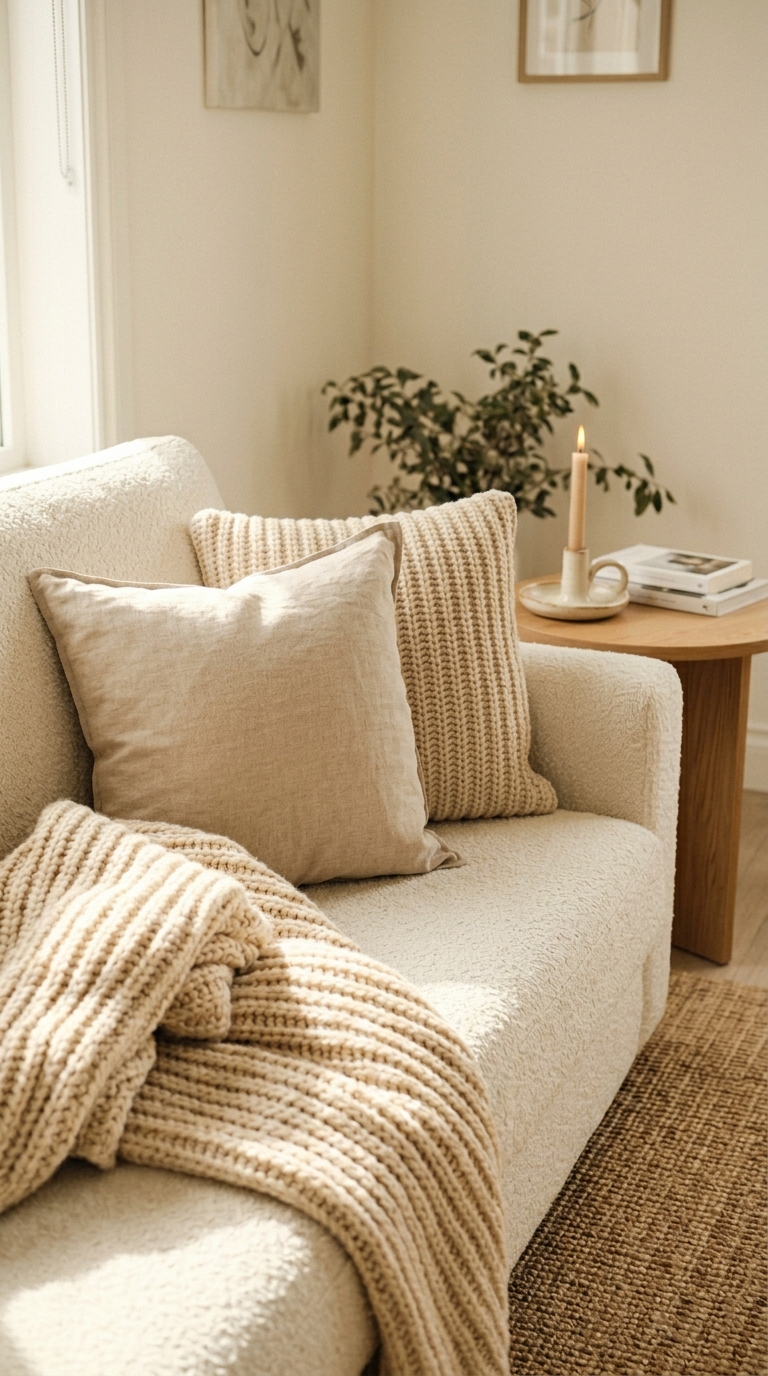
Here’s the thing about an all-neutral minimalist room — without texture, it can tip from “calm and sophisticated” into “flat and forgettable” faster than you’d think. The secret to a minimalist space that genuinely photographs beautifully and feels even better in person is the layering of textures across the same tonal palette. Multiple textures in matching tones read as rich and intentional, while multiple colors always risk looking busy.
Think about building texture across these types of materials and finishes:
- Smooth linen on your main sofa cushions
- Chunky knit or ribbed throws in the same neutral family
- A rough-woven jute or wool rug underfoot
- Matte ceramics and smooth stones as surface accents
- Soft cotton velvet on a single accent pillow
Use this list once, thoughtfully, and let those textures do the visual work that color would do in a more traditional room.
Window Treatments That Frame the Outdoors Beautifully
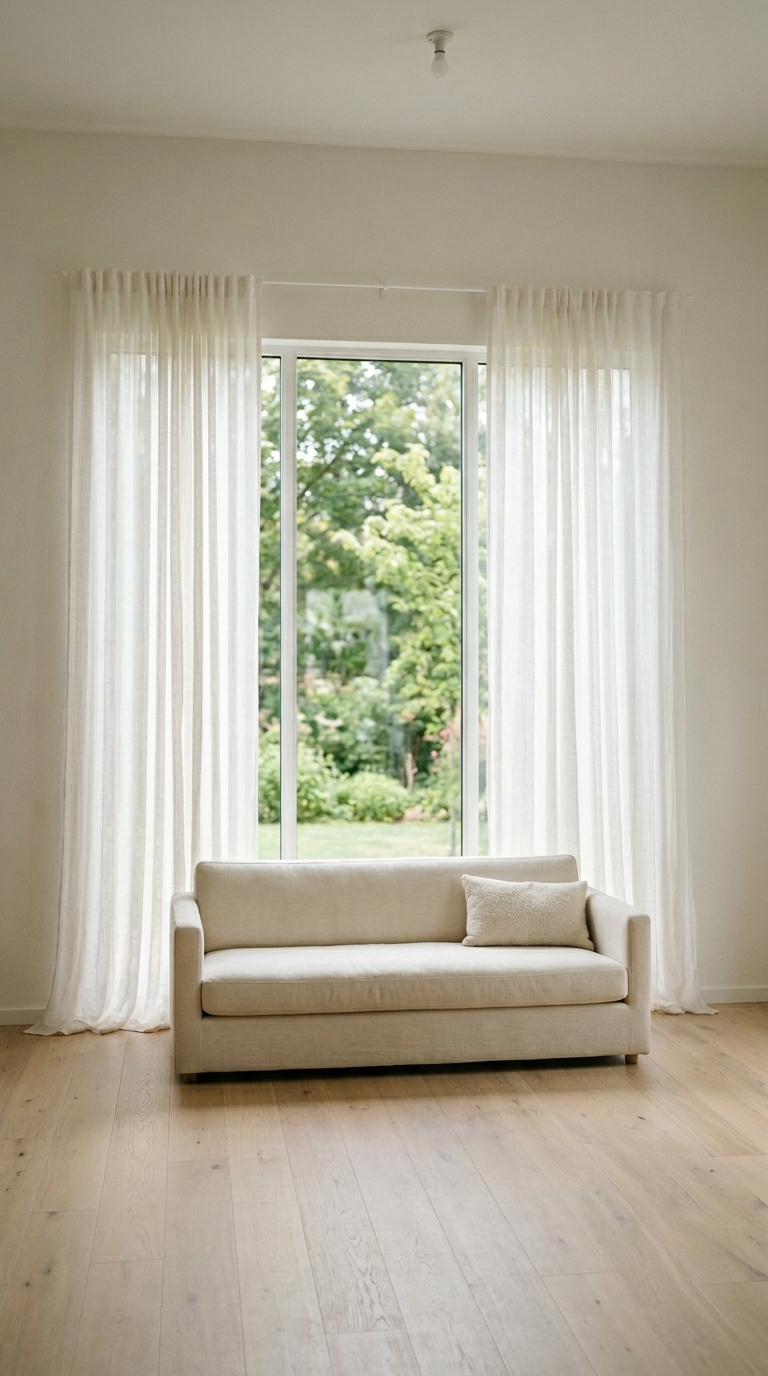
Windows in a minimalist living room deserve to be treated like artwork — framed, honored, and given the visual prominence they naturally create. The fastest way to make a room feel taller, airier, and more expensive is to hang your curtains as high as possible — ideally at ceiling height or just a few inches below the crown molding — and let them fall all the way to the floor. That vertical line transforms even an average-sized window into something architectural.
For fabric, always choose sheer linen or cotton voile in your base neutral, because these diffuse natural light beautifully rather than blocking it, and they move gently in a breeze in a way that makes the room feel genuinely alive. Avoid anything with heavy patterns, blackout liner, or short hems that stop at the windowsill — all three instantly shrink the sense of scale that minimalist living rooms depend on to create their signature feeling of openness and ease.
A Scent and Candle Ritual That Completes the Atmosphere
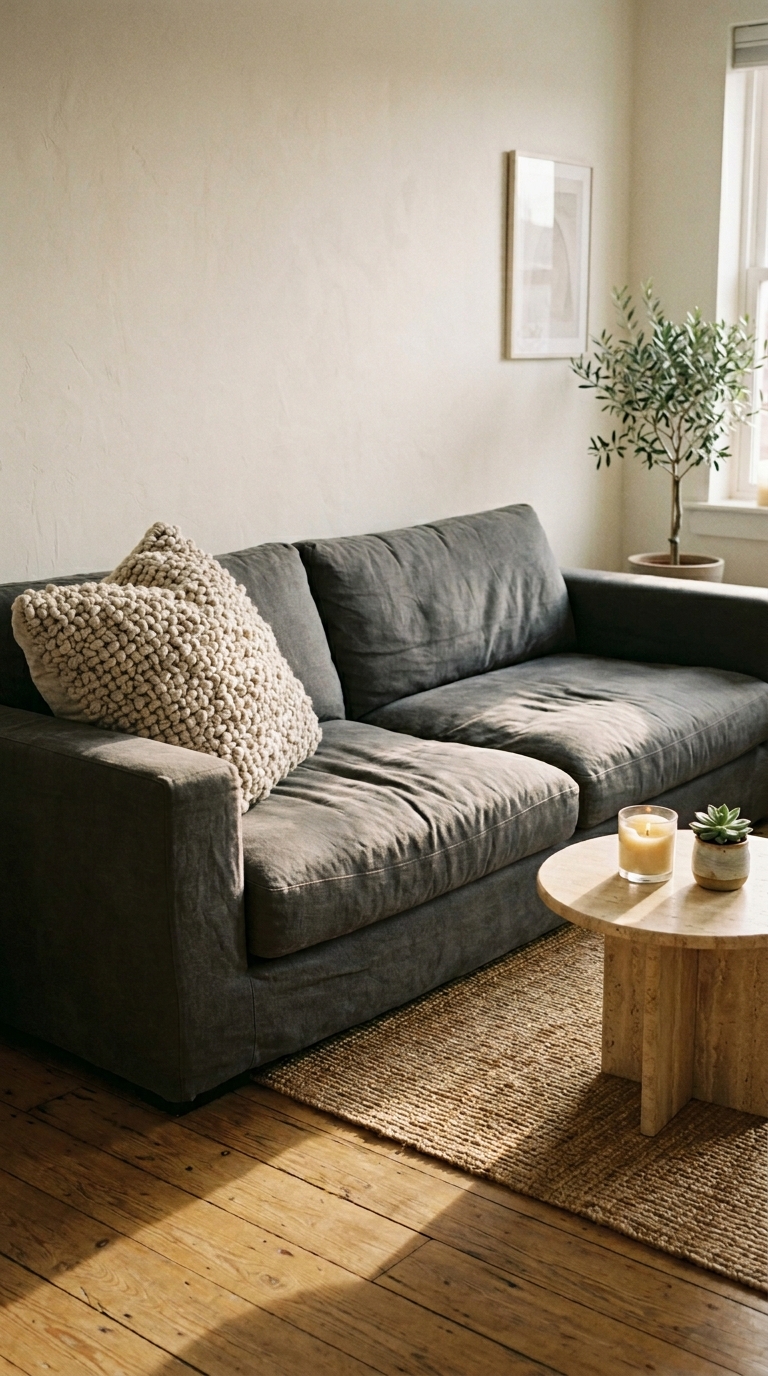
A minimalist living room appeals to four of your five senses — and the one that most people forget is smell. The most beautifully designed room in the world can feel incomplete if it doesn’t have a signature scent that wraps around you when you walk through the door. A single quality candle burning on your coffee table during the evening does something to the atmosphere that no amount of throw pillows or art can replicate — it signals that this space is cared for and intentionally lived in.
Choose one signature scent and stick with it — something warm and understated like cedarwood, fig, sandalwood, or a clean linen note — and burn it consistently so your nervous system starts associating that smell with relaxation the moment it hits your nose. Keep your candle arrangement simple: one or two candles on a small tray, always in vessels that match your room’s palette. Matte concrete, smooth white ceramic, or natural stone all work beautifully. Light your candle when you come home. Let the ritual be the signal that your real day begins now.
Conclusion
You don’t need a full renovation, a huge budget, or an interior designer on speed dial to create a living room that genuinely feels like a retreat. All it takes is one intentional decision today — one piece of furniture moved, one surface cleared, one soft lamp switched on instead of the overhead light. Start there. Feel the difference immediately. Then take the next small step when you’re ready, and the one after that. Your home should feel like a place that restores you every single time you walk through the door — and with these ideas in hand, it absolutely can.